Salt Spray Corrosion Test Chamber
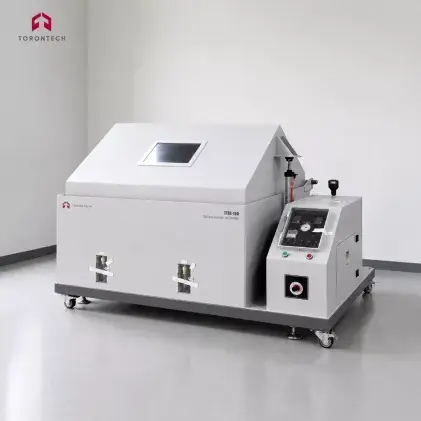
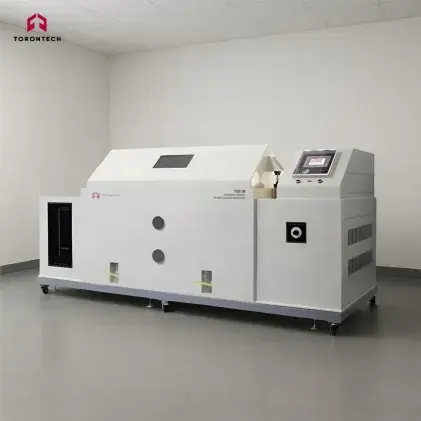
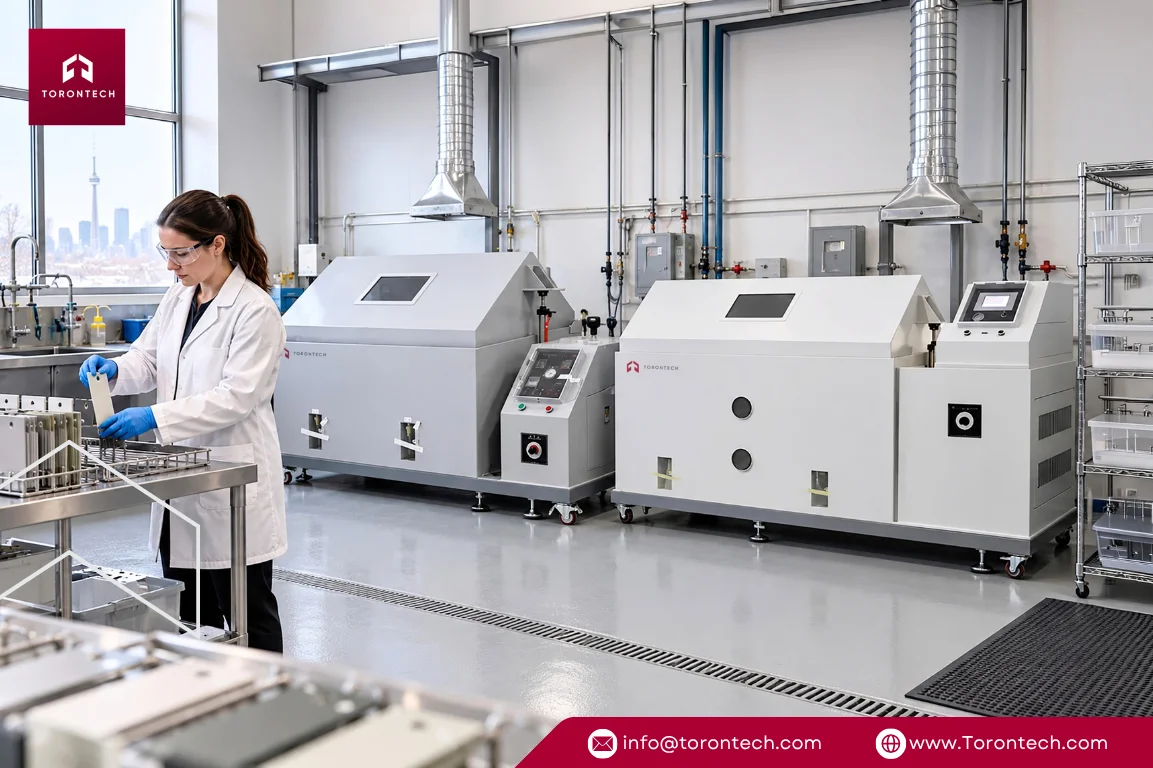
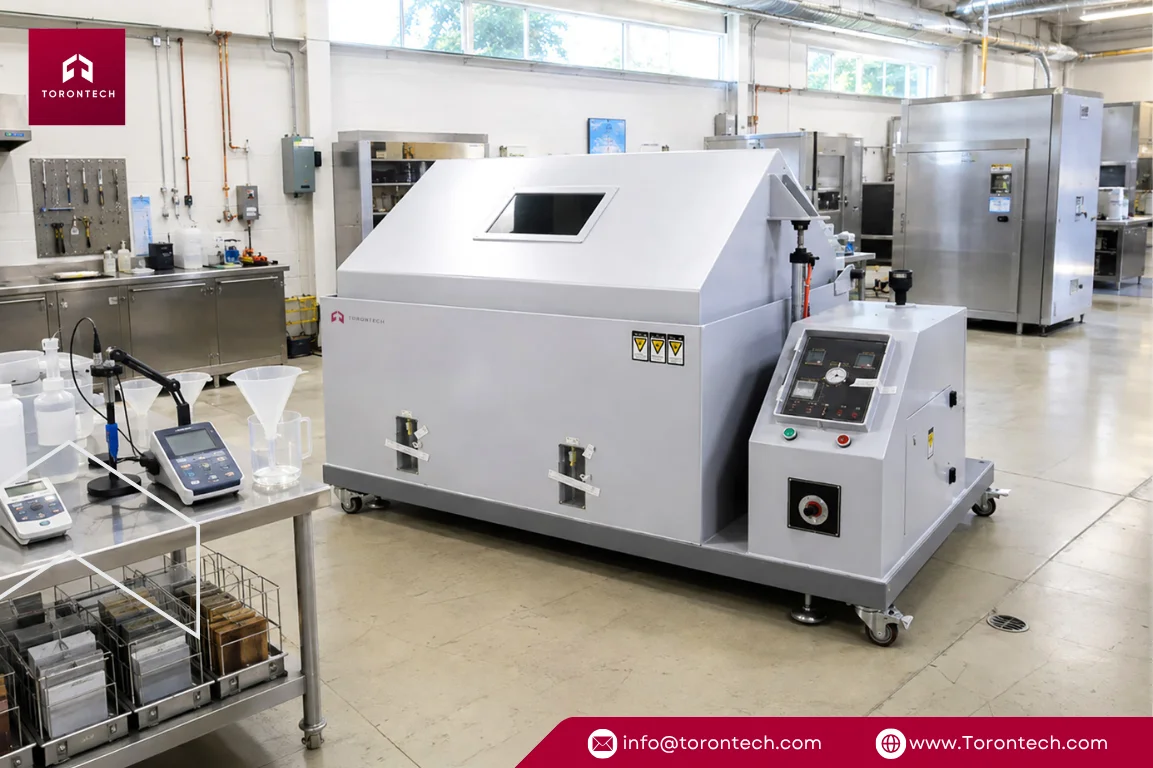
Salt Spray Corrosion Test Chamber can simulate the marine climate and can be used to test the salt fog resistant performance of materials, products and their coatings. They can also be used to evaluate the quality of the coatings.
The interior and exterior sides of the chamber are made of reinforced plastic (or PVC) by compression molding, which are acid-proof, alkali-proof, impact-proof and easy to clean.
Compare Salt Spray Corrosion Test Chamber Options
Side-by-side comparison to help you choose between standard salt spray testing and combined temperature-humidity salt spray testing.
| Feature | Salt Spray Corrosion Test Chamber (TTSS Series) | Temperature & Humidity Salt Spray Corrosion Test Chamber |
|---|---|---|
| Primary purpose | Salt fog / salt spray corrosion resistance testing | Salt spray testing with added temperature and humidity control for combined conditioning |
| Best for | Evaluating coatings and material resistance in salt fog environments | Testing coatings/materials under salt fog plus temperature and humidity effects |
| Simulates | Marine climate style salt fog exposure | Salt fog exposure with combined thermal and moisture stress (system dependent) |
| Common use cases | Coating quality checks, corrosion resistance screening, product durability validation | More demanding corrosion programs requiring added environmental conditioning |
| Chamber build | Reinforced plastic (or PVC) construction, acid/alkali resistant, impact resistant, easy to clean | Reinforced plastic (or PVC) construction, acid/alkali resistant, impact resistant, easy to clean |
| Selection tip | Choose TTSS Series for standard salt spray corrosion testing workflows | Choose this option when your method benefits from temperature and humidity control in addition to salt spray |
The salt spray corrosion test chamber supports quality control and product validation in any industry where corrosion resistance affects product life and safety.
Coatings, Paints, and Surface Finishes
Evaluate how protective coatings, paints, and conversion layers hold up against corrosion. Salt spray testing reveals coating defects and helps qualify new finishes.
Automotive and Transportation
Test fasteners, body panels, trim, and underbody components for the corrosion resistance required by demanding road and weather exposure.
Electroplating and Metal Finishing
Verify the durability of zinc, nickel, chrome, and other plated layers, and confirm that plating thickness and process control meet specification.
Aerospace, Electronics, and Hardware
Check connectors, enclosures, and structural hardware for corrosion resistance, supporting compliance and long-term reliability in service.
1. Standards-Based Operation
The chamber is built to run neutral salt spray testing to ASTM B117 and ISO 9227, with support for acetic acid salt spray (AASS) and copper-accelerated tests (CASS) where configured.
2. Corrosion-Resistant PVC Construction
Compression-molded reinforced plastic resists the acids, alkalis, and impact involved in long-duration corrosion testing, and wipes clean easily.
3. Stable Temperature Control
The chamber maintains the elevated test temperature defined by the standard (35 C for neutral salt spray), which keeps corrosion conditions consistent throughout the run.
4. Controlled Salt-Fog Generation
An atomizing nozzle and spray tower produce a uniform, continuous salt fog across the test zone for even exposure of all specimens.
5. Fog Collection and Monitoring
Collection funnels let operators check the fog deposition rate against the standard, confirming the chamber is running within specification.
6. Programmable Test Duration
Adjustable timing supports short screening tests and extended exposures such as 500-hour and 1,000-hour programs without operator intervention.
A salt spray test is an accelerated corrosion test. It speeds up the natural corrosion process so a laboratory can compare the corrosion resistance of different materials and coatings in days rather than months.
How the Test Creates Corrosion
The chamber prepares a salt solution, typically 5% sodium chloride in purified water. An atomizing nozzle uses compressed air to turn this solution into a fine mist, or fog, that fills the sealed test chamber. The chamber holds the air at an elevated temperature, around 35 C for a neutral salt spray test under ASTM B117.
Why a Controlled Environment Matters
The salt fog settles on the test specimens and forms a thin, corrosive film. Chloride ions in that film accelerate the electrochemical reactions that drive corrosion, so protective coatings and base metals break down faster than they would in normal conditions. Standards such as ASTM B117 fix the key variables, including salt concentration, temperature, solution pH (held between 6.5 and 7.2), and fog collection rate. Holding these conditions steady is what makes the results repeatable and allows fair comparison between samples, suppliers, and laboratories.