Plastic Granulator
Plastic Granulator
Plastic Granulators | Uniform Regrind from Bottles, Film, Caps, Pipe, and Profiles
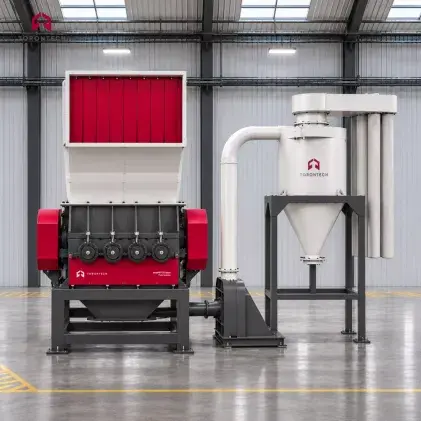
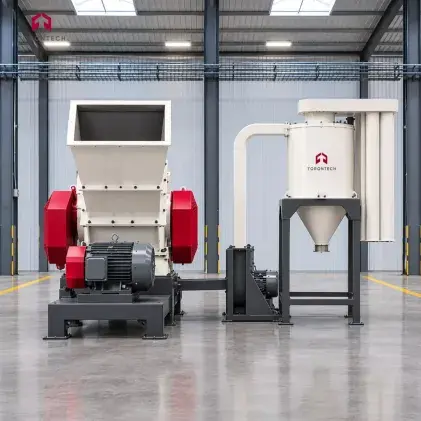
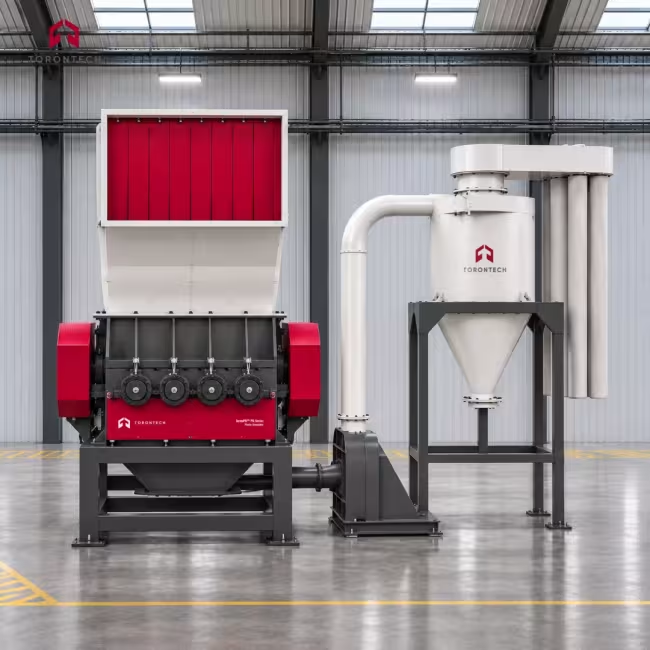
A plastic granulator also called a plastic grinder or regrind machine cuts thin or pre-shredded plastic into uniform regrind ready for washing, pelletizing, or direct reuse. Molders, recyclers, and extruders use granulators beside the press or as the sizing stage of a recycling line. High-speed rotor knives slice material against fixed bed knives for clean, consistent particles. Torontech offers general-purpose and long-part granulators, plus a combined shredder-granulator.
Granulators work best on material that is already reasonably small or thin-walled. Bulky bales and heavy lumps should pass through a shredder first. Long pipe and profile scrap needs a dedicated feed design to enter the cutting chamber. Torontech matches each granulator to the material, regrind size, and throughput a plant needs.
Why Choose Torontech for Your Plastic Granulator
Torontech supplies plastic granulators and complete recycling lines to molders, recyclers, and extruders. Our team helps you choose the rotor size and blade style that suit your material and target regrind size. Torontech supports installation so the granulator reaches stable production quickly. Replacement rotor knives, bed knives, and screens stay available to keep regrind size and output consistent.
Request a Quote
Tell us your material, part size, and target regrind size, and we will recommend the right plastic granulator. Contact the Torontech team for pricing, layout drawings, and lead times.
Applications
Plastic granulators serve any operation that needs consistent regrind from rigid or flexible scrap.
- PET and HDPE Bottle Recycling: granulating bottles and containers into flake for washing lines
- Injection and Blow Molding Plants: regrinding sprues, runners, and rejected parts beside the press
- Cap and Closure Recovery: reducing caps and closures separated during bottle recycling
- Film and Woven Bag Recycling: cutting loose film and woven bags into flakes before washing or pelletizing
- Pipe and Profile Extrusion: regrinding small-diameter pipe, tube, and window profile scrap
- Compounding and Recycling Plants: providing final size reduction after a primary shredder
Plastic Granulator Range
The range covers two granulator designs, each built for a different part shape. A combined unit handles bulky lumps in one pass.
Plastic Granulator (ToronPR™ PG)
A general-purpose granulator for loose film, PE, PP, and PET bottles, caps, baskets, woven bags, and short small pipe. Rotors spin at 550 to 600 rpm, and slanted knives give a scissor cut for film and thin-walled scrap, while claw-style knives add shear force for thicker caps and basket walls. Six models cover rotor diameters of 220 to 580 mm with motor power up to 90 kW.
Pipe and Profile Granulator (ToronPR™ PG PP)
A long-part granulator for small-diameter plastic pipe and extruded profiles. An angled feed chute and a large rotor of 500 to 1,000 mm let long pieces cut progressively without manual pre-cutting. Six models deliver 300 to 1,500 kg/h, with blower and cyclone discharge.
Shredder and Granulator Unit (ToronPR™ SGU)
A low-speed shredder and a high-speed granulator on one frame for plastic lumps and containers. It turns bulky parts into regrind in a single pass, saving floor space. Two models deliver 300 to 400 kg/h and 400 to 700 kg/h.
How to Choose the Right Plastic Granulator
- For bottles, caps, film, and thin-walled scrap: choose the Plastic Granulator, with blade style matched to the material.
- For long pipe, tube, and profile scrap: choose the Pipe and Profile Granulator to avoid cutting parts to length by hand.
- For bulky lumps, purgings, and thick containers: choose the Shredder and Granulator Unit, or place a plastic shredder ahead of a granulator.
- For thicker or harder parts such as caps and basket walls: specify claw-type blades on the Plastic Granulator.
- For thin film and sheet-like scrap: specify slice or flat blades for clean shearing cuts.
- For larger throughput on rigid scrap: choose a larger rotor diameter and higher motor power within each series.