Dropping Point and Softening Point Tester Series
Dropping Point and Softening Point Tester Series
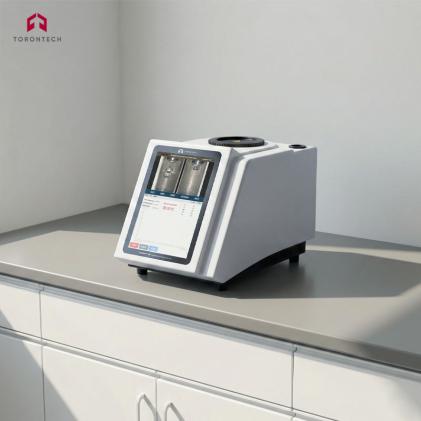
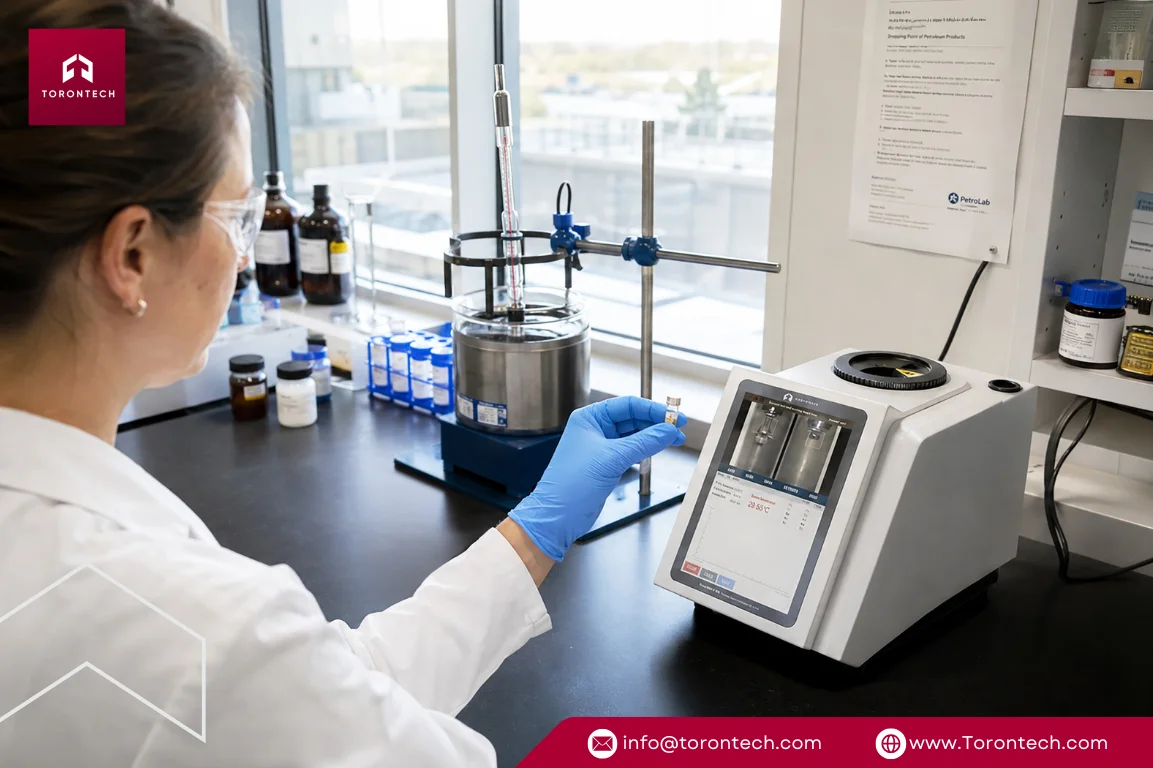
A Dropping Point and Softening Point Tester helps labs measure phase-change temperatures for greases, waxes, resins, and asphalt. The ToronDSPT™ Series uses HD video observation and controlled heating to capture clear transition behavior and support consistent endpoint decisions. Two-channel testing supports faster daily throughput, while method management helps align results across operators. Documentation tools such as direct printing and controlled data functions support labs that need traceable records.
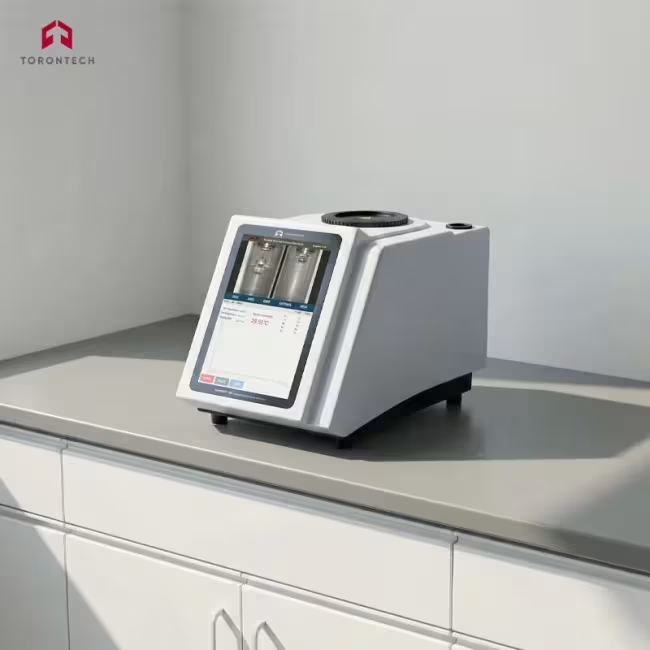
ToronDSPT™ instruments combine a closed, PID-controlled furnace with HD video observation to replace traditional microscope-style viewing. The system records the full transition process, which supports review when melt or drop behavior needs confirmation.
Both models are designed around standardized cups and controlled ramp programs to support repeatable testing. ToronDSPT™ 100 uses a semi-automatic workflow, while ToronDSPT™ 200 adds fully automatic, one-click testing and automatic endpoint detection. Both are built for routine QC environments where speed, consistency, and documentation matter.
Applications
- Grease and lubricant QC: Dropping point testing supports batch qualification, grease identification, and lot-to-lot consistency checks. Teams often use the results to compare thickener systems and monitor formulation stability during development.
- Asphalt and roofing materials: Softening point testing helps compare bitumen flow tendency at higher temperatures. This supports incoming inspection and product development for paving and roofing applications.
- Waxes, resins, and rosin for coatings and adhesives: Softening point data supports composition control for waxes, paraffin, resins, and rosin used in adhesives, coatings, inks, and processing aids. Cup-and-ball style methods are commonly referenced for resin and rosin work, where repeatable ramps and clear endpoint viewing help consistency.
- Petroleum jelly and semi-solid bases: Softening and dropping behavior can help screen consistency for petroleum, ointments, and similar semi-solid bases. Video records support internal review when transition behavior needs verification for documentation.
Table Comparison
| Item | ToronDSPT™ 100 | ToronDSPT™ 200 |
|---|---|---|
| Positioning | Dropping point and softening point testing with HD video observation and controlled ramps | Same test scope, with higher automation and one-touch workflow |
| Detection / operation | Semi-automatic | Fully automatic (manual-compatible) + automatic endpoint detection |
| Data handling | PDF/Excel export; USB/RS232/SD/Wi-Fi/RJ45/U-disk; QR scan input | Same, with larger storage and more methods |
| Storage / methods | 64 GB; 600 methods | 128 GB; 800 methods |
| Best fit | Labs that want video-based testing with a semi-automatic workflow | Labs that want one-click automation and faster routine QC execution |
Why Choose ToronDSPT™ for Your Dropping Point and Softening Point Tester?
- Clear endpoint visibility with HD video records: ToronDSPT™ captures the full transition process with HD video observation, which helps teams review results when behavior is borderline or needs confirmation. This reduces reliance on subjective microscope viewing and supports more consistent decisions across operators.
- Consistent heating control for repeatable methods: Closed furnace design with PID temperature control and segmented programming helps maintain stable ramp profiles from run to run. That matters when trending results over time, comparing lots, or aligning multiple labs to the same SOP.
- Two-sample throughput built for routine QC: Both ToronDSPT™ 100 and 200 run two samples at the same time, supporting higher daily throughput without complicating workflow. This is useful for grease, asphalt, wax, and resin checks where sample volume can be steady. 4. Documentation and data controls that match lab workflows: Direct printing supports quick batch documentation, while data export and common interfaces support QC reporting. When controlled records matter, the series supports audit trail and electronic signature functions aligned with regulated documentation needs.