Why Microwave Digestion Beats the Classic Hot Plate
Are those old hot plates dragging your lab down?
Moving to a modern microwave system is a huge step up for your throughput. You won’t see any half-melted particles left behind, the data is far cleaner, and your whole process will finally be as smooth as silk. Why wait three days for samples when you can finish in minutes?
If you want to get your materials ready for the heavy-duty analytical gear, getting that liquid to look perfectly see-through is the first big hurdle you’ll face. Labs have been going back and forth on this for ages: classic acid digestion vs microwave digestion.
Key Takeaways
- Speed and Efficiency: Microwave digestion reduces sample prep time from several hours or days to just 15 to 45 minutes.
- Superior Accuracy: Closed high-pressure vessels prevent the loss of volatile trace elements and completely eliminate airborne contamination.
- Enhanced Safety: Modern microwave systems shield your lab personnel from hazardous acid fumes.
- Long-Term Cost Savings: While hot plates have a lower initial price, microwave systems use significantly less high-purity acid and require minimal supervision.
- Versatile Chemistry: Advanced systems safely handle highly corrosive mineral acids, including hydrofluoric acid for highly resistant materials.
Overview of Conventional Hot Plate Methodologies
Think of classic acid digestion like a slow-simmering pot on a kitchen stove. You’re basically tucking your testing material into a glass beaker with some concentrated chemicals and cranking up the heat on a manual block. While this is a conventional sample preparation method, it often leads to incomplete digestion or the loss of volatile elements, especially in refractory samples.
Operational Advantages
- Low Cost to Get Started: Buying a few hot plates and some glassware won't drain your budget.
- Room for Large Chunks: Those open-top containers can hold a pretty massive amount of material, which helps if your sample isn't perfectly mixed together.
- Simple as Can Be: It’s a very basic way of doing things that your hard-working lab crew can pick up in five minutes.
Primary Technical Limitations
- A Massive Time Drain: Waiting for tricky materials to break down can take a whole afternoon or even several days. Studies confirm that classic methods are significantly slower and potentially less efficient depending on the matrix.
- The Vanishing Act: Since the beakers are wide open, high heat makes things like Mercury and Lead float away. In our view, this is a huge deal-breaker if you need high-precision results for trace analysis.
- Dirty Air Problems: It's far too easy for tiny bits of dust to fall into those open beakers and ruin your data.
- Hazardous Fume Situations: You’re dealing with a ton of nasty acid steam that needs constant watching and eats up your available fume hood space.
Transitioning to High-Performance Microwave Digestion
This is where things get really productive. Instead of waiting for heat to slowly crawl through the glass, we use microwave energy to rapidly heat samples in closed vessels with acid mixtures under controlled pressure and temperature. When evaluating microwave digestion vs hot plate digestion, the speed and safety of a closed system are immediately apparent.
Operational Advantages
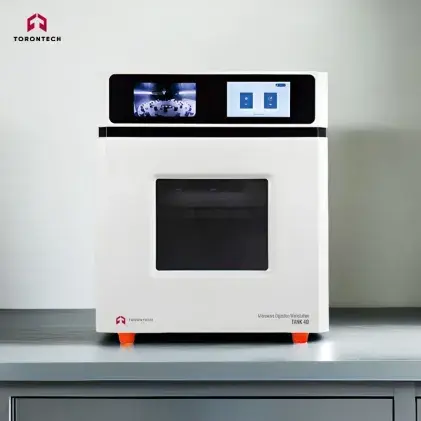
- Fast Turnaround Times: What used to take half a day on a hot plate is done in about 20 to 45 minutes. We think the twin-magnetron setup in systems like the Microwave Digestion Workstation TANK 40 is a total win for making sure the heat hits everything at once without any weird pulsing.
- Super Accurate Results: Since the containers are locked tight, those sneaky volatile elements have nowhere to run, giving you a perfect recovery every single time.
- Customized Chemistry: Microwave digestion allows for complex acid mixtures tailored to your specific sample types, such as including HF for silicates, which significantly improves mineralization efficiency compared to classic methods.
- Keeping the Crew Safe: These setups come with explosion-proof walls and containers made of the same tough stuff used in space travel. We prioritize this because it keeps the lab crew completely shielded from those biting acid vapors.
- Saving Cash on Chemicals: You only need a tiny splash of acid compared to the buckets you’d go through with the old-school method.
Primary Technical Limitations
- Higher Price Tag Upfront: You’ll definitely spend more money on day one to get a microwave system set up, though we’re certain the time you save makes it pay for itself at a fast clip.
Comparative Analysis: Technical Performance Summary
When looking at classic acid digestion vs microwave digestion, the technical metrics show a clear winner for high-precision labs.
| Feature | The Old Hot Plate Way | The Microwave Zap |
|---|---|---|
| Processing Time | Hours or even Days | 15 to 45 Minutes tops |
| Acid Needed | A whole lot (constant top-ups) | Just a tiny splash |
| Max Heat | Only as hot as the acid boils | Up to a scorching 300°C |
| Saving Elements | Not great (things vanish) | Absolute perfection (nothing escapes) |
| Contamination | Pretty likely (open to the air) | Zero chance (locked tight) |
| Hands-Off Level | You have to watch it constantly | Set it and go grab a coffee |
Operational Impact and Technical Performance Review
When we look at classic acid digestion vs microwave digestion, the difference in how much work you actually get done is night and day. Studies comparing the two methods show that microwave digestion generally provides better recovery, precision, and linearity for heavy metals analysis.
1. Workflow Optimization and Sample Throughput
We’ve noticed that the hot plate method is a massive bottleneck. You’ve got people standing around watching beakers so they don’t go dry. On the flip side, the microwave is a "push a button and walk away" deal.
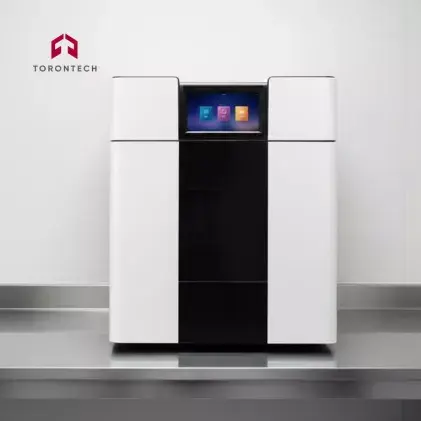
Big machines like the Ultra High Throughput Closed Microwave Digestion / Extraction Workstation MASTER can handle 100 samples at once and cool them down from 200°C to a safe 60°C in about 15 minutes.
2. Matrix Decomposition and Digest Quality
In our opinion, some tough materials just won't melt properly at normal boiling points. We’re convinced the microwave is the better choice for totally crushing difficult samples until they’re perfectly liquid.
Consider a heavy petrochemical or a dense ceramic; on a standard hot plate, you often end up with a murky sludge even after hours of boiling. Put that same material into a high-pressure microwave vessel and it completely dissolves into a clear liquid ready for the spectrometer.
3. Economic Efficiency and Resource Management
Even if the hot plate looks cheaper at first, we’d say the hidden costs add up fast. Between the piles of expensive acid and the endless hours spent by staff, those old blocks are actually pretty pricey to run in the long haul.
Applications Across Key Industrial Sectors
The debate between microwave digestion vs hot plate digestion is often settled by the specific requirements of the industry and the standards that must be met.
Read more: How to Choose a Microwave Digester: Safety & Buying Guide
Environmental Analysis and Compliance
You absolutely need this to meet the big EPA rules when you're testing dirt or waste water.
Pharmaceutical Research and Quality Control
This is a must for checking for tiny impurities in pills and liquids to stay on the right side of the FDA.
Food Safety and Agricultural Diagnostics
It’s the best way to chew through organic samples to find hidden heavy metals in what we eat. For example, if a facility needs to screen infant formula for trace amounts of arsenic, a fast, contamination-free prep method is an absolute necessity.
Petrochemical and Polymer Characterization
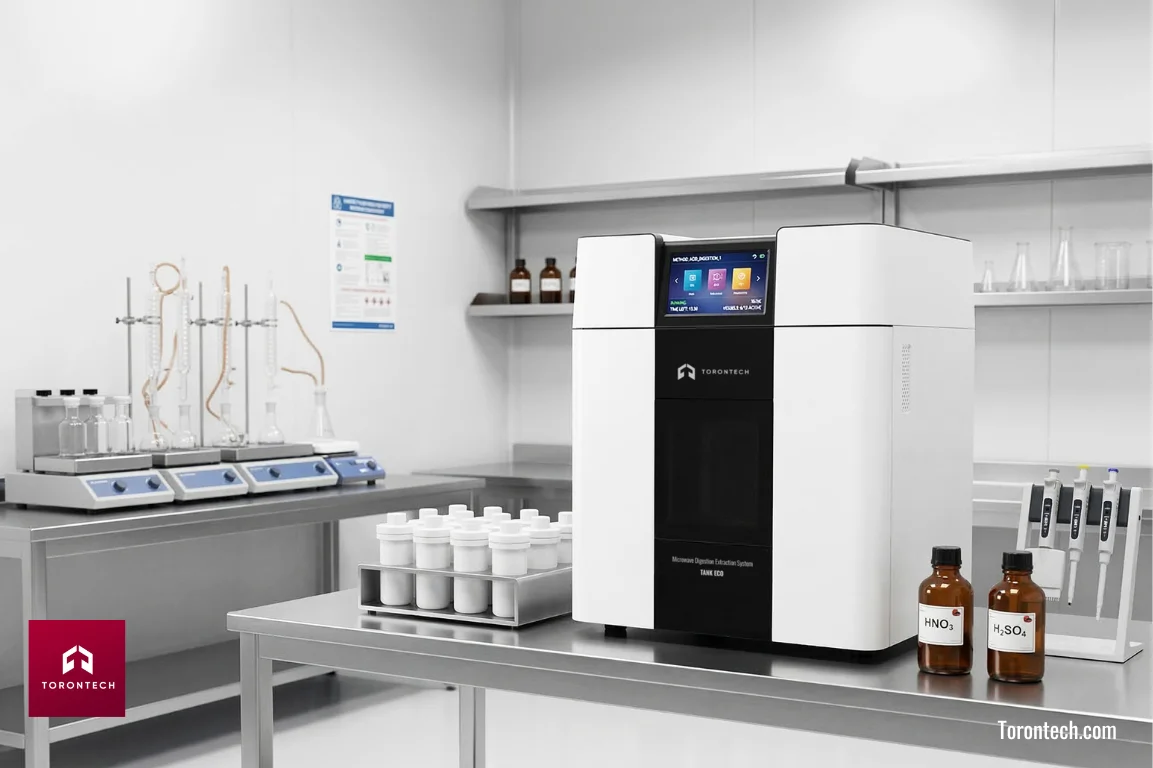
We’ve found that high heat and pressure are the only way to really break down thick oils and polymers. Take a heavy crude oil sample; a hot plate will just bake it into a sticky mess, while a high-pressure setup like the Microwave Digestion Extraction System TANK ECO breaks it down completely.
Mining, Metallurgy, and Ore Processing
If you are pulling tough ores or thick alloys out of the ground, we know how hard it is to dissolve those materials. High-pressure waves crush through rocks and stubborn minerals without breaking a sweat.
Cosmetic and Personal Care Formulation
Nobody wants toxic metals in their daily routine. We see these systems as essential for proving your makeup and lotion batches are totally free of dangerous elements before they ever hit the shelves.
Advanced Electronics and Energy Storage
When you have to prove your circuit boards and lithium-ion batteries meet strict safety limits, you need a prep method that leaves zero room for error. Breaking down the tough plastics and internal metals of a battery cell requires exactly this kind of intense, enclosed heat.
Clinical Toxicology and Biological Testing
Whether you are checking hair, blood, or tissue samples, we trust this closed-system method to give you the crystal-clear liquids required for high-stakes health and toxicology checks.
Torontech: Ready to Give Your Lab a Upgrade?
Bottom line: when choosing between microwave digestion vs hot plate digestion, the old-school boil-up just can't keep pace anymore. If you want to scale up, keep your team safe, and trust your data completely, moving to a sealed system is a total necessity.
At Torontech, we get that picking new gear is a big deal. We’re a top-tier supplier based right here in North America, and our whole mission is giving you cost-effective solutions and innovative technologies that help you get world-class results without draining your bank account.
Whether you’re looking for the massive capacity of our MASTER Workstation, the versatility of the TANK ECO, or the steady reliability of the TANK 40, we build gear that’s focused on high precision and keeping people safe.
Stop letting that old-fashioned gear slow your lab down. Come see our innovative and cost-effective Microwave Digestion Systems right now and start getting your samples done with way more speed and way less stress!
References:
- Alsehli, B. (2020). Evaluation and Comparison between a Conventional Acid Digestion Method and a Microwave Digestion System for Heavy Metals Determination in Mentha Samples by ICP-MS.. The Egyptian Journal of Chemistry, 0-0.
- Singh, P., & Gupta, S. (2024). Comparison between Microwave Digestion and Conventional Open Digestion Method for Heavy Metals determination. Ecology, Environment and Conservation.
- Han, S., Ju, T., Meng, Y., Du, Y., Xiang, H., Aihemaiti, A., & Jiang, J. (2021). Evaluation of various microwave-assisted acid digestion procedures for the determination of major and heavy metal elements in municipal solid waste incineration fly ash. Journal of Cleaner Production.
- Bizzi, C., Pedrotti, M., Silva, J., Barin, J., Nóbrega, J., & Flores, E. (2017). Microwave-assisted digestion methods: towards greener approaches for plasma-based analytical techniques. Journal of Analytical Atomic Spectrometry, 32, 1448-1466.
- Nakayama, K., & Wagatsuma, K. (2020). Application of Quaternary Acid Mixture to Microwave Digestion Effective for Various Kinds of Steel Samples. ISIJ International.
- Santos, D., Pedroso, M., Costa, L., Nogueira, A., & Nóbrega, J. (2005). A new procedure for bovine milk digestion in a focused microwave oven: gradual sample addition to pre-heated acid.. Talanta, 65 2, 505-10.
- Taylor, V., Toms, A., & Longerich, H. (2002). Acid digestion of geological and environmental samples using open-vessel focused microwave digestion. Analytical and Bioanalytical Chemistry, 372, 360-365.
- Hassan, N., Rasmussen, P., Dabek-Zlotorzynska, E., Celo, V., & Chen, H. (2007). Analysis of Environmental Samples Using Microwave-Assisted Acid Digestion and Inductively Coupled Plasma Mass Spectrometry: Maximizing Total Element Recoveries. Water, Air, and Soil Pollution, 178, 323-334.