Microwave Digestion Systems: The Ultimate Guide
Is your lab's throughput being throttled by the sample preparation bottleneck? We know that traditional open-vessel heating is often the culprit—slow, risky, and prone to contamination.
Microwave Digestion offers the definitive fix. By using microwave radiation to accelerate acid decomposition, modern sealed-vessel systems reduce prep time from hours to minutes.
This guide explores the technology, its industrial applications, and how to select the right Microwave Digestion System for your specific needs.
Key Takeaways
- Drastic Time Savings: Reduce sample preparation cycles from several hours to under 30 minutes. This eliminates the primary bottleneck in analytical laboratories.
- Superior Data Integrity: Sealed-vessel technology prevents airborne contamination and retains volatile elements. This is critical for meeting strict EPA and USP detection limits.
- Operational ROI: Lower your cost per sample by significantly reducing acid consumption and hazardous waste disposal fees.
- Universal Application: High-pressure systems successfully digest difficult matrices that open hot blocks cannot touch. This includes ceramics, geological ores, and complex polymers.
- Scalable Solutions: Torontech offers tailored configurations. From the versatile TANK ECO for R&D to the high-throughput MASTER Series for commercial testing.
Microwave Digestion: The Standard for Modern Analysis
In essence, microwave digestion is the process of dissolving solid samples in concentrated acids within a completely sealed container, which is then subjected to microwave energy. This step is absolutely essential to release trace metals for analysis by sensitive instruments.
In our opinion, this has become the required standard for any facility serious about producing defensible data.
Unlike a hot plate that heats a beaker from the outside, microwave energy works internally by directly heating the solvent and sample. This produces a rapid rise in temperature and pressure to ensure the complete decomposition of even the most refractory matrices, such as ceramics, geological ores, and complex polymers.
Related article: Why Microwave Digestion Beats the Classic Hot Plate
Here is the bottom line: You cannot produce quality data from a poorly prepared sample. We firmly believe that if the sample is not fully digested, even the most expensive analytical instrument will produce inaccurate results.
The Science Behind High-Pressure Acid Digestion
How does this technology achieve such remarkable efficiency? It relies on controlled microwave energy absorption by the sample and reagents.
- Direct, Internal Heating: Microwaves interact directly with molecules in the acid and sample to generate heat from within instead of waiting for it to transfer through the vessel walls.
- Elevated Boiling Points: High-pressure acid digestion involves conducting reactions under elevated pressures. This allows acids to reach temperatures far exceeding their normal atmospheric boiling points, often surpassing 260°C (500°F).
- Accelerated Reaction Kinetics: These elevated conditions enhance the breakdown of samples by increasing reaction rates. This allows laboratories to use diluted acids, which improves safety and reduces reagent consumption without sacrificing performance.
A Focus on Safety:
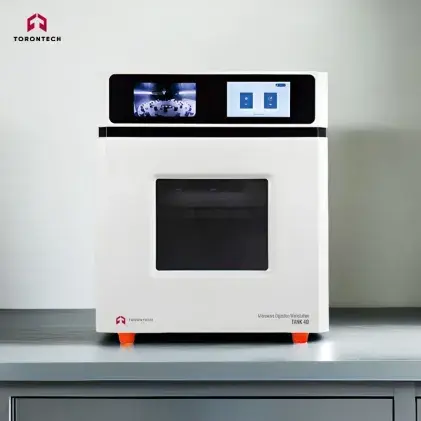
That is why we have ensured our modern workstations, such as the TANK 40, utilize real-time pressure monitoring and a durable explosion-proof stainless steel cavity with an aerospace fiber coating.
Microwave Digestion vs. Traditional Hot Block Heating
For labs considering an upgrade, the comparison between closed-vessel microwave digestion and open hot blocks is quite revealing.
Microwave systems deliver significant improvements in speed, safety, and data integrity by preventing airborne contamination and the loss of volatile elements. The ability to reach higher temperatures ensures a more complete digestion in a fraction of the time.
For a more granular, side-by-side review, we recommend reading our complete guide about Microwave Digestion vs. Hot Block Heating.
Operational Benefits: Speed, Safety, and ROI
Why are laboratories worldwide adopting Torontech microwave systems? The advantages go beyond simple convenience. They translate directly into higher throughput velocity and a substantially lower cost of operation.
- Throughput Velocity: It is not just about being fast; it is about volume. With the MASTER Ultra High Throughput Workstation, you can process a full carousel of up to 100 samples in under 30 minutes.
Consider this scenario: A commercial lab processing 50 soil samples daily on hot plates would likely need multiple shifts to clear the backlog. With a high-throughput MASTER system, that same workload is cleared before lunch.
- "Right First Time" Data: Sealed vessels prevent airborne contaminants from affecting your samples. This is crucial for achieving low detection limits. We consider this one of the most valuable benefits because it eliminates the need for costly re-runs due to contamination.
- Significant Cost Reduction: Recent advances support greener approaches, such as combining dilute acids with oxidants like oxygen or hydrogen peroxide.
For example: Instead of using 50mL of high-purity acid in an open beaker, a closed vessel might require only 5-10mL. Over a year, this results in massive savings on reagents and drastically lowers your hazardous waste disposal fees.
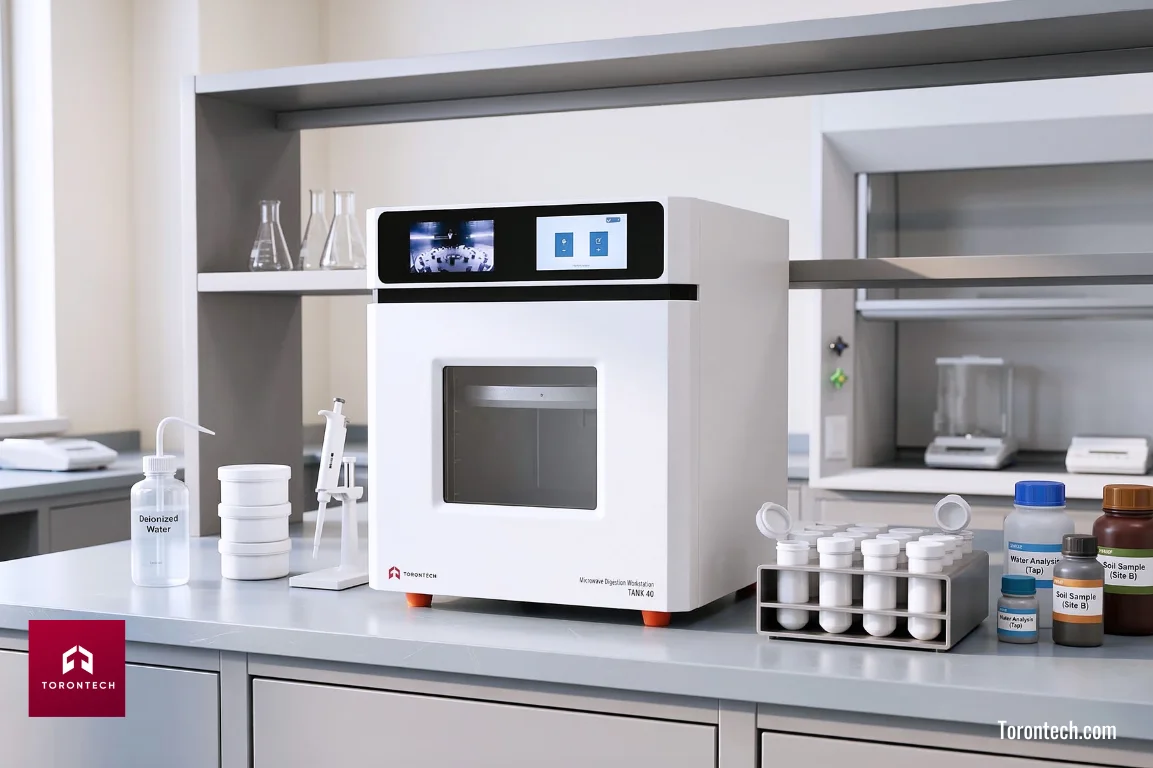
- Unattended Operation: Unlike open hot plates that require constant vigilance, modern systems like the TANK 40 are "load and go." Your technicians can focus on other revenue-generating tasks while the digestion runs, which effectively multiplies your workforce.
- Superior Element Recovery: The system ensures the complete capture of volatile elements like mercury and arsenic. This leads to a level of data accuracy that is simply not possible with open systems to protect your lab's reputation for reliability.
Key Industrial Applications
These operational benefits are being realized every day in the world's most demanding industries. Here is how advanced microwave digestion serves specific sectors and helps them meet stringent international standards:
Environmental & Soil Analysis (Meeting EPA Standards)
With increasingly strict regulations, labs testing soil, sludge, and wastewater must perform at the highest standard. Microwave digestion ensures the complete recovery of heavy metals required for full compliance.
EPA Method 3051A & 3015A: These are the global benchmarks. Modern methods have even been adapted for specific molecular marker extraction, such as biochar quantification. Our MASTER Series systems are designed to handle these diverse environmental applications efficiently.
Pharmaceutical Quality Control (USP Compliance)
The shift to USP <232> and USP <233> regarding elemental impurities has made closed-vessel digestion a necessity for pharma labs.
An example: You simply cannot detect low-level toxic elements in drug products without clean, high-temperature digestion. Open vessels often lose these volatile elements to yield a false "pass" result, a risk no pharmaceutical manufacturer can afford to take.
Petrochemicals & Polymers
Testing crude oil, lubricants, and plastics represents one of the toughest challenges in the lab. These organic matrices require high temperatures to break down carbon bonds without creating dangerous pressure spikes. This is particularly relevant for trace element determination in biodiesel and fuels, where complete matrix destruction is required for ICP-MS analysis.
ASTM D5291: The TANK ECO Extraction System excels here due to its versatile configuration capabilities. Consider heavy crude oil analysis, which requires intense heat to oxidize carbon chains. In an open vessel, this is a fire hazard. In the TANK ECO, it is a controlled, routine procedure.
Mining & Metallurgy
Geological samples are notoriously difficult to process. High-pressure microwave systems are engineered to handle the aggressive acid combinations, including hydrofluoric acid, needed to completely dissolve ores.
EPA Method 3052: Take Lithium ores or Chromite as an example. Trying to dissolve these in an open vessel is often an exercise in futility. Our units can safely achieve the high temperatures required to break down these siliceous matrices using HF to ensure accurate grading.
Food Safety & Biological Sample Preparation
From testing heavy metals in fish to analyzing nutrients in crops, food safety labs demand high throughput. For challenging samples like fruit juices and milk, high-pressure systems achieve rapid and uniform heating to improve digestion efficiency.
Consider baby food matrices: Even trace arsenic must be detected to ensure safety. Microwave digestion prevents the volatile loss that ruins these tests to ensure that the final product is safe for consumption.
Solving the Impossible: Examples of Challenging Matrices
We often encounter laboratories struggling with specific materials that simply refuse to dissolve using traditional methods. In our experience, high-pressure microwave digestion is often the only viable path forward for these "impossible" samples.
| Material | The Challenge | The Microwave Solution |
|---|---|---|
| Ceramics & Refractories | The crystal structure is too stable for normal acids to penetrate. | High pressure forces acid into the lattice to break it down in minutes. |
| Cosmetics (Lipsticks/Creams) | High fat and wax content creates dangerous exothermic reactions. | Precise temperature ramping controls the reaction rate to prevent pressure spikes. |
| Electronic Waste (E-Waste) | A mix of plastics, metals, and glass that requires multiple acid types. | The ability to use HF, Nitric, and HCL simultaneously in a sealed TFM vessel. |
| Plant & Animal Tissue | High organic content generates massive amounts of CO2 gas. | Advanced venting mechanisms release excess gas safely while keeping the sample intact. |
Choosing the Right Microwave Digestion System for Your Lab
Selecting the correct unit depends entirely on your typical sample volume, matrix complexity, and budget. We offer a range of configurations because we know it is critical to match the technology to the application.
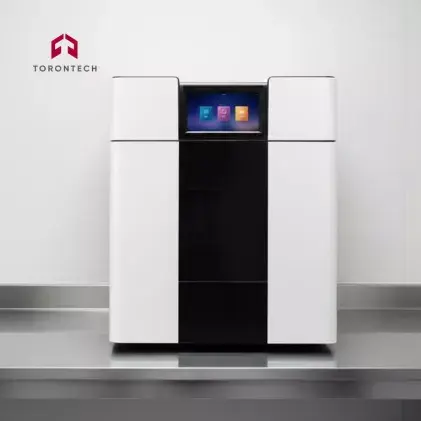
- The MASTER Ultra High Throughput Workstation is a powerhouse engineered for commercial labs with extensive sample loads, capable of managing up to 100 vessels per run with wireless video monitoring.
- The TANK 40 Workstation is our versatile workhorse, offering a perfect balance of high capacity and robust design for general analytical labs utilizing dual magnetron frequency resonance.
- The TANK ECO Extraction System delivers the power and flexibility required for R&D and the most complex, hard-to-digest materials, featuring cloud storage, real-time tracking, and a durable aerospace composite fiber vessel
Each system has unique strengths. To see a full feature comparison and find the ideal fit for your lab, please review our Guide to Choosing Your Torontech Microwave Digestion System.
Overcoming Common Challenges (Safety & Vessel Durability)
Historically, valid concerns about microwave digestion included operational safety and the replacement cost of consumable parts.
We are proud to say that modern engineering has made those issues a thing of the past.
- Exceptional Vessel Strength: Torontech systems feature robust construction; the TANK ECO utilizes an Aerospace Composite Fiber vessel, while the TANK 40 features a stainless steel cavity with an aerospace fiber coating.
- Advanced Venting Technology: Advanced Venting Technology: We consider the Safety Bolt design a significant innovation found on our MASTER Series.
- Guaranteed Sample Purity: Integrated piezoelectric pressure sensors on our MASTER Series measure pressure accurately to ensure optimal control and safety.
Best Practices for Safe & Efficient Digestion
To maximize the longevity of your equipment and the consistency of your results, we recommend a few key practices:
- Vessel Inspection: Before each use, quickly inspect the inner TFM liners for any scratches. This simple step prevents significant issues down the line.
- Acid Program Selection: Ensure your acid mixture is appropriate for your sample type to promote a smooth and efficient reaction.
- Proper Cooling Protocol: Always allow the system to complete its cooling cycle before opening the vessels to prevent any analyte loss.
- Routine Calibration: Regularly calibrate your temperature sensors to ensure long-term method repeatability.
Torontech: Upgrading Your Lab’s Capabilities
In our view, microwave digestion is no longer a luxury; it is a fundamental requirement for any laboratory focused on throughput and accuracy. Whether you are ensuring food safety or performing geological assays, the quality of your sample preparation defines the quality of your final data.
Torontech’s range of Microwave Digestion Systems—from the flexible TANK ECO to the high-capacity MASTER Series—delivers the safety, durability, and precision that we believe modern laboratories require to succeed.
Ready to accelerate your sample preparation? Explore our full range of Microwave Digestion Systems or request a quote today to learn how we can improve your laboratory's efficiency.
References:
- Barela, P., Silva, N., Pereira, J., Marques, J., Rodrigues, L., & Moraes, D. (2017). Microwave-assisted digestion using diluted nitric acid for further trace elements determination in biodiesel by SF-ICP-MS. Fuel, 204, 85-90.
- Bizzi, C., Barin, J., Müller, E., Schmidt, L., Nóbrega, J., & Flores, E. (2011). Evaluation of oxygen pressurized microwave-assisted digestion of botanical materials using diluted nitric acid. Talanta, 83(5), 1324-1328.
- Bizzi, C., Flores, E., Picoloto, R., Barin, J., & Nóbrega, J. (2010). Microwave-assisted digestion in closed vessels: effect of pressurization with oxygen on digestion process with diluted nitric acid. Analytical Methods, 2, 734-738.
- Bizzi, C., Pedrotti, M., Silva, J., Barin, J., Nóbrega, J., & Flores, E. (2017). Microwave-assisted digestion methods: towards greener approaches for plasma-based analytical techniques. Journal of Analytical Atomic Spectrometry, 32, 1448-1466.
- Glaser, B., Guenther, M., Maennicke, H., & Bromm, T. (2021). Microwave-assisted combustion to produce benzene polycarboxylic acids as molecular markers for biochar identification and quantification. Biochar, 3, 407-418.
- Hallwirth, F., Motter, H., & Wiltsche, H. (2023). An improved digestion coil arrangement for high-pressure microwave-assisted flow digestion. Journal of Analytical Atomic Spectrometry.
- Marques, T., Wiltsche, H., Motter, H., Nóbrega, J., & Knapp, G. (2015). High pressure microwave-assisted flow digestion system using a large volume reactor-feasibility for further analysis by inductively coupled plasma-based techniques. Journal of Analytical Atomic Spectrometry, 30, 1898-1905.
- Marques, T., Wiltsche, H., Nóbrega, J., Winkler, M., & Knapp, G. (2017). Performance evaluation of a high-pressure microwave-assisted flow digestion system for juice and milk sample preparation. Analytical and Bioanalytical Chemistry, 409, 4449-4458.
- Matusiewicz, H. (1999). Development of a high-pressure asher focused microwave system for sample preparation. Analytical Chemistry, 71(15), 3145-3149.