How to Choose a Microwave Digester: Safety & Buying Guide
There’s nothing quite like a lab that runs like a dream. When your sample prep is hitting every mark, your results come out looking absolutely flawless.
At Torontech, we know that turning stubborn solids into crystal-clear liquids is a massive win for your daily output. We’re convinced the right microwave digestion system turns a high-pressure headache into a smooth success story that keeps your team safe and your results spot on.
Key Takeaways
- Swapping out old hot blocks for sealed microwave systems slashes sample prep time from hours to minutes.
- Modern digesters lock in volatile elements to guarantee your final data is completely accurate.
- Top-tier safety features in a microwave digester like explosion-proof vessels and smart pressure vents are non-negotiable for protecting your lab.
- When deciding how to choose a microwave digester, focus on your daily sample volume and how tough your materials are to break down.
- Torontech offers high-capacity and high-pressure Microwave Digestion options that fit your budget without cutting corners on performance.
Transitioning From Hot Blocks to Microwave Systems
If you’re still relying on traditional open-vessel hot blocks, you’re essentially leaving money and safety on the table. Switching to a sealed microwave system dramatically cuts down on processing time, ensures you don't lose volatile elements, and keeps your lab free from corrosive acid clouds.
Related article: Why Microwave Digestion Beats the Classic Hot Plate
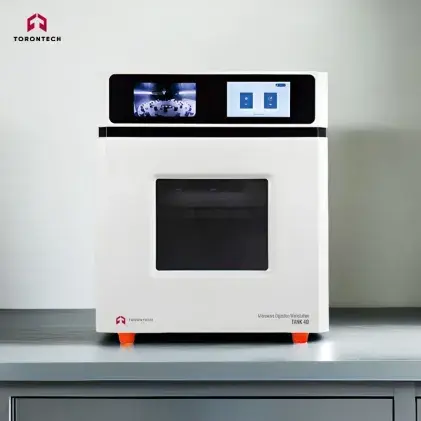
Let’s paint a picture here. Say a facility is tasked with breaking down a massive batch of forty stubborn soil samples. Doing that on a hot block usually eats up an entire eight-hour shift. If they swap that out for a sealed powerhouse like the Microwave Digestion Workstation TANK 40, they can easily knock out that exact same batch before their morning coffee even gets cold.
Versatility Across Key Industrial Applications
Every industry has its own set of headaches. We know that a good digester needs to be a bit of a jack-of-all-trades to handle the heavy lifting across these fields:
- Checking the Environment: Grinding through dirt, sludge, and murky water to hunt down heavy metals and stay on the right side of the law. (Think: isolating trace lead in community drinking water before it becomes a public health crisis.)
- Food and Drink Safety: Prepping everything from farm crops to steak to make sure there’s nothing nasty hiding inside before it hits the grocery store shelves. (Think: ripping apart baby formula to check for heavy metals before it ever leaves the factory floor.)
- The Pharma Scene: Hitting those super-strict rules for tiny impurities in the ingredients that go into our medicine.
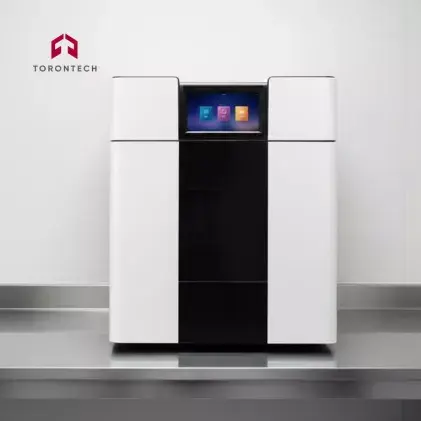
- Oil and Plastics: Chewing through tough stuff like crude oil and synthetic polymers to make sure the quality is exactly where it needs to be. (Think: dissolving thick, sticky motor oil to check for wear metals without gumming up the works, which is exactly the kind of stubborn mess the Microwave Digestion Extraction System TANK ECO is built to handle.)
- Mining and Metallurgy: Breaking down ore samples and metal alloys to verify purity and mineral content in record time.
- Cosmetics and Personal Care: Ensuring lotions, makeup, and shampoos are free from heavy metal contaminants before they reach consumers.
- Clinical and Forensic Labs: Analyzing biological samples like hair or tissue to detect toxins and support critical investigations.
Essential Safety Features in a Microwave Digester
When you’re dealing with high-pressure chemical reactions, we think safety is the one thing you can’t afford to be cheap on. The best gear stops a disaster before it even starts by incorporating multiple layers of protection that work together to keep the environment stable. Here are the big safety features in a microwave digester we think you should be demanding:
Vessels That Can Handle Extreme Stress
We’re talking about heavy-duty stainless steel chambers lined with multi-layer Teflon or aerospace-grade fibers. This is the bare minimum in our book; if something goes wrong inside, it stays inside.
A high-end chamber should act like a vault, ensuring that even if a vessel fails, your technicians and other expensive lab equipment remain completely untouched. Research suggests that vessel design, including height and shape, can even improve acid regeneration and maintain controlled reaction conditions.
Smart Pressure Vents
Modern machines use these clever "Safety Bolt" setups. We’re big fans of this because it lets out the extra steam in a controlled, calm way instead of a sudden burst.
This "vent-and-reseal" logic is a huge win. It prevents the vessel from turning into a rocket while keeping your samples from disappearing into the exhaust system.
Real-Time Monitoring and Sensor Integration
Keeping a constant watch is key. We’re partial to systems with built-in sensors, such as platinum resistance temperature sensors, to monitor temperature precisely. These safety features in a microwave digester ensure the system is smart enough to "see" a potential spike before it happens, adjusting the microwave power in real-time to keep everything within the safe zone.
Super-Tough Containers
The jars themselves have to be built like tanks. We suggest going for ones made of high-tech fibers that can handle crazy pressures and temperatures without breaking a sweat. If your vessels can't handle at least 70 MPa, you're severely limiting the types of samples you can digest safely.
How to Choose a Microwave Digester
Getting the safety right is the first hurdle, but finding the one that fits your daily grind is where it gets interesting. If you’re trying to figure out how to choose a microwave digester, we’d tell you to look at these four big things:
1. How Much Volume Are You Actually Running?
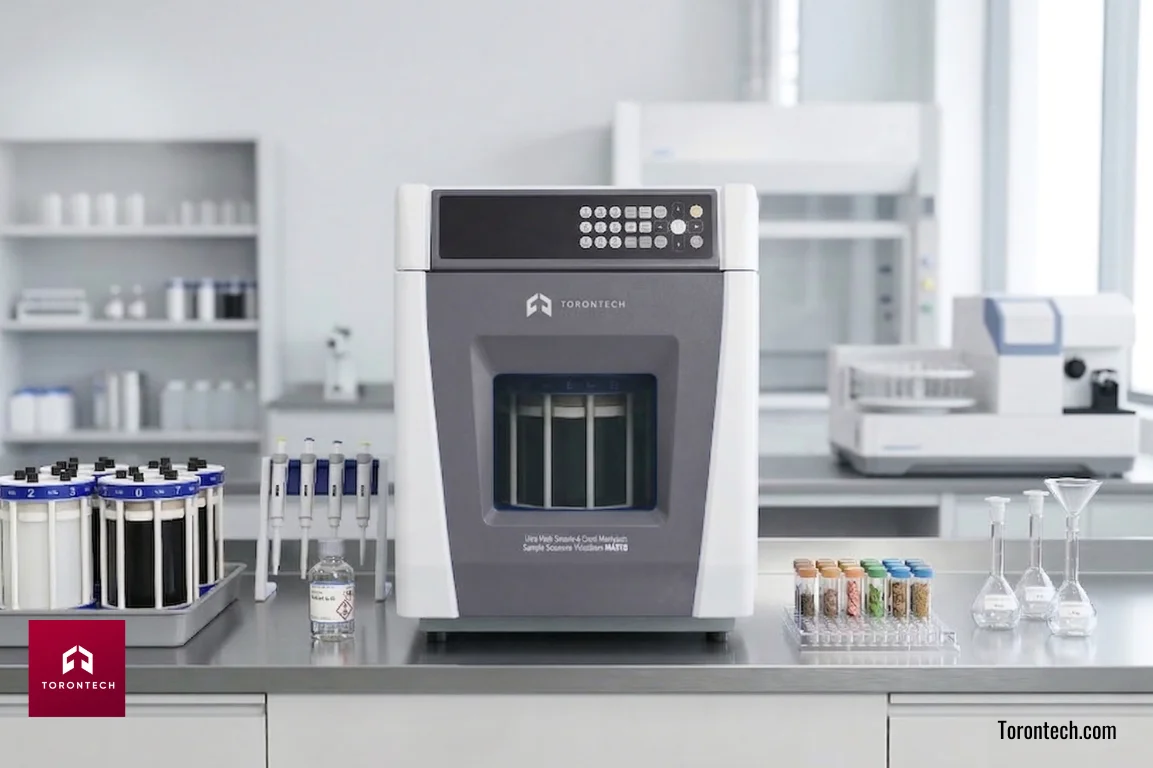
Some setups are great for a small batch of 16 jars, which makes sense if a facility processes a few specialized water samples a day. But if a massive commercial lab is staring down hundreds of daily tests, they are going to want a high-capacity machine like the Ultra High Throughput Closed Microwave Digestion / Extraction Workstation MASTER that can knock out 100 samples in one go.
2. How Mean is Your Sample?
Dirt and oil are two totally different beasts. If a team only runs clear drinking water, a basic setup gets the job done. But if they are dealing with samples that are notoriously hard to break down, such as vulcanized rubber, we’d suggest putting your money into a high-pressure, leak-proof system that won't give up halfway through. Selecting a vessel design that is specific to your target sample type and reactivity is vital for keeping things safe.
3. Software and Power Balance
We think you should hunt for software that feels like using a smartphone. Features like being able to watch the process on video are a massive help. Furthermore, knowing how to choose a microwave digester means selecting equipment that balances power settings, digestion time, and moisture content can optimize both safety and efficiency.
4. The Real Price Tag
It’s not just about what you pay on day one. We’d tell you to think about how long the jars last and how fast the machine cools down. Compliance with regulatory standards, ease of operation, and total cost are all major factors in selecting the right unit for your specific industrial needs.
Leveling Up Your Lab with Torontech
At Torontech, we know the struggle is real for modern labs. We’ve spent over 20 years helping folks out across North America and beyond, based on one simple idea: you shouldn’t have to settle for second-best gear just to keep your budget in the green.
Our lineup is packed with high-tech, wallet-friendly solutions that are built to handle whatever you throw at them.
Torontech Microwave Digesters: At-a-Glance Selection Matrix
| Model | The Perfect Fit | Why We Love It | Capacity |
|---|---|---|---|
| TANK 40 | Your daily bread-and-butter lab work. | It uses two microwave sources to make sure the heat is perfectly even every time. | Up to 40 jars |
| TANK ECO | When your samples are being particularly stubborn. | It’s a 3-in-1 tool that handles extractions and synthesis too, without leaking a drop. | Varies |
| MASTER | For the labs that never stop moving. | It spins in one direction to keep things smooth and has over 1,000 built-in recipes. | 16 to 100 jars |
Optimizing Your Laboratory Operations with Torontech
We’re convinced that putting your money into the right prep gear is the smartest move you can make for your results and your team’s sanity. By picking top-tier safety and matching the machine to your workload, you’ll have your lab running like a well-oiled machine for years.
Ready to swap your old equipment for something that actually works? Explore Torontech’s full range of microwave digestion systems today and let our team help you find the one that fits your laboratory's unique demands.
References:
- Garitta, J., Fialho, L., De Oliveira, G., Maria, R., Pirola, C., Ferreira, A., & Nóbrega, J. (2020). Microwave-Assisted Acid Digestion: Evaluation of Reaction Vessel Design and Performance. Journal of the Brazilian Chemical Society.
- Lao, Y., Qu, C., Zhang, B., & Jin, H. (2022). Development and validation of single-step microwave-assisted digestion method for determining heavy metals in aquatic products: Health risk assessment. Food chemistry, 402, 134500.
- Liu, J., Li, H., Liu, Z., Meng, X., He, Y., & Zhang, Z. (2022). Study on the process of medical waste disinfection by microwave technology. Waste management, 150, 13-19.