Comparing Preparative vs. Analytical Ultracentrifuges
Getting your centrifugation equipment right is a massive win for your lab.
The choice between a preparative and an analytical setup changes how your work flows and how spot-on your data stays. We want to help you pick the perfect tool so you can get the best results every single time.
Here is the full breakdown on how these two heavy-hitters stack up so you can spend your budget with total confidence.
Key Takeaways
- The Heavy Lifters: Preparative setups focus entirely on separating massive volumes of physical material so your team has a highly purified sample ready for the next phase of work.
- The Diagnostic Cameras: Analytical systems use built in light scanners to watch your molecules in real time, capturing incredibly detailed data about their behavior rather than collecting a physical clump.
- The Winning Combination: The most successful facilities often pair these two technologies, using the deep insights from analytical runs to completely optimize their high capacity preparative batches.
The Role of Preparative Ultracentrifugation
A preparative setup is basically your go-to for cleaning things up and pulling out the good stuff. These machines are primarily used for purifying macromolecules, such as proteins and nucleic acids, by separating them based on physical traits like size, density, and molecular weight.
It’s built to grab cells, tiny cell parts, and viruses, often handling larger sample volumes for isolation purposes. By using tricks like "pelleting" or "density gradients," these machines let you grab exactly what you need so you can use it for your next big experiment.
Primary Isolation Methods
To get that perfect isolation, these workhorse models usually do things two ways:
1. The Pelleting Method
You spin things until the heavy bits get shoved to the bottom of the tube. It’s the move we always suggest if you just need to harvest a bunch of cells or viral bits as fast as possible. Think about a lab crew needing to quickly pull intact cells out of a messy biological broth; this is the exact technique they rely on to get it done.
2. The Gradient Method
You layer your sample over a special liquid. The bits travel through until they find their perfect match in density. We’re convinced that if you want your samples to be sheer perfection in terms of purity, this is the only way to go.
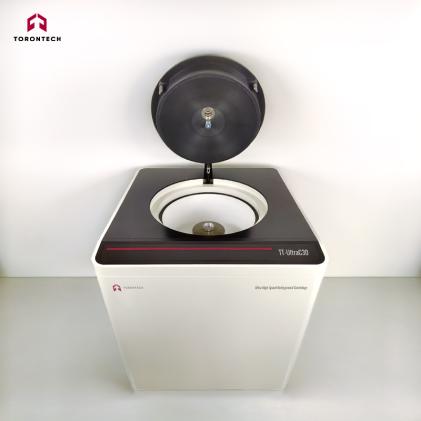
For instance, if researchers are trying to isolate highly purified exosomes to build targeted therapies, they depend on this layered approach to pull out the exact right material. Sturdy and dependable systems like our TT-UltraC30 make these tricky layers feel like a breeze.
For labs that need to process a mountain of material at once, we see high-capacity systems as the absolute backbone of getting work done. The Torontech TT-UltraC30 Ultra-High Speed Refrigerated Centrifuge is a total beast for this, handling up to 6 liters while spinning with enough force to hit 110,000 x g. In our view, having that much room and that much "oomph" is exactly what you need to turn a small idea into a full-scale production.
Related article: What is an Ultracentrifuge: A Complete Guide
The Role of Analytical Ultracentrifugation (AUC)
An analytical setup is a whole different ball game; it is more like a super-smart diagnostic tool. You aren't trying to recover a physical sample here; instead, you are studying the properties of macromolecules and complex mixtures. You’re watching your tiny molecules do their thing while they are actually spinning.
We see these machines as total lifesavers because they reveal the raw truth about what’s in your tube. Here is a breakdown of what makes them so essential:
- Real-Time Scanning: They are packed with fancy light-scanning systems that keep an eye on the sample every single second of the run.
- High-Precision Metrics: This setup provides detailed info about molecular weight, interactions, and sedimentation behavior at extremely small scales.
- Live Interaction Tracking: Consider a pharmaceutical team testing a brand-new antibody medication. They use these specific scanners to watch how their medication binds to a target on the fly, confirming it actually behaves correctly before they risk starting costly clinical trials.
- Advanced Material Design: Analytical methods even make it possible to plan out the exact ordering of nanoparticles, making them absolutely necessary for high-end nanomaterials research.
Technical Comparison: Preparative vs. Analytical
To get a clear picture of which one fits your daily grind, check out how they stack up:
| The Feature | Preparative Setup | Analytical Setup (AUC) |
|---|---|---|
| Primary Goal | Physical separation and purification. | Real-time observation and characterization. |
| Detection System | None (you look at it when the spin is over). | Fancy light scanners (UV or Interference). |
| Capacity | A ton (up to 6L at once). | Barely anything (tiny drops). |
| Output | A solid clump or a clean layer of liquid. | Graphs and charts showing molecular profiles. |
| Application | Making vaccines or scale-up purification. | Protein aggregation or molecular insights. |
Functional Differences
The biggest thing to remember is the end goal.
We like to call the preparative models the "heavy lifters" because they are aimed at fractionation or purification. The analytical models are more like "high-tech cameras" that give you quantitative analysis that can actually guide and improve your preparative protocols.
Capacity and Speed Metrics
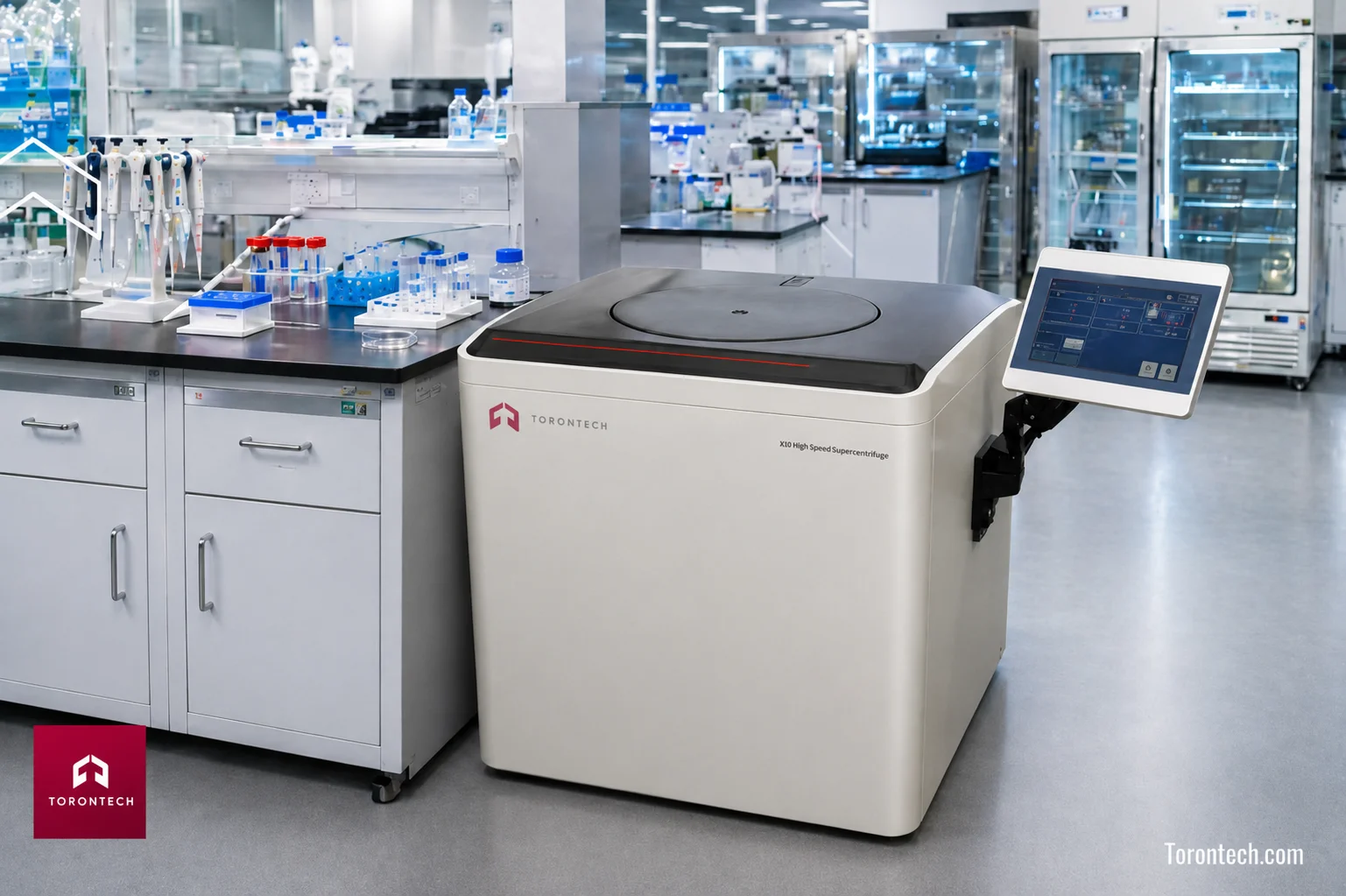
Preparative models are built for volume. If you’re working with a lot of viruses or genetic material, we think systems like the TT-UltraC30 are the way to go because they’ve got a dozen different rotor options. Analytical models are the opposite; they only take tiny amounts because they’re obsessed with getting every single data point exactly right.
Optical Monitoring Capabilities
From what we’ve seen, having those built-in "eyes" is the biggest hardware difference.
Preparative machines are "blind" while they run; you only see the result when the timer dings. Analytical machines let you watch the whole show as it happens, which is invaluable for revealing phenomena like sedimentation efficiency reduction due to the inverse Boycott effect.
Performance Analysis
Advantages of Preparative Systems
- The Upside: You can fit a massive amount of stuff, pick from a huge list of rotors, and it’s basically the only way to get a physical sample for your next step. Plus, it’s usually way easier on the budget for the amount of work it does.
- Downside: You don't get those live updates on how your molecules are interacting while the motor is humming.
Advantages of Analytical Systems
- The Upside: We’d call this the absolute "gold standard" for figuring out how heavy a molecule is without having to use a middleman.
- Downside: They are super niche, you can't process much at once, and the data can be a bit of a headache to figure out. Plus, they usually cost a pretty penny.
Choosing the Right System for Your Facility
If you are trying to choose, we say focus on what you're actually trying to achieve:
- Do you need a physical sample for your next move? If you’re trying to grab DNA or isolate a specific virus for purification, you’ve got to go with a Preparative Ultracentrifuge.
- Do you just need to know what a molecule is doing? If you have to prove that a protein is clumping together or find its exact weight, the Analytical tool is your best bet.
- Operational Sustainability: We’re convinced that saving on your electric bill isn't just a "nice-to-have" anymore. You should definitely look for machines that stay cold without eating up all your electricity.
In a lot of the high-end labs we work with, they actually use both. They use analytical methods to optimize the conditions for their preparative runs, ensuring every spin is as effective as possible.
Featured Solution: The High-Capacity TT-UltraC30
If you need a solid and dependable, high-capacity machine for grabbing nanoparticles or cleaning up viruses, we built the Torontech TT-UltraC30 to be a total standout.
This big, refrigerated preparative machine brings some serious heat:
- High Performance: Hits 31,200 RPM and pulls with 110,000 x g force.
- Massive Loads: We made sure it can handle 6 liters in one go so you aren't waiting around all day.
- Efficiency: We’re pretty stoked about the smart cooling that cuts your energy use by over 45%; it’s just better for your wallet and the planet.
- Ease of Use: It recognizes its own rotors and has a big 10-inch touch screen that’s a total joy to use.
- Total Flexibility: Works with 12 different rotors so it can handle pretty much whatever you throw at it.
Choose the best centrifugation setup with Torontech! We’ve got the dependable gear and the know-how to make sure your research stays on track. View TT-UltraC30 specifications now!
References
- (2019). Centrifuge, Ultra (High Speed). Compendium of Biomedical Instrumentation.
- (2013). High-Performance Automation and Centrifugation Preparation of Carbon Nanotubes for Analytical Ultracentrifugation.
- Minton, A. (1989). Analytical centrifugation with preparative ultracentrifuges. Analytical biochemistry, 176(2), 209-16.
- Wang, S., Ding, Z., Wang, S., Hu, B., Wu, E., Xia, C., & Chen, M. (2024). Approaching Effective Differential Centrifugal Fractionation by Combining Image Analysis with Analytical Ultracentrifugation. Langmuir : the ACS journal of surfaces and colloids.
- Xu, X., & Cölfen, H. (2021). Ultracentrifugation Techniques for the Ordering of Nanoparticles. Nanomaterials, 11.