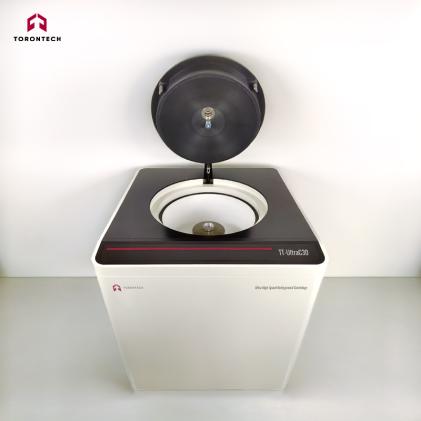
What Is an Ultracentrifuge: A Complete Guide
Are you still struggling with standard equipment that simply cannot isolate those tiny viral bits?
We believe that for high-stakes research, you need significantly more than just a basic spinner to get the job done. Operating these high-velocity instruments is an absolute joy because every square inch is rock-steady and the physical pull is remarkably intense.
If you want sheer perfection in your samples without any mechanical jitter, let us look at why these machines are the real workhorses of the modern lab.
Key Takeaways
- Massive physical pull beats mere speed: Obsessing over revolutions per minute is a frequent blunder. The actual pulling force applied to your sample is the true metric that guarantees exceptionally pure end products.
- Taking liquid separation to the absolute extreme: Everyday equipment handles routine prep perfectly fine, but capturing microscopic elements absolutely demands the intense physical stress of an ultra-fast spinning instrument.
- Essential hardware for high-level medical research: These top-tier systems generate an artificial pull well beyond 100,000 x g to cleanly isolate tiny building blocks like viral particles and genetic material.
- Scaling up your daily operational output: Premium options like the Torontech TT-UltraC30 fill the gap between extreme pulling force and large-scale facility needs by delivering 110,000 x g alongside a spacious six-liter processing volume.
What is an Ultracentrifuge?
Basically, one of these machines is a highly specialized, ultra-fast spinning instrument built to whip rotors around at speeds that create a massive artificial pulling force. While standard units might create a pull in the tens of thousands of g, we think a real high-speed system is something that pushes way past 100,000 x g.
In fact, top-tier units are designed to reach speeds up to 150,000 rpm and forces exceeding 1,000,000 x g (, 2019).
Analytical vs. Preparative Methods
In our time spent assisting various laboratories, we see two main ways of getting the work done.
You have the "Monitor and Detect" method (Analytical), which uses light-tracking sensors to watch how things settle out in real-time. This is essentially used to characterize mass, size, shape, and molecular interactions in a solution.
Then you have the "Isolate and Purify" method (Preparative), which acts as the heavy-lifting workhorse used to physically pick out and clean up tiny macromolecules or particles for actual medical production based on their size, density, and mobility.
We will not list all the minute details here. If you want to get the complete picture on how these two methods stack up against each other, we highly suggest reading our highly detailed article comparing analytical and preparative units: Comparing Preparative vs. Analytical Ultracentrifuges
The Science of Sedimentation
We believe that truly getting the most out of your lab separation requires a solid grip on the actual physics at play, rather than just knowing which buttons to tap. The whole process is based on a delicate balance. The physical force pushes particles outward (sedimentation), while natural spreading tries to push them back (diffusion).
For tiny components like DNA or viruses, normal gravity is far too weak to win against the random jiggling that keeps them floating in a liquid. By creating a massive artificial pull, we force particles to move based on their size, shape, density, fluid thickness, and the speed of the rotor.
- Mass and Weight: In our view, this is the most straightforward part. The heavier pieces simply hit the bottom much faster.
- Density: We find that layering liquids is one of the most clever tricks in science, letting bits move through a liquid until they hit a spot where they match the thickness of the fluid around them. A textbook illustration of this is running a thick, heavy sugar mixture to pull apart specific fat-carrying proteins from human blood fluid.
- The Svedberg Unit (S): We often see people getting mixed up by this number. It simply shows how a tiny bit acts when it is being spun around. In our view, knowing these ratings is the key to predicting how cell parts will separate. A perfect hypothetical example is splitting apart the protein-building blocks of bacteria (which hit the 70S mark) from human cell parts (which hit the 80S mark).
Optimizing Performance: RPM vs. RCF
One of the most common blunders we see is people obsessing over RPM. While that measures how fast things turn, we believe the RCF (Relative Centrifugal Force) is the only number that really gets the results you want.
That force is decided by the speed as well as how wide the rotor is. In our opinion, a machine does not strictly need the highest speed on the market if the rotor shape is built just right. For example, we put together the TT-UltraC30 to turn at 31,200 RPM, yet it hits a massive 110,000 x g.
Plus, we think a solid air-sucking vacuum setup is a requirement for serious work. At these speeds, air rubbing against the rotor can actually boil a sample. We use a smart vacuum system because we believe the hardware should stay on top of keeping your research safe.
Critical Rotor Selection
In our perspective, the rotor is the actual soul of the machine. Picking the wrong one can lead to a completely disappointing yield:
- Fixed-Angle Rotors: These hold tubes at a stiff, unmoving angle. We think these are the best choice for quickly grabbing viruses or nanoparticles because they can take the most intense force. A standard laboratory situation would be blasting cellular waste to the absolute bottom of the tube, leaving perfectly clean protein liquid floating right at the top.
- Swinging-Bucket Rotors: These hinge outward until they are totally flat. In our view, these are a necessity for layering work, making sure that DNA or RNA forms xrisp, flat bands. If a team needs to run a heavy salt chemical mixture to pull out perfectly flat strips of circular bacterial DNA, this is the exact hardware they reach for.
High-Speed Centrifuge vs. Ultracentrifuge
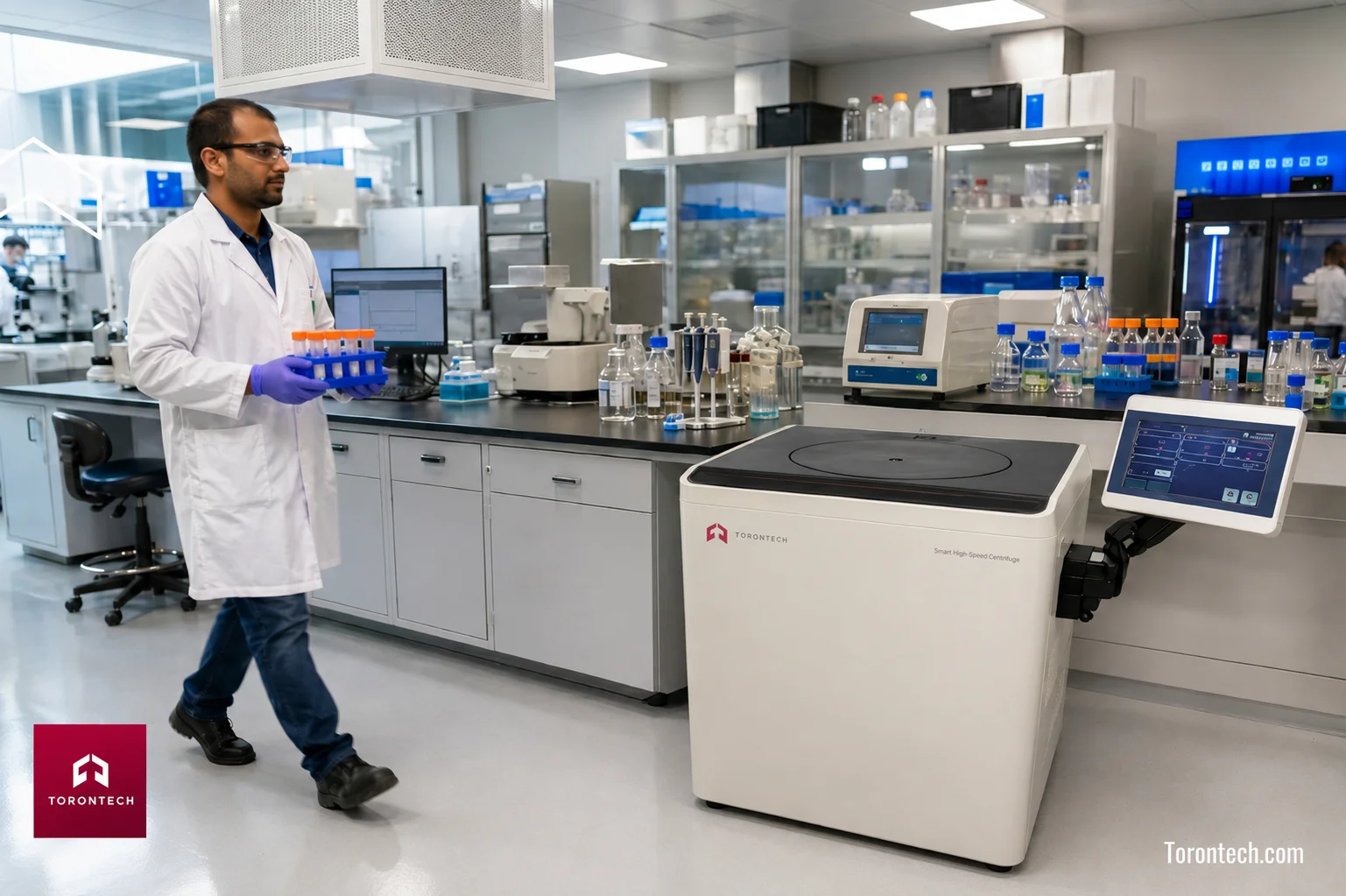
Before we look at the hardware differences, we think it makes sense to clear up the actual contrast between the everyday spinning process and the extreme, super-charged spinning process. Regular spinning (centrifugation) is the general technique of separating components using centrifugal force, and it includes low-speed, high-speed, and ultra-speed levels.
Standard devices like the Low-Speed Centrifuge PRO 1406/1406R rely on a moderate amount of artificial gravity to pull apart fairly large, bulky stuff. Think about separating whole red blood cells from clear blood fluid. It is a highly useful daily lab chore.
Moving a step up, models like the High-Speed Centrifuge PRO 2418/2418R and the High-Speed Centrifuge PRO 2415/2415R generate up to roughly 20,000×g. These units are highly effective for routine serum preparation and can remove excess lipids (lipemia) almost as effectively as top-tier models without clinically significant differences.
But ultra-level spinning (ultracentrifugation) is an entirely different beast. It is the high-end subset of this process. We view it as taking that exact same physical concept and cranking the physical pulling force to such an incredibly extreme level that you completely overcome the microscopic random bouncing that keeps completely invisible bits floating around.
If you are moving from whole cells to those tiny viral bits or isolating exosomes, we think the investment in an ultra-level machine is an absolute requirement.
| Feature | High-Speed Centrifuge | Ultracentrifuge |
|---|---|---|
| Max Pull (RCF) | Up to ~20,000 x g | 100,000+ x g |
| Main Jobs | Routine serum prep, lipemia removal, whole cells, large debris. | Very small vesicles, viruses, DNA/RNA, detailed biophysical characterization. |
| Air Vacuum | Rarely needed | Totally essential |
| Keeping Cool | Simple chilling | Super-charged icy cooling |
Think about a typical laboratory situation where a team keeps hitting a frustrating wall trying to grab pure cellular messenger bubbles (exosomes) using a standard benchtop unit.
The basic gear simply cannot pull hard enough, leaving them with a muddy mix of junk. By swapping over to the massive pulling force of an ultracentrifuge, a team in that exact situation instantly fixes their purity issues and gets the exact clean sample they need.
Core Laboratory Applications
We are constantly impressed by how our clients use these machines to push the limits of what is possible. By utilizing intense forces, researchers can precisely target viruses, viral particles, proteins, protein complexes, lipoproteins, RNA, plasmid DNA, and nanoparticles.
- Protein Purification: We see this as the main building block for making new medicines.
- Cellular Fractionation: In our view, this is the best way to pick out the tiny components inside a cell to see how they function.
- Virology Research: With the current focus on vaccines, we believe these machines are the gold standard for getting the clean virus bits needed for medical research. A prime scenario is separating highly specific delivery vehicles, like lentiviruses or adeno-associated viruses, for advanced genetic therapies.
- Nucleic Acid Isolation: We think using liquid layers is the most dependable way to get the amounts of material needed for genetic mapping.
- Materials Science: We are seeing a big jump in use for cleaning up tiny polymers and particles in the high-tech materials space. A common industrial use case is picking out tiny gold particles of a highly specific diameter so they act exactly as intended in medical testing kits.
Strategic Operational Benefits
In our experience, upgrading your lab's spinning capabilities gives you benefits that go way beyond just being fast.
- Superior Sample Purity: We think being able to pick out bits that are only slightly different in density is what makes world-class research stand out.
- Thermal Protection: Because all that spinning creates heat, we consider top-tier cooling to be a safety requirement for fragile proteins.
- Capacity for Growth: We often see labs having a hard time with tiny amounts of liquid. For mid-tier operational needs, stepping up to a High-Capacity & High Speed Centrifuge PRO 2515/2515R makes perfect sense to handle larger daily batches. However, for those requiring extreme gravitational pull at scale, being able to spin six liters at once in a full ultracentrifuge is a total shift in how work gets done for busy facilities.
Related article: Choosing the Best Floor or Benchtop Ultracentrifuge
Safety and Compliance Standards
We have a strong opinion that safety features should never be seen as extra stuff. One of these machines holds a massive amount of moving energy, and we believe it is our job to build in every possible guard.
- Intelligent Safety: We think things like recognizing the rotor automatically and spotting if things are off-balance are essential for stopping a machine breakdown.
- Rotor Lifecycle Management: We find that checking for worn-out metal is often skipped. We suggest using smart systems that keep a log of every run so you know when a rotor is getting tired.
- Regulatory Compliance: In our view, gear used for making medicine has to meet global safety stamps to pass any official check-up.
Selecting the Right Ultracentrifuge
When you are picking out a new tool, we suggest looking past the flashy ads. In our opinion, you should focus on the total pulling force, how well the vacuum works, and if it is easy to maintain.
We built the UltraCentrifuge - Ultra-High Speed Refrigerated Centrifuge TT-UltraC30 to be what we consider the perfect answer for modern labs that need to process a huge amount of material. It fills the gap between raw muscle and large-scale capability.
Why we think the TT-UltraC30 is the top choice:
- Capability: 110,000 x g handles the toughest jobs you can throw at it.
- Volume: 6 Liters of space lets you grow your work in a significant way.
- Reliability: Our cooling system keeps things at a frosty 4°C even when the machine is working its hardest.
- Safety: Built with smart tech that recognizes its own parts and stays steady during operation.
We believe that by putting resources into versatile, high-capacity gear, labs can set themselves up for the next wave of scientific breakthroughs.
References
- Gandhi, K., Sharma, N., Gautam, P., Sharma, R., Mann, B., & Pandey, V. (2022). Centrifugation. Springer Protocols Handbooks.
- Castro-Castro, M., Candás-Estébanez, B., Esteban-Salán, M., Calmarza, P., Arrobas-Velilla, T., Romero-Román, C., Pocoví-Mieras, M., & Aguilar-Doreste, J. (2018). Removing Lipemia in Serum/Plasma Samples: A Multicenter Study. Annals of Laboratory Medicine.
- Jeraiby, M., Moshi, J., Dar, S., Habibullah, M., Yahia, M., Abdalla, S., Balkhtab, R., Saigh, R., & Burayk, N. (2025). Comparative Evaluation of Centrifugation Speed and Its Impact on Diagnostic Accuracy. Journal of Clinical Laboratory Analysis.
- Wei, H., Qian, X., Xie, F., & Cui, D. (2021). Isolation of exosomes from serum of patients with lung cancer: a comparison of the ultra-high speed centrifugation and precipitation methods. Annals of Translational Medicine.
- Xu, X., & Cölfen, H. (2021). Ultracentrifugation Techniques for the Ordering of Nanoparticles. Nanomaterials.