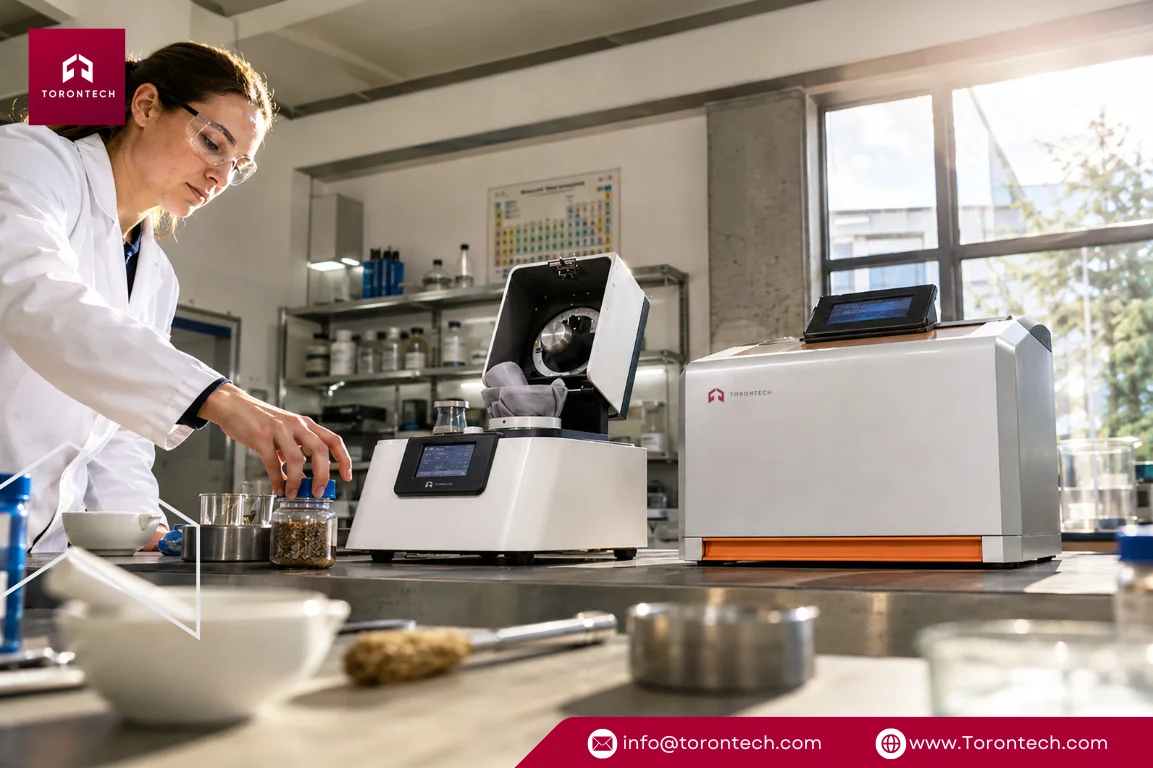
Mortar Grinder vs Ball Mill: Best Lab Prep Equipment
Your analytical instruments perform at their absolute best when fed perfectly prepared starting samples. Processing a flawless batch practically guarantees highly accurate, reliable results.
Selecting the ideal grinding system secures your budget and streamlines your operations. To help you make the perfect choice, we compared the leading options, mortar grinder vs ball mill, directly below.
The Core Comparison: Ball Mill vs Mortar Grinder
From our perspective in the industry, putting money into the wrong system for the specific materials you process is an incredibly expensive mistake. To help you weigh your options efficiently, we summarized the core physical differences right here:
| Feature | Mortar Grinder | Ball Mill |
|---|---|---|
| Grinding Mechanism | Heavy pressure and continuous surface friction (shear) | High speed kinetic impacts, abrasion, and friction |
| Best For | Soft, fragile, cohesive, heat sensitive, or highly adhesive materials | Hard, dry, brittle, or extremely abrasive materials |
| Typical Materials | Food products, soils, biological cells, dried plants | Metal ores, hard alloys, rigid ceramics, rocks |
| Sample Visibility | Open design; allows real time viewing and continuous feeding | Sealed jars; requires halting the run to inspect the sample |
| Cleaning | Straightforward and fast; easy to access and wipe down | Highly demanding (requires scrubbing jars and multiple grinding spheres) |
| Heat Generation | Low; gentle action helps preserve heat sensitive components | Significant energy intensive heat buildup; potential to alter sensitive samples |
| Control & Scale | Small batches, laboratory work, or careful sample preparation | Broad range, from lab to massive industrial throughput |
| Typical Product | Controlled, moderate fineness | Very fine to ultrafine sub micron powders |
| Featured Torontech Models | Mortar Grinder MG200 | High Energy GT600 Multi, Micro GT300, Planetary BM Series |
What is a Mortar Grinder?
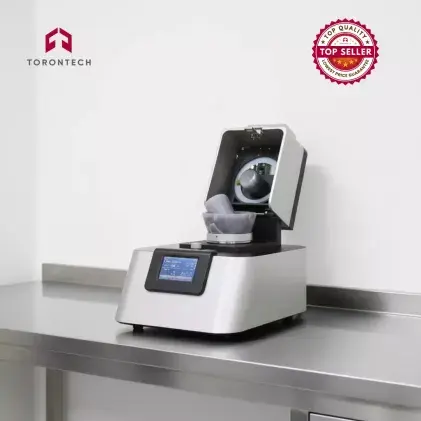
Think of an automated mortar grinder as a highly advanced, motorized version of the classic manual mortar and pestle. It operates by compressing and shearing your material between a rotating bowl and a heavy duty pestle, utilizing a combination of heavy pressure and continuous smearing friction. Recent studies confirm that this shear dominant, low heat process is particularly excellent for preserving heat sensitive components in food materials and careful sample preparation.
Related article: How Laboratory Mortar Grinders Prevent Contamination
For instance, systems like our Mortar Grinder MG200 feature fully adjustable vertical pestle pressure alongside adjustable scraper positions. You can dial in the exact physical force required for your specific sample consistency. The most advanced setups constantly return stray particles to the main grinding path, ensuring an incredibly uniform, homogeneous powder.
In fact, research demonstrates that automated mortar mills can produce finer whole wheat flour simply by increasing pestle speeds, which strongly impacts particle size distribution and functional properties.
To picture how this works in practice, consider trying to process oil rich cocoa beans. If you hit them with high speed impacts, you get a clumpy, unusable mess. However, the heavy pressure and continuous smearing action of a mortar gently coax those fatty beans into a beautifully smooth paste.
Furthermore, the mortar and pestle on units like the MG200 can be swapped out easily without using any hand tools, keeping the cleanup process fast and highly efficient.
What is a Ball Mill?
A ball mill operates on an entirely different principle, relying primarily on aggressive kinetic impact force and abrasion. These tumbling devices actually evolved from historical mortar and pestle tools and are now the standard for fine and ultrafine grinding.
You place your sample inside a securely sealed cylindrical jar along with heavy grinding media, such as thick stainless steel or agate spheres. As the jar shakes or rotates at high speeds, these heavy spheres repeatedly collide with the sample.
Think about processing a solid chunk of rigid quartz. The gentle friction of a mortar will barely scratch the surface. However, inside a ball mill, the repeated, intense physical strikes from those heavy spheres batter the quartz until it quickly shatters into fine dust.
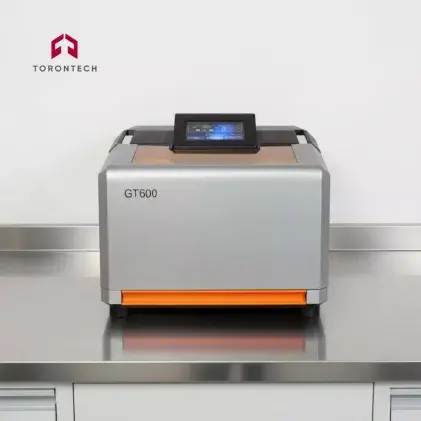
If you require intense crushing force for highly resilient materials, this energy intensive mechanism is essential. For example, setups like our High Energy Ball Mill GT600 Multi drive speeds up to 2100 rpm, battering rigid materials down to an ultrafine limit of 100 nm or less.
Research comparing bench scale ball mills to manual mortars for carbon materials shows that the shock and fracture mechanism of ball mills creates entirely different surface area and chemistry patterns compared to the shear force of a mortar.
Industry Specific Applications: Who Uses What?
Based on our interactions with laboratories worldwide, we observe a clear divide in how different industries select their milling equipment.
Food & Agriculture
A technician needing to test damp, fibrous plant roots or sticky yeast cells will find that mortar grinders smear and blend the organic matter perfectly. The ability to swap in different scraper materials, such as Beech wood or Polyurethane on the MG200, prevents sticky residue from ruining the run.
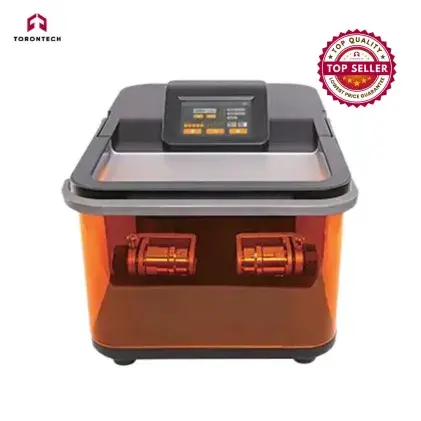
Alternatively, if a lab runs high throughput DNA extraction, they skip the mortar entirely and load up a system like our Micro Ball Mill GT300, which blasts through 2 x 96 samples in under three minutes.
Pharmaceuticals
Researchers homogenizing active ingredients heavily favor mortar grinders to avoid generating excess heat that could degrade sensitive chemical compounds. Operators frequently rely on specialized PTFE scrapers for cryogenic grinding using liquid nitrogen to keep materials extremely cold and structurally intact.
Mining & Metallurgy
Facilities tasked with breaking down highly resistant, solid mineral ores rely entirely on ball mills, because those aggressive kinetic strikes easily crack apart rigid structural formations. Research shows that ball milling is absolutely central to grinding minerals and cement, even though it consumes high energy.
Furthermore, studies confirm that ball mills efficiently disaggregate soils and rocks for geotechnical testing, providing far more complete disaggregation than manual mortar processing.
Advanced Materials Research
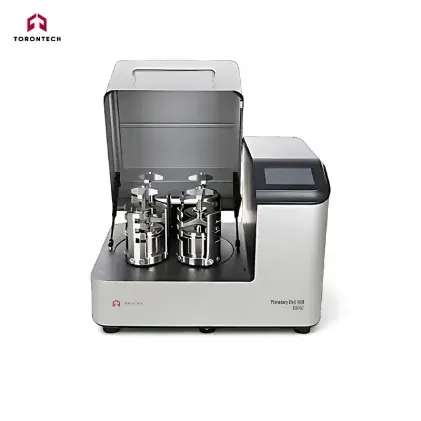
Technicians synthesizing microscopic particles utilize the high energy collisions of systems like our Planetary Ball Mill BM Series. These units incorporate automatic direction reversal, preventing material agglomeration while forcing physical changes at the atomic level. While advanced stirred mills often outperform conventional ball mills in energy efficiency for ultrafine grinding, they still fundamentally rely on the ball mill principle.
Throughput, Volume, and Scalability
Sample volume and operational speed play a massive role in equipment selection.
From our standpoint, automated mortar grinders act as the perfect fit for precise control over small to medium batches. Because the grinding chamber stays completely open, your team can monitor the physical changes in real time.
We recommend looking for setups that comfortably accommodate starting volumes from 10 mL up to 200 mL, alongside variable speed options typically ranging from 50 rpm to 130 rpm. A major operational advantage of the MG200 is its continuous feed opening; you can pour in rough samples up to 15 mm right through the lid while the machine actively runs.
Depending on their configuration, ball mills process everything from tiny micro samples to massive industrial batches. However, checking the physical progress of your sample requires stopping the run entirely, opening the sealed jar, and waiting for the dust to settle.
Total Cost of Ownership (TCO) and Maintenance
Acquiring laboratory equipment involves looking way past the initial price tag. Ongoing upkeep and consumable replacements heavily impact your facility's long term financial health. We always encourage decision makers to evaluate how these systems physically wear down over years of continuous operation.
Because ball mills rely on high velocity collisions, the internal components naturally experience rapid physical degradation. Consider the regular upkeep of buying specialized, heavy duty Zirconia grinding spheres every few months after they wear down from constant, aggressive impacts. That specific expense adds up surprisingly fast.
Conversely, automated mortar grinders apply force through smooth, continuous friction. The internal tools are spared from violent, sudden impacts, which leads to a significantly longer lifespan. Wiping down the open, accessible bowl keeps those ongoing operational bills comfortably low.
Modern systems also incorporate features like a magnetic switch lock, meaning the machine simply will not run unless the lid is securely closed, drastically reducing operator accidents and equipment damage.
Which One Should You Choose?
The best choice ultimately depends on your sample sensitivity, target fineness, and required throughput rather than one tool being universally better than the other. Breaking it down by your daily workflow helps clarify the best path forward:
When to Choose a Mortar Grinder: Soft, Pasty, or Adhesive Samples
If a facility frequently works with moist soil samples, adhesive chemical pastes, sticky food materials, or soft organic tissue, putting those materials into a ball mill usually results in a thick, unusable crust stuck to the inner walls, stopping the process entirely.
Here, the mortar grinder acts as the perfect, frustration free fix. The gentle, continuous pressure and smearing friction are ideal for creating smooth pastes or uniform powders without generating excessive heat.
If this matches your laboratory workflow, we invite you to evaluate our Mortar Grinder. Engineered to process a wide variety of materials, this system ensure highly repeatable results while keeping your operators perfectly safe.
Read more: How to Choose Laboratory Mortar Grinders Effectively
When to Choose a Ball Mill: Hard, Resilient, or Highly Abrasive Materials
If a research team needs to reduce solid titanium alloys, hard rocks, or rigid ceramics into microscopic particles, the gentle smearing friction of a mortar lacks the necessary physical force.
In that specific scenario, the intense, shattering impacts of a ball mill become absolutely essential to batter these tough samples down to an ultra fine dust. If your workflows demand aggressive, high impact force for harder materials, explore our extensive lineup of High Performance Ball Mills to find the right high energy solution for your facility.
Partner with Torontech for Cost-Effective Prep
At Torontech, we hear the constant pressure modern laboratories face to deliver highly precise analytical data while keeping a tight grip on operational budgets. As a leading North American supplier, our primary focus is providing cost effective solutions and innovative technologies that never compromise on long term reliability.
Visit our Test & Analytical Division or contact our technical experts today to request a custom quote. Let Torontech supply the reliable, cost effective equipment your laboratory needs to succeed.
References (Click to expand)
- Abulikemu, G., et al. (2023). Role of grinding method on granular activated carbon characteristics. Carbon trends, 11, 1-12.
- Bearce, R. G., & Rinehart, R. V. (2024). Evaluating Methods for Ball Mill Disaggregation of Slakable Rock and Fine-Grained Soil. Geotechnical Testing Journal.
- Elbendari, A. M., & Ibrahim, S. S. (2025). Optimizing key parameters for grinding energy efficiency and modeling of particle size distribution in a stirred ball mill. Scientific Reports, 15.
- Huang, L.-P. (2023). Discussion and application of ball mill in preparation of particle size samples of fine grained sedimentary rocks. Journal of Physics: Conference Series, 2499.
- Kaya, Y., Kobya, V., Mardani, A., Mardani, N., & Beytekin, H. E. (2024). Effect of Grinding Conditions on Clinker Grinding Efficiency: Ball Size, Mill Rotation Speed, and Feed Rate. Buildings.
- Kumar, A., Sahu, R., & Tripathy, S. K. (2023). Energy-Efficient Advanced Ultrafine Grinding of Particles Using Stirred Mills—A Review. Energies.
- Lee, H., Kim, K., & Lee, H. (2019). Analysis of grinding kinetics in a laboratory ball mill using population-balance-model and discrete-element-method. Advanced Powder Technology.
- Li, D., Zeng, D., Liu, Z., Zhang, M., & Li, F. (2024). Improving grinding efficiency and performance of new impeller type ball mill using discrete element method simulations and Taguchi method. International Journal of Applied Ceramic Technology.
- Martelli, S., & Di Nunzio, P. E. (2024). Powder ball milling: An energy balance approach to particle size reduction. Journal of Materials Research, 40, 292-308.
- Moon, J., Moon, Y., & Kweon, M. (2025). The Effects of Milling Conditions on the Particle Size, Quality, and Noodle-Making Performance of Whole-Wheat Flour: A Mortar Mill Study. Foods, 14.
- Santosh, T., Eswaraiah, C., Soni, R. K., & Kumar, S. (2023). Size reduction performance evaluation of HPGR/ball mill and HPGR/stirred mill for PGE bearing chromite ore. Advanced Powder Technology.