How to Choose Laboratory Mortar Grinders Effectively
How much faster could your laboratory team deliver perfect analytical results if your sample preparation was flawlessly consistent every single time? We honestly believe that starting with a perfectly uniform sample is the most critical step in your testing process, even though it is the solid ground that all your analytical numbers stand on.
Sorting out what to know when buying lab mortar grinders saves your team a ton of wasted hours, eliminates contamination risks, and keeps your budget-approvers happy. Here is our straightforward checklist on how to choose laboratory mortar grinders that will actually do exactly what you need them to do.
Key Takeaways
- Match the Machine to Your Industry: We highly recommend securing a grinder with enough raw muscle to handle the specific demands of your sector, whether that is delicate pharmaceuticals or heavy construction materials.
- Demand True Versatility: Look for a setup that easily switches between dry pulverizing, wet grinding, and cryogenic freezing so you never have to force uncooperative samples.
- Prioritize Capacity and Purity: Find a unit that handles both tiny 10 mL drops and massive 200 mL batches. You also need the ability to select specific bowl materials (such as Agate or Alumina) to prevent ruined, contaminated samples.
- Insist on Digital Automation: Manual processing causes human error. Getting a machine with a smart digital touch display and programmable settings guarantees exact consistency on every single shift.
1. Match the Machine to Your Industry Requirements
Buyers almost always need machinery that is verified to handle their exact, everyday workspace requirements. We frequently see laboratories trying to use cheap, weak tools for highly specific, heavy-duty industrial tasks, and it always ends in a sad disaster of lumpy, totally useless test results.
Before you sign any purchase papers, make sure your machine has the raw muscle, like a dependable 230W motor, to handle the exact daily grind of your specific field:
- Pharmaceuticals & Biology: You want to pulverize active chemical ingredients, tiny pills, or even stubborn yeast cells into a perfectly smooth powder without accidentally heating them up or changing their delicate chemical makeup. For instance, a facility preparing active pharmaceutical ingredients for rigorous dissolution testing absolutely needs that uniform consistency to avoid failing compliance checks. Multiple studies confirm that for sensitive DNA and biological extractions, relying on outdated manual methods falls completely short compared to specialized or cryogenic setups.
- Farming & Dirt Science: You need to blend dry soils, plant leaves, and fertilizers so your nutrient and chemical tests are satisfyingly spot on every single time.
- Construction Materials & Mining: You need something tough enough to pulverize brutal materials like cement clinker, dusty coal, steel slag, and hard silicates into a super-fine powder that is ready for XRF machines. Consider a standard heavy-duty site crushing raw limestone. Getting that material to the exact right particle size is totally critical to testing the structural integrity of the final cement product.
2. Assess Sample Characteristics and Processing Methods
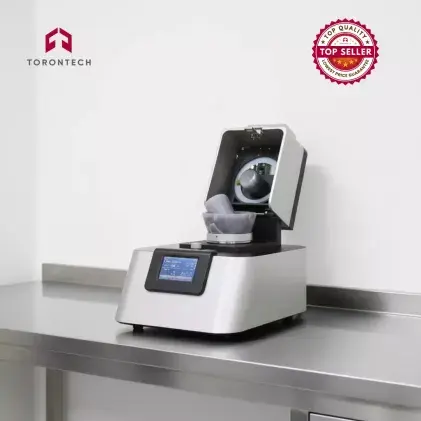
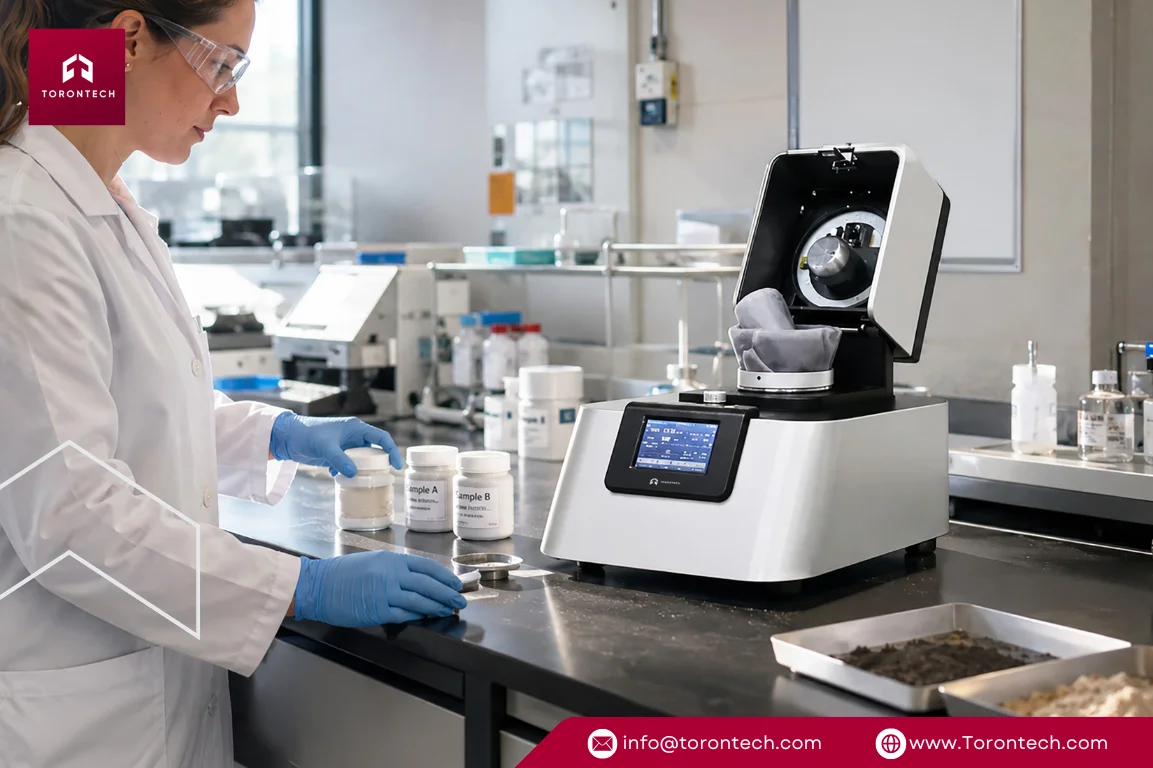
The next step is simply looking at the actual stuff you are throwing into the machine. Is it brittle, squishy, oily, or sticky? We strongly recommend grabbing a machine that doesn't force you into a corner, but instead lets you switch up your methods on the fly. The Torontech MG200, for example, is specifically engineered to handle all three major processing methods effortlessly:
- Bone-Dry Pulverizing: Ideal for crunchy, brittle things like glass chunks, industrial ceramics, and dry grain seeds.
- Wet Grinding: Absolutely necessary when you have to pour in liquid to help the crushing process along, make smooth liquid suspensions, or stop the sample from getting too hot.
- Super-Cold Cryogenic Freezing: If you ask us, being able to freeze your samples is quickly becoming a non-negotiable feature rather than some fancy extra. Academic evaluations frequently point out that cryogenic grinding is incredibly important for homogenizing inconsistent food or tough biological matrices effectively. It is a total lifesaver for stretchy plastics or delicate yeast cells where you need to pour in liquid nitrogen to turn them ice-cold and brittle before pulverizing them.
3. Understand Feed Size, Batch Capacity, and Target Fineness
At the end of the day, actual daily efficiency is about how much stuff you can dump in at once and how tiny the final bits become. First, check the biggest chunks the machine can actually swallow. Premium units like the MG200 comfortably take chunky pieces up to 15 mm wide without jamming up. We also highly favor machines featuring a live filling opening, which allows your technicians to drop in extra material while the grinder is actively running.
Then look at the actual batch capacity. We always tell laboratory managers to find a machine that can handle both tiny test runs and huge rushes. Top-performing machines comfortably hold anywhere from 10 mL to a massive 200 mL of material. From what we've seen, this range is the absolute sweet spot.
It lets you process tiny drops of precious samples and massive daily batches in the exact same machine, so you don't have to waste cash buying two separate setups. Picture a standard Tuesday morning in a busy facility. A technician needs to process a heavy 150 mL batch of basic soil and then immediately pivot to grinding an incredibly valuable, tiny 15 mL chemical compound right after their lunch break. Having one machine smoothly handle both extremes is incredibly efficient.
And if you are running highly sensitive tests like DNA extraction or precise chemical scans, you need things crushed down to a tiny scale. The MG200 hits an ultra-fine particle size of under 5 microns. Seriously, what kind of laboratory technician could resist a perfectly smooth, ready-to-test sample?
4. Select Mortar and Pestle Materials to Prevent Contamination
An accidental speck of the wrong metal can ruin a whole week of laboratory work. We believe that the material of your grinding cup, pestle, and scraper is the absolute make-or-break factor in keeping your samples pure. You have to match these parts directly to the hardness of your materials and the specific tests you're running.
Make sure you buy from a supplier that offers a wide, interchangeable selection. For the MG200, we purposefully offer three distinct mortar and pestle materials, which aligns perfectly with academic recommendations for contamination control:
- Agate: This material is universally recommended for trace-element rock and ceramic analysis because it introduces almost zero measurable contamination. Agate achieves incredibly fine particles, even though it might require slightly longer grinding times than carbide options.
- Sintered Aluminium Oxide (Alumina): This option is phenomenally hard but can introduce traces of aluminum or magnesium. It is completely acceptable and highly effective as long as those are not your specific target elements.
- Tough Stainless Steel: Your reliable, everyday workhorse for hard, brittle rocks and solids. However, just like tungsten carbide, metal tools can occasionally introduce trace metals like cobalt or nickel, making them unsuitable if you are scanning for those exact trace elements.
- The Scraper Material: We think the type of scraper you use is a totally ignored feature that is incredibly important for dealing with different sticky liquids or gooey pastes. Having the option to swap between squishy Polyurethane, slick PTFE, and classic Beech Wood scrapers gives you total control over the processing environment.
Comparison of Common Mortar Materials for Contamination and Use
| Mortar Material | Main Advantages | Main Cautions |
|---|---|---|
| Agate | Very low contamination; widely suitable | Slower; cleaning can be difficult, cross-contamination risk |
| Artificial Quartz | Lowest contamination | Limited to softer samples; Pb issue |
| Alumina / Corundum | Hard, sturdy | Adds many metals (Al, etc.) |
| Tungsten Carbide | Fast, fine grinding | W, Co contamination |
| Boron Carbide | Good for hard ceramics, low contamination | B contamination |
5. Prioritize Automated Control and Precision Speed Settings
Standing over a manual mortar and pestle is slow, boring, and frankly, outdated. We are convinced that getting the exact same result every single time is what makes a laboratory successful. Doing things by hand is where human error ruins your consistency. There is not a trace of consistency when your staff is processing samples manually.
Look for grinders that let you dial in the speed, like the adjustable 50 to 130 rpm range on the MG200, and come with a simple, crystal-clear digital display. Our touch panel shows you speed, time settings (from 00:01 up to 99:59), and real-time motor load status at a single glance.
In our experience, total control is what gives operators the ability to churn out flawless results. Being able to save up to nine specific operational programs (Programs 01 to 09) and use dedicated knobs for precision adjustments ensures absolute perfection on every single shift. Your technicians can physically tweak the pestle pressure vertically and horizontally while setting the exact scraper gap for perfect uniformity.
6. Verify Cleanability and Integrated Safety Standards
Busy laboratories do not have time for machines that require a heavy toolbox just to wipe down. Go for a setup that lets you pop out the mortar and pestle without any tools for incredibly fast cleaning between runs.
And let’s not forget about keeping your hands safe. We firmly believe that high-quality safety mechanisms should never be sold as overpriced, optional add-ons. The Torontech MG200 comes standard with an external helix-screw cover lock device and a totally transparent viewing window, allowing you to safely observe the crushing process while keeping your team compliant and protected.
7. Evaluate Long-Term ROI and After-Sales Support
Buying laboratory gear isn't just about paying the lowest upfront price. It is about keeping your workflow moving without annoying breakdowns. At Torontech, we believe the true cost of any lab tool is measured by how long it lasts and how little it breaks, not just the number on the initial invoice. A highly efficient grinder saves you massive labor costs over time.
Consider the absolute nightmare scenario of a critical grinder breaking down right in the middle of peak testing season. Waiting six agonizing weeks for a simple replacement scraper because a cheap supplier lacks local inventory costs facilities thousands of dollars in delayed operations.
We firmly believe your hardware supplier needs to prevent that exact disaster. When you source machinery like the MG200, look for a partner that actually answers the phone, ships out replacement parts immediately, and offers friendly tech support so your machine runs perfectly for years.
Get Premium, Budget-Friendly Torontech Grinding
When it’s time to sign the purchase order, laboratory managers often feel stuck choosing between incredibly advanced features and keeping costs low. We think that is a completely fake choice. You should absolutely get both. Here at Torontech, we do things differently by offering highly economical options packed with truly creative tech.
If you want a machine that checks every single box we just talked about, the Torontech Mortar Grinder MG200 is built to blow you away. We are totally confident it delivers the heavy-duty, reliable grinding your lab needs at a price point that keeps your budget perfectly intact.
Ready to make your sample prep incredibly easy? Go check out the Torontech MG200 Mortar Grinder right now and see how our budget-friendly, innovative machines can completely clean up your daily lab workflow.
References (Click to expand)
- Boulton, J., & Eardley, R. P. (1967). The preparation of analysis samples of hard materials with a boron carbide mortar. Analyst, 92, 271-272.
- Colón, E. M., Hernandez, M., Candelario, M., Meléndez, M., & Cruz, T. D. (2018). Evaluation of a Freezer Mill for Bone Pulverization prior to DNA Extraction: An Improved Workflow for STR Analysis. Journal of Forensic Sciences, 63.
- Daniel, L., Clarke, B. R., & Parsons, D. (2019). Performance of Sample Preparation for Determination of Gold in Samples of Geological Origin. Geostandards and Geoanalytical Research, 43.
- Hickson, C., & Juras, S. (1986). Sample contamination by grinding. Canadian Mineralogist, 24, 585-589.
- Jian-Qi, W. (2004). Examination of Sample Particle Sizes and Element Contamination in Grinding by Using Different Kinds of Mortar Mills.
- Krejčová, A., Pouzar, M., Černohorský, T., & Pešková, K. (2008). The cryogenic grinding as the important homogenization step in analysis of inconsistent food samples. Food chemistry, 109(4), 848-854.
- Rancourt, A. C., Sainte‐Marie, S., Blackmore, V., & Currie, K. (2023). Evaluation of low-cost bone and teeth processing methods for automated DNA extraction. Forensic Science International: Reports.
- Román, B., González-Verdejo, C. I., Pena, F., Nadal, S., & Gómez, P. (2012). Evaluation of different pulverisation methods for RNA extraction in squash fruit: lyophilisation, cryogenic mill and mortar grinding. Phytochemical analysis : PCA, 23(6), 622-626.
- Santos, W. P. C., Hatje, V., Lima, L., Trignano, S. V., Barros, F., Castro, J. T., & Korn, M. (2008). Evaluation of sample preparation (grinding and sieving) of bivalves, coffee and cowpea beans for multi-element analysis. Microchemical Journal, 89, 123-130.
- Schmitt, K. E., Fink, L. J., Jantschke, A., Vigelius, D., & Schöne, B. R. (2024). Isotopic and mineralogic bias introduced by pulverization of aragonite. Rapid Communications in Mass Spectrometry, 38.
- Takamasa, A., & Nakai, S. (2009). Contamination introduced during rock sample powdering: Effects from different mill materials on trace element contamination. Geochemical Journal, 43, 389-394.
- Thompson, G., & Bankston, D. C. (1970). Sample Contamination from Grinding and Sieving Determined by Emission Spectrometry. Applied Spectroscopy, 24, 210-219.
- Yamasaki, T. (2018). Contamination from mortars and mills during laboratory crushing and pulverizing. BULLETIN OF THE GEOLOGICAL SURVEY OF JAPAN.