How to Pair Soxhlet and Rotary Evaporators for Yield
Are your solvent costs draining your operating budget while extraction bottlenecks slow down your daily production runs? Many facility managers mistakenly treat the comparison of soxhlet extraction vs rotary evaporator setups as an "either-or" debate, when in reality they have zero functional overlap.
Soxhlet pulls compounds from solids, while a rotovap gently evaporates and recovers that solvent under vacuum pressure. Pairing them creates an insanely efficient, waste-free pipeline that delivers concentrated, pure yields.
Take a look at this straightforward side-by-side comparison to see how these complementary systems operate:
| Key Equipment | Main Function | Typical Strength | Main Limitation |
|---|---|---|---|
| Soxhlet Extraction | Extracts analytes from solid materials. | Repeated fresh-solvent washing, resulting in a very high yield. | Long processing time, heavy solvent reliance, and high heat burden. |
| Rotary Evaporator | Removes solvent from the liquid extract. | Fast concentration and solvent recovery under vacuum pressure. | Completely unable to perform extractions directly from solid materials. |
Grasping how each system operates clarifies exactly why both are often highly necessary for an optimized laboratory facility.
Soxhlet Extraction: Core Principles and Capabilities
First constructed in 1879, the Soxhlet extractor remains a highly consistent solid-liquid extraction option for pulling valuable compounds out of physical materials. If you are shopping around for dependable botanical processing equipment, these glass components are absolute staples.
The Specifics on How It Runs:
You pack your solid sample into a porous container inside the middle chamber. Down below, you heat your chemical solvent. The vapor travels upward, gets chilled back into liquid droplets at the top through reflux condensation, and rains down onto your sample.
Once that middle chamber fills up completely, a small siphon tube empties the solvent right back down into the boiling pot. That repeated contact with pure, freshly distilled solvent drastically improves mass transfer and thermodynamically favors analyte removal compared with simple soaking. The main job of the Soxhlet is moving target analytes from a physical matrix into your solvent.
Primary Benefits:
- Thorough extraction: It frequently provides a high extraction yield, which helps explain why it is still a reference method for lipid and natural-product workflows. As a clear industry example, analytical facilities processing agricultural materials consistently observe substantially higher yields for compounds like coffee lipids, tobacco sterols, and garlic extract compared to standard soaking techniques.
- Minimal supervision: Once set up, it runs automatically.
Our Perspective:
The extraction yield is satisfyingly spot on: strong but not outrageously impure; the processed botanical material is washed completely clean all the way through, and the resulting extracted liquid is sheer perfection. However, we must point out the documented drawbacks.
The long extraction times, substantial solvent use, and heavy energy demand make it a poor fit for thermolabile compounds. Additionally, that higher yield can sometimes come with lower selectivity or purity, bringing along unwanted co-extracted matrix materials.
Rotary Evaporation: Core Principles and Capabilities
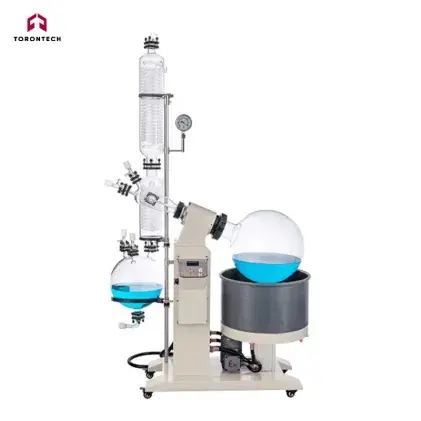
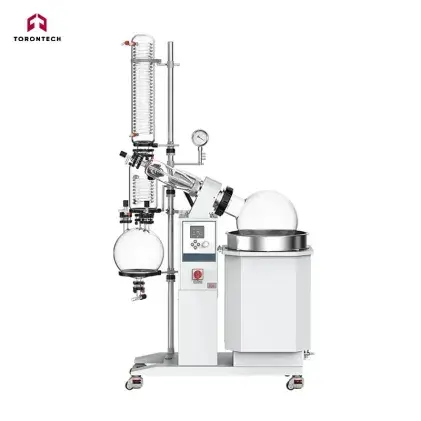
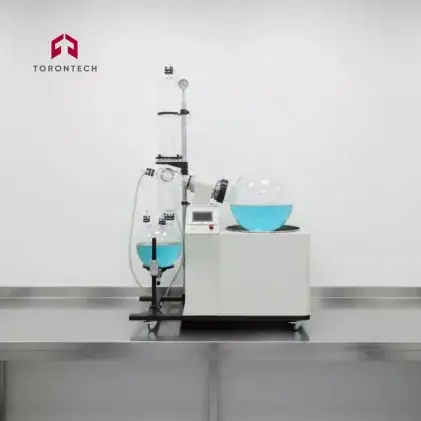
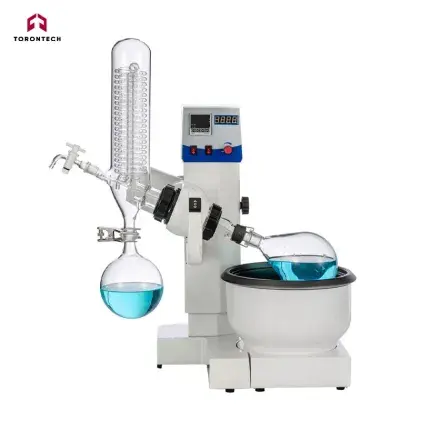
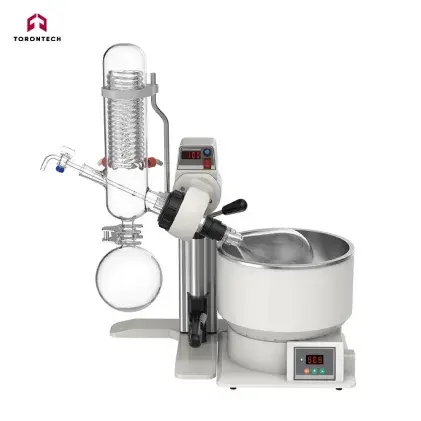
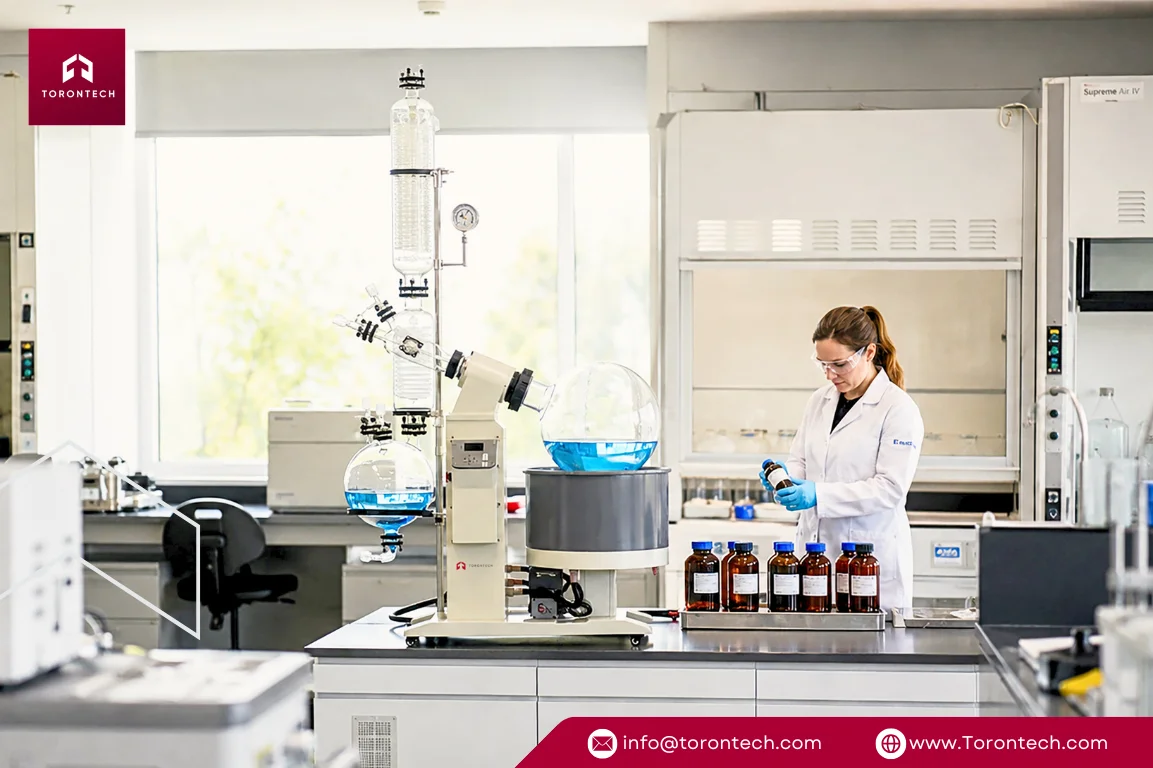
Think of a rotary evaporator (affectionately dubbed "the rotovap" by lab folks) as a highly precise piece of machinery built to strip liquid solvents away from your target compounds. A rotary evaporator concentrates your extract by evaporating the solvent, often under reduced pressure.
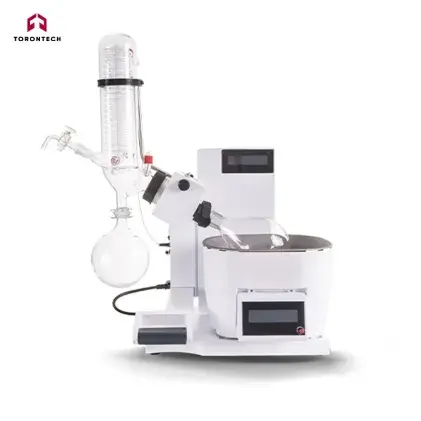
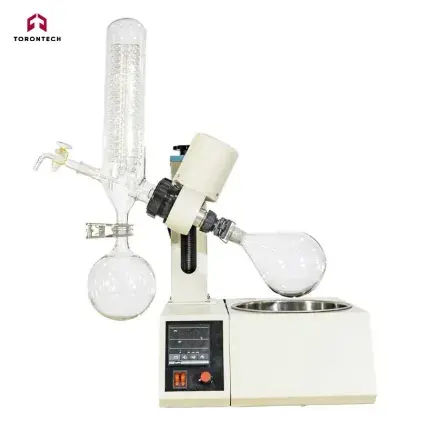
Whether you are seeking a straightforward, space-saving system for basic academic research or a larger system for industrial pilot production, selecting the right equipment scale is critical. For basic laboratory evaporation and routine solvent recovery, a compact setup like the bench-top AVR-001 fits smoothly onto tight benches.
Related article: Complete Guide to Rotary Evaporation
The Specifics on How It Runs:
An industrial rotovap only processes liquid mixtures. It uses a vacuum system to lower the pressure inside the glassware. Lowering the pressure means your solvent boils at a much lower, safer temperature. By spinning the flask, the machine spreads the liquid across a wider surface area, while a warm water bath keeps the temperature completely steady.
Key Operational Advantages:
- Protection against heat damage: Because it boils at extremely low temperatures, those delicate, heat-sensitive medical compounds are entirely safe from thermal degradation. For example, standard commercial facilities processing delicate botanical profiles rely on this low-temperature vacuum boiling to perfectly preserve highly volatile flavor terpenes that would otherwise completely evaporate and degrade under normal atmospheric heating.
- Swift evaporation: The spinning action coupled with the vacuum makes the solvent evaporate in a wonderfully short timeframe.
- Direct cost savings: It operates as a highly efficient solvent recovery system. Some highly advanced setups even combine both steps by recycling the evaporated solvent back into the Soxhlet flask. For daily laboratory routines, utilizing model series like the EV-52A / EV-52C / EV-5299 or the EV-201D / EV-301 / EV-501 provides the flexible configurations needed to easily capture and recycle expensive chemicals.
Our Perspective:
If you ask us, the rotovap is the absolute champion of the concentration step. The low-temperature vacuum boiling is completely superior to traditional open-air heating. It protects your fragile ingredients, and the massive amount of money you save by recycling your expensive solvents means this machine pays for itself very quickly.
The Sequential Workflow: Pairing Soxhlet and Rotary Evaporators
Many highly successful workflows use these two units sequentially rather than interchangeably. We see this exact combination used in bark, basil, garlic, and ketapang-leaf studies where the Soxhlet extraction was immediately followed by rotary evaporation.
To picture how this looks on a practical level, consider a standard industrial procedure for analyzing pesticide residues in agricultural soil. First, technicians place the dry, contaminated dirt into the Soxhlet apparatus to wash out all the hidden pesticide traces into a large volume of liquid solvent.
Once that highly exhaustive washing finishes, the technicians move that diluted, solvent-heavy mixture into the rotary evaporator. The rotary evaporator then efficiently boils away the solvent at a completely safe, low temperature. This leaves behind a highly concentrated pesticide sample ready for accurate chemical analysis, while keeping the recovered solvent cleanly separated for the very next batch of soil.
If the task is to extract from a solid, Soxhlet is the relevant technique. If the task is to remove solvent from a liquid extract, rotary evaporation is the relevant technique. In standard laboratory practice, Soxhlet is commonly chosen for exhaustive extraction, and the rotary evaporator is then used to recover the solvent gently at reduced pressure, leaving a concentrated extract.
Industrial Applications and Scaling Requirements
Depending on your specific sector, the scale of your evaporation step must be perfectly matched to your processing volume:
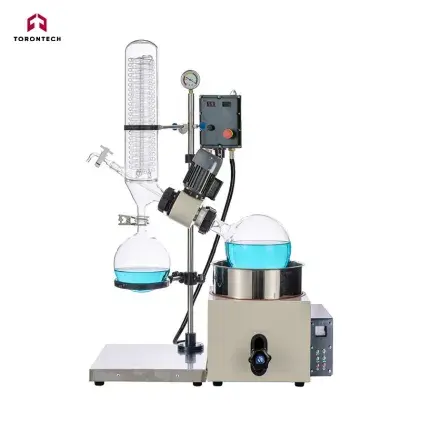
- Medicines & Pharma: Pulling active ingredients out of raw materials without damaging them. When scaling up from laboratory testing to pilot plants, process development teams utilize pilot-scale configurations like the EV series (EV-1002 / EV-2002 / EV-3002 / EV-5003 or EV-1005 / EV-1010 / EV-1020 / EV-1050) to handle larger volumes smoothly.
- Cannabis & Hemp: Washing plant material and stripping away the ethanol to get pure oil. In our view, as these markets get more crowded, running a highly efficient, waste-free setup like this is a requirement to remain profitable. For demanding, hazardous process environments where volatile solvents are everywhere, opting for Ex-rated pilot systems like the R series (R-1005 / R-1050 / R-2020Ex / R-2050Ex) is sheer perfection for safety and performance.
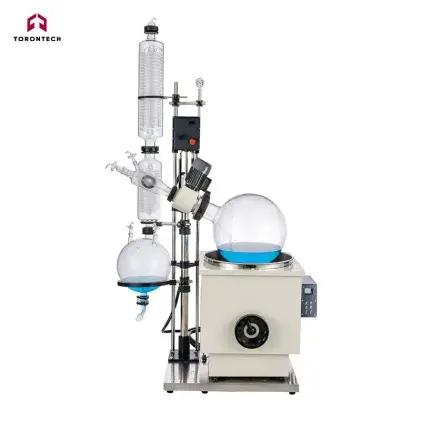
- Food & F&B: Isolating pure, high-quality essential oils and flavors from raw materials. For pilot production or large-volume industrial facilities where a small lab bench setup simply will not cut it, a massive, high-capacity system like the Rotary Evaporator 100L is built to handle massive throughput without a single trace of bottlenecking.
- Environmental Testing: Extracting pesticides or contaminants out of soil samples for analysis. General labs doing routine method development find that bench-top setups with a bit more capacity, such as the EV-2000 / EV-3000 / EV-5000 series or a dedicated Lab-scale Rotary Evaporator, keep things moving efficiently.
Essential Supporting Equipment for Evaporation Systems
A rotary evaporator is only one part of a fully functional solvent recovery system. To perform vacuum distillation, you must pair your evaporator with two critical ancillary components: a recirculating chiller and a vacuum pump.
The Torontech DL-400 Recirculating Chiller
This is where we can directly support your configuration. We supply the DL-400 Recirculating Chiller, which is a compact, bench-top cooling unit built to pump chilled fluid through the condenser coils of your rotovap. By keeping the condenser cold, the DL-400 ensures that vaporized solvent immediately liquefies and drains into the collection flask, keeping your recovery rates high and preventing chemical fumes from escaping into your laboratory air.
The Vacuum Pump
While a vacuum pump is absolutely necessary to lower the internal pressure and protect heat-sensitive samples, please note that this is a component you will need to source separately from an external supplier. To complete your setup, you should look for a chemical-duty diaphragm vacuum pump equipped with chemical-resistant seals (such as PTFE) that can easily withstand continuous exposure to solvent vapors.
We frequently see facilities purchase a high-quality evaporator and pair it with an underpowered chiller. In our view, that is a major operational mistake. It is equivalent to buying a premium commercial transport vehicle and installing budget tires. You will never get the performance you actually paid for unless your chiller can keep up with your distillation rate.
Secure High Yield Lab Solutions with Torontech
Realizing how the Soxhlet and the rotovap work hand-in-hand is the first step to building a truly efficient laboratory setup.
At Torontech, we are highly focused on supplying cost-effective solutions alongside incredibly smart, innovative technologies to labs all over the globe. We build our extensive range of rotary evaporators with energy-efficient designs and modern safety standards, delivering the reliable performance needed for consistent and accurate results.
Ready to optimize your laboratory workflow?
Please visit our product page: Torontech Rotary Evaporators. Let our team of specialists help you build a budget-friendly setup so you can start recycling solvent and producing high-quality extracts without any unnecessary complications.
References (Click to expand)
- Cao, S., Liang, J., Chen, M., Xu, C., Wang, X., Qiu, L., Zhao, X., & Hu, W. (2025). Comparative analysis of extraction technologies for plant extracts and absolutes. Frontiers in Chemistry, 13.
- Daso, A., & Okonkwo, O. J. (2015). Conventional Extraction Techniques: Soxhlet and Liquid–Liquid Extractions and Evaporation, 1437-1468.
- De Faria, D. C., De Queiroz, M. D., & Novaes, F. (2025). Direct Hot Solid–Liquid Extraction (DH-SLE): A High-Yield Greener Technique for Lipid Recovery from Coffee Beans. Plants, 14.
- Dewi, L. K., Setyawati, S. D., Pamuji, A. N. F., Indrayana, S., & Cahyani, C. (2023). The Effect of Various Solvent in Soxhlet Extraction on The Characterictics of Basil Oil (Ocimum Americanum L.). Jurnal Bahan Alam Terbarukan.
- Hawthorne, S., Grabanski, C. B., Martin, E., & Miller, D. J. (2000). Comparisons of soxhlet extraction, pressurized liquid extraction, supercritical fluid extraction and subcritical water extraction for environmental solids: recovery, selectivity and effects on sample matrix. Journal of Chromatography A, 892(1-2), 421-433.
- Hirondart, M., Rombaut, N., Fabiano-Tixier, A., Bily, A., & Chemat, F. (2020). Comparison between Pressurized Liquid Extraction and Conventional Soxhlet Extraction for Rosemary Antioxidants, Yield, Composition, and Environmental Footprint. Foods, 9.
- Luthria, D., Vinjamoori, D., Noel, K., Ezzell, J., & Luthria, D. (2019). Accelerated Solvent Extraction. Oil Extraction and Analysis.
- Marzuki, I., Mirsyah, M., & Gala, S. (2022). Identifikasi Komponen Kimia Ekstrak Daun Ketapang (Terminalia cattapa) Berdasarkan Perbandingan Metode Ekstraksi. Al-Kimia.
- Muhayyidin, A., Ghazali, N. A., Bakar, N. F. A., Ibrahim, W., Sauki, A., & Hassan, Z. (2018). Tannin Extraction from Bark of Rhizophora Mucronata Using Soxhlet and Boiling Techniques. International Journal on Advanced Science, Engineering and Information Technology.
- Sander, L. (2017). Soxhlet Extractions. Journal of Research of the National Institute of Standards and Technology, 122, 1.
- Shen, J., & Shao, X. (2005). A comparison of accelerated solvent extraction, Soxhlet extraction, and ultrasonic-assisted extraction for analysis of terpenoids and sterols in tobacco. Analytical and Bioanalytical Chemistry, 383, 1003-1008.
- Voss, G., & Blass, W. (1973). A solvent-saving extraction-evaporation apparatus developed for residue analysis of pesticides. The Analyst, 98(172), 811-812.
- Zaini, A., Putra, N. R., Idham, Z., Faizal, A. M. N., Yunus, M. C. A., Mamat, H., & Aziz, A. H. A. (2022). Comparison of Alliin Recovery from Allium sativum L. Using Soxhlet Extraction and Subcritical Water Extraction. ChemEngineering, 6.