How to Choose a Portable Octane Analyzer for All Blends
Why let off-spec fuel deliveries hold up your transport fleet while waiting hours for remote laboratory results?
Every minute a tanker sits idle at loading racks burns operating margins and backs up distribution lanes. In our view, having immediate, non-destructive testing directly in the field provides complete verification without stretching your equipment budget.
Here is our direct guide on how to choose a portable octane analyzer to protect your supply chain and keep your racks moving.
Key Takeaways
- Immediate field screening flags off-spec product on the spot without replacing official referee laboratory testing.
- Non-linear ethanol blending chemistry demands versatile, multi-mode calibration algorithms.
- Precision inductive hardware and three-point calibration using standard oil provide systematic error adjustment during field rounds.
- Field testing must remain within rated operating limits (-5°C to +30°C for the TT-131), requiring conditioned testing areas during seasonal weather extremes.
- Standalone battery operation and direct ticket printing keep field technicians fully autonomous.
Field Screening vs. Laboratory Engines
Before reviewing hardware specifications, it pays to be clear about how portable units fit alongside fixed facility equipment.
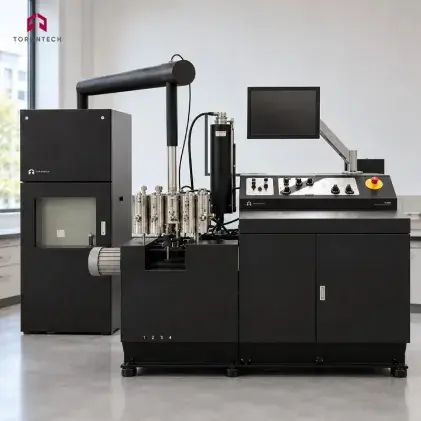
Stationary Cooperative Fuel Research (CFR) engines, such as our Octane Number of Spark-Ignition Engine Fuel testing unit (TT-300R), remain the recognized benchmark for official ASTM D2699 (RON) and ASTM D2700 (MON) laboratory certifications. However, traditional knock engines consume substantial fuel sample volumes, occupy dedicated laboratory space, and require continuous, labor-intensive maintenance just to stay in service.
In high-throughput logistics hubs and distribution racks, such as terminal inspection stations or pipeline depots, holding up transport tankers while waiting on off-site laboratory engine results creates costly supply bottlenecks. In our view, portable screening serves as an essential operational safeguard.
It does not replace certified referee testing, but it gives your operators an immediate verification check directly at the transport vehicle before fuel enters distribution channels. If your facility is planning to establish a primary reference lab, read our detailed guide on what is needed to run ASTM D2699 octane testing using a dedicated RON MON engine.
Fuel Compatibility and Blend Compensation
If your operation requires a portable octane analyzer for gasoline and ethanol blends, confirming how an instrument handles non-linear fuel chemistry is critical.
In the United States, annual volume obligations under the Renewable Fuel Standard (RFS) have established E10 as the de facto commercial baseline for retail gasoline, with E15 approved for light-duty vehicles built in 2001 and newer. In Canada, federal Clean Fuel Regulations enforce carbon-intensity reduction requirements alongside baseline low-carbon fuel volume targets.
Scientific research demonstrates that introducing ethanol into base hydrocarbons creates non-linear blending dynamics. Ethanol blends synergistically with paraffin components like iso-octane to boost knock resistance, yet it interacts antagonistically with aromatic hydrocarbons such as toluene. Because standard linear calculations fail to predict actual knock ratings across varied blendstocks, your field hardware must provide adaptable computation algorithms. In our assessment, having flexible blend modes is a baseline operational necessity rather than a secondary luxury.
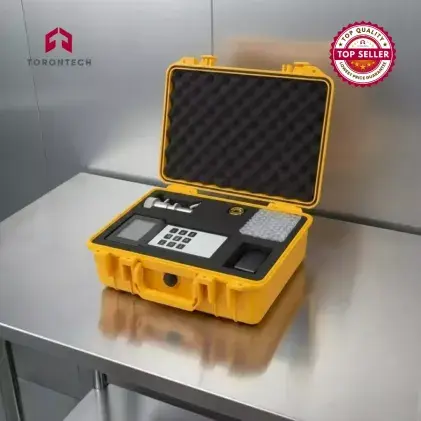
To handle these diverse formulations, the Torontech TT-131 Portable Octane and Cetane Tester provides multi-fuel compatibility across motor gasoline, methanol gasoline, ethanol gasoline, naphtha, and aromatic gasoline. For multi-fuel operations, the TT-131 also evaluates diesel products, providing consistent analysis for general diesel, blended diesel, and biodiesel.
Operational flexibility is backed by built-in inspection modes. The TT-131 features 7 predefined modes plus 5 custom modes for gasoline inspection, along with 3 predefined modes plus 5 custom modes for diesel inspection. Having configurable custom modes allows technicians to align non-destructive testing routines with specific regional blend variations.
Before procuring field instrumentation, quality managers should confirm the specific calibration range required for their target ethanol concentrations. While standard factory modes accommodate commercial retail gasoline blends like E10 and E15, high-ethanol flex fuels, such as E85 governed by ASTM D5798 (typically containing 51% to 83% ethanol), exhibit distinct dielectric and physical properties that necessitate verification of calibration curves and the use of dedicated custom modes.
Sensing Technology and Calibration
The internal electronics determine whether your test data remains stable across shifts or drifts into unreliable territory. Published research highlights several electro-physical methods, including dielectric analysis, low-frequency spectroimpedance measurements, and capacitance sensors. These studies confirm that electrical properties correlate directly with fuel composition, provided the internal components remain stable and utilize systematic correction procedures to account for base-fuel shifts.
The TT-131 incorporates advanced international integrated circuit technology paired with precision inductive components, utilizing artificial intelligence technology to calculate non-destructive testing results.
Because electrical readings can shift when ambient surroundings change, disciplined calibration features are vital. In our view, relying on equipment without multi-point calibration introduces unacceptable financial exposure for blending terminals. The TT-131 supports one-point, two-point, and three-point corrections using standard oil to maintain measurement consistency across calibration points.
In addition, an automatic proof function and correction feature executes automatic adjustment for system errors. To account for differing operational temperatures, the instrument provides an integrated temperature adjustment function that allows operators to regulate octane values according to specific thermal conditions.
Environmental Limits and Durability
Terminal racks and inspection depots are demanding operating environments, particularly across North American geography with seasonal freeze-thaw cycles and broad elevation spans. We will be direct: high measurement precision delivers zero commercial value if the instrument fails the moment it encounters sub-freezing temperatures or transit vibration:
- Operating Temperature: Rated for operation within -5°C to +30°C. When ambient field temperatures drop below -5°C during northern winters or exceed +30°C on sun-exposed summer terminal racks, operators should conduct testing inside a climate-controlled vehicle, field laboratory, or inspection shelter to maintain verified operating conditions.
- Relative Humidity Limits: Maintains measurement stability up to 80% (≤25°C).
- Atmospheric Pressure Range: Operates consistently from 84 to 106 KPa (kPa), covering sea-level terminals up to elevations of approximately 1,500 meters (roughly 5,000 feet). Operators managing depots in higher-altitude regions, such as the Rocky Mountain Front Range, should verify local barometric pressure before conducting field inspections.
- Physical Protection: Enclosures remain resistant to vibration, impact, and electromagnetic interference, ensuring dependable service in industrial field depots.
The TT-131 remains small and portable, housed in a specially designed portable case for easy transit between production streams, blending terminals, and field inspection depots.
Battery Longevity and Data Output
Running field verification rounds requires complete independence from fixed electrical outlets.
The TT-131 operates on a DC (AA) 6V electrical configuration, providing portable energy capability across field inspection environments. To maximize battery life across extended shifts, the instrument incorporates automatic sleep, auto shut-off, and other energy-saving functions. An EL backlit display actively presents measuring time alongside remaining battery energy, allowing technicians to track device status in poorly illuminated terminal racks or during night shifts without guesswork.
Data management is equally practical for field workflows. Data storage is supported directly on the device, enabling technicians to archive inspection runs on the spot. Furthermore, having immediate physical documentation remains indispensable for formal custody transfers.
For immediate verification and chain-of-custody handoffs, the unit connects directly with a micro printer (manufacturer's designated model) to print measurement reports right at the sampling point.
Technical Criteria: Octane Scale, Accuracy, and Reference Correlation
When evaluating any portable analyzer for terminal or field deployment, technical evaluators must confirm how an instrument's data output aligns with commercial fuel specifications. In North America, retail gasoline is sold based on the Anti-Knock Index (AKI), calculated as (RON + MON) / 2, whereas international markets and refining baselines often specify Research Octane Number (RON) or Motor Octane Number (MON) independently.
Before finalizing an equipment purchase, procurement teams should clarify three core technical parameters with the manufacturer:
- Reported Octane Scales: Confirm whether the analyzer outputs RON, MON, or direct Anti-Knock Index (AKI) values to ensure readings match your facility's operational compliance targets.
- Stated Accuracy and Repeatability: Verify the instrument's stated tolerance limits when benchmarked against primary ASTM D2699 (RON) and ASTM D2700 (MON) laboratory test engines.
- Calibration Verification Protocols: Determine the required frequency for checking the instrument against standard oil or laboratory-tested reference fuels to detect any baseline shift over extended field service.
Reviewing these criteria against your facility's specific quality assurance manual ensures that field screening data correlates reliably with primary laboratory results.
Model Selection Guide
Torontech supplies cost-effective products engineered to protect capital budgets while meeting specific inspection profiles:
- TT-131 Portable Octane and Cetane Tester: A comprehensive multi-fuel solution for facilities requiring octane screening for gasoline (including ethanol and aromatic blends) alongside diesel cetane verification.
- TT-LAB 133 Portable Octane Analyzer: A dedicated instrument configured specifically for gasoline fuel testing.
- TT-LAB 132 Portable Cetane Analyzer: A specialized analyzer focused exclusively on diesel cetane verification.
Protect Fuel Quality Across Distribution with Torontech
Off-spec batch disputes and loading delays carry a heavy price tag. Equipping your facility with the right field hardware maintains blend compliance, keeps transport lanes open, and protects downstream supply chains. At Torontech, we manufacture cost-effective products supported by sound engineering to deliver dependable field testing across North American and international terminals.
Contact our technical specialists today to review full equipment specifications, evaluate the TT-131, and choose the optimal fuel inspection solution for your operations.
References (Click to expand)
- AlRamadan, A. S., Sarathy, S., & Badra, J. (2021). Unraveling the octane response of gasoline/ethanol blends: Paving the way to formulating gasoline surrogates. Fuel, 299, 120882.
- Anderson, J. E., Leone, T. G., Shelby, M., Wallington, T., Bizub, J. J., Foster, M., Lynskey, M. J., & Polovina, D. (2012). Octane Numbers of Ethanol-Gasoline Blends: Measurements and Novel Estimation Method from Molar Composition. SAE Technical Paper.
- Badra, J., AlRamadan, A. S., & Sarathy, S. (2017). Optimization of the octane response of gasoline/ethanol blends. Applied Energy, 203, 778-793.
- Foong, T. M., Morganti, K., Brear, M., Da Silva, G., Yang, Y., & Dryer, F. (2013). The octane numbers of ethanol blended with gasoline and its surrogates. Fuel, 115, 727-739.
- Irshad, M., Mujahid, A., Afzal, A., Bajwa, S., Hussain, T., Zaman, W., Latif, U., & Athar, M. (2018). A miniaturized electronic sensor for instant monitoring of ethanol in gasohol fuel blends. RSC Advances, 8, 22952-22962.
- Luecke, J., & Zigler, B. (2021). Rapid prediction of fuel research octane number and octane sensitivity using the AFIDA constant-volume combustion chamber. Fuel, 301, 120969.
- Shatokhina, E. V. (2007). Fast analysis of the quality and environmental safety of motor fuels. Chemistry and Technology of Fuels and Oils, 43, 242-247.
- Voigt, M., Legner, R., Haefner, S., Friesen, A., Wirtz, A., & Jäger, M. (2019). Using fieldable spectrometers and chemometric methods to determine RON of gasoline from petrol stations: A comparison of low-field 1H NMR@80 MHz, handheld RAMAN and benchtop NIR. Fuel, 245, 439-447.
- Мамыкин, А. В., Кукла, А. Л., Майстренко, А. С., Матвиенко, Л. М., Kukla, A., & Matzas, E. P. (2017). A method for express estimation of the octane number of gasoline using a portable spectroimpedance meter and statistical analysis methods. Tekhnologiya i Konstruirovanie v Elektronnoi Apparature, (4-5), 52-60.