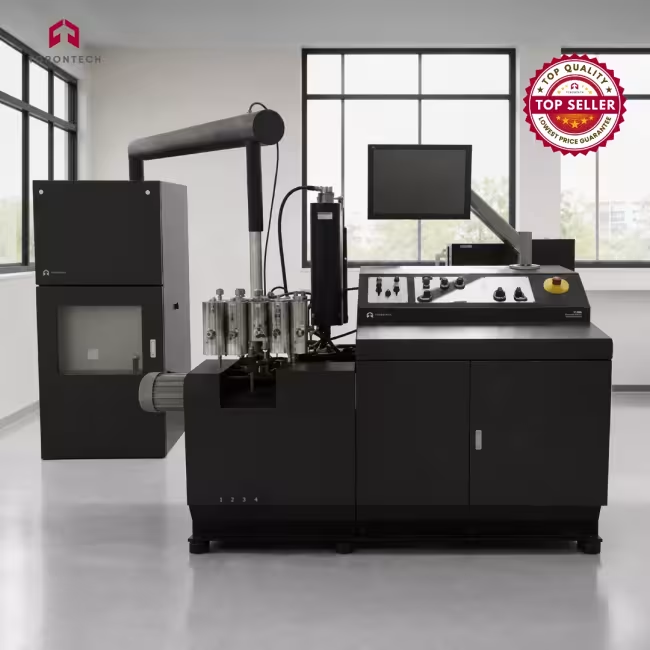
Octane Number of Spark-Ignition Engine Fuel
Octane Number of Spark-Ignition Engine Fuel TT-300R
Octane Number of Spark-Ignition Engine Fuel TT-300R conforms to ASTM D2699 Standard Test Method for Research Octane Number of Spark-Ignition Engine Fuel and ASTM D2700 Standard Test Method for Motor Octane Number of Spark-Ignition Engine Fuel.
Octane Number of Spark-Ignition Engine Fuel TT-300R covers the quantitative determination of the knock rating of liquid spark-ignition engine fuel in terms of Research Octane Number (RON), including fuels that contain up to 25% v/v ethanol, as well as the quantitative determination of the knock rating of liquid spark-ignition engine fuel in terms of Motor Octane Number (MON).
The primary application of the Octane Number of Spark-Ignition Engine Fuel TT-300R is the definitive, quantitative determination of the knock rating of gasoline (spark-ignition engine fuel). As the industry-standard Cooperative Fuel Research (CFR) engine, it is the referee method for measuring:
- Research Octane Number (RON), in compliance with ASTM D2699.
- Motor Octane Number (MON), in compliance with ASTM D2700.
This is the most critical test for grading gasoline and certifying its anti-knock performance.
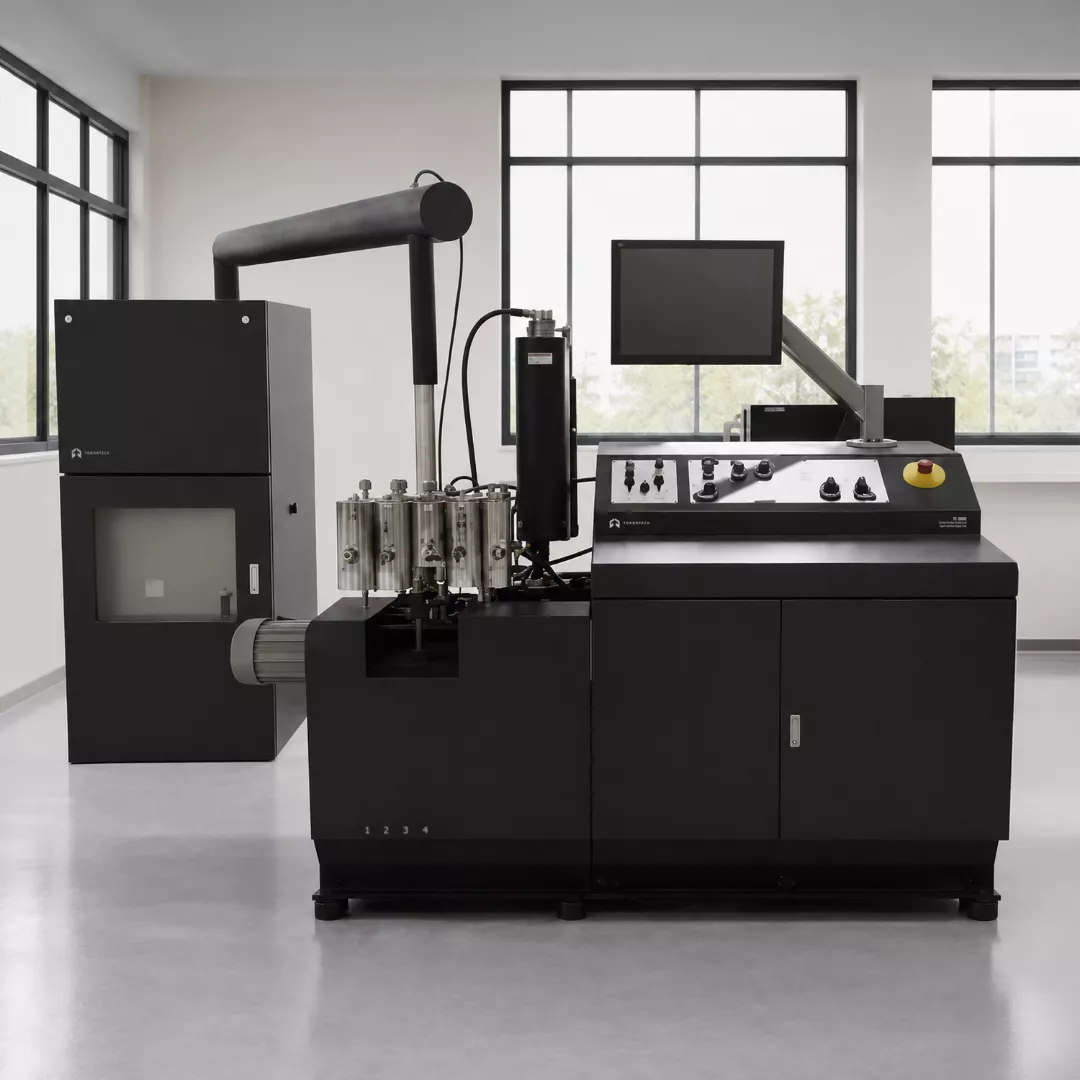
Key Industries
- Petroleum Refining: This is the most essential industry for this instrument. Refineries are required to use this specific engine-based test to certify that their finished gasoline meets the legally mandated RON and MON specifications for different grades (e.g., Regular, Premium).
- Automotive and Engine Manufacturing: Engine manufacturers use this test in their research and development centers to design and calibrate engines that can run efficiently and safely on commercially available fuels. The octane rating is a fundamental parameter for engine design.
- Third-Party Testing Laboratories and Regulatory Agencies: These independent labs and government bodies (like environmental or standards agencies) use the CFR engine as the ultimate authority to verify fuel quality, settle commercial disputes, and enforce national and international fuel regulations.
- Standard detonation meter supports multiple operating methods.
- DW engine meets standard requirements and is easy to maintain.
- Four sample tanks, one of which can be fitted with a cooling jacket.
- Detonation sensor can be interchanged without debugging.
- Uses a precision displacement sensor to measure the compression ratio, and the engine phase is measured accurately by a rotary encoder.
- Features a special plug-in modular controller that is stable and reliable, and can be connected to LIMS.
- Software supports English and Russian, designed according to standard operating procedures.
1. Measurement range: 40~120
2. Cylinder inner diameter: 82.55 mm
3. Piston stroke: 114.3 mm
4. Compression ratio range: 4:1~18:1
5. Engine rotation speed: 900±9 r/min (MON), 600±6 r/min (RON)
6. Power: 8.0 kW
Configuration:
| Item | Unit | Qty. |
| Main Unit | set | 1 |
| Fuse Ф5×20 10A | piece | 1 |
| Micro printer | set | 1 |
| Test cup | piece | 1 |
| igniter | piece | 1 |