Difference Between PCR and Real Time PCR: Which One is Right for You?
Polymerase Chain Reaction (PCR) has been a cornerstone in molecular biology, allowing scientists to amplify DNA sequences for various purposes. However, the evolution of this technology introduced Real-Time PCR (or qPCR), which offers significant advancements.
If you're exploring these methods, understanding the difference between PCR and Real-Time PCR can help you choose the right approach for your needs.
What is PCR?
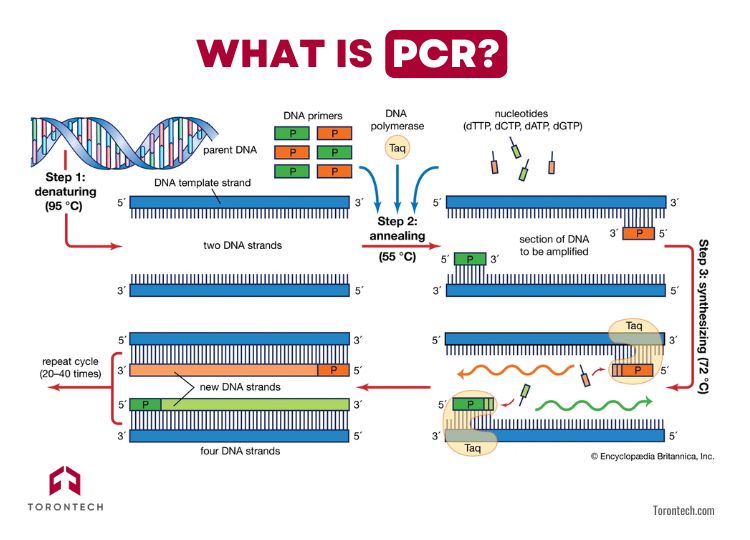
PCR, or Polymerase Chain Reaction, is a technique used to amplify specific DNA fragments. It’s like making countless copies of a particular page from a book, ensuring you have enough material to analyze.
During PCR, the DNA goes through repeated cycles:
- Denaturation: The double-stranded DNA separates into single strands.
- Annealing: Primers bind to the specific target sequence.
- Extension or Synthesizing: DNA polymerase synthesizes new DNA strands.
Once the process is complete, you typically analyze the results using gel electrophoresis to determine whether your target DNA was successfully amplified.
What is Real-Time PCR?
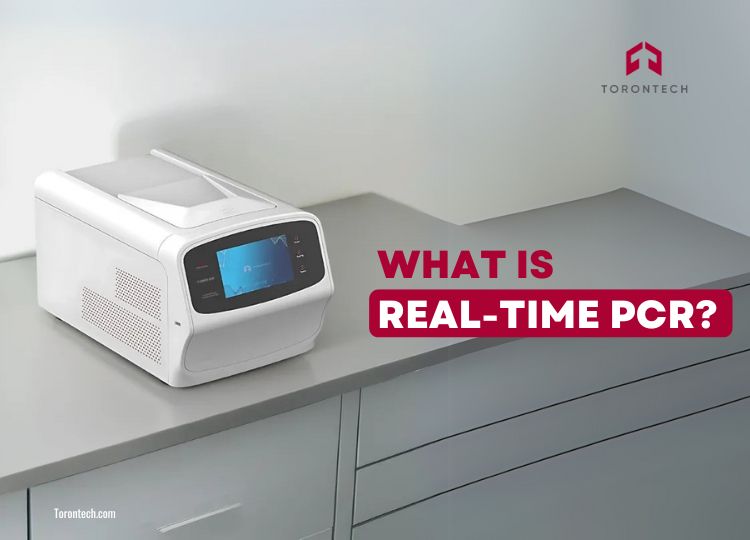
Real-Time PCR, also known as qPCR, builds on the foundation of conventional PCR but adds a modern twist. It not only amplifies DNA but also allows you to monitor the amplification process in real time using fluorescence. As the DNA is amplified, the fluorescence signal increases, providing immediate feedback.
This method uses dyes or probes to bind with the DNA, enabling real-time monitoring. Importantly, Real-Time PCR also quantifies DNA, giving you precise data rather than just a yes-or-no result.
Key Differences Between PCR and Real-Time PCR
1. Detection Method
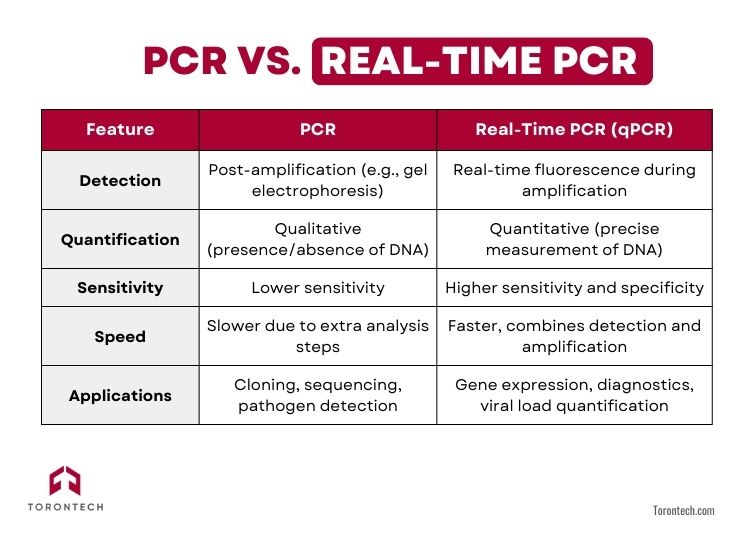
In PCR, the detection of amplified DNA occurs only after the entire process is complete. This typically involves gel electrophoresis, where DNA fragments are separated and visualized based on size.
In contrast, Real-Time PCR allows for the monitoring of DNA amplification in real-time. Fluorescent dyes or probes produce signals during each cycle, enabling immediate observation of the reaction as it progresses.
2. Quantification
PCR is a qualitative technique that determines whether the target DNA is present or absent but does not provide an exact measurement of DNA quantity.
Real-Time PCR, on the other hand, is quantitative. It measures the precise amount of DNA during amplification, which is particularly beneficial for applications such as quantifying viral loads or analyzing gene expression levels.
3. Time Efficiency
PCR requires additional steps after the amplification process, such as gel electrophoresis, to analyze the results. This adds extra time to the overall workflow.
Real-Time PCR integrates detection into the amplification process, eliminating the need for post-reaction analysis and providing faster results.
4. Sensitivity and Accuracy
PCR is generally less sensitive and may struggle to reliably detect low concentrations of DNA. Real-Time PCR, with its real-time monitoring and use of fluorescent probes, offers higher sensitivity and specificity.
It can detect even small amounts of DNA and distinguish between closely related sequences, making it more accurate for demanding applications.
5. Applications
PCR is commonly used for tasks like cloning, sequencing, mutagenesis studies, and detecting pathogens when only qualitative data is needed.
Real-Time PCR, however, is ideal for applications requiring precise quantification, such as gene expression analysis, diagnostic testing, genetic research, and quality control in food safety.
Understanding these distinctions ensures you can select the right method for your specific research or diagnostic needs.
If you need a quick reference to help you understand the key distinctions between PCR and Real-Time PCR, this table makes it easier to determine which technique suits your needs.
PCR vs. Real-Time PCR
Why Choose One Over the Other?
Your choice between PCR and Real-Time PCR depends on your goals. If you simply want to know whether a specific DNA sequence is present, conventional PCR might suffice. However, if you need precise quantification—such as measuring viral loads or gene expression—Real-Time PCR is the way to go.
For example, during the COVID-19 pandemic, Real-Time PCR became a critical tool in diagnostics, enabling quick and accurate detection of the virus in samples.
Making the Right Decision
When choosing between PCR and Real-Time PCR, think about the level of detail and accuracy you need. Real-Time PCR’s ability to provide real-time data and quantification gives it an edge for complex tasks. However, if your requirements are straightforward, PCR remains a reliable option.
By understanding the difference between PCR and Real-Time PCR, you can confidently decide which method best suits your laboratory or research needs.