A Guide to Catheter Leak Testing Methods
With medical devices becoming more complex and regulations stricter, the pressure to get every detail of your quality control right is immense.
When it comes to products like catheters, ensuring a component is perfectly sealed is an area of critical importance. A microscopic flaw can lead to significant downstream consequences, which is why we feel that perfecting your catheter leak testing method is a foundational part of a reliable production process.
The Critical Role of Catheter Leak Integrity
A catheter is a device that must perform without fail, often in high-stakes medical situations.
We see a well-defined leak testing protocol as the best way to ensure the equipment you ship will function exactly as expected. A leak isn't just a quality issue; in a clinical setting, it can mean a compromised sterile barrier or a complete failure of the device. This catheter integrity testing is about more than just finding holes; it's about safeguarding patients, satisfying compliance, and protecting your company's reputation.
An Overview of Common Catheter Leak Testing Methods
 Several leak detection methods exist. In our experience, they each have different strengths and are suited for different applications and stages of production.
Pressure Decay Leak Testing
A device is filled with a set amount of air, sealed off, and monitored for any pressure loss. It’s a very common leak detection method that provides a clear pass/fail result quickly, but its main limitation is that it confirms a leak's presence without identifying its location.
For instance, this is a perfect go/no-go test for a simple, high-volume product like a single-lumen drainage catheter on a busy assembly line.
Mass Flow Testing for Leaks and Blockages
This dynamic approach continuously measures the amount of air needed to keep the pressure inside a device constant. It is quite effective for catching larger flaws and can also indicate blockages. Think of a suction catheter, where ensuring it's not just sealed but also completely clear and unobstructed is part of the total catheter quality control check.
Bubble Testing (The Immersion Method)
A direct visual leak detection method where a pressurized device is placed in water. The sight of a stream of bubbles pinpoints a leak’s exact location. While simple, it has drawbacks like potential product contamination.
We see this used most effectively in R&D labs for troubleshooting a leaky seal on a new prototype, where you need to physically see the point of failure.
Vacuum Decay Leak Testing
This technique involves removing the air from a device to create a vacuum and then monitoring to see if that vacuum holds steady. It's an exceptionally clean and precise catheter leak testing method that we frequently endorse for finished medical products due to its high degree of precision.
Why We Endorse Vacuum Decay for Catheter Leak Detection

While all these testing methods are useful, we believe vacuum decay leak testing provides clear advantages for medical device manufacturing. It offers an exceptional level of sensitivity for finding very small flaws. Crucially, it isn't affected by the ambient temperature shifts in a facility that can interfere with pressure tests.
Consider a complex diagnostic catheter with a sealed electronic sensor. The last thing you want is to force air and potentially moisture into that sensitive assembly. A vacuum test, however, elegantly solves this. It gently confirms the catheter integrity from the outside in, protecting the delicate components. This makes it an inherently safer method for today's advanced devices.
A Solution Engineered for Accurate Leak Detection
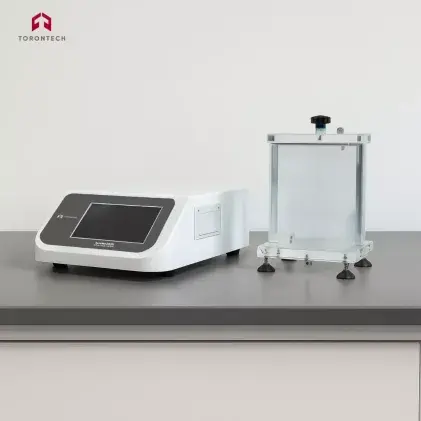
We felt so strongly about the benefits of this method that we engineered a system to optimize it: the Torontech Catheter Vacuum Leak Tester (ToronMed-CVLT01). We developed this instrument to provide the accurate, dependable, and repeatable results that modern manufacturing demands.
We also designed it for versatility. The ToronMed-CVLT01 is a real workhorse for medical device leak testing. It is perfectly suited for confirming the integrity of other equipment where a perfect seal is non-negotiable, such as in infusion set testing, blood transfusion set testing, and for various types of medical tubing.
Streamlining Compliance for Your Leak Testing Methods
We know that maintaining thorough, defensible records is a major operational requirement, especially for audits.
That is why our Catheter Vacuum Leak Tester was built to make the documentation process for your leak testing methods more efficient. It features large internal data storage, an integrated printer, and full PC connectivity. Having objective, time-stamped data at your fingertips simplifies compliance and makes responding to any regulatory inquiry a much more manageable task.
Related article: A Guide to Choosing a Catheter Leak Tester
The Right Testing Choice with Torontech
Choosing the right catheter leak testing method is a significant decision that directly impacts product quality, operational efficiency, and end-user safety. Based on our experience, for manufacturers who require a highly sensitive and reliable system, vacuum decay testing presents the most compelling case.
At Torontech, our central focus is to provide high-caliber, cost-effective medical device testing equipment. Our Catheter Vacuum Leak Tester (ToronMed-CVLT01) is the result of that focus—an instrument engineered for accuracy, efficiency, and compliance.
If you are looking to improve your quality control process with a versatile solution that simplifies data management, we invite you to contact us. We would be glad to start a conversation about your specific leak detection challenges and how this equipment can benefit your production workflow.