Rapid Sample Prep: The Ultra Centrifugal Mill Guide
If the initial grinding step is flawed, the rest of your analysis is effectively wasted. It doesn't matter if you have a high-end XRF or NIR analyzer sitting on the bench. If the sample preparation is poor, the results will be unreliable.
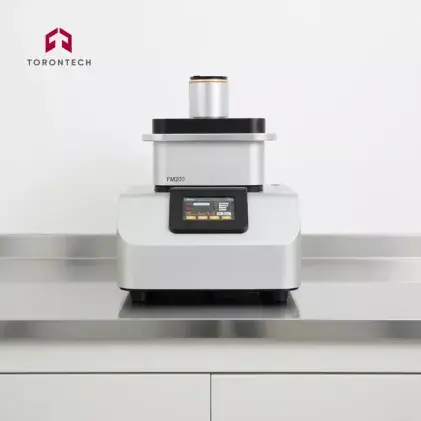
That’s where the Torontech FM200 Ultra Centrifugal Mill proves its worth. While standard laboratory grinders often struggle with fibrous materials or overheat temperature-sensitive samples, the FM200 reduces materials to <40μm before thermal degradation can set in.
This guide walks through how this machine operates, the difficult materials it handles, and why we believe it’s the most efficient option for high-throughput laboratories.
Key Takeaways
- Rapid Fine Grinding: The FM200 reduces samples to <40μm in seconds using high rotational speeds up to 20,000 RPM.
- Versatile Material Handling: It processes soft, fibrous, and hard materials effectively, including temperature-sensitive samples when paired with cryogenic accessories.
- Preserves Sample Integrity: The unique two-step grinding mechanism prevents heat buildup to protect volatile compounds and proteins.
- High-Throughput Design: Features like tool-free "Push-Fit" cleaning and dual safety locks minimize downtime between batches.
- Better Than Ball Mills: For standard analytical fineness, it offers a significantly faster and easier-to-clean alternative to planetary ball mills.
What Exactly is an Ultra Centrifugal Mill?
So, what is this machine? Technically speaking, an Ultra Centrifugal Mill is a high-speed grinding device that uses centrifugal force generated by a rapidly rotating rotor to grind materials into fine or ultra-fine particles.
It sits squarely between small laboratory mills (like a coffee grinder) and heavy industrial crushers. It is a compact, benchtop unit engineered to process everything from soft, elastic materials to brittle rocks and fibrous roots without taking up your entire lab counter.
The real advantage here is speed and efficiency. These mills operate at very high rotor speeds, often exceeding 15,000 rpm. The FM200 specifically reaches up to 20,000 rpm. This enables efficient size reduction and produces fine particle sizes, often below 150 micrometers, with controlled particle size distribution.
Because the grinding happens almost instantly, the machine doesn't have time to generate excessive heat. You get the fine, homogenous powder you require without altering the chemical composition or moisture content of the sample.
Working Principle: The "Two-Step" Mechanism
The FM200 executes a "Two-Step" process that we find superior to single-stage milling because it prevents the sample from clumping or bouncing around in the chamber.
- The Initial Impact: You drop the sample into the hopper (which features an anti-splash design to contain dust). It falls onto a rotor spinning at 20,000 RPM. That high-speed impact immediately fractures the material into smaller chunks.
- The Shearing Action: Centrifugal force then drives the material outward against a fixed ring sieve. Here, the material is sheared and rubbed between the rotor teeth and the sieve until it is fine enough to pass into the collection pan.
The residence time of the sample inside the grinding chamber is incredibly short. This rapid throughput ensures proteins remain intact and volatile compounds are preserved, which is critical if you are running subsequent thermal or chemical analysis.
What Can You Actually Feed It?
One major frustration with standard mills is their lack of versatility. They might handle rock well but fail completely with plastic. The FM200 Ultra Centrifugal Mill handles a broad spectrum of materials, provided they aren't too wet or oily (unless you use cryo-cooling).
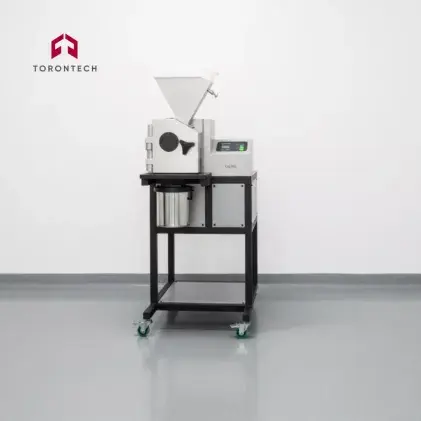
Note: The FM200 accepts feed sizes up to 10mm. If you are starting with bulky materials, like whole electronic boards, large plastic parts, or heavy biomass, we strongly recommend pre-shredding them with our Cutting Mill CM200 first. Once reduced to a manageable size, the FM200 can take over for the fine pulverization.
Here is what you can typically expect in terms of processing goals:
| Material Type | Specific Examples | Typical Processing Goal |
|---|---|---|
| Soft & Elastic | Rubber, polymers, pharmaceutical tablets, gelatin capsules | Embrittlement: Using liquid nitrogen to shatter the sample rather than shredding it, ensuring a free-flowing powder. |
| Fibrous | Plant roots, leaves, straw, textiles, paper, leather | Cutting: Shearing long fibers into a <500μm powder for extraction, rather than just mashing them. |
| Temperature-Sensitive | Powder coatings, resins, fatty foods | Preservation: Rapid grinding prevents melting or oil separation, which ruins analysis. |
| Hard & Brittle | Coal, minerals, electronic components, graphite, dried bones | Pulverization: Achieving <40μm fineness for XRF pellet preparation or fusion. |
Comparison: Are You Buying the Wrong Mill?
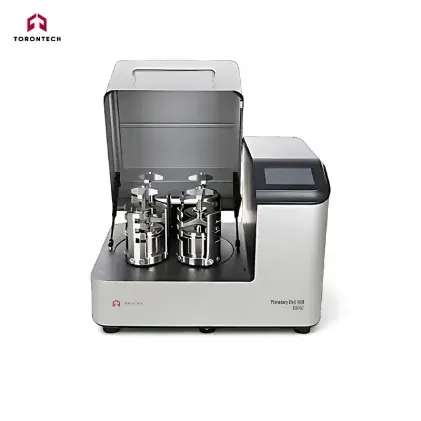
We see many labs purchasing Planetary Ball Mills simply out of habit. However, unless you require nano-scale grinding, a Ball Mill is often inefficient for the job, not to mention the hassle of cleaning the jars and balls afterward.
Here is how we view the FM200 compared to other common options:
| Feature | Ultra Centrifugal Mill (FM200) | Planetary Ball Mill | Knife Mill (e.g., HM300) |
|---|---|---|---|
| Best For | Soft, fibrous, and heat-sensitive samples. | Hard, abrasive rocks (like concrete or glass). | High-water, high-fat, or very elastic samples (e.g., meat, cheese). |
| Mechanism | Impact & Shearing (High Speed) | Friction & Impact (High Energy) | Cutting (Blades) |
| Final Fineness | < 40 μm (Fast) | < 1 μm (Nano-scale, Slow) | ~300 μm (Rough chop) |
| Speed | Seconds | Minutes to Hours | Seconds |
Our take: If you are processing wet or extremely fatty samples (like fresh meat or cheese) without liquid nitrogen, the Knife Mill HM300 is likely the better fit. But for dried, fibrous, or brittle samples where fineness is key (<40μm), the FM200 is significantly faster.
Where is it Used?
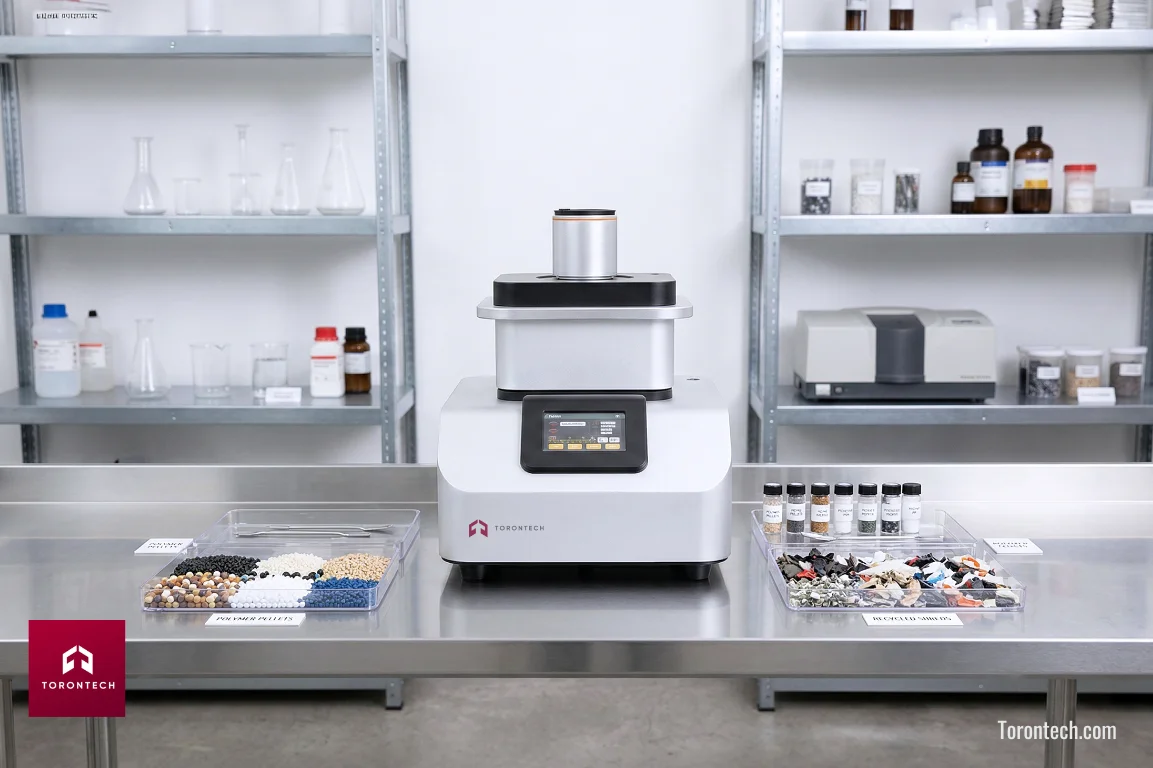
This machine is not just for geological testing. It is essential in several demanding sectors where regulatory compliance and accuracy are non-negotiable.
Pharmaceuticals & Herbal Medicine
- Tablet Analysis: Pulverizing tablets and dragees to verify that active ingredients are evenly distributed.
- Typical Scenario: Processing coated tablets often gums up standard blades. The FM200 uses impact force to shatter the coating and core simultaneously for a homogenous mix.
- Fibrous Roots: Grinding hemp or ginseng roots without clogging the system. The FM200 shears through tough fibers that typically jam blade mills, ensuring you get a representative sample for potency testing.
Agriculture & Food
- Feed Testing: Processing seeds and pellets to check protein levels.
- Typical Scenario: For high-fat seeds like soybeans, standard grinding creates a paste. With the FM200's cryogenic setup, the oil freezes, allowing the seed to be ground into a flowable powder for accurate NIR analysis.
- Whole Grain Flour: This type of mill is commonly used in food science for producing whole grain flours with desirable qualities such as low damaged starch and fine particle size, which are important for baking and nutritional properties (Khalid et al., 2017; Han et al., 2025).
- GMO Analysis: Rapidly crushing crop samples to extract DNA before degradation occurs. Speed is vital here to stop enzymatic activity.
Plastics & Polymers
- Cryo-Grinding: Grinding rubber or elastomers at room temperature is nearly impossible. By adding liquid nitrogen, the FM200 shatters the embrittled material into a fine powder.
- Typical Scenario: A lab needs to test a masterbatch for filler distribution. The FM200 can turn a standard plastic pellet into dust in seconds using a 0.5mm sieve.
- Additives Testing: Verifying filler content within plastics to ensure production consistency.
Minerals, Electronics & Industrial
- Mineral Processing: Centrifugal mills are applied in mineral processing for ultra-fine grinding of minerals like limestone and talc, where the grinding efficiency depends on the mill's gyration diameter and speed. The FM200’s high speed makes it ideal for these applications.
- Circuit Boards: Processing PCBs to detect hazardous substances like lead. This machine handles fiberglass and copper effectively, separating the metals from the board material.
- General Efficiency: Ultra centrifugal mills are favored in industries requiring precise particle size control and high grinding efficiency, including pharmaceuticals, chemicals, mining, and ceramics. Their ability to handle a wide range of materials with high energy efficiency makes them suitable for applications demanding ultra-fine particle production.
Textiles
- Fabric Testing: Grinding cotton or leather to check for chemical dyes (like azo dyes). The shearing rotor cuts these fibers into a powder rather than creating a tangled mess, which is a common issue with impact-only mills.
Why We Recommend the FM200
We are selective about equipment. It must be reliable, safe, and respectable in a busy lab environment. Here is why we endorse this FM200:
Adaptable Speed Control
You can operate at 20,000 RPM for hard materials, or reduce it to 6,000 RPM to avoid scorching elastic samples. This flexibility is practical for labs handling varied sample types, meaning you don't need two different machines for different daily tasks.
Handles Difficult Materials
For sticky or fatty samples that usually clog a machine quickly, the cryogenic capability is essential. Freezing the sample allows for immediate grinding without the mess, and the FM200 is built to handle those temperature extremes without failing.
Prevents Sample Contamination
If you are analyzing trace metals, grinding with stainless steel introduces iron contamination, which can skew your baselines. We offer Pure Titanium parts to keep your samples chemically pure and audit-ready.
Tool-Free Cleaning
Cleaning lab equipment is often the biggest bottleneck in the workflow, especially in multi-user labs. The FM200 features a "Push-Fit" design, allowing you to remove the rotor and sieve by hand. This keeps the process moving and drastically reduces the risk of cross-contamination between batches.
Operator Safety
Spinning metal at 20,000 RPM requires strict safety measures. The FM200 utilizes a dual-lock system; the motor will not start unless sealed, and the lid remains locked until the rotor stops completely. This fail-safe protects your technicians from accidents.
Need a quote for your lab? Check the FM200 Price and Specifications Here.
Selecting the Right Configuration
Don't just buy the base unit; you need the correct accessories to get the job done right. We can assist with the configuration, but here is a quick guide to getting started:
Rotor & Sieve Guide
- Standard 24-Tooth Rotor: The standard choice for chemicals, coal, and grains. It provides the finest grind for general applications.
- 12-Tooth Rotor: Use this for fibrous materials like tobacco or straw. The wider gap prevents jamming and allows bulky material to pass through easier.
- Ring Sieves: The aperture size dictates your final powder size. Tip: Select a sieve size approximately 20-30% larger than your target particle size to maintain high throughput without blocking the screen.
Key Specifications
- Feed Size: < 10mm (Use a pre-crusher for anything larger).
- Final Fineness: < 40μm (depending on the material nature).
- Throughput: Automatic feeders (vibratory feeders) are available for high-volume workloads, ensuring a consistent feed rate.
Upgrade Your Lab with Torontech FM200
The Torontech FM200 Ultra Centrifugal Mill is more than just a piece of hardware. It is the difference between reliable data and a failed analysis. Whether you are processing 50 samples daily or preparing a critical pharmaceutical formulation, this machine delivers consistent results.
Ready to upgrade your sample preparation? Contact us to get a quote!
References:
- Cho, H., Lee, H., & Lee, Y. (2006). Some breakage characteristics of ultra-fine wet grinding with a centrifugal mill. International Journal of Mineral Processing, 78, 250-261.
- Han, H., Lee, E., & Kweon, M. (2025). Predominant factors in milling and wheat variety influencing particle size and quality of whole wheat flour. Journal of Food Science, 90.
- Khalid, K., Manthey, F., & Simsek, S. (2017). Whole Grain Wheat Flour Production Using an Ultracentrifugal Mill. Cereal Chemistry, 94, 1001-1007.
- Umucu, Y., Deni̇z, V., & Gürsoy, Y. (2023). ÖĞÜTMEDE ENERJİ-TEKNOLOJİ GELLİŞİMİ VE İNCE ÖĞÜTME İLE İLİŞKİSİNİN ARAŞTIRILMASI. Eskişehir Osmangazi Üniversitesi Mühendislik ve Mimarlık Fakültesi Dergisi.