Choosing a Disintegration Tester: Automated vs Manual
The disintegration tester your lab chooses is a key indicator of your operational strategy. With increasing demands for speed and flawless compliance, this decision directly impacts workflow, labor costs, and data confidence.
The core question in the manual vs automated disintegration testing debate is whether your operation will stick with the traditional hands-on method or benefit from a system that automates the work for you.
What is Disintegration Testing?
In simple terms, a disintegration tester simulates stomach conditions to measure how long it takes for a tablet or capsule to break down into particles. It is a fundamental pass/fail quality check that confirms a product will behave as expected once ingested.
The entire procedure is strictly defined by official guidelines from pharmacopeias like the USP 701, USP 2040, and others, ensuring consistent and reliable results across the industry.
Read more: Understanding the Disintegration Test: How Tablets and Capsules Are Evaluated
Manual Testers: The Established Workhorse
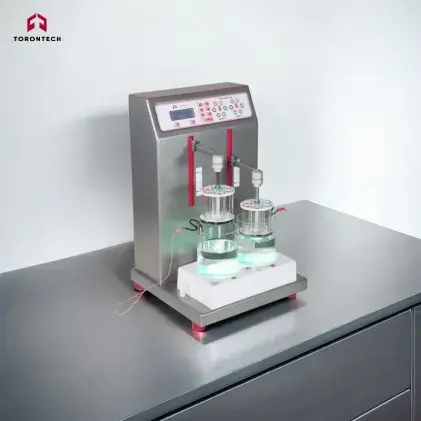
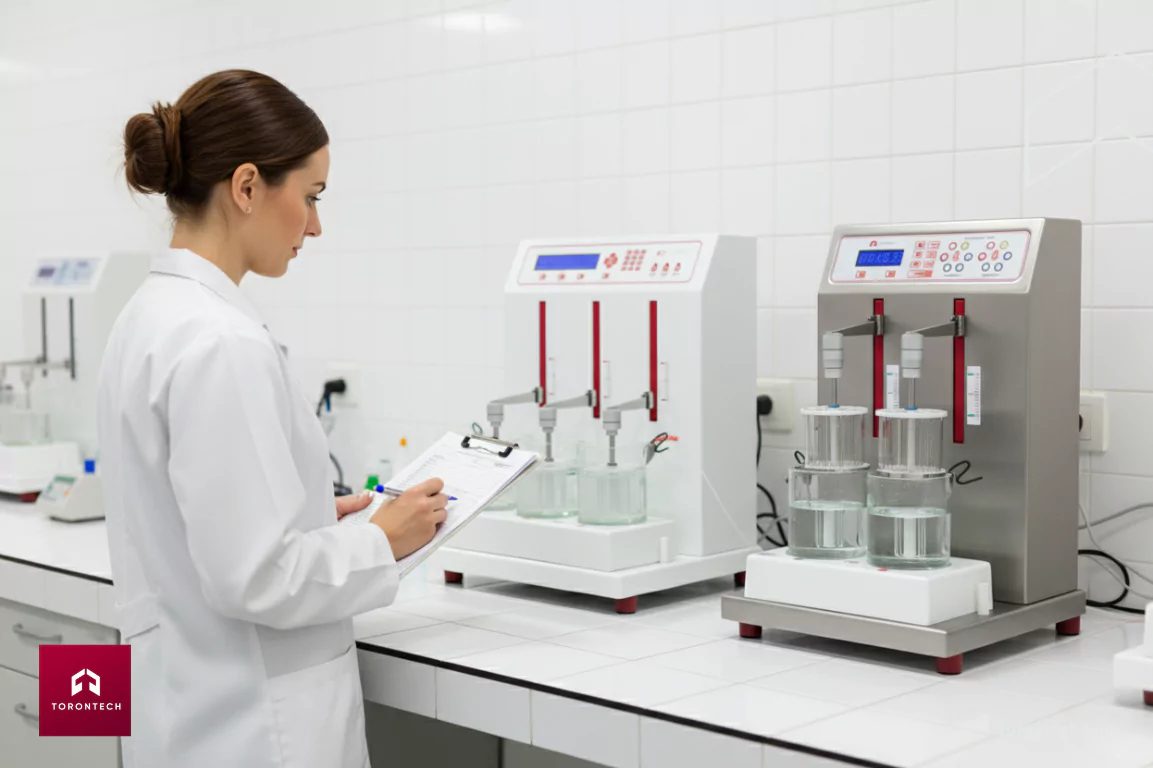 Manual testers have long been the standard for labs everywhere. They are straightforward, reliable, and get the job done. The procedure involves a technician visually monitoring the samples and recording the results by hand. For a facility with a manageable sample volume, a dependable, no-frills machine like our ToronDT-2sA is an extremely sound and cost-effective investment.
This is a perfect example of the right tool for the right job. Think of a startup in the nutraceutical field creating a new vitamin C tablet. Their production runs are small and their formulation is still being perfected. A manual tester provides the fundamental quality check they need to keep their project moving. It's a core part of our mission to provide companies at this stage with a compliant starting point that doesn't break the bank.
Automated Testers: A Genuine Impact on Throughput and Accuracy
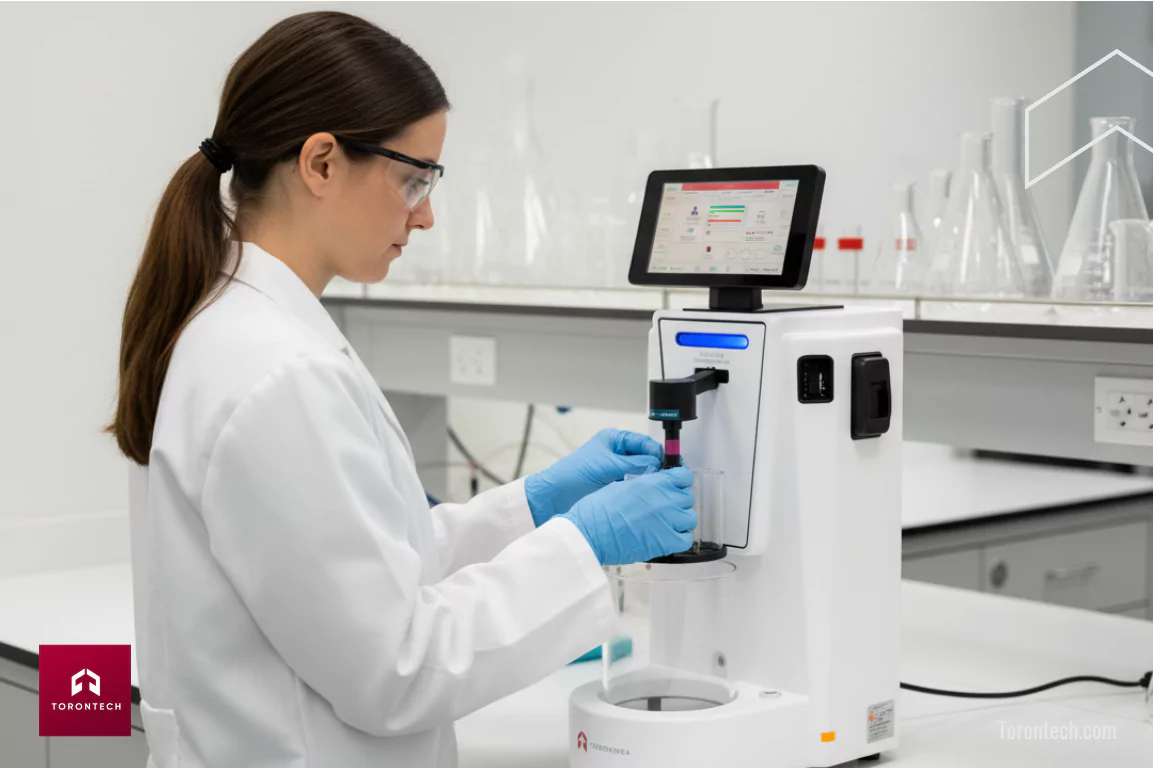
This is where the benefits in the automated vs manual disintegration testing comparison become most apparent.
Automated testers manage the entire testing sequence with minimal human input, from lowering the baskets to detecting the endpoint. They use precise detection technology to identify and record the exact moment of disintegration for every single sample, creating a clean, unassailable data record.
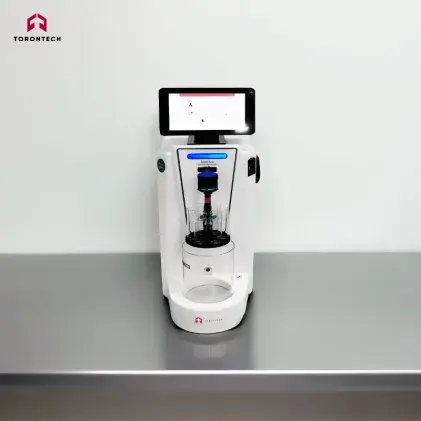
The most significant benefit here is the high degree of confidence it gives your data, combined with a dramatic increase in "walk-away time." When our clients integrate a system like our ToronDT-Auto, they are making a strategic investment in their data integrity. Their most experienced technicians are freed up from the repetitive task of watching samples and can be reallocated to more demanding analytical work.
This is the system built for a high-volume generic drug manufacturer. Consider a facility producing millions of metformin tablets a week. They cannot afford a QC bottleneck. This is precisely the kind of high-stakes environment the Torontech automated systems are engineered for, where data integrity isn't just a feature, but the entire foundation.
A Clear Comparison: Manual vs Automated Disintegration Testing
This table offers a direct look at how these two approaches stack up against key business considerations.
| Key Operational Factor | The Traditional Manual Approach | The Modern Automated Approach |
| Result Precision | Operator-dependent; potential for subjectivity | High; electronically timed and recorded |
| Sample Throughput | Lower; limited by the need for constant attention | High; can run unattended, increasing capacity |
| Labor Allocation | Requires dedicated technician monitoring | Frees up expert staff for higher-value tasks |
| Data Integrity | Manual logging; susceptible to human error | Generates a secure, unalterable digital record |
| Initial Capital Outlay | Lower | Higher |
| Best Suited For | Lower-volume QC, R&D labs, budget-focused projects | High-volume QC, compliance-heavy environments |
The Hybrid Advantage: Flexible Semi-Automated Testers
For facilities seeking more flexibility than a manual tester without the full investment of an automated one, there's a powerful hybrid solution.
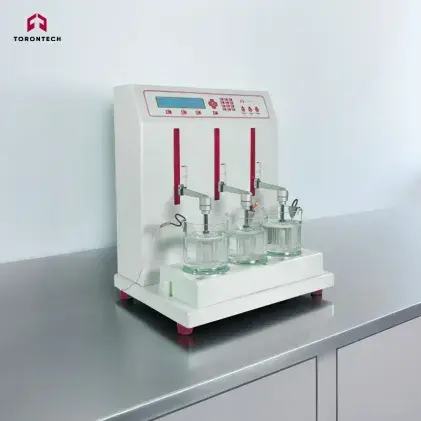
Instruments like our ToronDT-3X model offer a dual-capability approach. Each testing station operates independently, with its own motor and programmable timer. This means you can run three completely different samples, with different test durations, all on one machine at the same time, effectively operating in multiple modes. You retain the direct visual confirmation of a manual test but gain the efficiency and accuracy of automated timing.
We developed this line specifically for labs that need to maximize throughput on a variety of products simultaneously.
Selecting the Right System for Your Operation
When we consult with laboratories on the automated vs manual disintegration testing decision, we advise them to assess three core areas:
- Your Real-World Sample Volume: Look at your daily and weekly batch logs. A high-throughput environment will see a much faster return on the investment made in full automation.
- Your Capital Budget: We encourage a Total Cost of Ownership perspective. Our team specializes in helping clients look beyond the initial price tag to see the full financial picture.
- Your Regulatory Requirements: For any lab operating under the strict guidelines of 21 CFR Part 11, data integrity is paramount. The secure, traceable data from an automated system are essential for making audits as smooth as possible.
Torontech: Your Partner in Disintegration Testing
The choice in manual vs automated disintegration testing is a key strategic decision. We are convinced that for any forward-thinking lab, the move to automation offers clear advantages in efficiency, error reduction, and data quality.
Making this upgrade, however, must be financially sound. At Torontech, our business model is built on this principle: providing high-performance, compliant equipment at a sensible price point. From our durable manual machines to our advanced automated systems, every instrument is engineered to meet global standards without straining your budget.
Ready to enhance your lab's testing capabilities? We invite you to review our range of cost-effective disintegration testers. Contact our sales team to discuss your operational needs, and let's build a quote that aligns with your goals.
Achieve Consistent Disintegration, Batch After Batch
Explore cost-effective Disintegration Testers for reliable results.