What is a Catheter Flexibility Tester? A Guide
In the medical device industry, long-term success is built on predictable device performance.
Physicians will describe the “feel” of a device, but as a manufacturer, you know that subjective feedback isn’t actionable data. To create a consistently superior product, the mechanical properties of catheters and guidewires must be quantified.
At Torontech, we believe this data is the line between being a market leader and just another commodity, and it starts with a clear catheter flexibility tester definition.
What Does a Catheter Flexibility Tester Measure?
So, what does a catheter flexibility tester measure? By definition, it's a specialized instrument designed to provide objective, quantitative data on a device's core mechanical characteristics. This isn't just about a simple pass/fail; it's about deeply characterizing your product's physical personality. A tester quantifies:
- Flexibility and Stiffness: The fundamental resistance the catheter shaft provides when subjected to a bending force, a key metric for performance.
- Mechanical Compliance: The precise engineering term for how much a device deforms under a specific, controlled load, critical for understanding its structural integrity.
- Force-Displacement Response: The narrative of how much effort it takes to move a device from one point to another, which is essential for guidewire and catheter testing.
How Does It Work? The Core Mechanism
The testing process is straightforward, but its value is in the precision. Every step in a well-designed system, like the kind we advocate for, is meant to remove human error and produce a clean, undeniable data profile using methods like the three-point bend test.
- It Secures the Device: First, the machine gets a firm hold of the catheter. We specify pneumatic systems because they provide a secure grip without crushing the sample, which would corrupt the catheter testing results.
- It Applies a Force: A high-precision drive system then applies a controlled force. In a standard three-point bend test, it presses on the middle of the shaft to simulate a bending moment a device might experience in use.
- It Measures the Response: All the while, a highly sensitive load cell is detecting every bit of resistance. It notices minor variations that a human hand could never register, providing accurate flexibility and stiffness measurements.
- It Generates a Data Curve: The software records this interaction, plotting a force-displacement curve. We see this graph as the device’s unique mechanical fingerprint, giving you the objective facts for analysis and permanent record-keeping.
Defining the Core Performance Metrics
The force-displacement curve is a rich source of specific metrics that define a device's behavior. Turning this data into actionable intelligence is key to product improvement.
Flexural Stiffness and Modulus
This primary metric from a bend test quantifies the shaft's resistance to bending. This balance is key to preventing kinking while avoiding the "over-steering" effect of a shaft that is too stiff, a critical aspect of catheter performance.
Column Strength and Pushability
This metric defines the catheter's resistance to buckling under a direct pushing force. It’s the engineering foundation for clinical pushability. Good column strength allows for precise distal control instead of the force being lost to shaft compression.
Frictional & Insertion Forces
This quantifies resistance during interaction with other components. A catheter flexibility tester can measure the frictional drag of a guidewire or the force needed to push a tip through a hemostasis valve, helping you engineer a smoother experience.
From Graph to Insight
The primary output is that force-displacement graph. A steep curve shows a stiff device; a shallow curve indicates a more flexible one. By comparing these graphical 'fingerprints,' you can immediately see the effect of a design change or spot a production deviation, creating a traceable record of catheter mechanical properties.
Key Applications: From R&D to Final Quality Control
This numbers-first medical device testing is invaluable across the product lifecycle.
- In Research & Development: Engineers use this data to benchmark new designs. By testing different materials, they can fine-tune a device's performance profile, shelving unpromising concepts early and saving significant time and money.
- In Quality Control (QC): In QC, testing is the gatekeeper. It ensures every unit produced has the same specs as the approved design. This data is fundamental for demonstrating compliance with standards like ISO 10555 for intravascular catheters and ASTM F2394 for guidewire mechanical properties.
| Standard | Why It Matters |
| ISO 10555 | The big-picture rules for intravascular catheters. |
| ISO 11070 | The rulebook for introducers and guidewires. |
| ISO 178 | The official standard for how much plastic stuff should bend. |
| ASTM F2394 | The guide for checking out the physical chops of a guidewire. |
| ASTM F2908 | The test for figuring out how stiff or bendy a guidewire is. |
The Risks of 'Feel': Why Manual Testing Falls Short
Relying on subjective feedback exposes your operation to serious risk. This is why objective data from a dedicated catheter flexibility tester is superior.
- Operator Variability: Different technicians produce different results, leading to quality control nightmares. An automated system provides absolute consistency.
- Slow R&D Cycles: Manual setups are time-consuming and slow down design iterations, delaying your time-to-market.
- Audit Exposure: Defending data from a non-validated process during a regulatory audit is a difficult position. An automated system provides a clean, documented report every time.
- Product Inconsistency: Without a quantitative benchmark for catheter stiffness, it’s hard to guarantee your millionth device is identical to your first.
Essential Features of a Modern Catheter Testing System
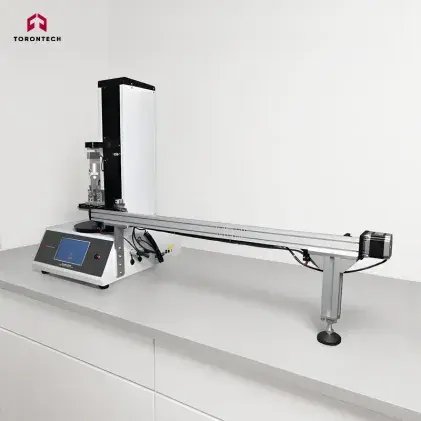
A serious piece of testing equipment needs a few key things. At Torontech, we consider these the essential features for any modern catheter flexibility testing equipment.
- A High-Precision Drive: A smooth drive system is the foundation of a repeatable test. Without it, you are introducing noise into your own data.
- A Sensitive Sensor: A force sensor that can pick up on tiny differences in resistance allows you to characterize subtle but important device behaviors.
- A Secure Clamp: A pneumatic clamp that holds on tight without damaging the sample ensures that you are testing the device, not the quality of your grip.
- Compliant Software: A program that tracks user permissions and actions, with an audit trail to help you meet the requirements of FDA 21 CFR Part 11, is non-negotiable.
Start Testing with Certainty: Choose Torontech
It's time to move past subjective feedback and make critical decisions based on solid proof.
Our ToronMed-CCT02 Catheter Flexibility and Compliance Tester provides the repeatable data you need to refine your designs and satisfy regulatory demands. This is about shifting your process from ambiguity to the certainty of reliable catheter flexibility measurements.
We believe you shouldn't have to choose between high-end features and your budget. Torontech has always focused on engineering cost-effective medical device testing equipment that deliver critical information.
If you’re ready to remove testing variables and bring better products to market, faster, let's discuss how our catheter and guidewire flexibility tester can help.
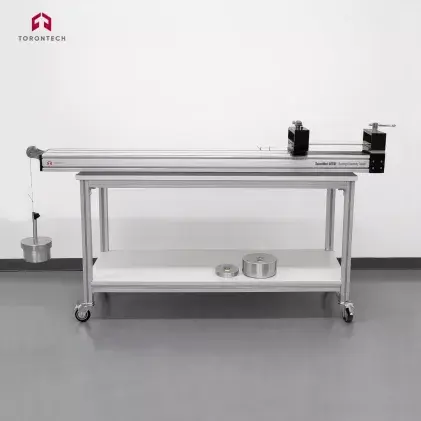
Our ToronMed-BET01 Bandage Elasticity Tester is the embodiment of this philosophy. It delivers the precision and compliance you need in an affordable, focused package. If you are ready to make quality a core part of your competitive strategy, we would be pleased to provide a quote.