
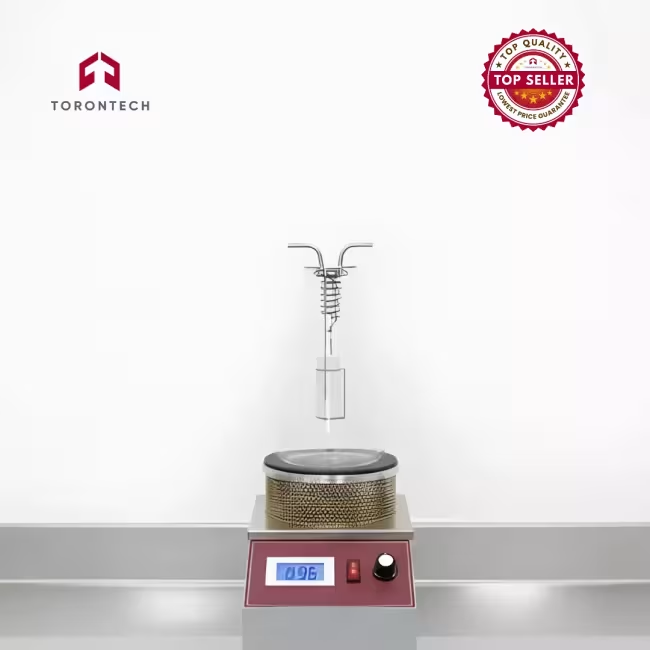
Sediment Extraction in Crude Oil and Fuel Oil
Sediment Extraction in Crude Oil and Fuel Oil TT-473
Sediment Extraction in Crude Oil and Fuel Oil TT-473 aligns with the ASTM D473 Standard Test Method for Sediment in Crude Oils and Fuel Oils using the Extraction Method.
It serves the purpose of testing sediment in crude oils and fuel oils through extraction with toluene. The precision of this method is applicable to sediment levels ranging from 0.01 to 0.40% mass, although it can also determine higher levels if necessary.
The primary application of the Sediment Extraction in Crude Oil and Fuel Oil TT-473 apparatus is to determine the amount of sediment in crude oils and fuel oils using the extraction method, in compliance with the ASTM D473 standard. This test is essential for measuring the quantity of non-combustible, solid impurities in these products, which is a critical indicator of their quality and cleanliness. The method is particularly precise for sediment levels between 0.01 and 0.40% mass.
Key Industries
- Petroleum Refining: Refineries must test incoming crude oil for sediment content. High levels of sediment can cause significant operational problems, including fouling of heat exchangers, plugging of pipes, and damage to processing units.
- Marine and Bunkering: For the shipping industry, which relies heavily on fuel oils, sediment is a major concern. It can cause fuel filter blockages, damage to fuel injectors, and increased engine wear, leading to costly maintenance and potential engine failure.
- Pipeline and Transportation: Midstream companies that transport and store crude oil and fuel oil test for sediment to ensure product quality is maintained throughout their system. Sediment can accumulate in pipelines and storage tanks, and this test is used at custody transfer points to verify that the product meets quality specifications.
- Electric heating ensures uniform temperature distribution.
- The cover and condenser pipe feature standard plating.
- The apparatus includes a stainless steel basket and a glass water receiver.
1. Rated voltage: AC220V ± 10% 50Hz
2. Power: Adjustable from 0 to 700W continuously
3. Temperature controlling mode: Solid-state voltage regulator with stepless voltage regulation.
4. Adjustable display range: AC 0 to 250V (110V also available)
5. Erlenmeyer flask capacity: 2000ml
6. Ambient requirements: Temperature range of 10 to 40°C; Humidity ≤ 85%