
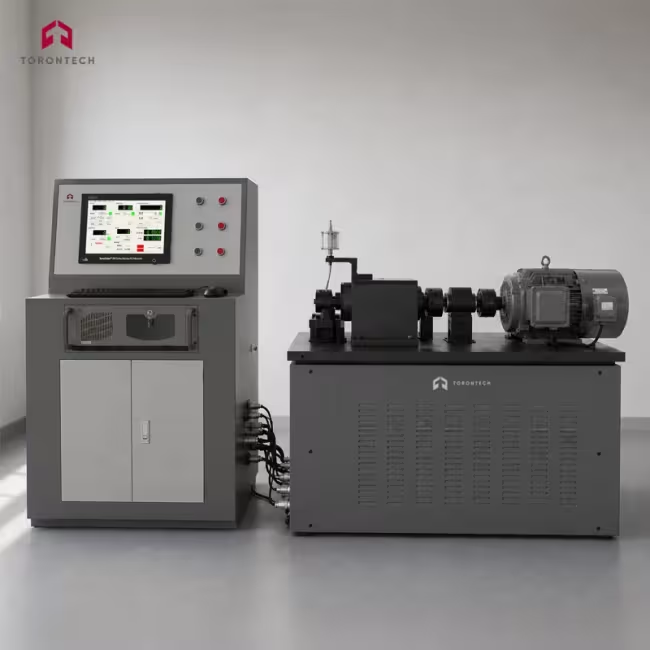
Sliding Bearing PV Tribometer
Sliding Bearing PV Tribometer - ToronTribo™ PV
Sliding Bearing PV tribometer measures the pressure-velocity performance limits of sliding bearing materials, serving bearing manufacturers, bushing producers, and materials laboratories evaluating self-lubricating and lubricated bearing systems. The ToronTribo™ PV drives a sliding bearing under controlled load and speed conditions, testing performance across dry friction, drip lubrication, and immersion lubrication while measuring bearing temperature rise, friction coefficient, wear amount, and PV value.
The tester applies normal force from 300 to 20,000 N with stepless adjustment, and a maximum friction torque of 50 N·m. Main spindle speed ranges from 200 to 2800 rpm with stepless speed regulation, and temperature is monitored from room temperature up to 200°C. Time display extends to over 99,999 minutes, supporting the extended test durations often needed to establish a bearing material's limiting PV value.
Bearing manufacturers, bushing producers, and materials research laboratories use the ToronTribo™ PV to determine the maximum combination of load and speed a sliding bearing material can sustain before excessive wear, overheating, or failure occurs. This PV limit data directly supports material selection and bearing design decisions across dry-running and lubricated bearing applications.
Sliding Bearing PV Tribometer - ToronTribo™ PV Applications
The ToronTribo™ PV supports pressure-velocity performance testing for sliding bearing and bushing materials across dry and lubricated operating conditions.
- Self-Lubricating Bushing Material Qualification: determines the PV limit of polymer, composite, and metal-polymer bushing materials operating without external lubrication
- Plain Bearing Material Selection: compares candidate bearing materials by PV limit to guide selection for specific load and speed applications
- Bearing Lubrication Strategy Evaluation: measures how dry friction, drip lubrication, and immersion lubrication each affect PV performance for a given bearing material
- Bearing Temperature Rise Characterization: tracks how bearing temperature increases as load and speed rise, identifying the onset of thermal-related performance limits
- Polymer and Composite Bearing Development: supports development of new self-lubricating bearing compounds by quantifying PV limits during formulation
- Industrial Machinery Bearing Design Support: provides PV limit data used directly in sizing and selecting bearings for pumps, conveyors, and other rotating machinery
- Quality Control and Batch Verification: confirms that incoming bearing or bushing material batches meet expected PV performance before production use
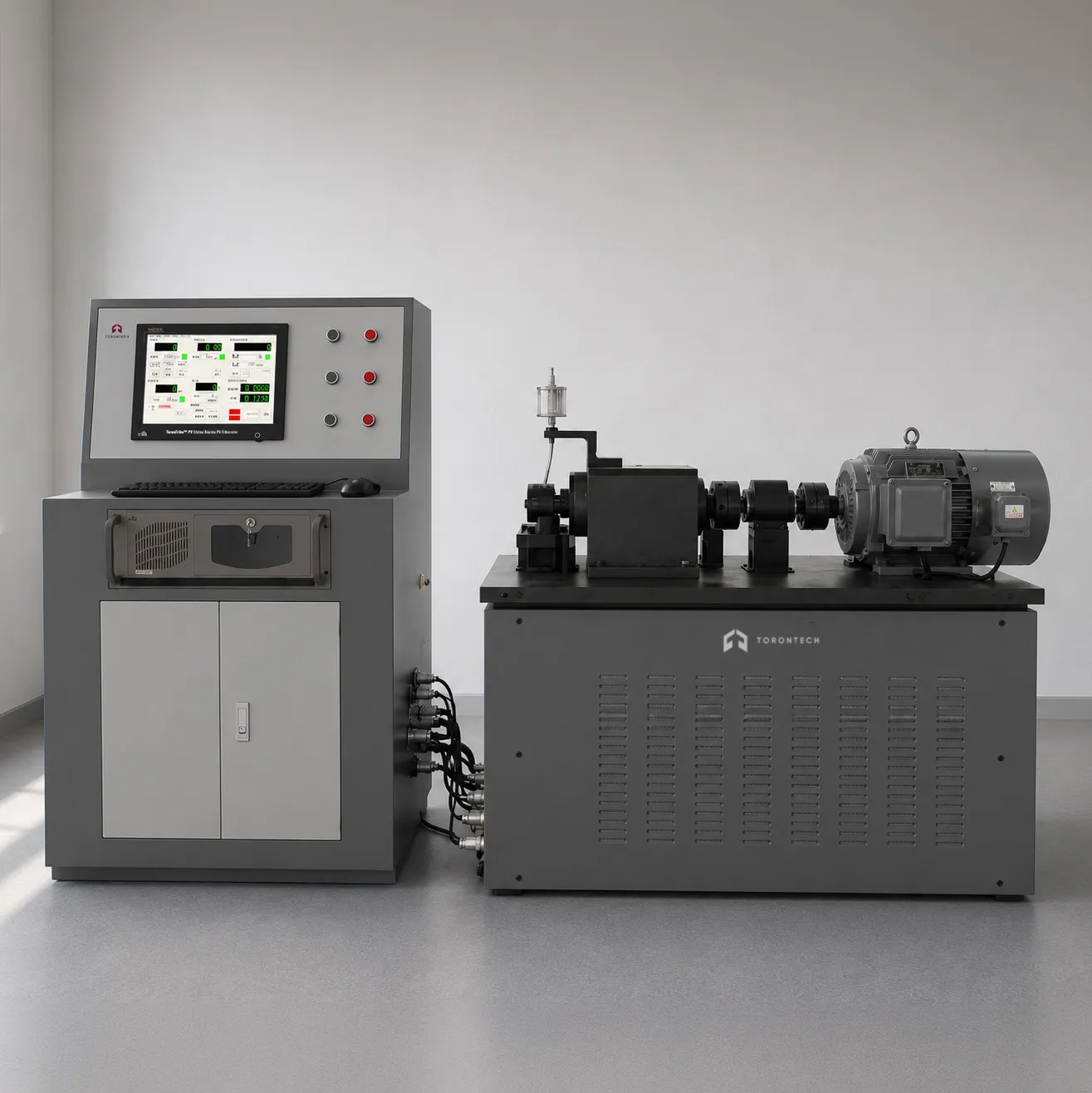
Sliding Bearing PV Tribometer - ToronTribo™ PV Key Features
The ToronTribo™ PV combines high load capacity with flexible lubrication testing for determining sliding bearing performance limits.
- Wide Load Range: applies 300 to 20,000 N of normal force with stepless adjustment for precise control across light to heavy bearing load conditions
- High Friction Torque Capacity: measures friction torque up to 50 N·m, suited to demanding sliding bearing test conditions
- Stepless Speed Control: adjusts main spindle speed from 200 to 2800 rpm for precise matching of test velocity to application requirements
- Multiple Lubrication Modes: tests under dry friction, drip lubrication, and immersion lubrication to characterize PV performance across different service conditions
- Bearing Temperature Monitoring: tracks temperature rise from room temperature up to 200°C to identify thermal limits during PV testing
- Extended Time Display: supports test durations beyond 99,999 minutes, accommodating the long-duration testing often needed to establish PV limits accurately
Theory and Method
The PV value of a sliding bearing is the product of bearing pressure and sliding velocity, a combined metric that captures how much mechanical loading and frictional heating a bearing surface experiences during operation. Bearing pressure reflects the load carried per unit of projected bearing area, while sliding velocity reflects how fast the shaft surface moves relative to the bearing. Because frictional heat generation depends on both how hard two surfaces press together and how fast they slide, PV value serves as a practical single number for comparing how demanding different operating conditions are on a bearing material.
Every bearing material has a limiting PV value, the highest combination of pressure and velocity it can sustain without excessive wear, overheating, or accelerated failure. The ToronTribo™ PV determines this limit by running a sliding bearing under progressively increasing load or speed while continuously monitoring friction coefficient, wear, and bearing temperature rise. As the operating point approaches the material's PV limit, temperature rise accelerates and friction becomes less stable, signaling that the material has reached the edge of its sustainable operating range under the current lubrication condition.
Lubrication state significantly shifts a material's PV limit, since a lubricant film reduces direct asperity contact and carries away frictional heat more effectively than dry sliding. Running the same bearing material under dry friction, drip lubrication, and immersion lubrication on the ToronTribo™ PV shows engineers exactly how much additional load or speed capacity a given lubrication strategy provides, information directly usable when specifying bearing materials and lubrication systems for a target application.
Sliding Bearing PV Tribometer - ToronTribo™ PV Technical Specifications
| Parameter | Specification |
|---|---|
| Normal Force Working Range | 300 to 20,000 N, stepless adjustable |
| Maximum Friction Torque | 50 N·m |
| Main Spindle Speed Range | 200 to 2,800 rpm, stepless speed regulation |
| Temperature Measurement | Room temperature to 200°C |
| Spindle Taper | 1:7 |
| Time Display Range | 1 second to over 99,999 minutes |