
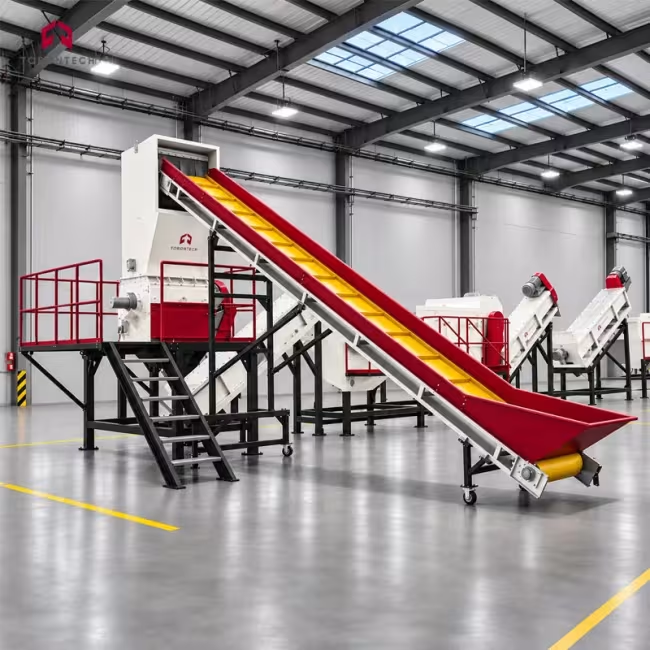
Rigid Plastic Washing Line - ToronPR™ PWL R Series
PE PP Rigid Plastic Washing and Recycling Line for HDPE Containers and Crates
The rigid plastic washing line converts dirty HDPE and PP containers, crates, and molded parts into clean flakes ready for pelletizing or direct reuse. Recyclers, compounders, and molders use it to reclaim milk jugs, shampoo bottles, food boxes, crates, chairs, and pipe offcuts. The ToronPR™ PWL R combines conveying, wet crushing, float washing, friction washing, and centrifugal dewatering in one continuous process. Five standard configurations deliver 300, 500, 1,000, 1,500, and 2,000 kg/h of output.
Rigid waste varies widely in wall thickness, shape, and contamination, so Torontech builds each HDPE washing line around the material a plant actually receives. Post-consumer bottles carry labels, glue, and leftover product, while crates and furniture arrive with soil and grit. Crusher model, crusher count, and washing stages change to match that feedstock and the target throughput. An optional metal detector on the infeed conveyor protects the crusher when the stream includes metal hardware.
Water use stays low for a wet process, at 0.5 to 2 m³/h across the range. Adding a water treatment system lets the plant recirculate process water instead of discharging it. Staffing needs are modest, with two to five operators per shift depending on capacity. Clean rigid flakes leave the line ready for an extruder or an injection molding operation, giving plants a dependable source of recycled HDPE and PP.
Rigid Plastic Washing Line - ToronPR™ PWL R Series Applications
This plastic recycling washing line serves operations that collect contaminated rigid polyolefin products and need clean regrind for reprocessing.
- HDPE Bottle Recycling: washes post-consumer milk jugs, detergent bottles, and shampoo bottles collected through curbside programs, working as a dedicated HDPE bottle washing line
- Crate and Pallet Reclamation: cleans worn PP and HDPE crates, totes, and plastic pallets returned by food, beverage, and logistics operations
- Food Packaging Containers: processes rigid tubs, boxes, and clamshell containers that carry food residue and labels
- Household and Outdoor Furniture: reclaims plastic chairs, tables, and storage bins as part of a broader waste plastic recycling line
- Pipe and Profile Scrap: washes PE and PP pipe offcuts and construction scrap carrying soil, sand, and debris
- Injection Molding Plants: recovers rejected parts and dirty production scrap for regrinding back into the process
- Material Recovery Facilities: cleans the sorted rigid HDPE and PP fractions of mixed municipal waste for resale as washed flake
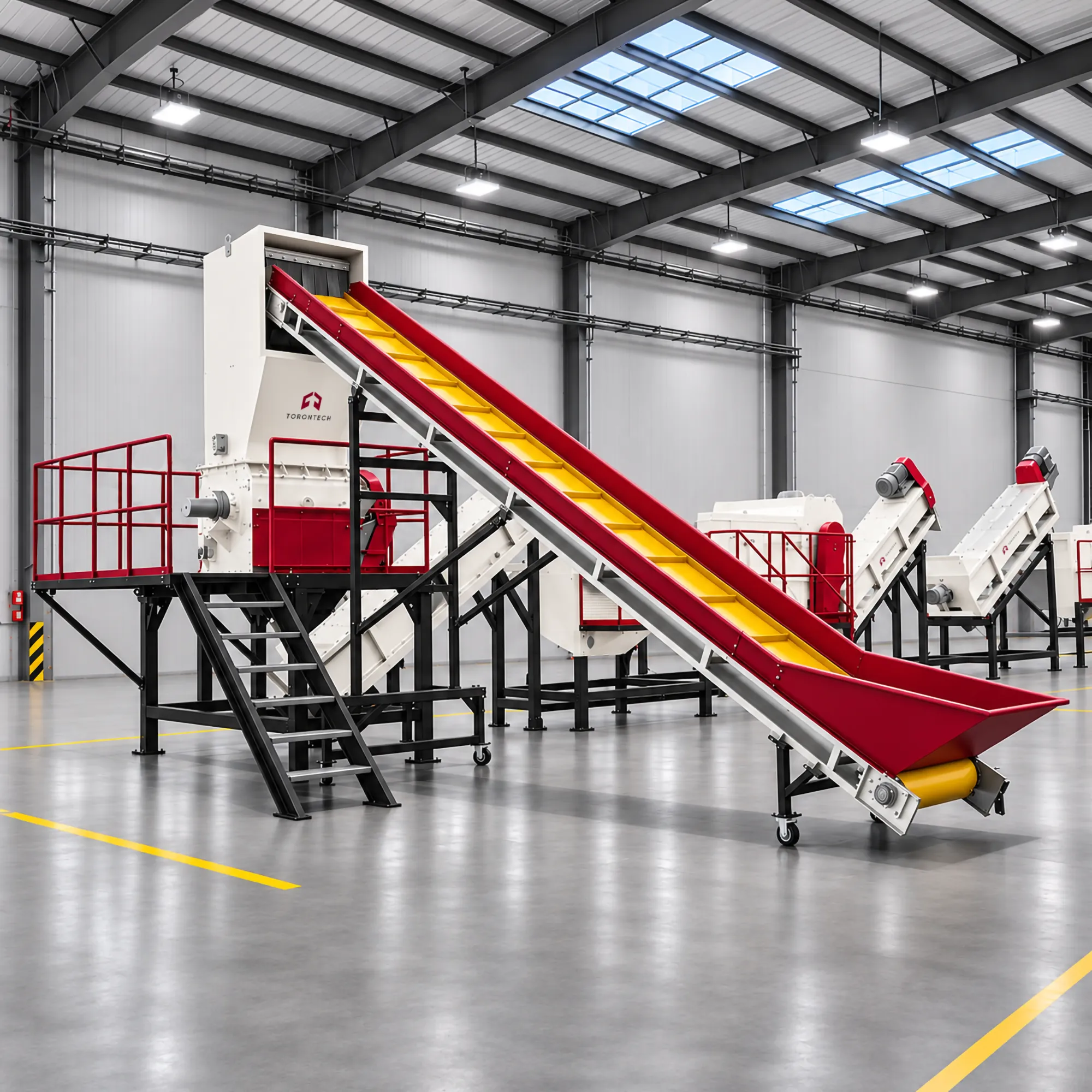
Rigid Plastic Washing Line - ToronPR™ PWL R Series Key Features
The line pairs heavy-duty size reduction with multi-stage washing and drying, all matched to each customer's rigid feedstock and output target.
- Integrated Multi-Stage Process: conveying, crushing, washing, and dewatering run as one connected line, so material moves through every stage without manual handling
- Optional Metal Detection: an infeed detector can be added to stop tramp metal before it chips or dulls the crusher blades
- Crusher Sized to Throughput: crusher model and crusher count are selected to match the target capacity of each installation
- Density Separation of Mixed Plastics: the float tank removes PET, PVC, and other sinking materials that would contaminate HDPE and PP regrind
- Recycled Water Operation: an optional water treatment system lets the line reuse process water and cut fresh water demand
- Customizable Unit Configuration: washing and crushing units can be added or changed to suit material type and contamination level
- Five Capacity Options: standard configurations span 300 kg/h through 2,000 kg/h of output
- Modest Staffing Requirement: two to five workers per shift operate the line, depending on capacity
Main Machine Units
Each ToronPR™ PWL R line is customized, so the exact unit list varies by project. The six units below form the core of every configuration.
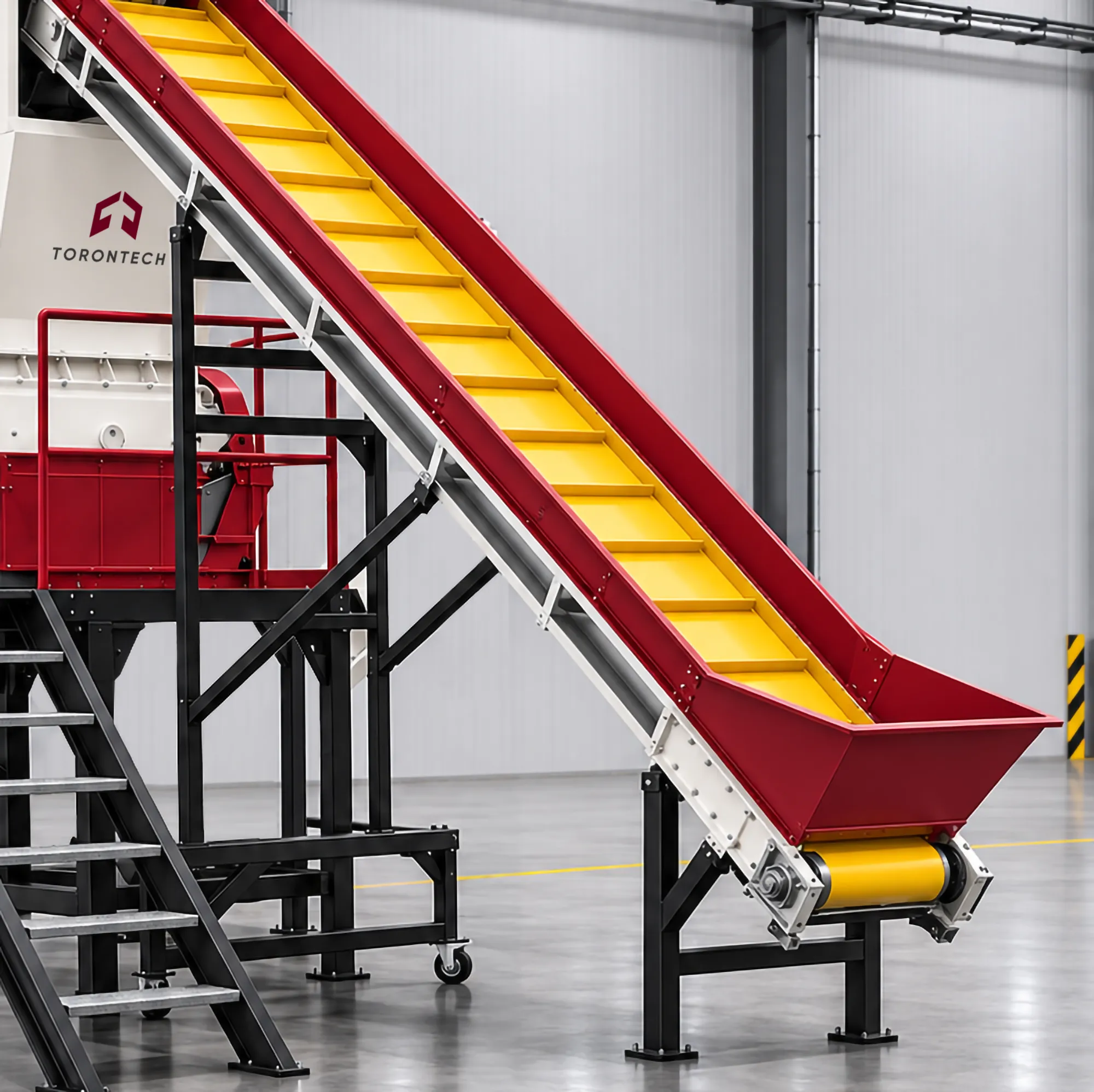
Belt Conveyor with Metal Detector (Optional)
The belt conveyor carries bottles, crates, and molded parts up an inclined path and delivers them to the crusher at a controlled rate. An optional metal detector scans the material stream before it enters the cutting chamber. Rigid waste often hides screws, hinges, and wire handles, and the detector flags these items so the operator can pull them out. This keeps metal away from the rotor, which protects the crusher blades and avoids costly blade changes.
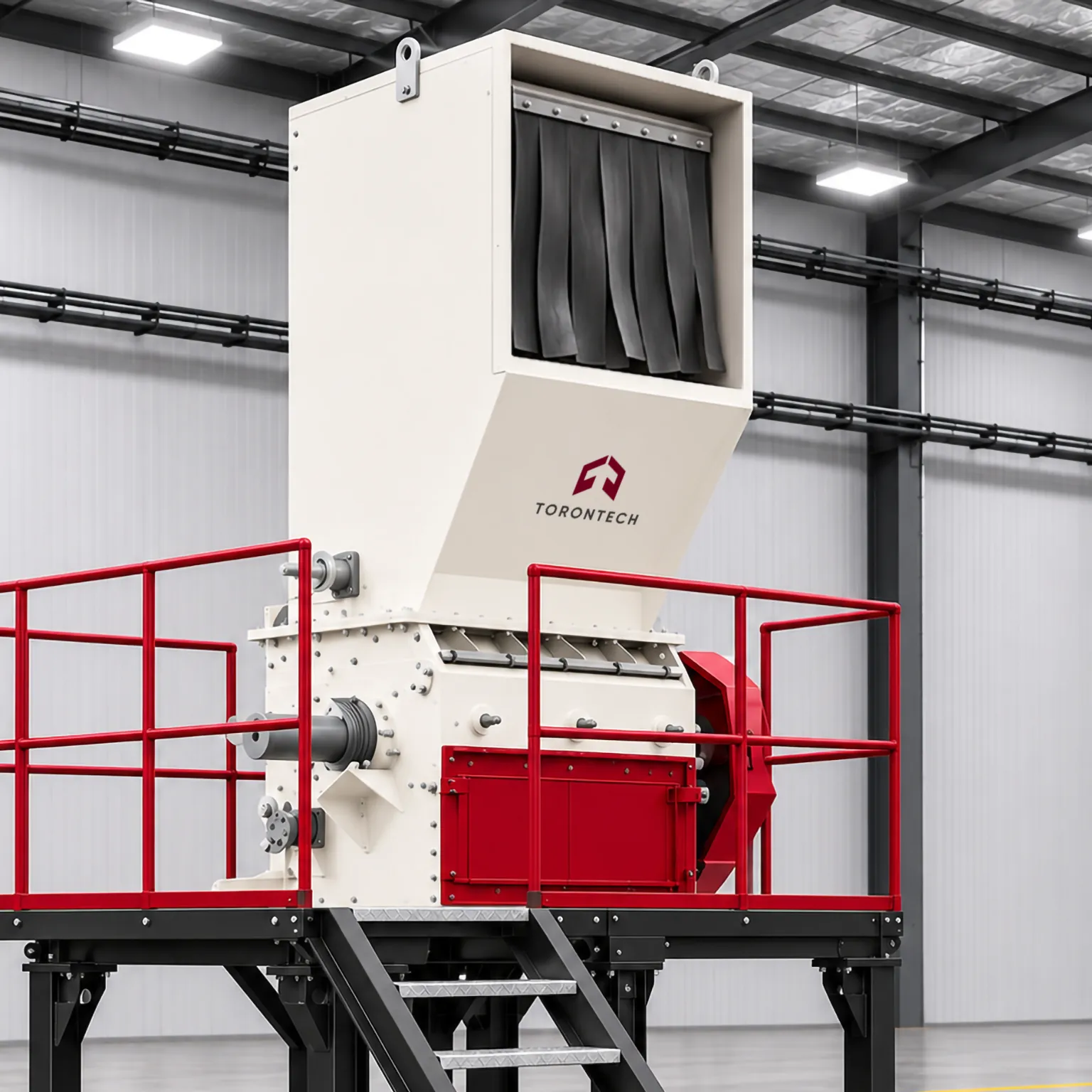
Wet Granulator/Crusher (with Water)
The crusher cuts thick-walled rigid plastic into small, uniform flakes that the washing stages can handle efficiently. Water flows into the cutting chamber throughout the process, cooling the blades and rinsing off loose dirt and leftover product. This wet crushing step starts the cleaning early and keeps dust and fines out of the plant air. Torontech selects the crusher model, and the number of crushers, according to the required output capacity of each line.
Screw Feeder
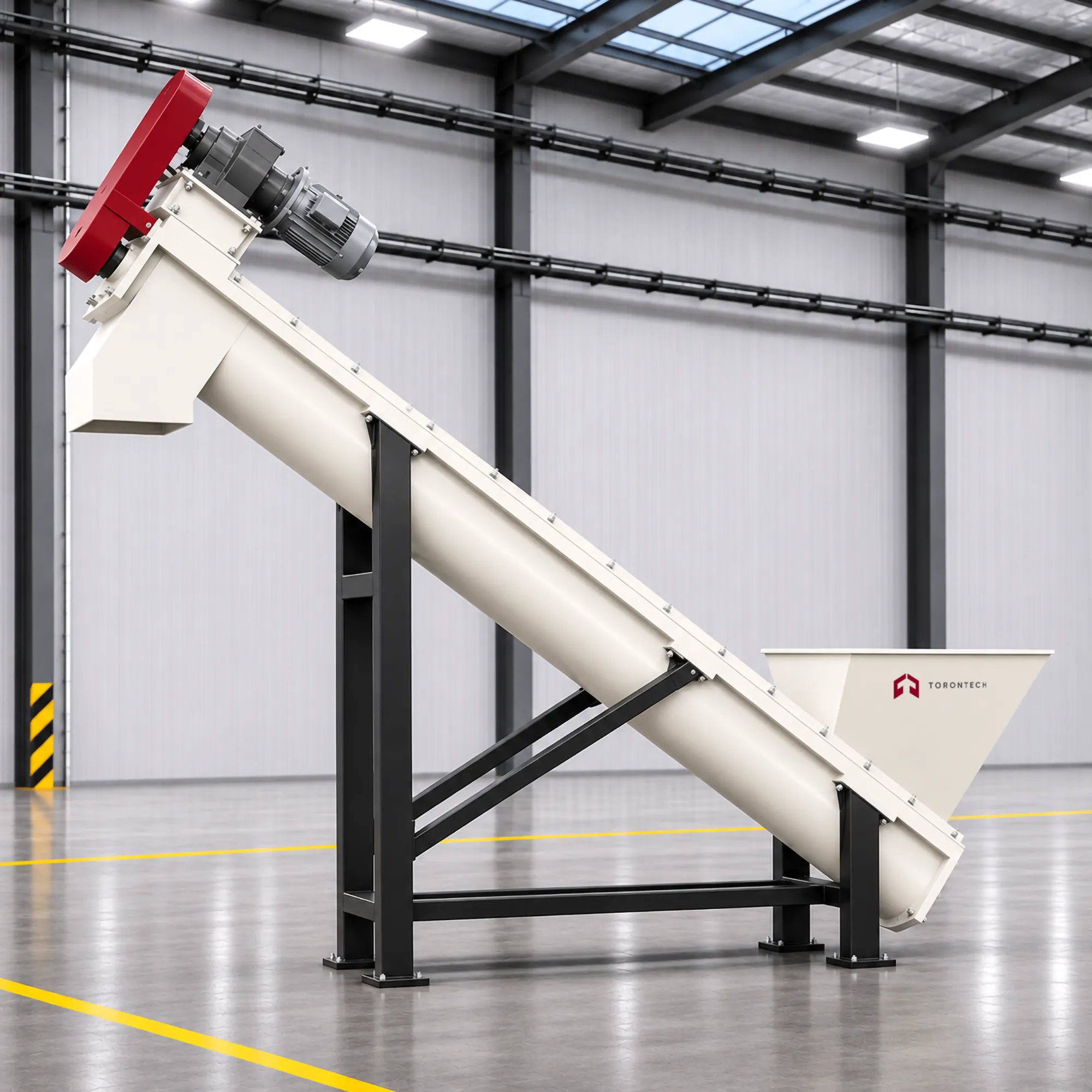
The screw feeder transfers flakes between processing stages, lifting wet material out of one unit and feeding it into the next. A rotating screw inside an inclined housing moves the flakes at a steady, metered rate. Excess water drains back down the incline as the material climbs, so less dirty water carries over into the following stage. This even feed keeps the downstream washers and dewatering machine consistently loaded, which helps the whole line hold its rated throughput.
Floating Washer
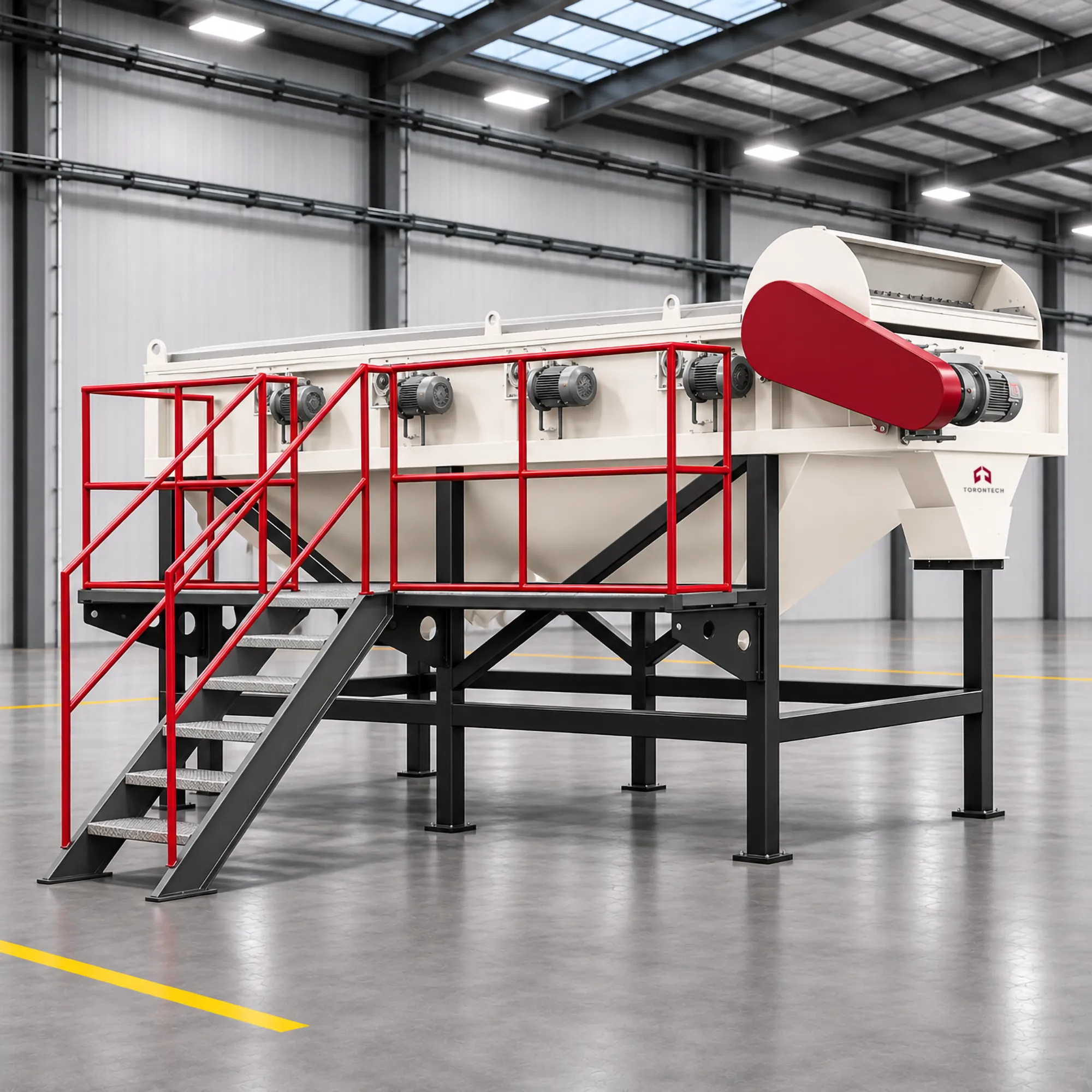
The floating washer separates contaminants by density in a long water tank. HDPE and PP flakes float on the surface, while a series of washing rollers pushes them under the water to scrub and soak them. Sand, grit, stones, and heavier plastics sink and collect at the bottom of the tank. Operators drain this sediment out periodically, and the cleaned flakes travel along the surface toward the discharge end for rigid plastic flake washing in the next stage (High-Speed Friction Washer).
High-Speed Friction Washer
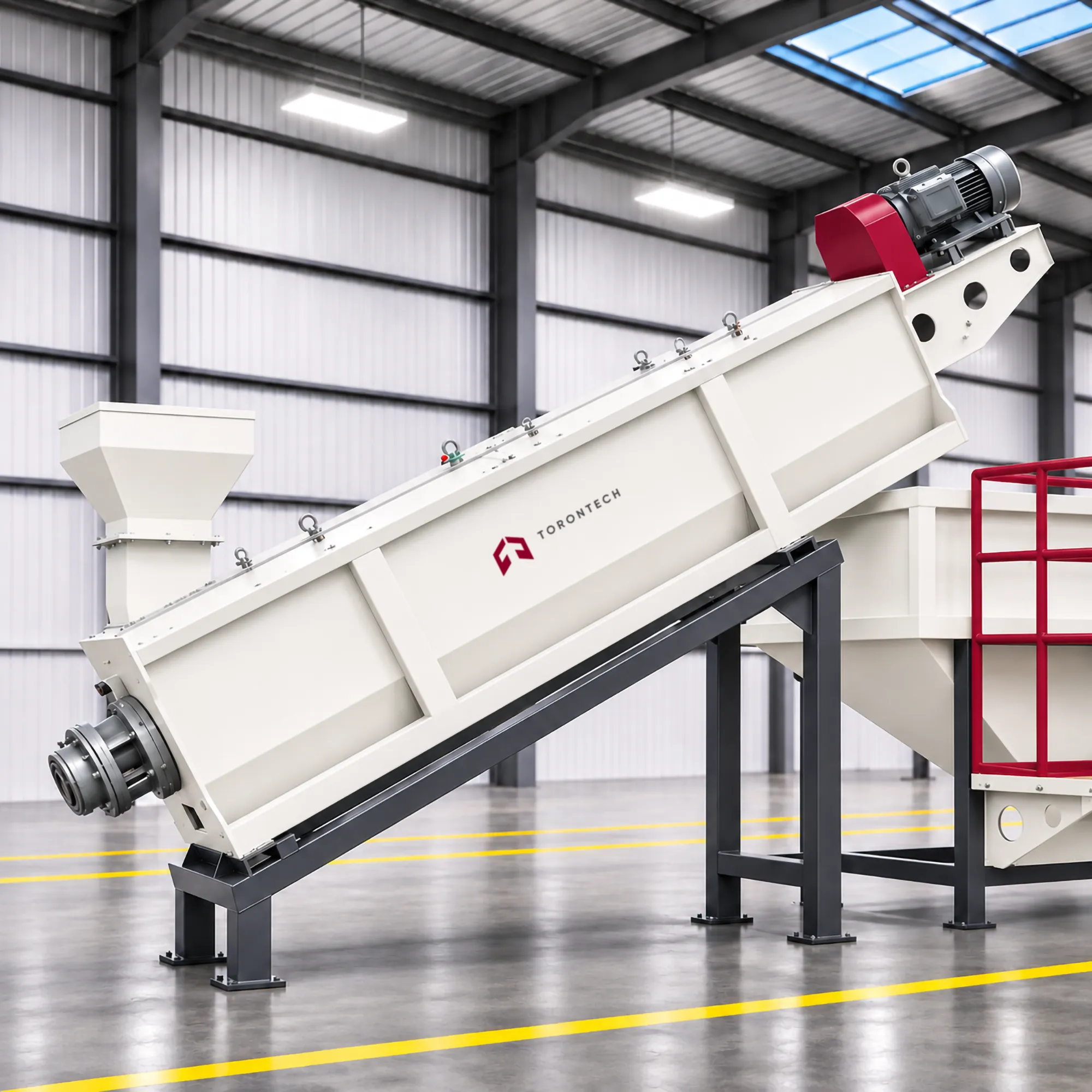
The high-speed friction washer scrubs off contamination that soaking alone cannot release. A paddle shaft rotates at high speed inside a screen mesh housing while high-pressure water sprays the flakes. The paddles drive flakes against each other and against the screen, stripping off paper labels, glue, and dried residue. These contaminants exit through the screen mesh with the wash water, and the cleaned flakes move on to dewatering.
High-Speed Dewatering Machine
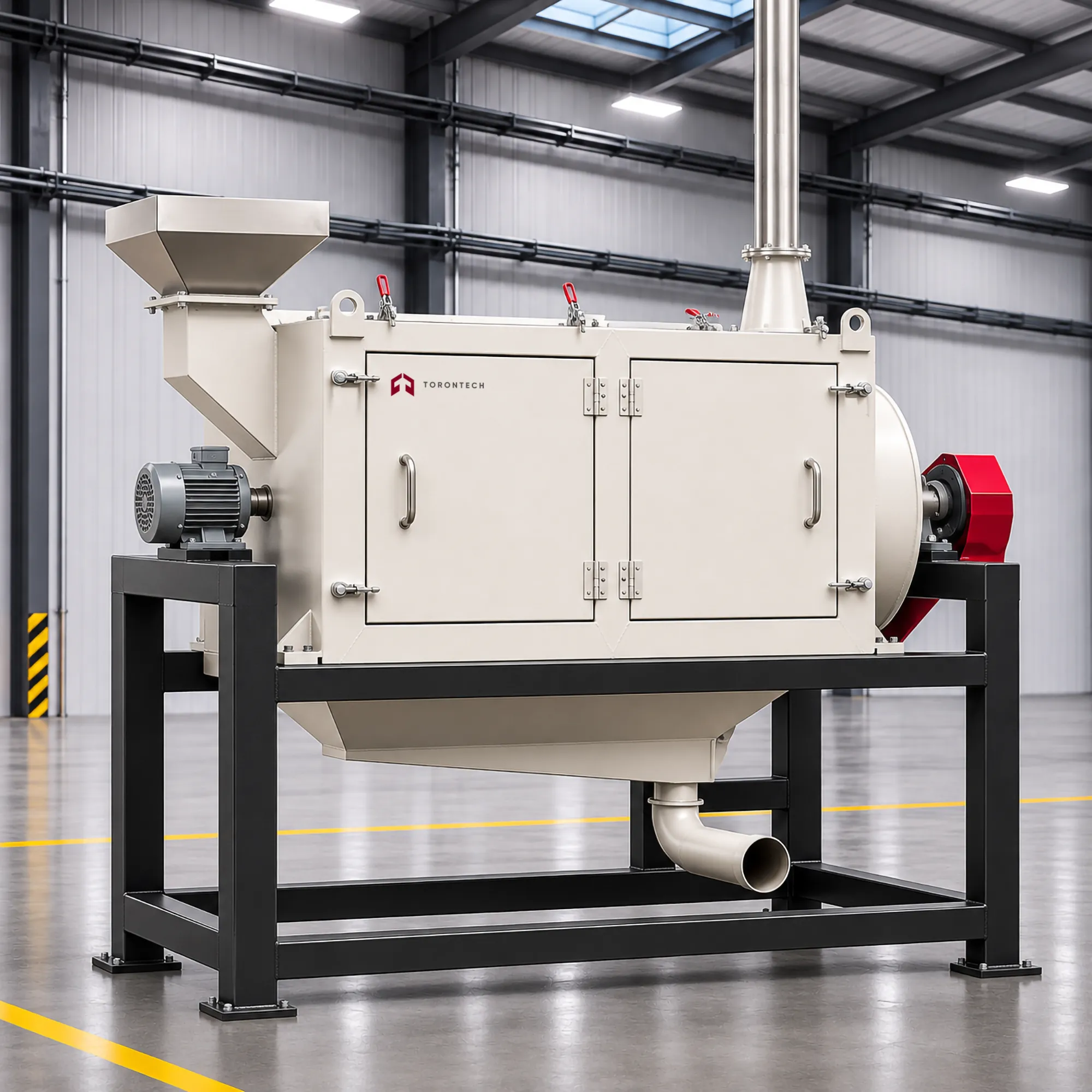
The high-speed dewatering machine also known as centrifugal dryer removes surface water before the flakes leave the line. A rotor spins at high speed inside a cylindrical screen, creating strong centrifugal force on the wet material. That force throws most of the surface water outward through the screen mesh around the rotor. HDPE and PP absorb very little water, so this final stage leaves flakes with low moisture and ready for further drying, storage, or pelletizing.
Theory and Method
Sink-float density separation does much of the cleaning work in this line. HDPE has a density near 0.95 g/cm³ and PP sits near 0.90 g/cm³, so both float in water at about 1.0 g/cm³. Sand, stones, metal fines, and denser plastics such as PET and PVC sink. The floating washer exploits this gap, which also pulls stray PET labels or PVC parts out of the polyolefin stream.
Friction washing removes the contamination that floats along with the flakes. A paddle shaft rotates at high speed inside a perforated screen while high-pressure water sprays the material. Rigid flakes strike each other and the screen at speed, and that abrasion strips paper labels, adhesive, and dried product residue off their surfaces. The loosened contaminants pass through the mesh with the wash water, leaving clean flake to continue downstream.
Centrifugal dewatering closes the process. A rotor spinning inside a cylindrical screen throws water outward through the mesh, much like a spin cycle in a washing machine. HDPE and PP absorb almost no water, so the moisture sits only on flake surfaces and leaves readily under centrifugal force. Thick, rigid flakes also hold less surface water than film, which helps the line deliver relatively dry regrind for storage or pelletizing.
Rigid Plastic Washing Line - ToronPR™ PWL R Series Technical Specifications
| Parameter | ToronPR™ PWL R 300 | ToronPR™ PWL R 500 | ToronPR™ PWL R 1000 | ToronPR™ PWL R 1500 | ToronPR™ PWL R 2000 |
|---|---|---|---|---|---|
| Output Capacity | 300 kg/h | 500 kg/h | 1,000 kg/h | 1,500 kg/h | 2,000 kg/h |
| Total Installed Power | 130 kW | 200 kW | 300 kW | 420 kW | 500 kW |
| Floor Area Required | 240 m² | 360 m² | 450 m² | 520 m² | 650 m² |
| Labor Required | 2-3 workers/shift | 2-3 workers/shift | 3-4 workers/shift | 3-4 workers/shift | 4-5 workers/shift |
| Water Consumption | 0.5 m³/h | 0.7 m³/h | 1.0 m³/h | 1.5 m³/h | 2.0 m³/h |
| Process Water | Recyclable with water treatment system | Recyclable with water treatment system | Recyclable with water treatment system | Recyclable with water treatment system | Recyclable with water treatment system |
Parameters are for reference only and may change according to the final line configuration.