

Potentiometric Titrator
Potentiometric Titrator – ToronAPT™ 2000 (Automated)
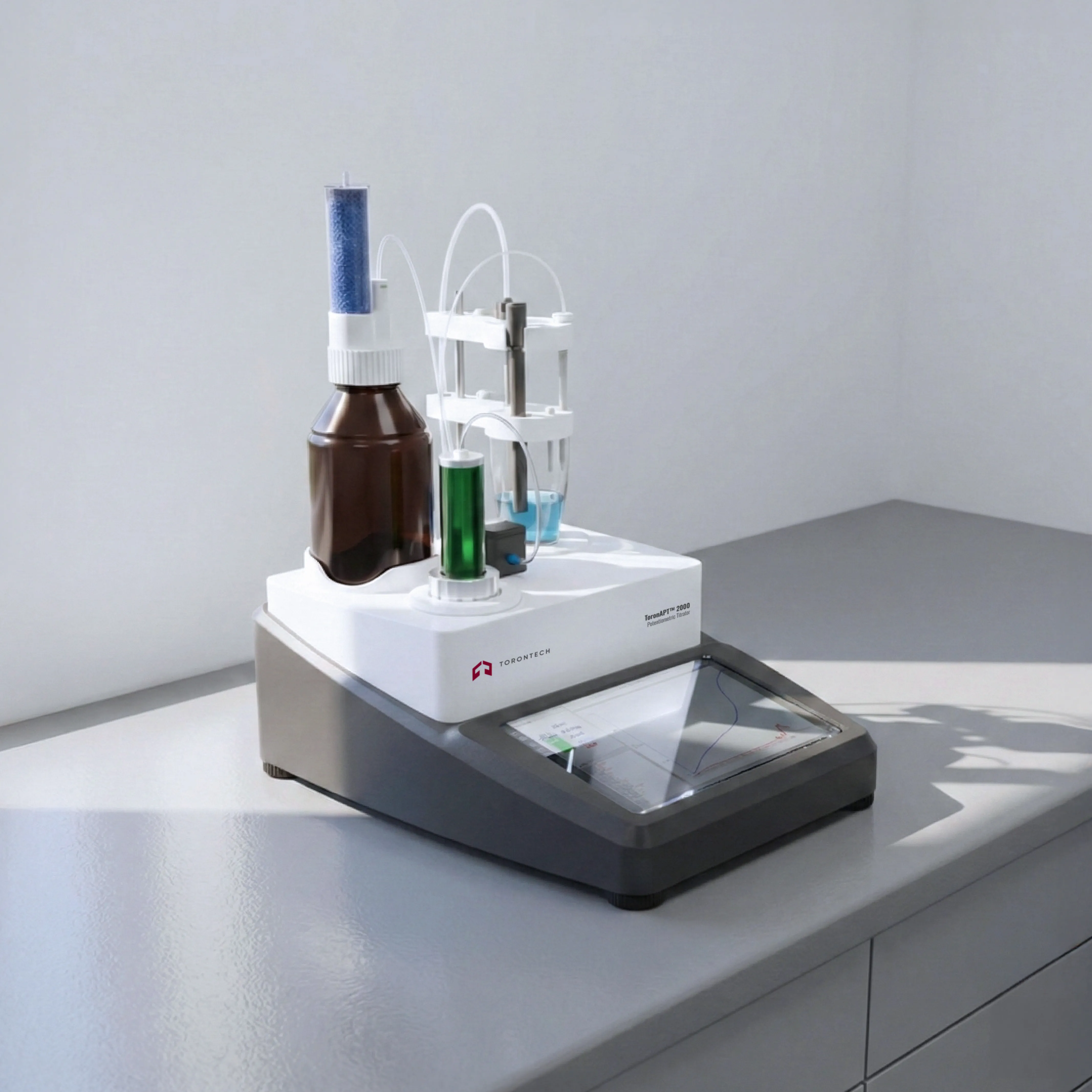
Potentiometric Titrator (ToronAPT™ 2000) is a fully automatic system built for fast, precise, and repeatable titrations across many analytical workflows. It uses high-resolution potential (mV) measurement and automated reagent delivery to identify endpoints without visual indicators, reducing operator subjectivity and improving result consistency.
Designed as a compact all-in-one platform, ToronAPT™ 2000 combines a high-precision syringe burette, intelligent endpoint detection, and a large 10-inch capacitive touchscreen. It supports multiple titration modes and chemical methods, making it a strong fit for routine QC testing and advanced analytical labs that want dependable potentiometric titration with minimal manual steps.
Potentiometric Titrator – ToronAPT™ 2000 (Automated) Applications
Potentiometric Titrator – ToronAPT™ 2000 is suitable for a wide range of titrations, including:
- Acid–Base Titrations: Measure acidity, alkalinity, and concentration for chemical, pharmaceutical, and industrial samples.
- Redox Titrations: Evaluate oxidation–reduction reactions used in environmental, metallurgical, and chemical analysis.
- Complexometric Titrations: Quantify metal ions with chelating agents for water hardness testing, alloy analysis, and industrial QC.
- Precipitation Titrations: Determine halides and other ions through precipitation reactions.
- Non-Aqueous Titrations: Accurately titrate weak acids/bases using non-aqueous solvents.
- Potentiostatic (Constant pH) Titrations & pH Measurement: Maintain continuous pH control and perform direct pH measurement using calibrated electrodes.
Standards
- ASTM D1067: Procedures for measuring acidity or alkalinity in water by potentiometric titration.
- ASTM D664: Potentiometric method for acid number in petroleum products, lubricants, and biodiesels to evaluate acidic constituents and oil degradation.
- ISO 750: Potentiometric method for chloride content in water and aqueous solutions.
- ISO 11285: Potentiometric titration method for sulfuric acid content in industrial chemicals.
Potentiometric Titrator – ToronAPT™ 2000 (Automated) Key Features
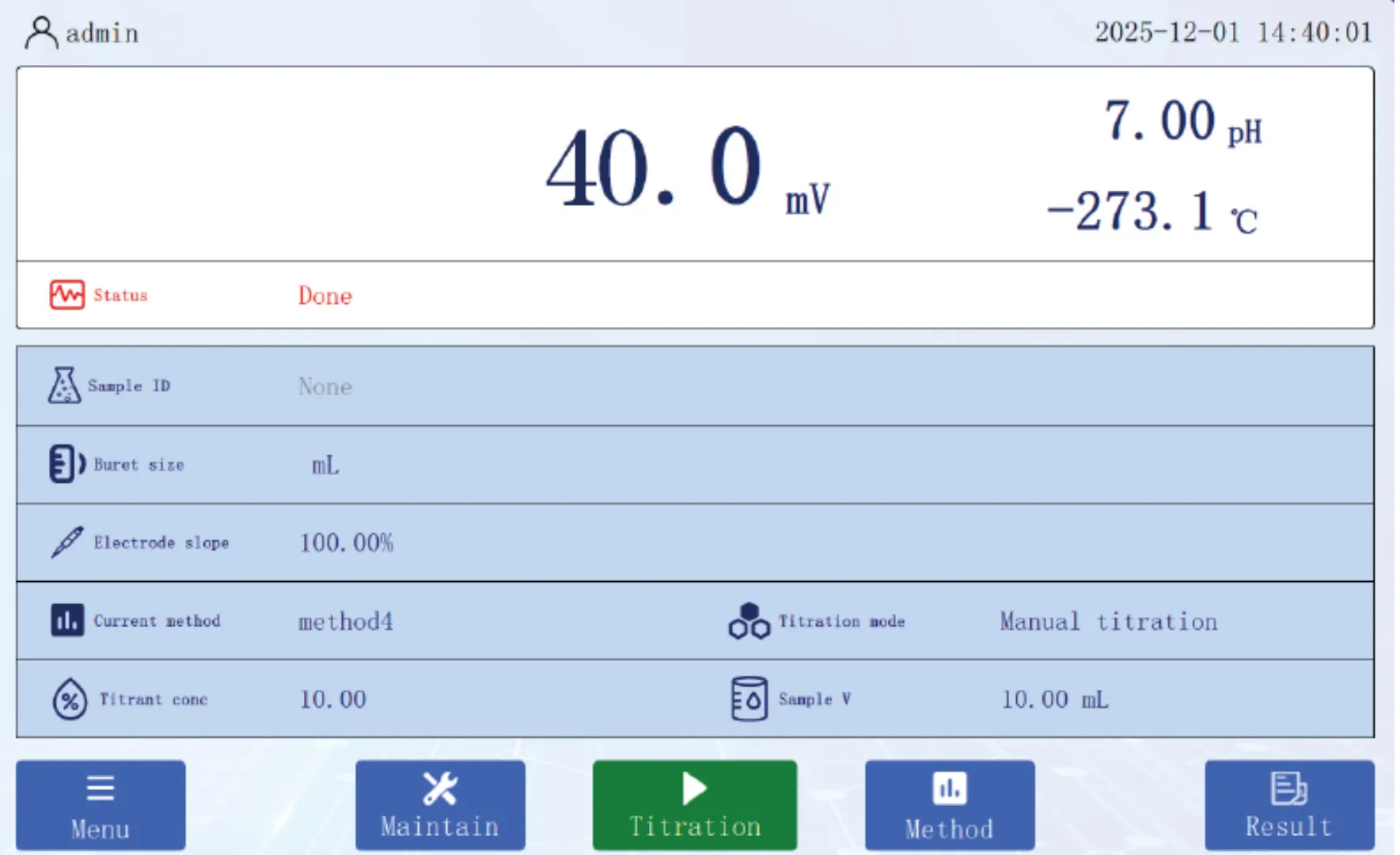
- 10-Inch Capacitive Touchscreen: Real-time method display, titration curves, and results with intuitive operation.
- Robust Chemical Resistance: Chemically resistant housing and fluid paths compatible with strong acids, bases, and organic solvents.
- Comprehensive Data Management: Automatic recording, storage, and printing for traceability, analysis, and compliance needs.
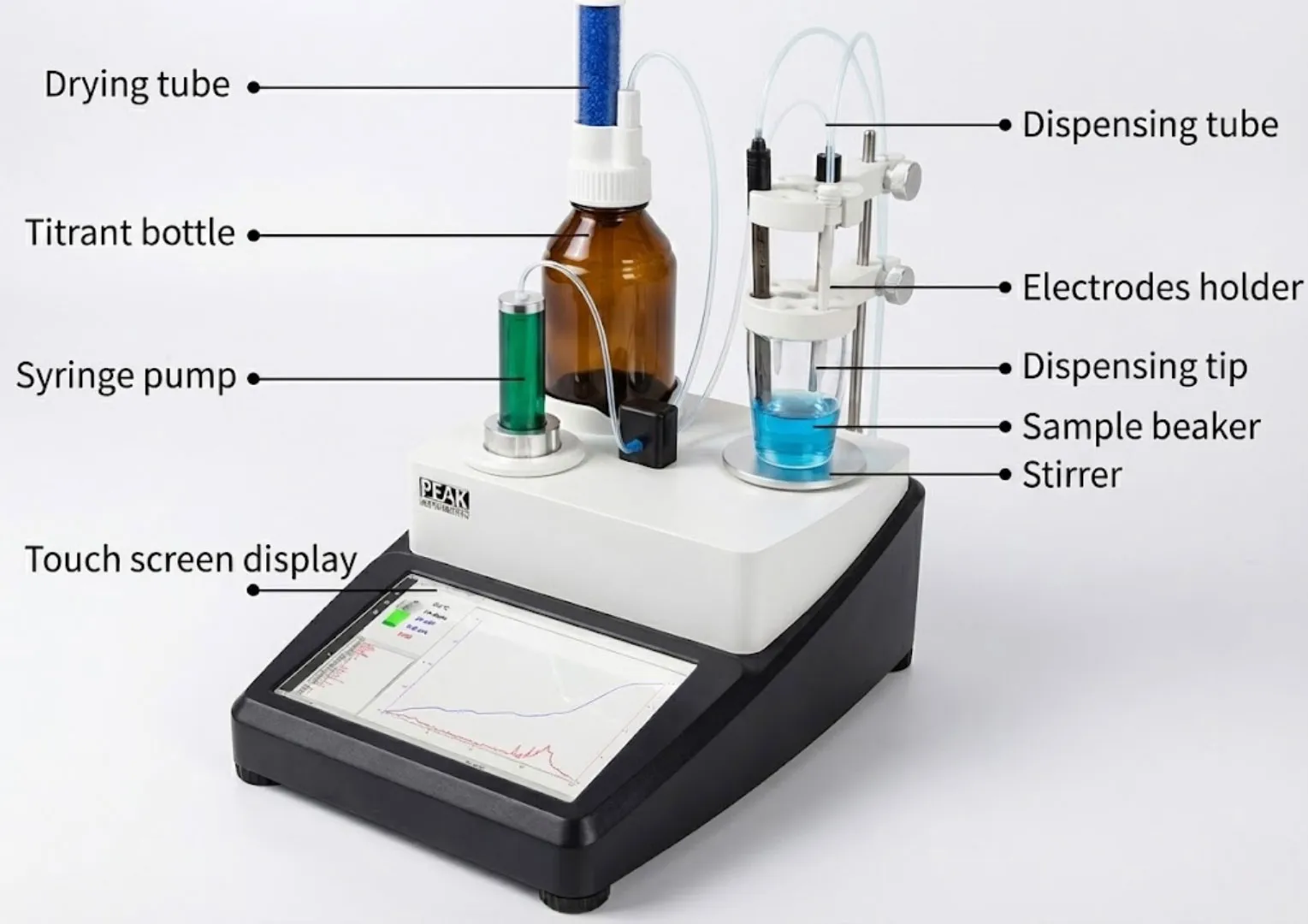
- Fully Automatic Potentiometric Titrator: Automates reagent dosing, endpoint detection, calculations, and result storage for consistent outcomes.
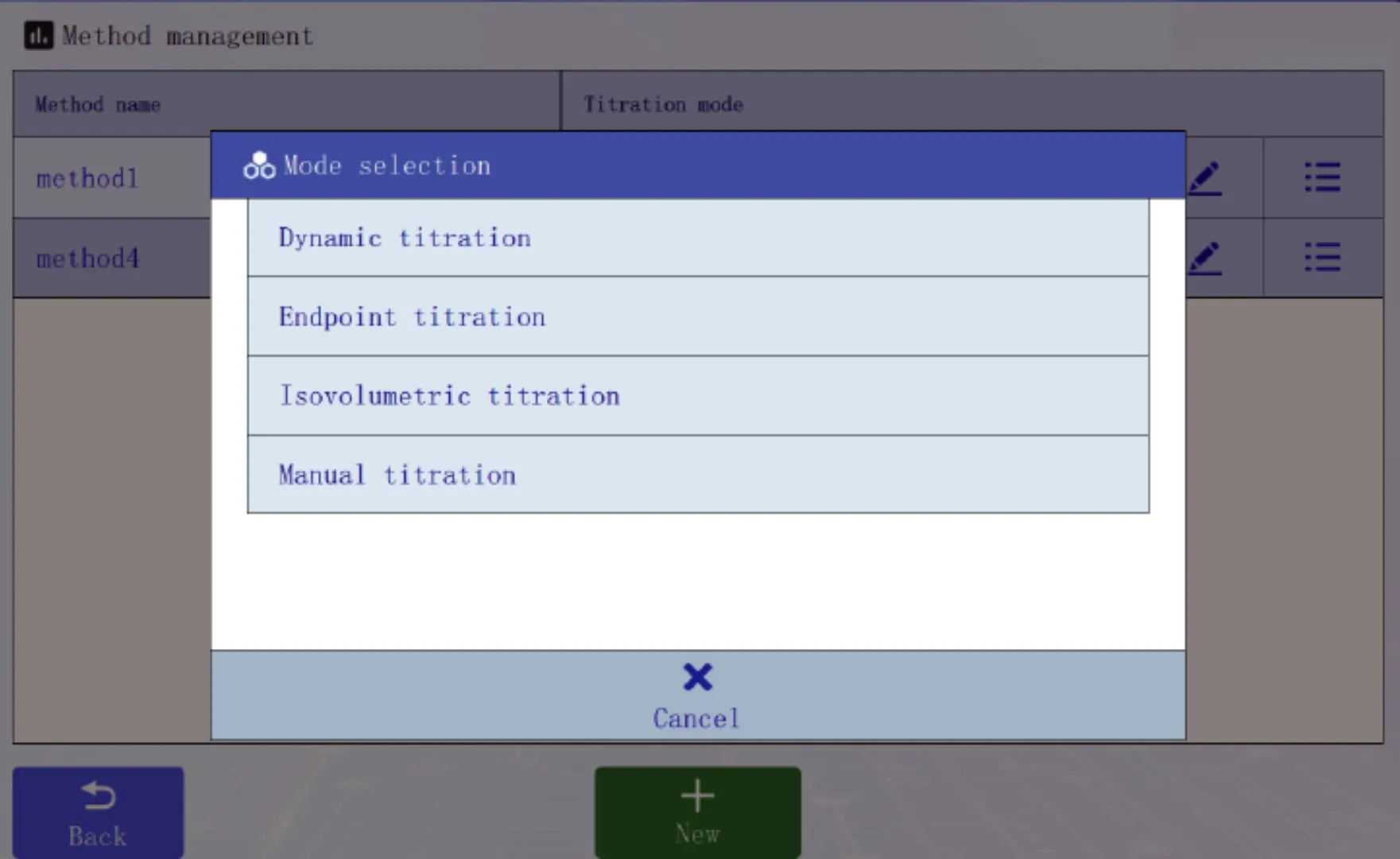
- Multiple Titration Modes: Supports dynamic titration, endpoint titration, equivalence titration, and manual titration.
- High-Precision Syringe Burette: Built-in 10 mL burette with ultra-fine resolution (1/96,000) for accurate, repeatable delivery.
- Automatic Endpoint Determination: Electronic endpoint detection improves repeatability and reduces human error.
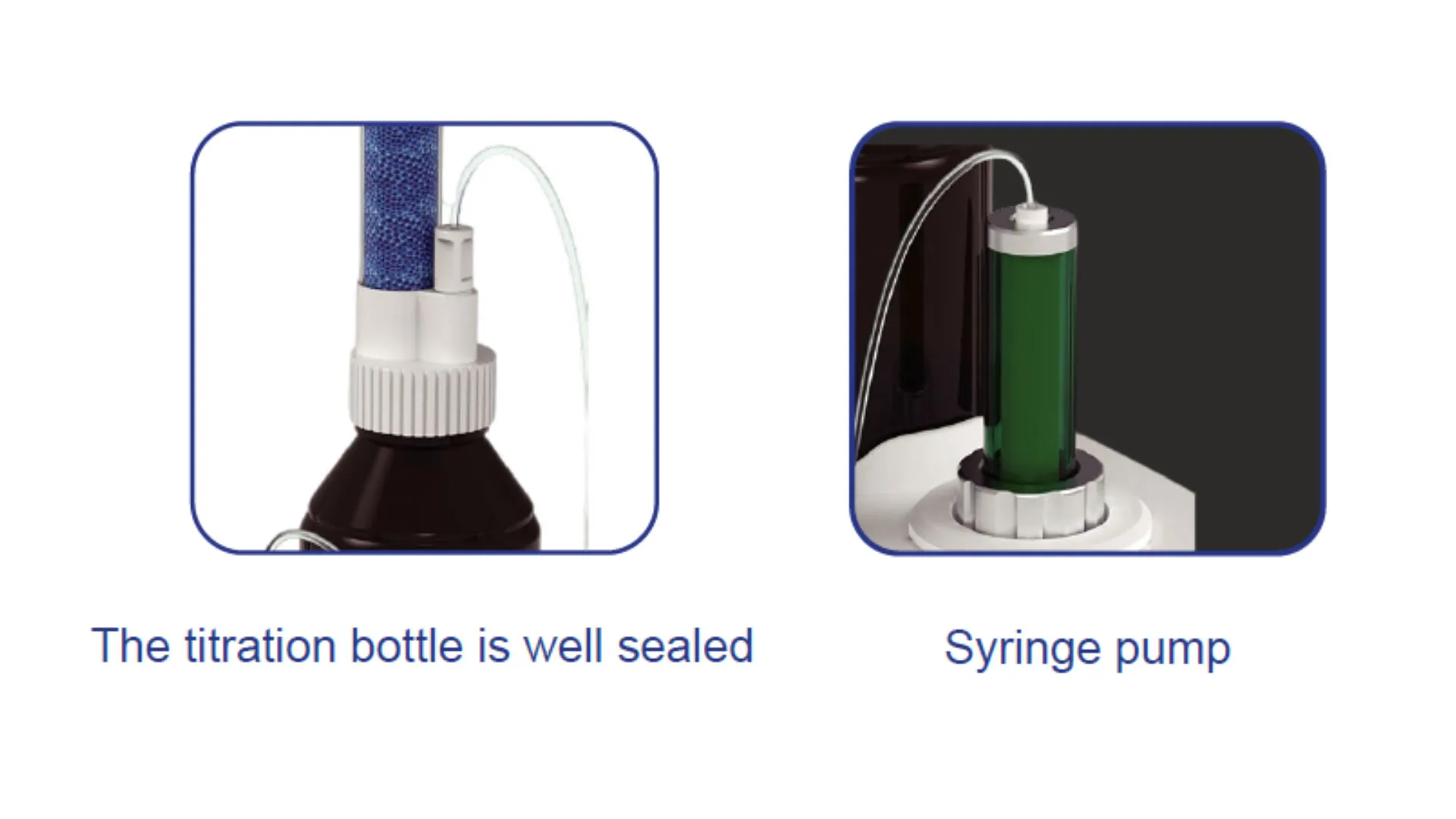
- Integrated Cleaning & Reagent Handling: Automated cleaning, rinsing, and reagent replenishment help reduce cross-contamination; pipelines are cleaned and rinsed multiple times.
 | |
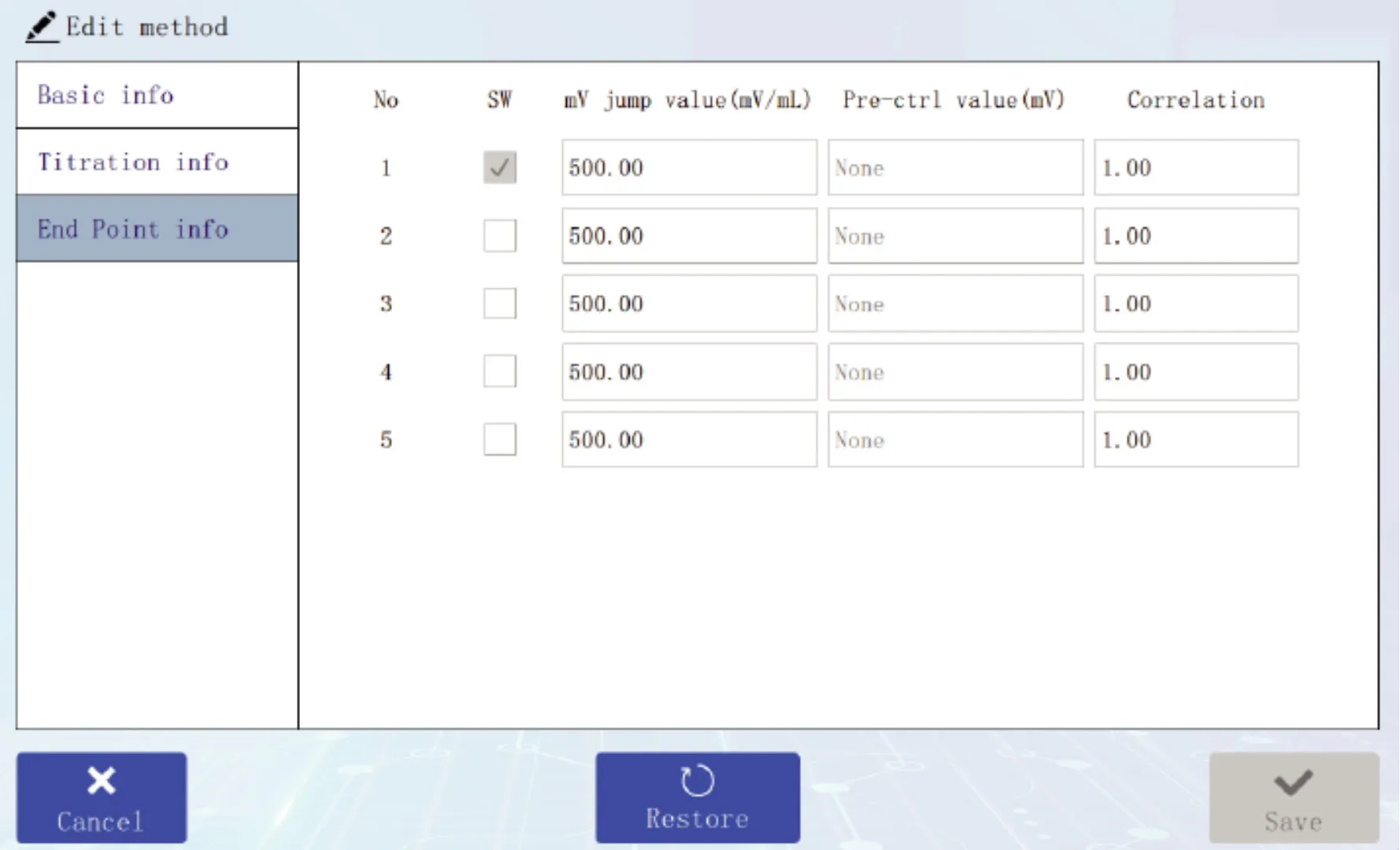 |  |
Automatic endpoint determination | |
 |  |
Real-time display of results | Multiple titration methods |
 | 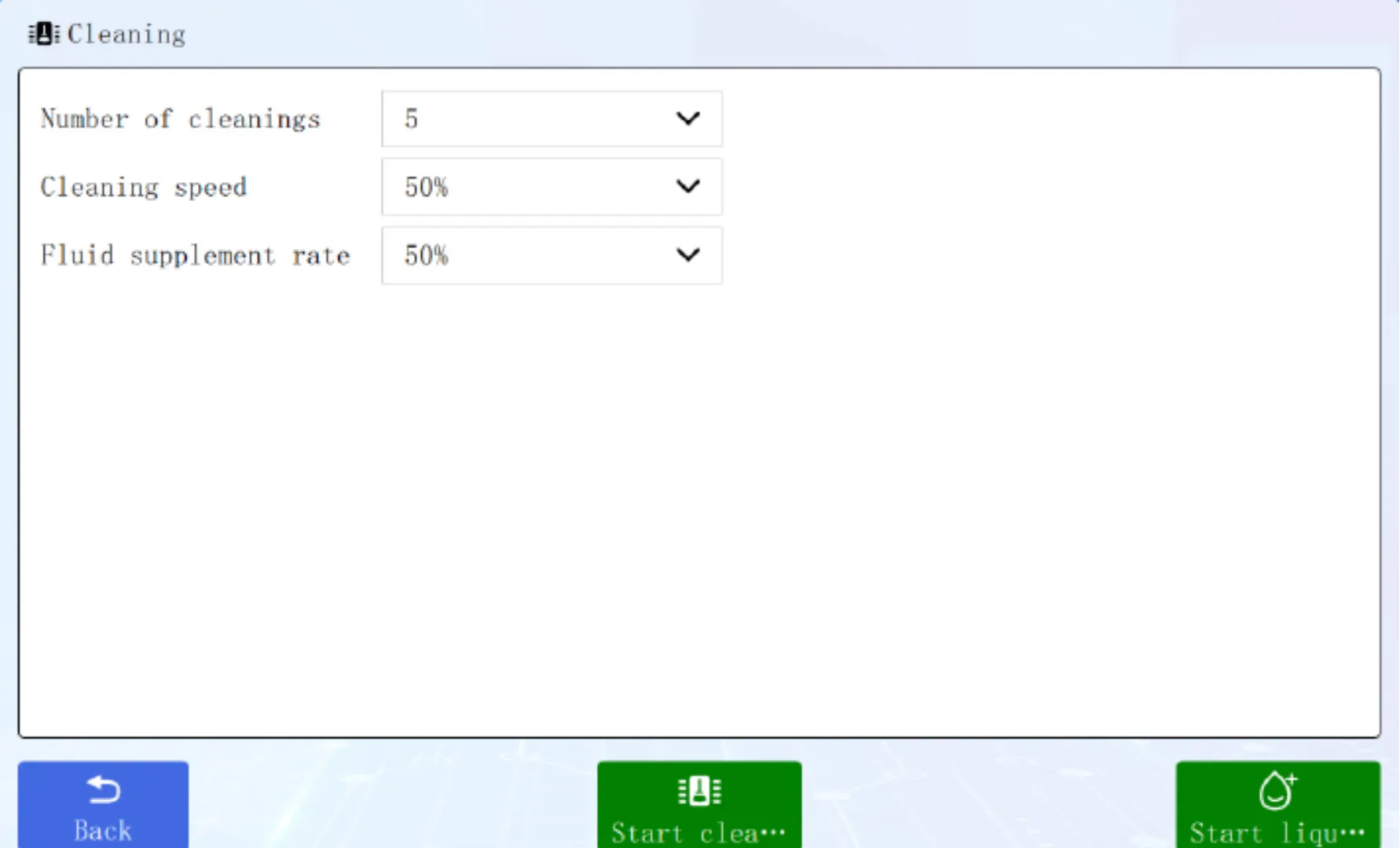 |
Probe and Burette Calibration | Automatic cleaning and fluid replenishment |
Potentiometric Titrator – ToronAPT™ 2000 (Automated) Technical Specifications
| Model | ToronAPT™ 2000 | |
|---|---|---|
| Instrument Type | Automatic Potentiometric Titrator | |
| Display | 10-inch color capacitive touch screen | |
| Measuring Range | Measurement Range (mV) | -2000.0 to +2000.0 mV |
| pH Range | -2.00 to 16.00 pH | |
| Temperature Range | -5 to 120 °C | |
| Resolution | 0.1 mV / 0.01 pH / 0.1 °C | |
| Accuracy | Measurement Range (mV) | ±0.1 mV, ±0.03% FS |
| pH Range | pH ±0.01 | |
| Temperature Range | ± 0.1°C, excluding probe error | |
| Titration Repeatability | ≤0.2% | |
| Electronic Stability | ±0.3 mV / 3 h | |
| Burette Volume | 10 mL | |
| Burette Resolution | 1 / 96,000 | |
| Voltage | 110–240 V AC, 50/60 Hz | |
| Operating Environment | 10–37 °C, up to 70% RH | |
| Stirrer Speed | 10–100% (10% increments) | |
| Shipping Size & Weight | 560 × 490 × 410 mm, 11 kg | |
| Weight | 11 kg | |
Standards configuration:
- Unit & Support: Titrator, Rod, 2 Holders
- Electronics: Power Adapter, Power Cable, USB Manual
- Probes: pH Electrode, Temp Probe, Short-circuit Connector
- Vessels: 150 mL Beaker, 500 mL Bottle & Cap
- Chemistry: 3x pH Buffers, 100g Desiccant, Drying Tube
- Small Parts: 2 Dispensing Tips, Stirrer Bead, Micron Filter
Electrode Application Guide
| Application / Analysis Method | Recommended Electrode Configuration |
|---|---|
| Acid-Base Titration | pH Composite Electrode or Separate Electrodes |
| Water Quality: Determination of alkalinity, bicarbonate, and carbonate | pH Composite Electrode or Separate Electrodes |
| Food Analysis: Determination of total acid (Automatic Potentiometric Titration) | pH Composite Electrode or Separate Electrodes |
| Fats & Oils: Determination of acid number and acidity (Potentiometric Method) | pH Composite Electrode or Separate Electrodes |
| Petroleum Products: Determination of acid number (Potentiometric Method) | pH Composite Electrode or Separate Electrodes |
| Dairy Products: Determination of acidity | pH Composite Electrode or Separate Electrodes |
| Industrial Cooling Water: Determination of total alkali and phenolphthalein alkalinity | pH Composite Electrode or Separate Electrodes |
| Industrial Cooling Water: Determination of carbonate alkalinity | pH Composite Electrode or Separate Electrodes |
| Water Analysis: Standard Test Method for Acidity or Alkalinity | pH Composite Electrode or Separate Electrodes |
| Volatile Organic Liquids: Determination of acidity (Titration Method) | pH Composite Electrode or Separate Electrodes |
| Plasticizers: Determination of acid value and acidity | pH Composite Electrode or Separate Electrodes |
| Industrial Glyoxal: Determination of acidity | pH Composite Electrode or Separate Electrodes |
| Seawater: Determination of alkalinity (pH Potentiometric Titration) | pH Composite Electrode or Separate Electrodes |
| Water Quality: Determination of chloride (Silver Nitrate Potentiometric Titration) | Ag (Silver) Composite Electrode or Ag Indicator Electrode + Reference Electrode |
| Water Quality: Determination of chloride (Mercuric Nitrate Titration) | Mercury Composite Electrode or Mercury Indicator Electrode + Reference Electrode |
| Silver Ion Titration: Titration with Thiocyanate | Ag (Silver) Composite Electrode or Ag Indicator Electrode + Reference Electrode |
| Water Quality: Determination of barium (Potentiometric Titration) | Tetraphenylborate Ion Electrode & Double Junction Reference Electrode |
| Arsenic Content: Ammonium ferrous sulfate titrimetric method | Platinum Electrode + Saturated Calomel Electrode |
| Groundwater Quality: Determination of sulfide (Iodometric Method) | Platinum Electrode + Saturated Calomel Electrode |
| Tin Concentrates: Determination of iron content (Cerium Sulfate Titimetric Method) | Platinum Electrode + Saturated Calomel Electrode |
| Water Quality: Determination of Chemical Oxygen Demand (COD) (Dichromate Method) | Platinum Electrode + Saturated Calomel Electrode |
| Iron Ores: Determination of total iron content (Titration after Titanium Trichloride Reduction) | Platinum Electrode + Saturated Calomel Electrode |
| Vitamin C Analysis: Determination by lodometry | Platinum Electrode + Saturated Calomel Electrode |
| Food Analysis: Determination of calcium | Calcium Ion Selective Electrode & Saturated Calomel Electrode |
| Water Quality: Determination of calcium (EDTA Titrimetric Method) | Calcium Ion Selective Electrode & Saturated Calomel Electrode |
| Waste Acid: Determination of Chloride Ion Content | Ag (Silver) Composite Electrode or Ag Indicator Electrode + Reference Electrode |
| Water Treatment: Determination of chloride | Platinum Electrode + Saturated Calomel Electrode |
| Oil Analysis: Determination of mercaptan sulfur | Ag-S (Silver-Sulfide) Composite Electrode |
| Petroleum: Determination of Base Number | pH Composite Electrode or Separate Electrodes |
| Chemical Analysis: Determination of titanium dioxide content | Platinum Electrode + Saturated Calomel Electrode |
| Food Analysis: Determination of peroxide value in curry paste | Platinum Electrode + Saturated Calomel Electrode |
| Food Analysis: Determination of acid value in curry pastes | pH Composite Electrode or Separate Electrodes |
| Pharmaceuticals: Determination of Calcium Content in Compound Calcium Granules II | Copper Composite Electrode |
| Edible Oils: Determination of acid value in soybean oil | pH Composite Electrode or Separate Electrodes |
| Chemical Analysis: Determination of citric acid | Platinum Electrode + Saturated Calomel Electrode |
| Water Analysis: Determination of chloride / Non-volatile residual chlorine | Platinum Electrode + Saturated Calomel Electrode |
| Battery Electrolytes: Determination of carbonate content in alkaline electrolytes | pH Composite Electrode or Split Electrodes |
| Pharmaceuticals: Determination of ferrous gluconate content | Platinum Electrode + Saturated Calomel Electrode |
| Chemical Reagents: Determination of total chromium content in chrome-manganese reagents | Platinum Electrode + Saturated Calomel Electrode |
| Metallurgy: Determination of Total Iron Content in High Titanium Slag | Platinum Electrode + Saturated Calomel Electrode |
| Supplements: Determination of Taurine content | pH Composite Electrode or Split Electrode |