

Portable Particle Counter
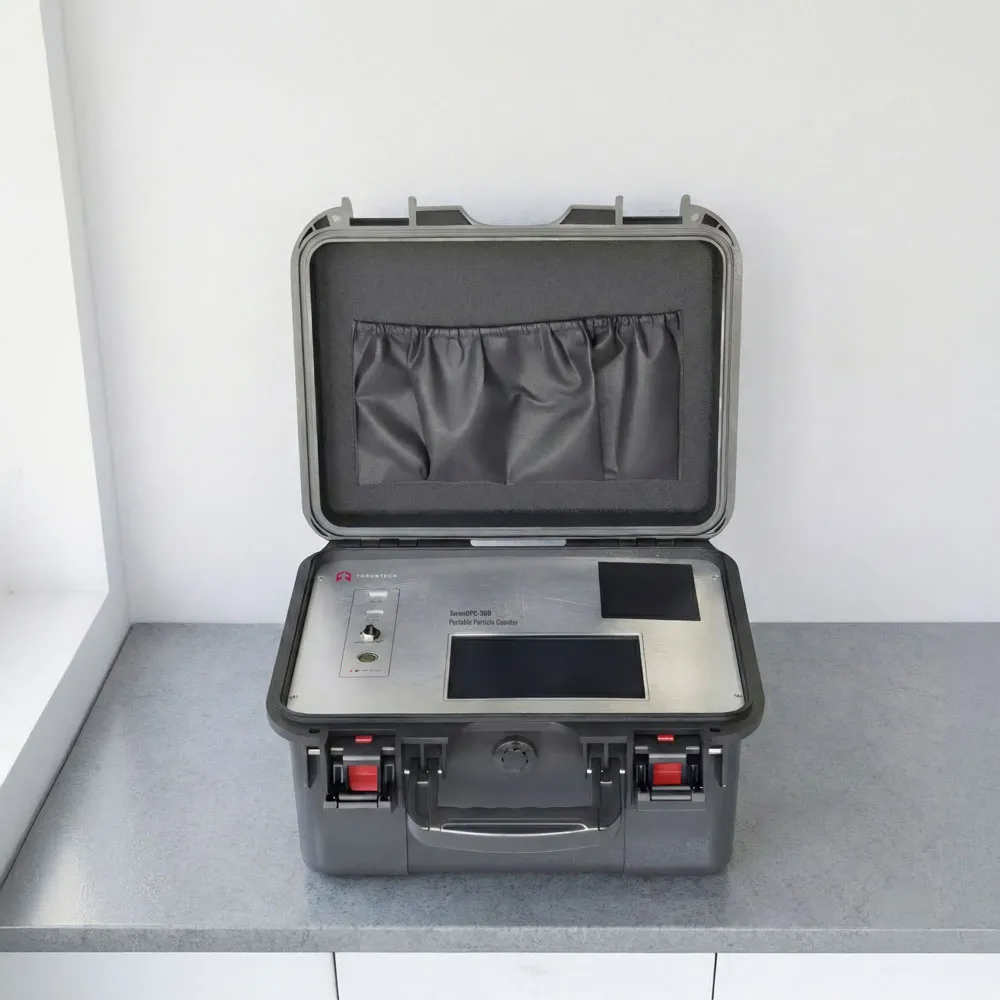
Portable Particle Counter ToronOPC™ 300 delivers accurate oil and fluid contamination measurement using optical light-blocking technology for lab and field testing.
Portable Particle Counter - ToronOPC™ 300
Portable Particle Counter – ToronOPC™ 300 is a versatile, field-ready Portable Particle Counter engineered for accurate measurement of particulate contamination in oils and industrial fluids. Using the optical light-blocking principle, this Oil Particle Counter detects and sizes solid particles in liquid media to assess fluid cleanliness quickly and reliably. Compact and battery-powered, the ToronOPC™ 300 supports both offline testing and optional inline (online) sampling, providing essential contamination insights in laboratories, maintenance workshops, and remote field environments.
Application
The Portable Particle Counter – ToronOPC™ 300 is ideal for contamination monitoring and fluid
cleanliness assessment in:
- Military Industry
- Used for field and laboratory monitoring of hydraulic oils, lubricants, and fuel systems in military vehicles and equipment, helping ensure fluid cleanliness, reduce component wear, and support mission-critical reliability.
- Aerospace Industry
- Supports contamination analysis of aviation hydraulic fluids, turbine oils, and fuel systems, enabling early detection of particulate contamination that could impact flight safety and system performance
- Electrical Power Sector
- Applied in the analysis of transformer insulating oils and turbine lubricants to assess fluid condition, identify wear particles, and maintain stable operation of power generation and transmission equipment.
- Transportation Industry
- Used for portable condition monitoring of lubricants and hydraulic fluids in rail, marine, automotive, and heavy-duty transportation systems, helping optimize maintenance schedules and extend equipment service life.
 |  |  |
Standards
The Portable Particle Counter – ToronOPC™ 300 supports multiple international cleanliness standards, enabling flexible reporting and compliance:
- ISO 4402 – Hydraulic fluid particle counting method.
- ISO 11171 – Calibration and verification of automatic particle counters.
- NAS 1638 – Aerospace fluid cleanliness classification.
- ISO 4406 (1999/2007/1987) – Fluid cleanliness code based on particle counts.
- SAE AS4059E / AS4059F – Aerospace and defense fluid cleanliness standards.
- ROCT 17216 (1971 / 2001) – Russian oil contamination standards.
- JTS-005, SAE749D, AETF1A – Other common contamination classification references.
Portable Particle Counter - ToronOPC™ 300 Key Features
- Optical Light-Blocking Detection
- Uses light-blocking (optical occlusion) technology to precisely measure particle size and count in fluid samples.
- Wide Particle Size Range & High Resolution
- Detects particle sizes from 1 µm to 500 µm with a 32-channel configuration and fine 0.1 µm resolution for detailed contamination profiling.
- Dual Mode Operation (Offline & Online)
- Supports both manual sampling and inline connection for real-time fluid monitoring, with optional high-pressure sampling (up to 40 MPa).
- Portable & Battery-Powered
- Equipped with a built-in lithium battery for true mobility, plus AC input support for lab or field use.
- Industrial PC Control & Calibration Options
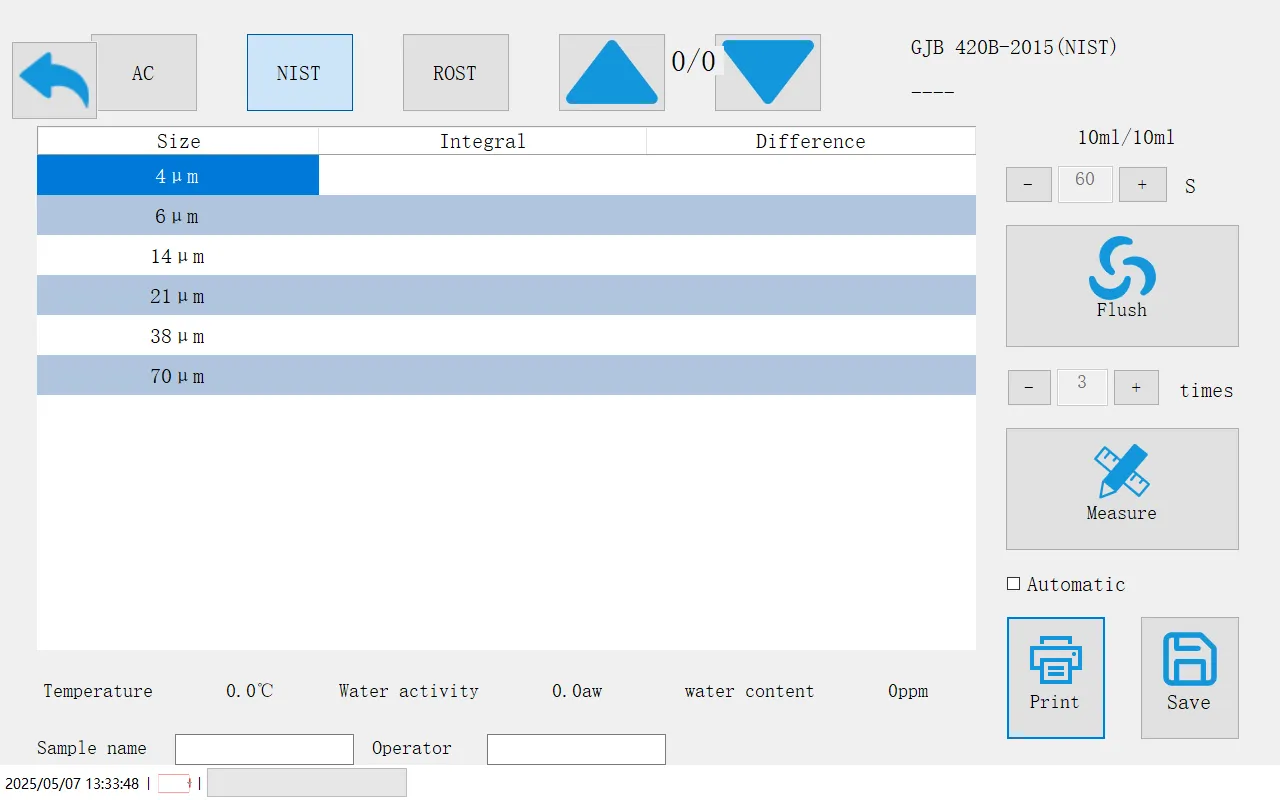
- Integrated Windows-based industrial PC for instrument control and calculation, with optional calibration curves (ACFTD, ISOMTD, latex, GOST, etc.).
- Comprehensive Data Management
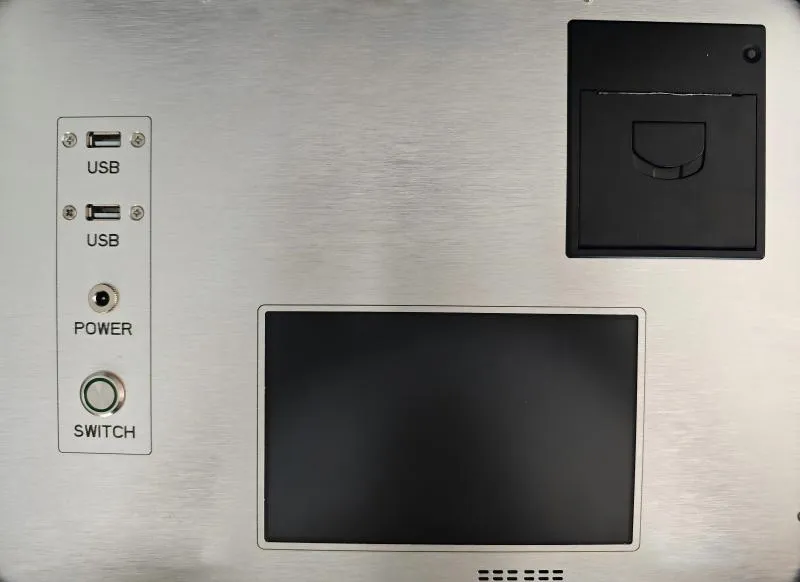
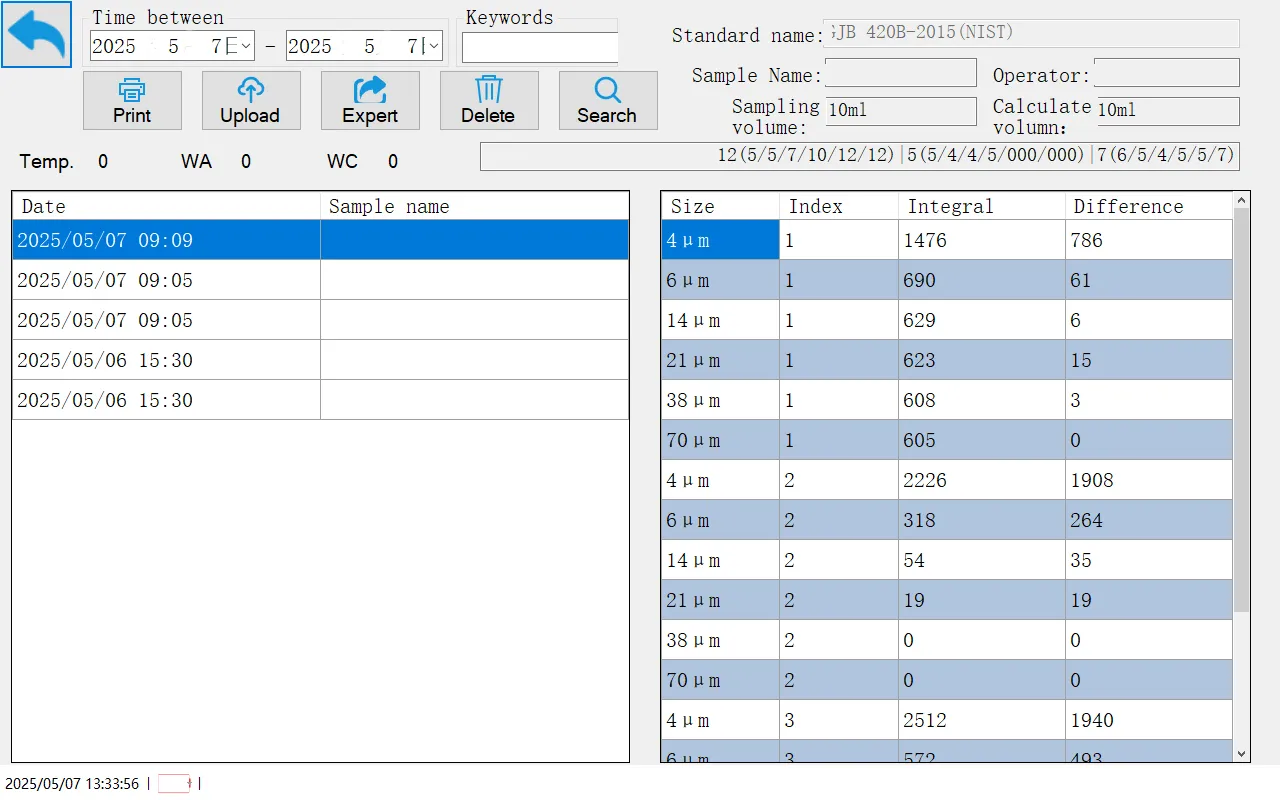
- Test results can be printed via built-in printer, stored in software database, or exported via USB for reporting and analysis.
- High Sampling & Cleaning Flexibility
- Adjustable sampling and cleaning flow rates ensure adaptable testing across fluid types and viscosities.
- High-Performance Particle Counting Sensors
- Equipped with large-format, high-sensitivity particle counting sensors to deliver stable and accurate particle detection across a wide measurement range.
- Industrial Windows-Based Control System
- Integrated industrial PC running a Windows operating system supports full instrument control, data calculation, and intuitive operation.
- Multiple Calibration Curve Options
- Supports optional calibration curves including ACFTD, ISOMTD, latex sphere, GOST, and other industry-recognized calibration standards.
- Flexible Data Storage and Output
- Test results can be stored internally within the software database, printed using the built-in printer, or exported via USB for reporting and traceability.
Portable Particle Counter - ToronOPC™ 300 Technical Specifications
| Models | ToronOPC™ 300 |
|---|---|
| Particle Detection Principle | Optical light-blocking (photoresist method) |
| Operation Modes | Offline sampling; Online sampling (optional high-pressure support) |
| Particle Size Range | 1–500 µm |
| Sensitivity Threshold | 1 µm (ISO 4402) or 4 µm (ISO 11171) |
| Detection Channels | 32 channels, 0.1 µm intervals |
| Sampling Volume | 10–100 mL |
| Sampling Flow Rate | 5–60 mL/min (default 25 mL/min) |
| Relative Error (Sampling) | ± 2% |
| Counting Repeatability | RSD < 2% |
| Counting Accuracy | ± 10% |
| Overlap Error Limit | 12,000–40,000 particles/mL |
| Temperature Range (Sample) | 0 °C–80 °C |
| Operating Temp Range | –20 °C–60 °C |
| Storage Temp Range | –30 °C–80 °C |
| Voltage | 110–240 V AC / Built-in lithium battery |
| Optional Features | High-pressure sampling support, calibration curve packages |
