

Military Sand & Dust Chamber
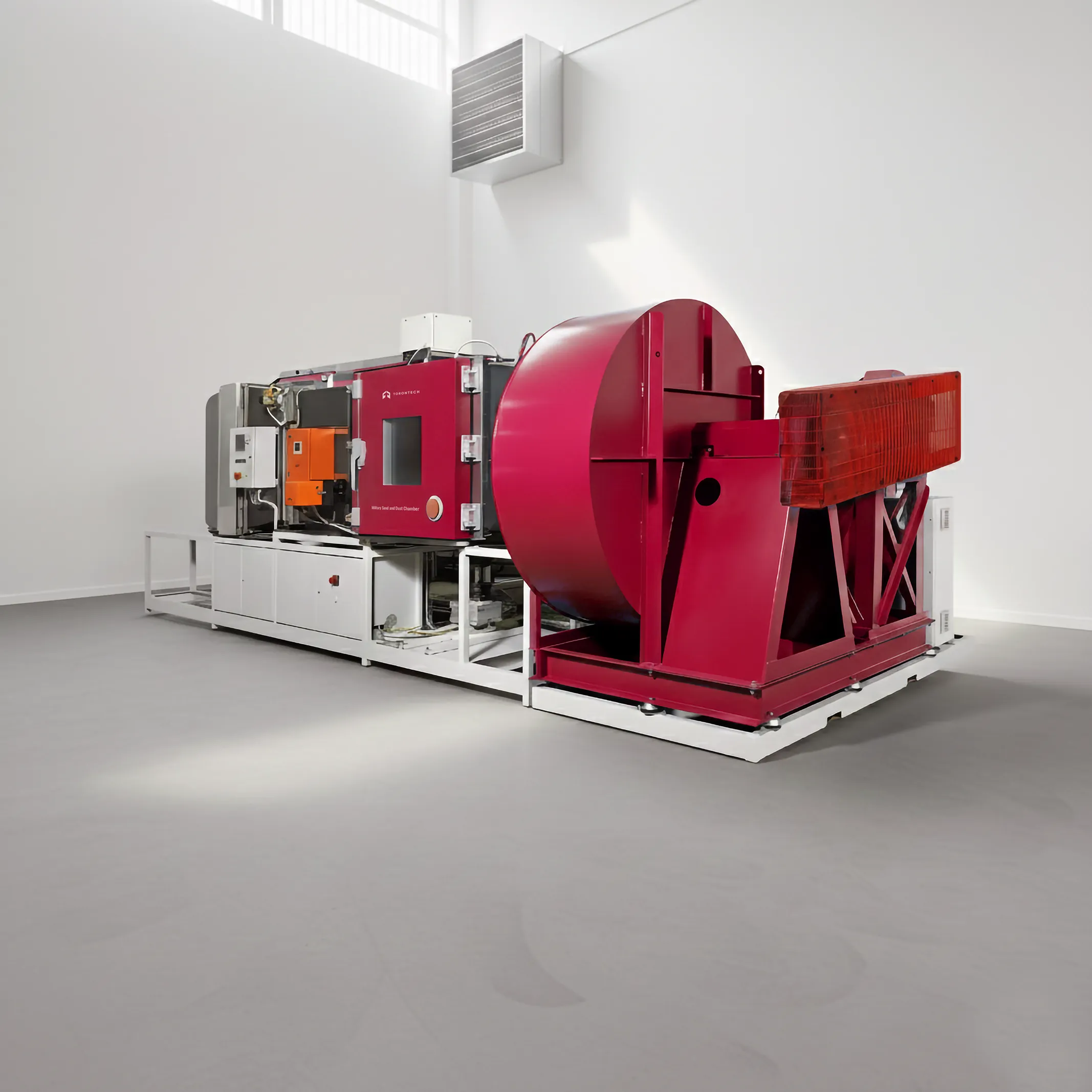
Military Sand and Dust Chamber is engineered to simulate the harsh desert conditions that military, aerospace, automotive, electrochemical, and electronic equipment may face during real-world operation or storage. This chamber exposes products to controlled dry sand-blowing, dust-blowing, and dust-settling environments, allowing manufacturers to evaluate durability, reliability, and long-term performance under extreme particulate stress.
Applications
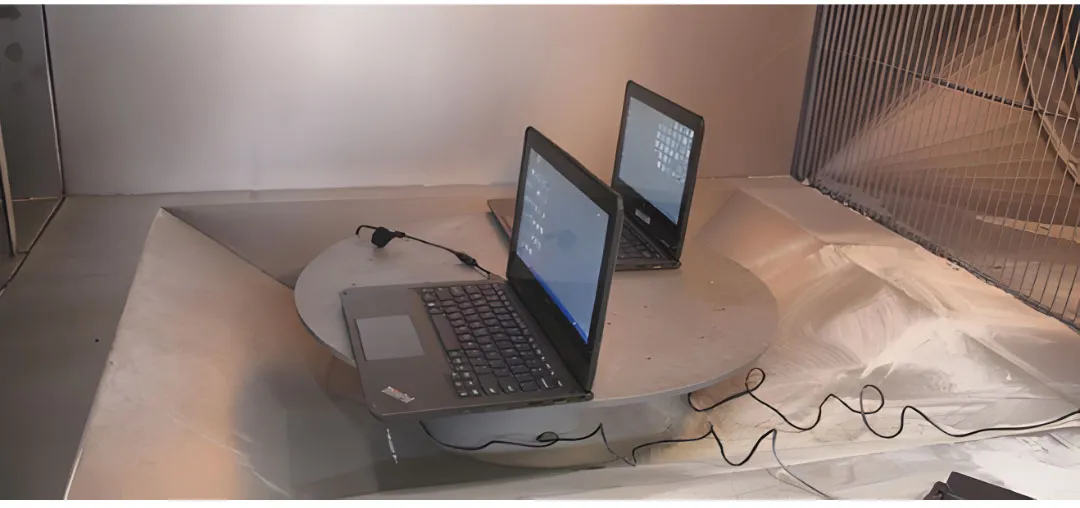
- Military & Defense Equipment Testing
- Aerospace & Avionic Qualification
- Automotive & Transportation Components
- Electronics & Mechatronics Dust Ingress Testing
- Optical & Precision Instrument Reliability Evaluation
- Abrasion, Wear, and Mechanical Function Testing
- Research, Laboratory, and Development Applications
Standard Test
- RTCA/DO-160G : contains environmental testing requirements for aerospace industry
- ISO 20653:2013 : Protection of electrical equipment against objects, water, and acces
- MIL STD 810G Method 510.5 Para 4.1.4.2 related test standards : test interruption and
post-test procedures for both the Blowing Dust (Procedure I) and Blowing Sand
(Procedure II) tests
Military Sand & Dust Chamber Features
- Built with a fully welded SUS304 stainless-steel inner chamber and reinforces 2 mm structural supports, this chamber offers extreme durability with outstanding corrosion resistance, heat stability, and long service life
- High speed centrifugal fan for realistics desert wind simulation even can generates controlled wind speeds for both dust (0.5-8.9 m/s) and sand (18-29 m/s)
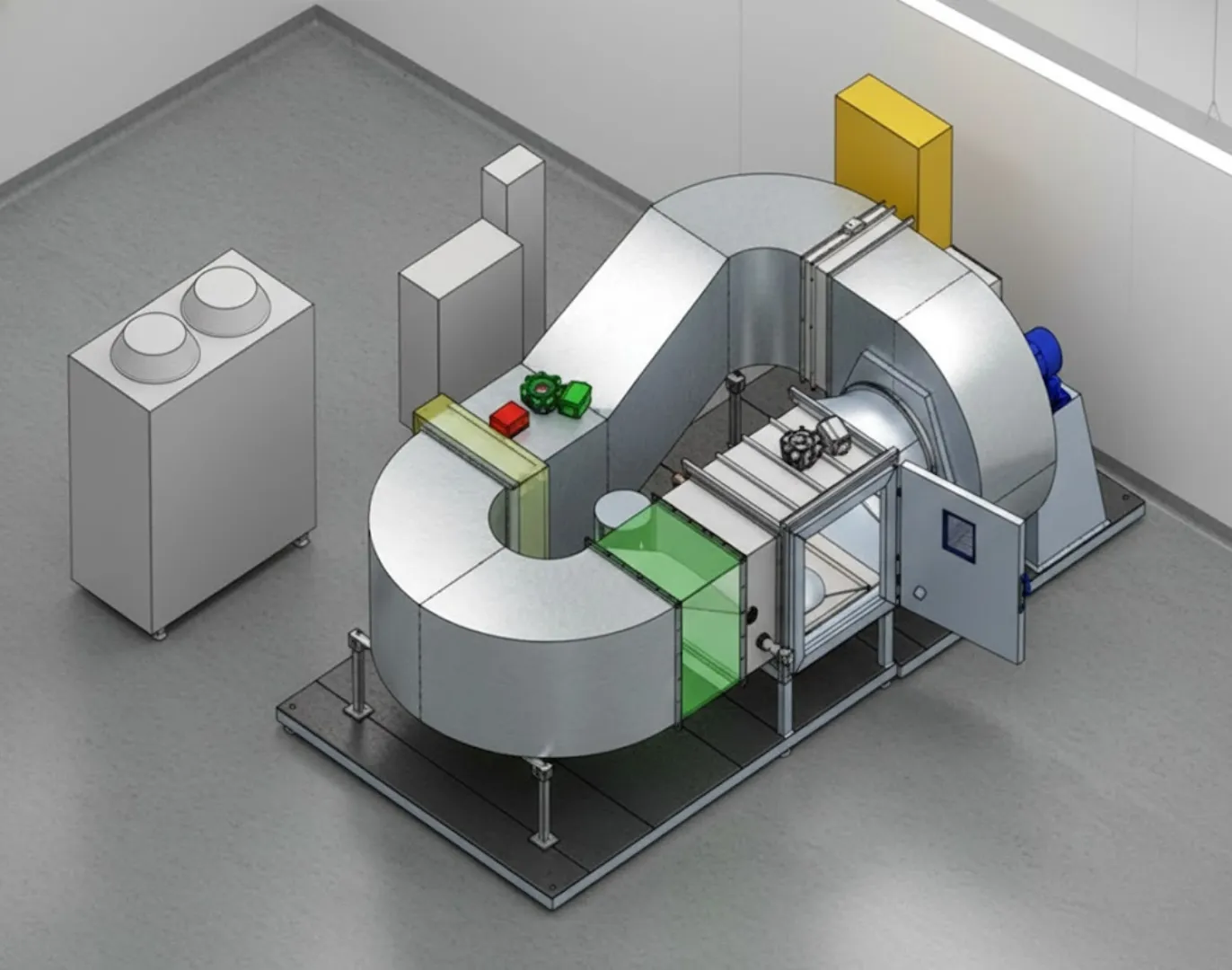
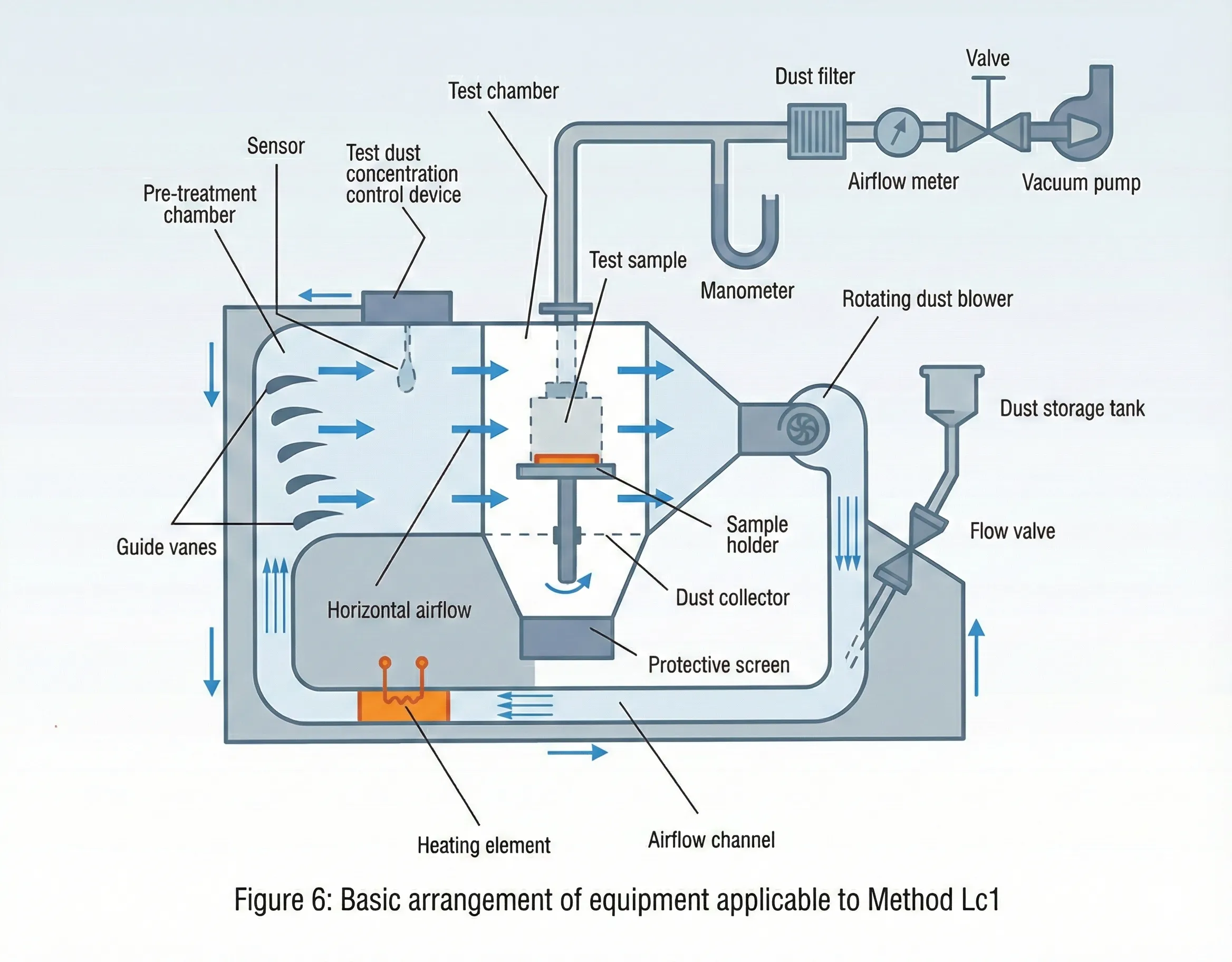
- The chamber uses a multi-funnel recirculation system that automatically collects falling particles and keeps them dry through built-in heating.
- Advanced cabinet sealing ensures zero dust leakage during operation, keeping the laboratory environment safe and clean.
- The multi-layer tempered glass window includes a built-in automatic wiper system, allowing clear visibility of test items at all times — even during heavy dust or sand cycles.
- A combination of Bayer high-strength PU foam and ultra-fine glass fiber insulation maintains chamber temperature stability up to +66°C.
Theory/Method
1. Dust Test Method (Blowing Dust)
To evaluate how equipment withstands fine dust intrusion, impaired cooling, electrical malfunction, and mechanical binding when exposed to airborne dust.
- Dust concentration: 3.5–8.8 g/m³, consisting of 97–99% silicon dioxide.
- Particle size: ≤150 µm, median diameter 20 ± 5 µm.
- Air velocity: 0.5–8.9 m/s depending on test category.
- Humidity: ≤ 30% to prevent dust agglomeration.
- Duration: typically 6 hours at room temperature + 6 hours at high temperature (if required).
Dust is dispersed above the specimen and maintained in suspension using airflow sufficient to simulate natural desert conditions without exceeding 0.2 m/s at the specimen during dust-fall procedures.
After exposure, mechanical parts are actuated to check for clogging or binding, and functional performance is evaluated.
2. Sand Test Method (Blowing Sand)
To assess resistance to abrasion, erosion, coating damage, and particle impact experienced in sandstorms or aircraft rotor wash.
- Sand concentration: defined per operational environment (0.18–2.2 g/m³).
- Particle size: 150–850 µm, with specific weight distribution requirements.
- Air velocity: 18–29 m/s to ensure particles reach terminal impact speed.
- Specimen distance: approx. 3 meters from the injection point.
- Temperature: ±25°C (first cycle) and ±55°C (second cycles)
- Humidity: ≤ 30% to prevent dust agglomeration.
- Duration: at least 1 hour per axis (first cycle at 25°C, second at 55°C).
The equipment is reoriented between cycles to expose all vulnerable surfaces equally to high-velocity sand abrasion.
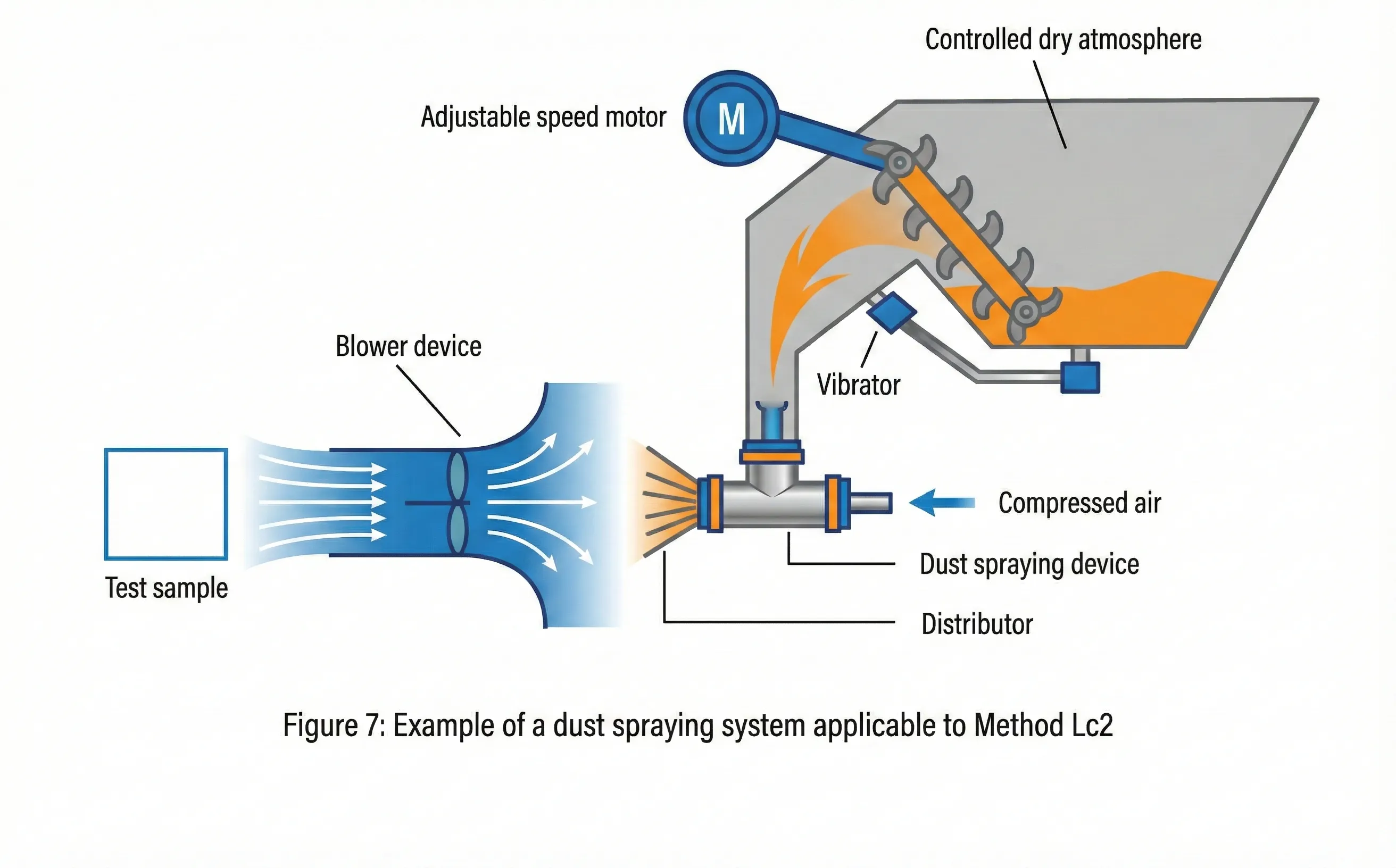
3. Dust-Fall (Settling Dust) Method
To measure how equipment tolerates long-term dust accumulation that may obstruct
cooling, ventilation, or moving parts.
- Dust settlement rate: 6 g/m²/day as a baseline.
- Duration: Typically 3 days unless otherwise specified.
- Application: Evaluates dust build-up effects on cooling systems, seals, enclosures, and thermal performance.
This method does not require high wind velocity; only enough airflow is used to keep
dust suspended before it settles.
Military Sand & Dust Chamber Technical Specifications
| Model | ToronSDC-Mi | |
|---|---|---|
| Chamber Volume | 1000 L | |
| Inner dimension (W x D x H) | 1000 × 1000 × 1000 mm | |
| Section size | Dust blowing (W x H) | 1000 × 1000 mm |
| Sand blowing (W x H) | 1000 × 500 mm | |
| External dimension (W x D x H) | 7000 × 3246 × 2500 mm | |
| Temperature range | Room temperature to + 66°C adjustable | |
| Wind speed | Dust blowing | 0.5 - 8.9 m/s |
| Sand blowing | 18 - 29 m/s | |
| Relative humidity | Less than or equal to 22% RH | |
| Collect system | Automatically collect the falling sand particle and continue to circulate in the chamber | |