
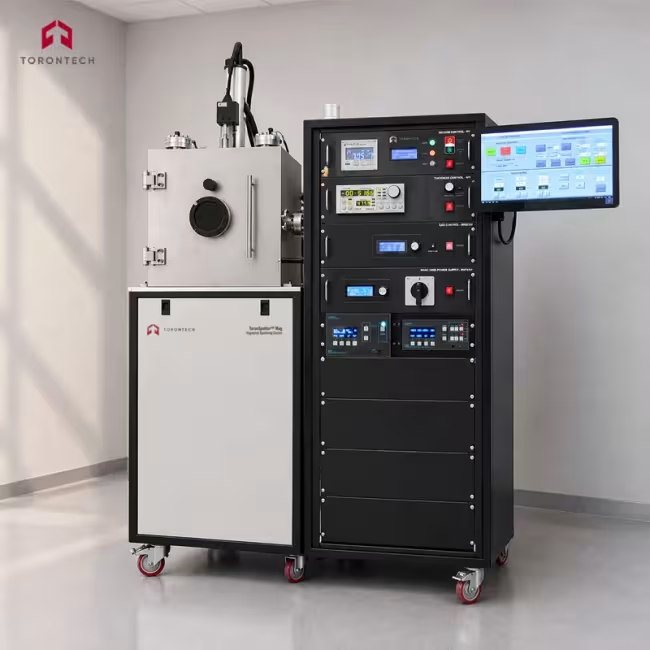
Magnetron Sputtering System - ToronSputter™ Mag
Magnetron Sputtering System - ToronSputter™ Mag
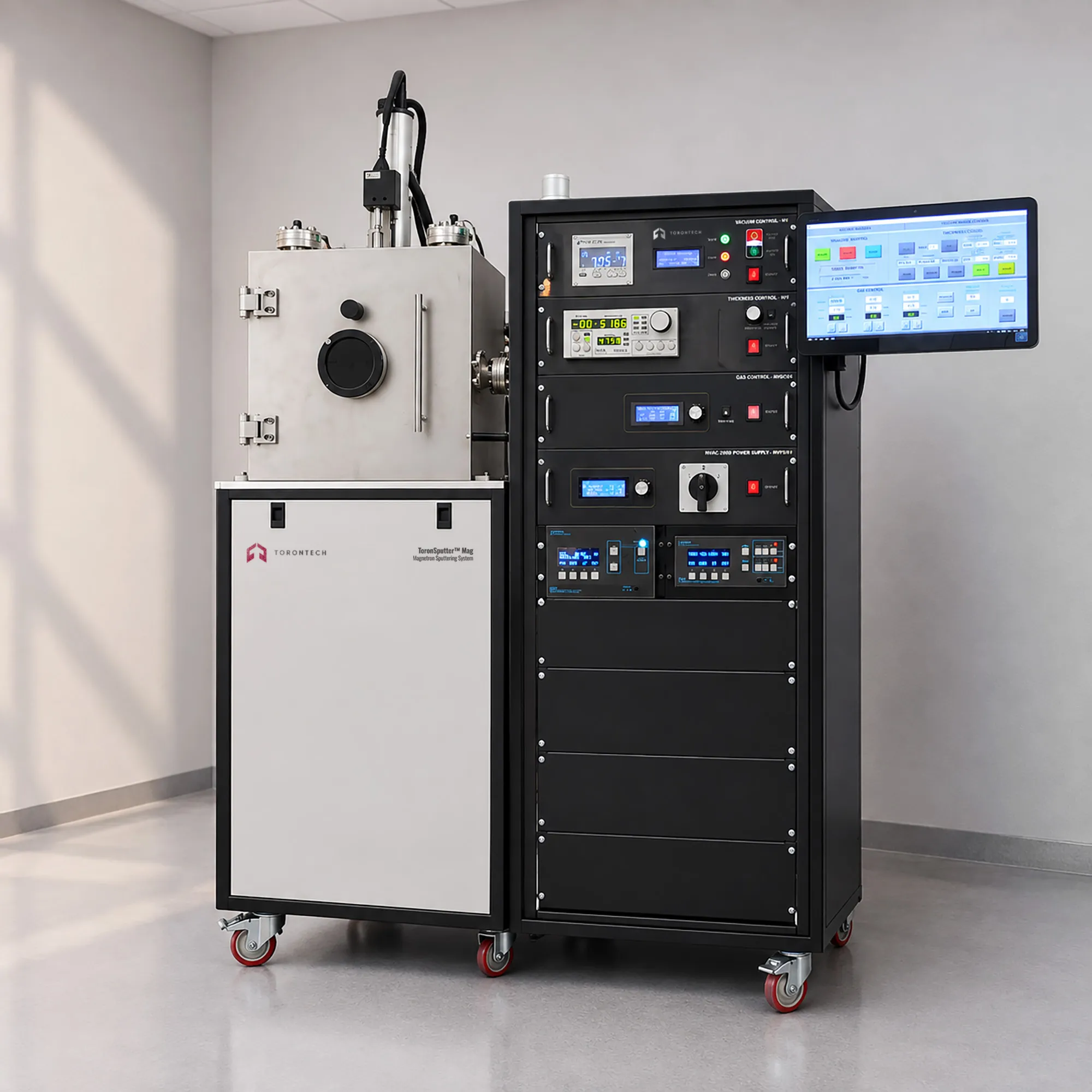
ToronSputter™ Mag is a fully automated magnetron sputtering system for research and production thin film deposition using DC and RF power. The DC supply provides 0 to 1000 V, 2000 W for conductive targets; the RF supply at 13.56 MHz, 300 to 1200 W covers insulators and reactive processes. One to four sources in 1 to 4-inch target diameters enable single-target and multi-target deposition. The SS304 chamber (30 to 60 cm) reaches 10⁻⁸ Torr base pressure and 2×10⁻⁶ Torr in 20 minutes.
Three-channel MFM gas control (Ar, N₂, O₂, He, CH₄, H₂) supports inert and reactive sputtering across 1 to 100 mTorr, with throttle, vent, and isolation valves for precise pressure setting. A capacitance manometer provides additional plasma pressure measurement during reactive processes. PID heating at 50 to 700 °C and 2 to 30 rpm rotation with RF plasma cleaning via substrate biasing prepare substrates. Wide-range vacuum control (1000 to 10⁻⁹ Torr) and 120 °C baking maintain base pressure and chamber condition.
A dual-channel thickness controller with 1 to 4 QCMs at 0.1 Å/s, managed by LabVIEW automation, controls each layer sequence fully automatically. The SS304 chamber in 30/40/50/60 cm configurations has electro-polished surfaces and standard 1-inch, QF, CF, and ISO ports. Automatic start-stop closed-loop water cooling and an observation window with rotatable shutter support monitored deposition. The 75×120 cm footprint on lockable wheels passes through standard doorways, with internal lighting and 120 °C baking capability.
Magnetron Sputtering System - ToronSputter™ Mag Applications
The ToronSputter™ Mag serves PVD research and production facilities requiring DC and RF magnetron sputtering across a wide range of conductive and insulating materials, with multi-target flexibility and precise reactive sputtering control.
- Semiconductor and Microelectronics Research: deposition of metal contacts, barrier layers, and dielectric films on wafer substrates using DC and RF magnetron sputtering at controlled rates and compositions
- Optical Thin Film Deposition: reactive RF sputtering of TiO₂, SiO₂, and other optical oxide coatings with capacitance manometer pressure control for stoichiometric accuracy
- Hard Coating and Wear-Resistant Surface Engineering: reactive DC and RF sputtering of TiN, CrN, TiAlN, and DLC films on cutting tools, molds, and mechanical components
- Energy Device Research: sputtering of transparent conductive oxides, barrier layers, and metallic contacts for thin-film solar cells, fuel cells, and energy storage device research
- Materials Science and Alloy Film Research: multi-target and co-sputtering of alloys, compound films, and mixed oxides for compositional studies and structure-property research
- Electronics and RF Component Coating: DC sputtering of Au, Al, Ti, and other conductive metals for electronics packaging, RF connectors, and precision component metallization
- Academic and University PVD Laboratories: flexible multi-source platform for teaching and materials research across a broad range of thin film deposition materials and techniques
Magnetron Sputtering System - ToronSputter™ Mag Key Features
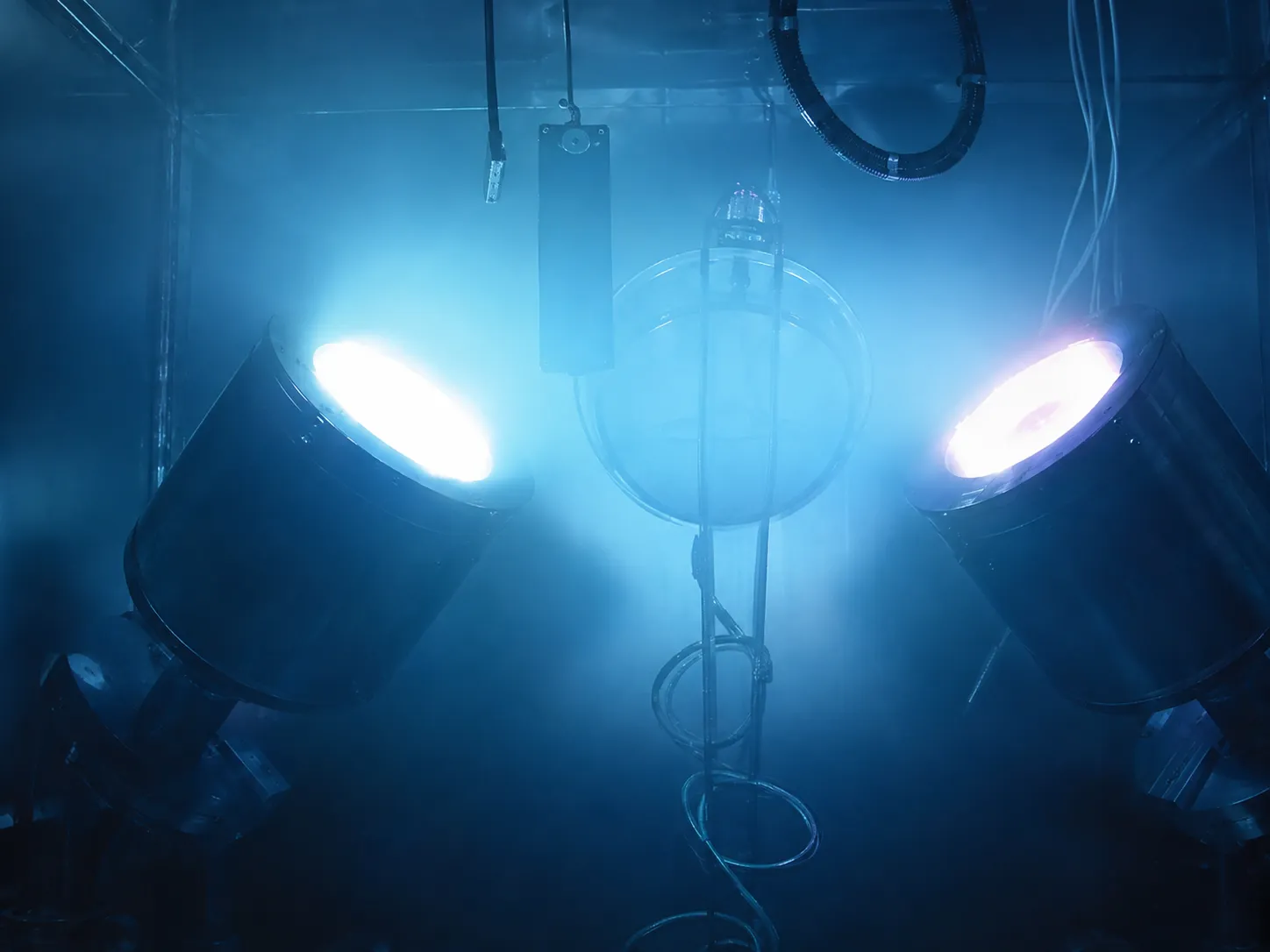
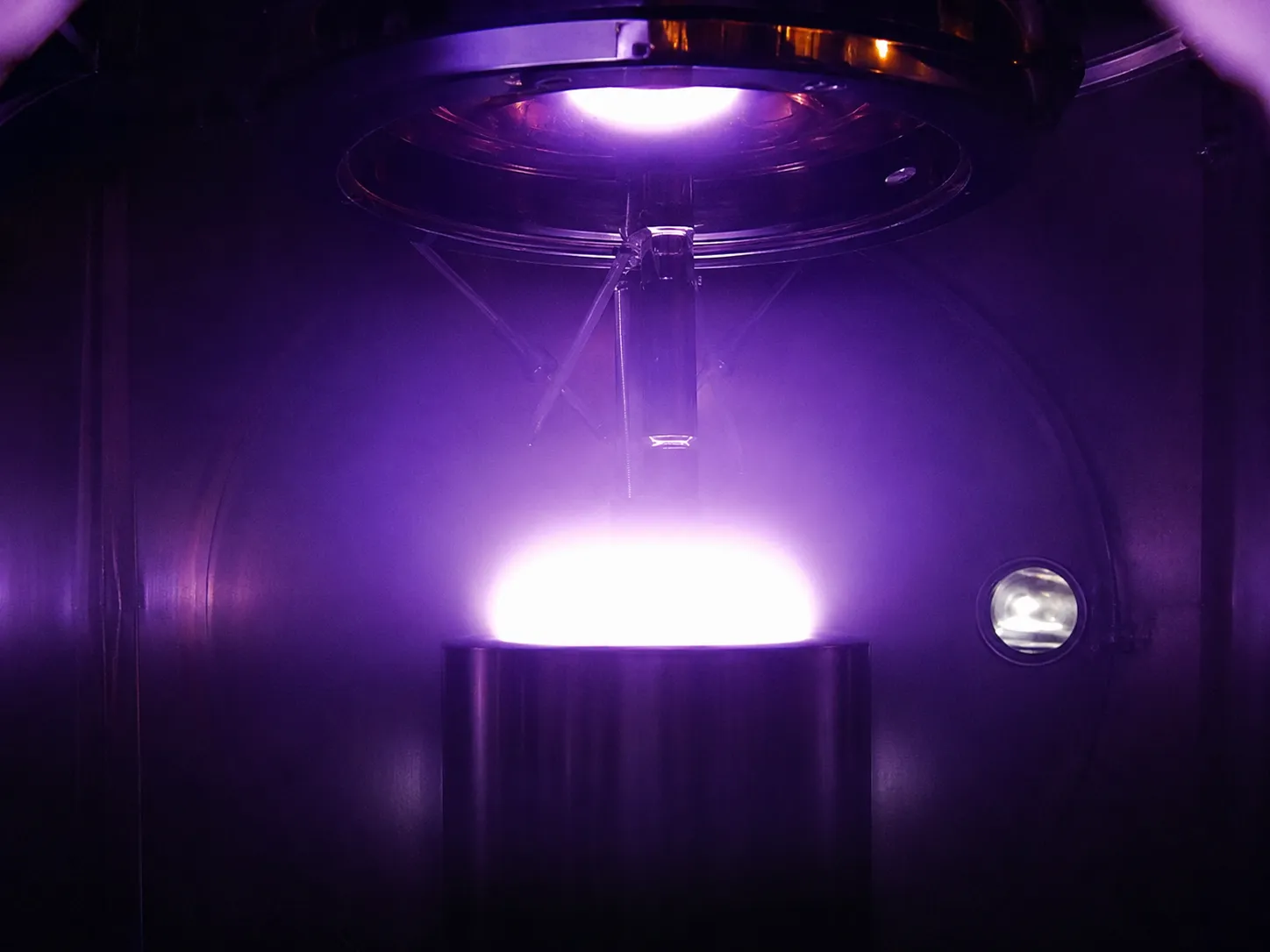
The ToronSputter™ Mag integrates DC and RF magnetron sputtering with three-channel MFM gas control, LabVIEW layer automation, and capacitance manometer plasma pressure monitoring in a multi-target high-vacuum sputtering platform.
- 1 to 4 DC/RF Magnetron Sputter Sources (1" to 4" Targets): configurable single to four-source layout for single-material, co-sputtered, and sequenced multi-layer thin film deposition
- DC Power Supply (0 to 1000 V, 2000 W): high-power DC supply for conductive target sputtering with voltage-controlled deposition rate
- RF Power Supply (13.56 MHz, 300 to 1200 W): covers the RF power range needed for insulating target sputtering and reactive oxide and nitride processes
- 3-Channel MFM Gas Control (Ar, N₂, O₂, He, CH₄, H₂): real-time electronic control and display for three independent gas channels supporting inert and reactive sputtering
- Additional Capacitance Manometer for Plasma Pressure: dedicated capacitance manometer provides precise plasma pressure measurement during reactive sputtering processes
- Throttle, Vent, and Isolation Valves, 1 to 100 mTorr Precision: precise working pressure adjustment for reactive process gas control and plasma stability
- 10⁻⁸ Torr Base Pressure, 2×10⁻⁶ Torr in 20 Minutes: fast pump-down to working vacuum with turbomolecular and mechanical pump; cryo and dry pump available as options
- Wide-Range Vacuum Control (1000 to 10⁻⁹ Torr): integrated vacuum measurement and control from atmospheric to deep vacuum for both process gas and base pressure monitoring
- LabVIEW-Based Layer-by-Layer Deposition Control: PC-controlled LabVIEW automation manages each deposition layer independently, supporting complex multi-layer process sequences
- 0.1 Å/s Dual-Channel Thickness Measurement with 1 to 4 QCMs: scalable multi-sensor thickness and rate monitoring across up to four QCM channels simultaneously
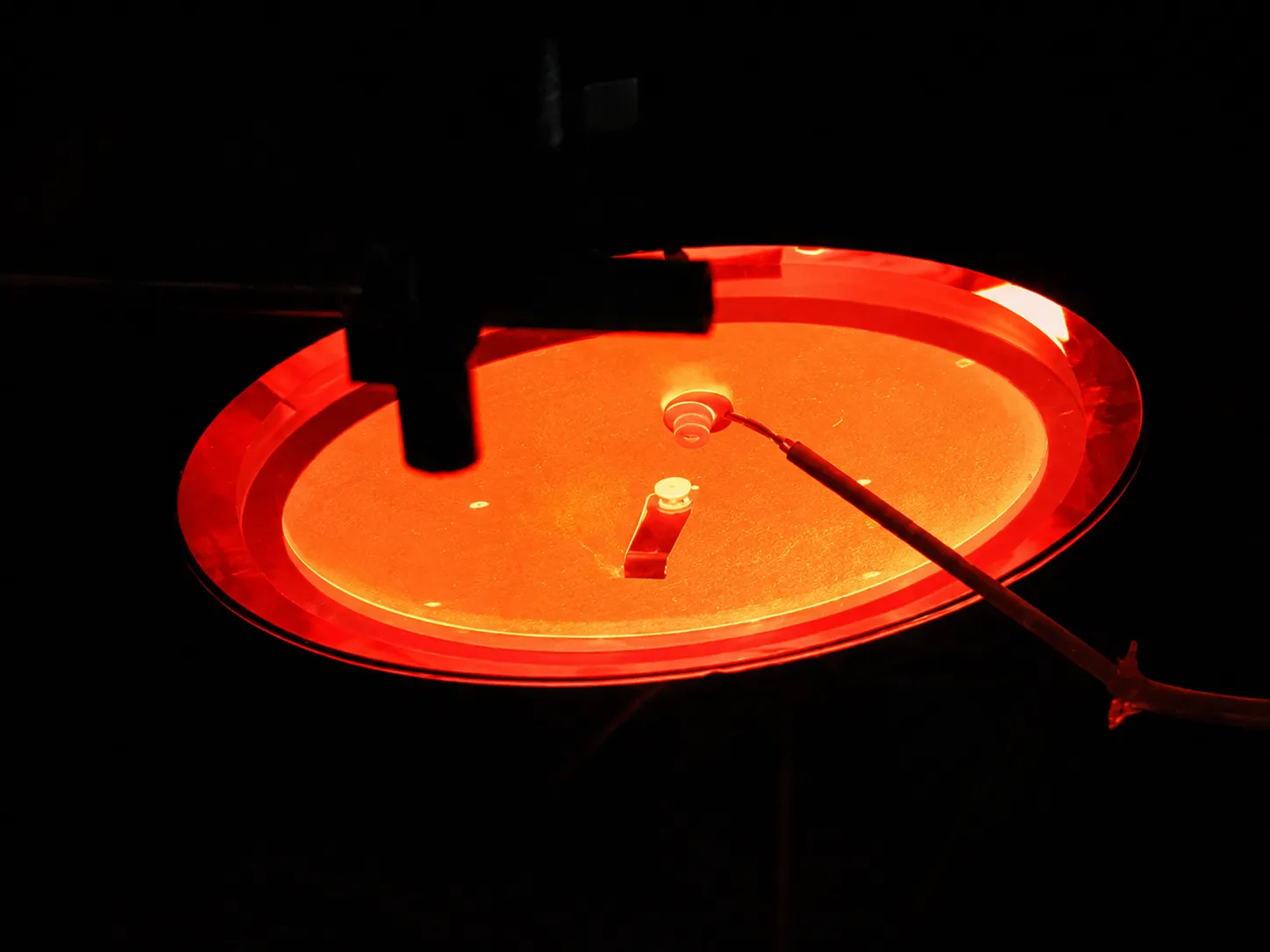
- 50 to 700 °C PID Substrate Heating: PID-controlled substrate temperature management for deposition at elevated temperatures for film crystallinity and adhesion
- 2 to 30 rpm Sample Rotation: adjustable substrate rotation promotes uniform film thickness distribution across the substrate surface
- Sample Plasma Cleaning Unit (RF via Substrate Biasing): in-situ RF plasma cleaning removes native surface oxides before deposition without breaking vacuum
- Automatic Start-Stop Closed-Loop Water Cooling: automatic thermal management activates and deactivates cooling based on system state, protecting sources and chamber throughout operation
- Vacuum Hold with Isolation Valve: main chamber stays under vacuum when not in use, reducing pump-down time between successive experiments
- SS304 Chamber (30 to 60 cm, Prismatic or Cylindrical): clean, electro-polished inner surfaces in multiple box size options with SS304 liner
- Standard 1-inch, QF, CF, and ISO Feedthrough Ports: configurable port selection for flexible feedthrough, gauge, and process gas integration
- Internal Lighting and 120 °C Baking Capability: internal lighting for chamber inspection and baking for conditioning and residual moisture removal
- Front Viewing Window with Rotatable Shutter: direct visual access for process monitoring with rotatable shutter for precise deposition timing
- Fully Automatic Computer Control with Touch Screen Panel: touch screen and real-time LCD displays manage all system operations automatically throughout the process
- 1.5-Hour Experiment Cycle Time: fast pump-down and process cycle supports consistent multi-run throughput for research and production programs
- 75×120 cm Mobile Platform on Lockable Wheels: compact footprint passes through standard doorways and allows repositioning within the facility
- One-Year Warranty for Design, Materials, and Workmanship: annual coverage for system components, design, and manufacturing quality
Theory and Method
Magnetron sputtering ionizes a process gas to produce ions that bombard a cathode target, ejecting atoms that condense on the substrate as a thin film. A magnetic field confines the plasma near the target face, increasing ion density and sputtering yield at low working pressures. DC power handles conductive targets at 0 to 1000 V; RF at 13.56 MHz dissipates charge buildup on insulators. This extends the material range to oxides, nitrides, and dielectric films from ceramic targets.
Multi-target configurations of one to four sources allow sequential deposition in a single pump-down cycle, reducing contamination between material layers. Co-sputtering from simultaneously powered sources enables composition-graded and alloy films without separate deposition steps. Reactive sputtering introduces N₂ or O₂ through MFM-controlled inputs during metallic target sputtering, forming nitride or oxide films without compound targets. Throttle valve and capacitance manometer control maintain stable plasma pressure across the 1 to 100 mTorr reactive process window.
LabVIEW automation manages the complete layer sequence, controlling shutter timing, power levels, and gas flow for each step without operator intervention between layers. RF plasma cleaning via substrate biasing removes native oxides before deposition, improving adhesion at the film-substrate interface. PID substrate heating at 50 to 700 °C promotes film crystallinity and surface diffusion during growth. The isolation valve holds the main chamber under vacuum between runs, eliminating pump-down overhead for successive depositions.
Magnetron Sputtering System - ToronSputter™ Mag Technical Specifications
| Parameter | Specification |
|---|---|
| DC Power Supply | 0 to 1000 V DC, 2000 W |
| RF Power Supply | 13.56 MHz, 300 to 1200 W |
| Number of Sputtering Sources | 1 to 4 (DC/RF) |
| Target Diameters | 1", 2", 3", 4" |
| Base Pressure | 10⁻⁸ Torr |
| Working Vacuum (Pump-Down Time) | 2×10⁻⁶ Torr in 20 minutes |
| Vacuum Control Range | 1000 to 10⁻⁹ Torr |
| Pump Configuration | Turbomolecular + Mechanical (cryo and dry pump as options) |
| Sputter Working Pressure Range | 1 to 100 mTorr (throttle valve controlled) |
| Plasma Pressure Measurement | Additional capacitance manometer |
| Chamber Material | SS304 (prismatic or cylindrical); electro-polished |
| Chamber Sizes | 30/40/50/60 cm box size |
| Feedthrough Ports | Standard 1-inch, QF, CF, ISO |
| Observation Window | Front viewing window; rotatable shutter |
| Internal Lighting | Yes |
| Baking Capability | Up to 120 °C (internal) |
| Gas Inputs | Ar, N₂, O₂, He, CH₄, H₂; 3-channel MFM; real-time electronic display |
| Valve Configuration | Throttle, vent, and isolation valves |
| Substrate Heating | 50 to 700 °C (PID controlled) |
| Sample Rotation Speed | 2 to 30 rpm |
| Plasma Cleaning | RF plasma via substrate biasing |
| Thickness Monitoring | Dual-channel; 0.1 Å/s precision; 1 to 4 QCMs |
| Control System | Fully automatic computer control; touch screen panel; real-time LCD; LabVIEW |
| Cooling System | Automatic start-stop closed-loop water cooling |
| Experiment Cycle Time | 1.5 hours |
| Footprint | 75 × 120 cm |
| Door Clearance | Passes through standard doorways |
| Mobility | Lockable wheels |
| Warranty | 1 year (design, materials, and workmanship) |