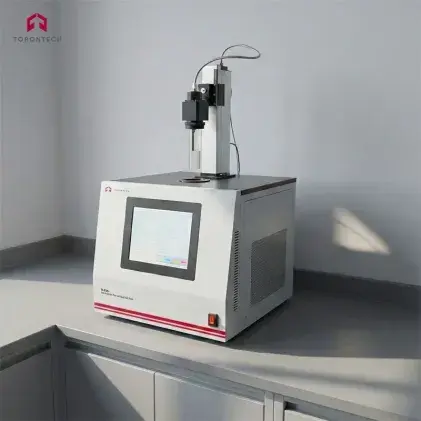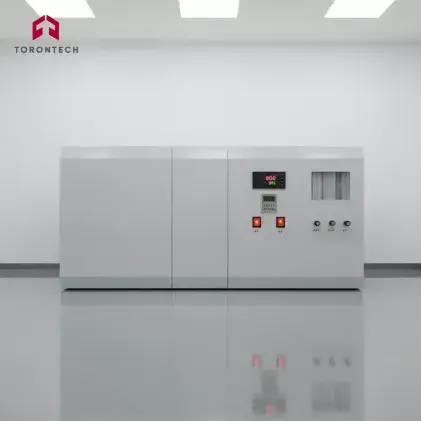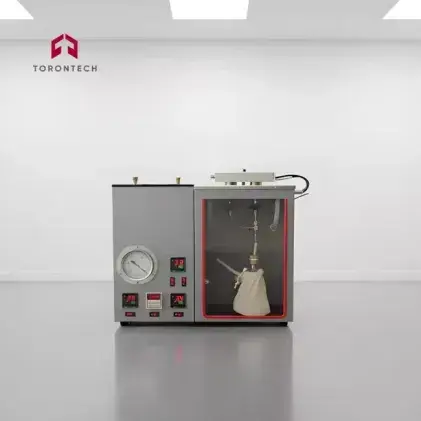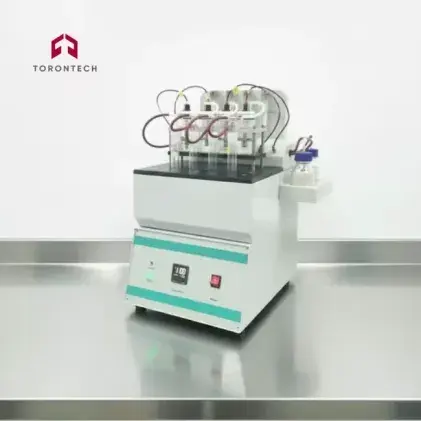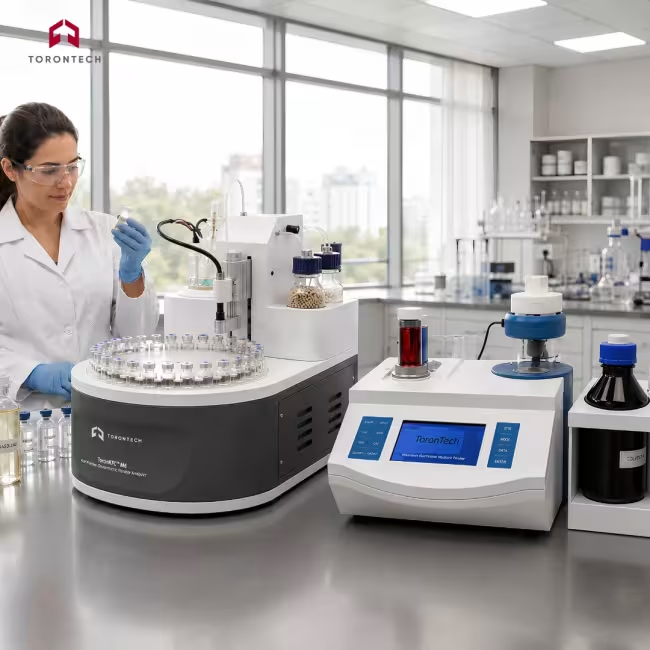
General Petrochemical Laboratory Instruments
Four pillars of petrochemical laboratory testing: physical properties, viscosity, elemental analysis & lubrication tribology
Petrochemical testing equipment for general laboratory testing covers the four core measurement dimensions that define petroleum product quality, composition, and performance regardless of product type. Torontech's general petrochemical testing range groups these four disciplines into dedicated sub-category pages, each with its own instrument portfolio, standards, and applications.
The four disciplines — physical properties, viscosity and low-temperature behavior, elemental and compositional analysis, and lubrication tribology — apply across crude oil, lubricants, fuels, and specialty petroleum products. Together they form the foundational testing capability of any petrochemical quality control or research laboratory.
How to Choose the Right General-Purpose Petrochemical Testing Equipment
- For establishing a petroleum product's identity, grade, and specification compliance: start with physical properties testing; density, distillation, water content, and sediment are the baseline parameters measured in every petroleum QC workflow before any advanced analysis.
- For lubricant viscosity grade verification, cold-weather pumpability, or coolant freeze protection: choose viscosity and low-temperature testing; kinematic viscosity at 40°C and 100°C, pour point, and cloud point are the primary classification parameters for lubricants, fuel oils, and coolant products.
- For regulatory sulfur limits, hydrocarbon composition, trace metal content, or elemental characterization: choose elemental and composition analysis; match the technology — sulfur analyzer, GC, ICP-OES, or combustion analyzer — to the specific analyte and sample matrix.
- For evaluating how well a lubricant protects components under load, wear, or oscillating contact: choose lubrication and tribology; four-ball EP and wear data, Timken OK load, and fretting wear results provide lubricant performance rankings that no physical property test can replicate.
Why Choose Torontech for Your Petrochemical Testing Equipment
Torontech supplies testing and measurement equipment to laboratories and manufacturers across North America and worldwide, backed by responsive technical support and calibration service. The petrochemical testing equipment range is built for reliable, standards-driven results, so you can standardize on one supplier as your testing needs grow. Our team helps you match the right configuration to your samples, applicable standards, and throughput, then supports you through installation and beyond.
Request a Quote
Tell us which measurement discipline your lab needs to cover, your sample type, and the applicable standard, and our team will guide you to the right sub-category and instrument. Contact the Torontech team for pricing, datasheets, and application support.
Applications
General petrochemical testing instruments serve buyers across the full petroleum value chain who need to characterize petroleum products against specification, classify them for custody transfer, or develop new formulations.
- Petroleum refineries: Physical properties (density, distillation, water, sediment), viscosity, and elemental composition testing at every process stage from crude oil intake to finished product dispatch.
- Lubricant manufacturers and blenders: Viscosity grade verification, low-temperature pour and cloud point, and tribological performance testing (four-ball EP and Timken OK load) for new product development and quality control.
- Quality control and independent testing laboratories: Routine physical properties and viscosity measurements for third-party product certification, custody transfer verification, and specification compliance across all petroleum grades.
- Fuel regulatory compliance: Sulfur content, elemental composition, and carbon residue testing for ultra-low sulfur diesel, Euro 6 gasoline, and IMO MARPOL Annex VI bunker fuel programs.
- Petrochemical research and development: Tribological performance screening of new lubricant additives by four-ball tester and Timken apparatus; compositional analysis of new formulations by ICP-OES, GC, and combustion elemental analyzers.
- Trading and terminal operations: Density, API gravity, basic sediment and water (BS&W), and distillation testing at loading and receiving terminals for crude oil and fuel oil custody transfer.
General Petrochemical Testing Equipment Range
Torontech organizes general petrochemical testing into four instrument sub-categories, each with a dedicated range page covering full product listings and specifications.
Physical Properties Testing
Physical properties testing provides the foundational quality data that identifies a petroleum product, establishes its grade, and confirms specification compliance before any advanced analysis is conducted. Torontech's physical properties range covers seven measurement categories: density and API gravity (ASTM D287, D1298), water content by Karl Fischer titration and distillation methods, atmospheric and vacuum distillation (ASTM D86, D1160), sediment and insoluble content (ASTM D473, D4870), combined basic sediment and water by centrifuge (ASTM D96, D1796), carbon residue and ash content (ASTM D524, D4530, D482), and ASTM color scale and refractive index determination. These instruments are used in refineries, trading terminals, independent laboratories, and marine and aviation fuel acceptance facilities worldwide.
Viscosity & Low Temperature Testing Equipment
Viscosity and cold-flow properties determine whether a petroleum product will lubricate, pump, atomize, and flow correctly across its intended operating temperature range. Torontech's range spans seven kinematic viscosity tester configurations from manual bath through fully automatic dual-bath systems (ASTM D445), pour point and cloud point analyzers (ASTM D97, D2500), automatic freezing point testers for engine coolants (ASTM D1177), and advanced rotational viscometers for non-Newtonian fluids and polymer-containing formulations. The portfolio covers the full automation range, from single-sample manual testing to dual-bath unattended operation, to match any laboratory throughput requirement.
Elemental & Composition Analysis
Elemental and compositional analysis defines the chemical identity, environmental compliance, and processing suitability of petroleum products — from regulatory sulfur limits to hydrocarbon composition and trace metal contamination. Torontech's range brings together four complementary instrument groups: five sulfur analysis technologies aligned with ASTM D5453, D4294, D1266, D3227, and D1275; seven petroleum-dedicated GC systems for transformer oil DGA, gasoline oxygenates, naphtha detailed hydrocarbon analysis, LPG, natural gas, and biodiesel quality; eight spectroscopy instruments (ICP-OES, RDE-OES, AAS, UV-VIS) for elemental analysis across all petroleum matrices; and combustion-based CHN and C/S elemental analyzers for solid fuels, catalysts, and environmental samples.
Lubrication & Tribology
Lubrication and tribology testing evaluates how well a lubricant protects surfaces under real contact conditions — wear, friction, extreme pressure, fretting, and load-carrying capacity — properties that viscosity and physical property measurements alone cannot predict. Torontech's range covers four tribology test categories: four-ball tribometers from manual to fully automatic for ASTM D2783 (EP lubricating oils), D4172 (anti-wear oils), D2266 (lubricating greases), and D2596 (EP greases); universal friction and wear testing machines for pin-on-disc and block-on-ring geometries (ASTM G99, G77, IP 239); dedicated fretting wear testers for ASTM D4170 bearing grease evaluation; and Timken OK load testers for load-carrying capacity per ASTM D2782 (oils) and D2509 (greases).