Gas & Contaminant Analysis | ASTM, ISO, and IP Test Methods
Gas and contaminant analysis instruments identify harmful species in gas streams, classify hydrocarbon types, and quantify solid particle contamination in petroleum products and industrial fluids. Refineries, aviation fuel labs, LPG distributors, and industrial maintenance teams use these instruments to verify product quality and detect contamination before it causes system failures or specification breaches.
The range covers gas-phase H2S analyzers, liquid-phase extraction apparatus, hydrocarbon type classifiers, particle counters, and electrical conductivity testers. Each instrument targets a specific contaminant or analytical property, and all are built to established ASTM, ISO, and IP test methods so results are globally accepted and audit-ready.
Why Choose Torontech for Your Gas & Contaminant Analysis Instruments
Torontech supplies testing and measurement equipment to laboratories and manufacturers across North America and worldwide, backed by responsive technical support and calibration service. The Gas & Contaminant Analysis Instruments range is built for reliable, standards-driven results, so you can standardize on one supplier as your testing needs grow. Our team helps you match the right configuration to your samples, applicable standards, and throughput, then supports you through installation and beyond.
Request a Quote
Tell us your sample type, target contaminant, and the standard you need to meet, and we will recommend the right instrument. Contact the Torontech team for pricing, configuration details, and delivery timelines.
Applications
Gas and contaminant analysis instruments are used across petroleum production, fuel distribution, and industrial fluid maintenance.
- Petroleum Refining: verifies H2S removal from LPG and fuel oil fractions before distribution, confirming the product meets corrosivity and safety specifications.
- Aviation Fuel Supply: tests H2S content, electrical conductivity, and hydrocarbon composition of jet fuels before loading, helping labs confirm full specification compliance.
- LPG Distribution: screens liquefied petroleum gas for hydrogen sulfide using the lead acetate method per ASTM D2420 to confirm the gas is sweet before dispatch.
- Bunker and Heavy Fuel Oil Testing: measures dissolved H2S per ISO 8217 and ASTM D7621 to protect loading crews and downstream equipment from corrosive exposure.
- Industrial Fluid Condition Monitoring: oil particle counters track solid contamination in hydraulic oil, lubricants, and turbine oil, giving maintenance teams early warning of wear debris build-up.
- Fuel Blend and Quality Assurance: hydrocarbon type analysis quantifies aromatics, olefins, and saturates in gasoline and naphtha fractions to support blend compliance and specification reporting.
Gas & Contaminant Analysis Range
The lineup covers five instrument types, each targeting a distinct analytical need. The instruments span gas-phase detectors, liquid-phase extractors, hydrocarbon classifiers, oil particle counters, and fuel conductivity meters.
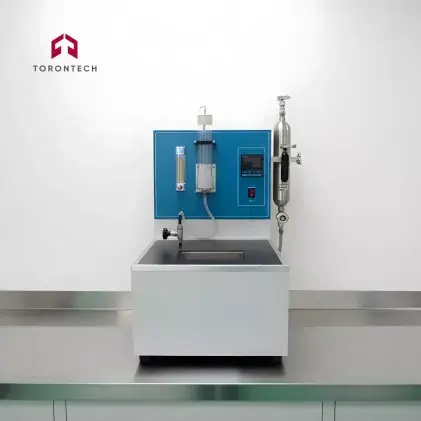
LPG Hydrogen Sulfide Analyzer (Lead Acetate Method)
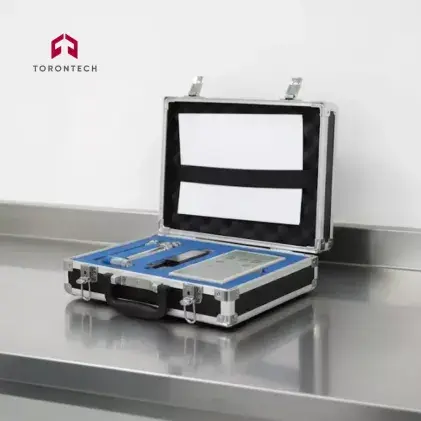
Built to ASTM D2420, this analyzer detects hydrogen sulfide in liquefied petroleum gas using the lead acetate method. LPG flows through a heated test vessel, with a precision needle valve controlling the gas rate, producing a quantitative result at a sensitivity of approximately 4 mg/m³. Refiners, blenders, and distributors who need routine sweetness verification before product release will find this the right tool.
Apparatus for Hydrogen Sulfide in Fuel Oils
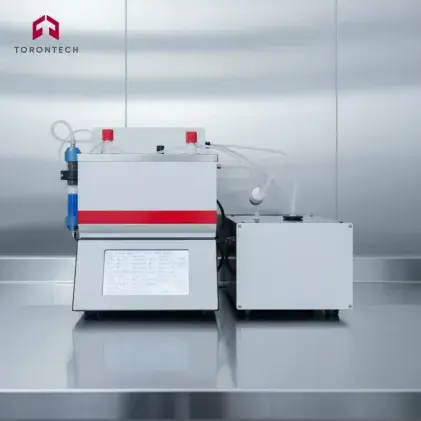
This apparatus determines H2S in fuel oils from 0 to 250 mg/kg by the rapid liquid phase extraction method, in compliance with ASTM D7621, IP570, and ISO 8217. Air is bubbled through a heated sample to extract dissolved H2S, which an electrochemical sensor reads directly in mg/kg. It handles fluids up to 3000 mm²/s viscosity and delivers results in 15 minutes, making it the standard tool for bunker fuel and heavy fuel oil testing labs.
Fluorescent Indicator Absorption Apparatus
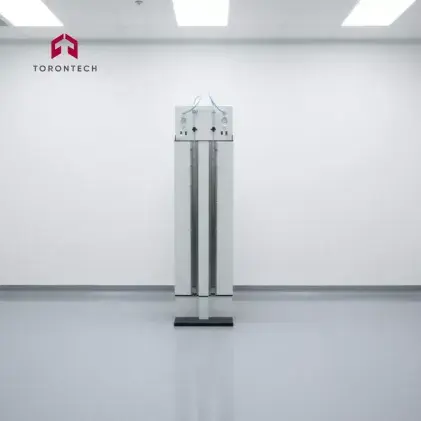
This apparatus classifies hydrocarbon types in liquid petroleum products per ASTM D1319, distinguishing aromatics, olefins, and saturates in fractions that distill below 315°C. A silica gel adsorption column separates the hydrocarbon classes under UV light using a fluorescent indicator, and the analyst reads volume percentages directly from the column. Two columns operate simultaneously, which suits labs running gasoline, jet fuel, and naphtha samples in parallel.
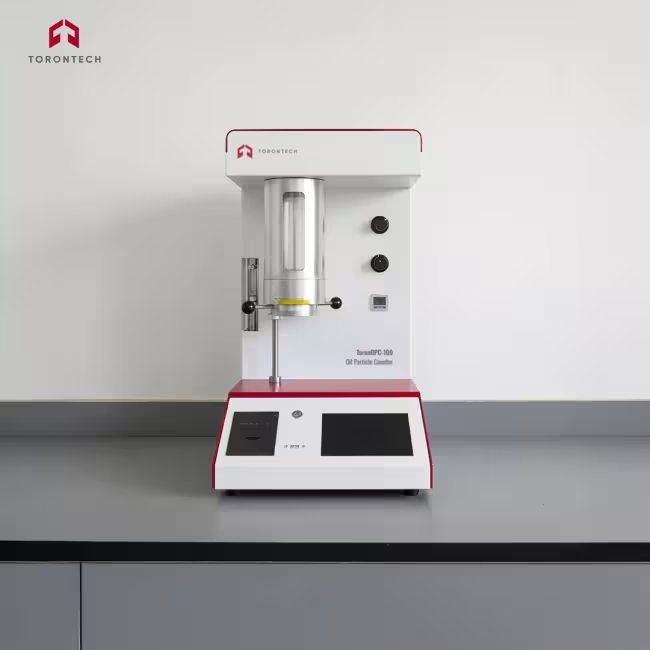
Liquid and Oil Particle Counter (ToronOPC™ Series)
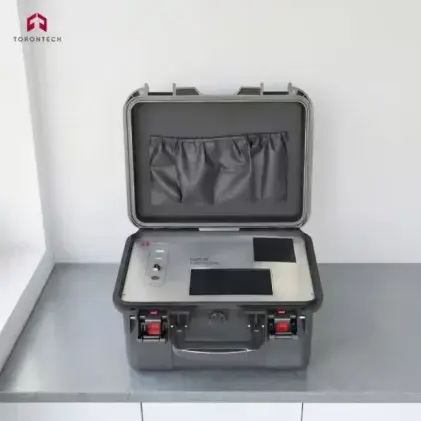
The ToronOPC™ series measures solid particle size and concentration in hydraulic oil, lubricating oil, turbine oil, transformer insulating oil, and fuel using laser-based light-blocking technology. Models span portable handheld units, laboratory analyzers, and permanently installed online monitors, all reporting fluid cleanliness to ISO 4406, NAS 1638, and SAE AS4059. The series scales from spot-check field sampling to continuous real-time contamination monitoring on critical plant systems.
Digital Conductivity Meter
This meter measures the rest conductivity of aviation and distillate fuels from 0 to 1999 µS/m at 1 µS/m resolution, in compliance with ASTM D2624. Photoelectric isolation technology and integrated temperature measurement from -50°C to 50°C keep readings stable across a wide range of sample conditions. Aviation fuel labs, biofuel producers, and distillate refiners use it to confirm that static dissipator additives are performing correctly and that fuel conductivity falls within specification.
How to Choose the Right Gas & Contaminant Analysis Instrument
- For H2S in LPG (gas phase): choose the LPG Hydrogen Sulfide Analyzer per ASTM D2420 for routine sweetness screening before product release.
- For H2S in fuel oils or bunker fuel (liquid phase): choose the H2S in Fuel Oils Apparatus per ASTM D7621 and ISO 8217, particularly for high-viscosity samples.
- To classify hydrocarbon composition (aromatics, olefins, saturates) in petroleum fractions: choose the Fluorescent Indicator Absorption Apparatus per ASTM D1319.
- To quantify solid particle contamination in oil or industrial fluids: choose a ToronOPC™ particle counter — portable model for field sampling, laboratory model for batch analysis, or online model for continuous monitoring.
- To measure electrical conductivity in aviation or distillate fuel: choose the Digital Conductivity Meter per ASTM D2624, including when verifying static dissipator additive effectiveness.