Engine Coolant Corrosion Testers
Engine Coolant Corrosion Testers | ASTM D1384 & ASTM D4340 Testing
An engine coolant corrosion tester screens antifreeze and coolant formulations for their ability to protect metal engine and cooling-system components from corrosion. Torontech's range covers ASTM D1384 glassware screening across the full metal set (steel, cast iron, brass, copper, solder, and aluminum) and ASTM D4340 testing for cast aluminum alloys under the heat-rejecting conditions found in aluminum cylinder heads.
Neither test replaces full bench, dynamometer, or field validation, but both give coolant formulators and OEM labs a fast, repeatable first screen before a formulation moves further down the approval process.
Why Choose Torontech for Your Engine Coolant Corrosion Tester
Torontech supplies testing and measurement equipment to laboratories and manufacturers across North America and worldwide, backed by responsive technical support and calibration service. The Engine Coolant Corrosion Tester range is built for reliable, standards-driven results, so you can standardize on one supplier as your testing needs grow. Our team helps you match the right configuration to your samples, applicable standards, and throughput, then supports you through installation and beyond.
Request a Quote
Tell us which coolant formulations and metals you need to qualify, and we will help you configure the right test setup. Contact the Torontech team for pricing and lead times.
Applications
Engine coolant corrosion testing supports quality control anywhere a glycol-based coolant contacts metal engine or cooling-system components.
- Coolant and Additive Manufacturing: benchmarks new formulations and inhibitor packages during research, development, and batch quality control.
- Automotive and Engine OEMs: screens and approves coolants for factory-fill and service use across the metals and aluminum components in modern engines.
- Fleet Maintenance and Heavy Equipment: supports coolant selection for long-life protection of water pumps, radiators, and engine blocks in high-value assets.
- Power Generation and Gas Compression: validates coolant performance in large stationary engines, where corrosion-related downtime carries a high cost.
- High-Performance and Heavy-Duty Engines: qualifies coolants for aluminum cylinder heads and blocks under the higher thermal loads of racing and long-haul diesel service.
Engine Coolant Corrosion Tester Range
The range splits by scope: general multi-metal screening and aluminum-specific heat-rejection testing.
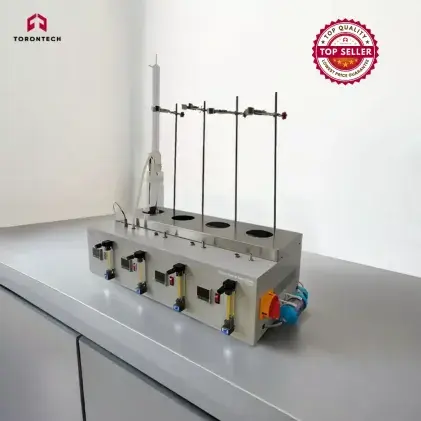
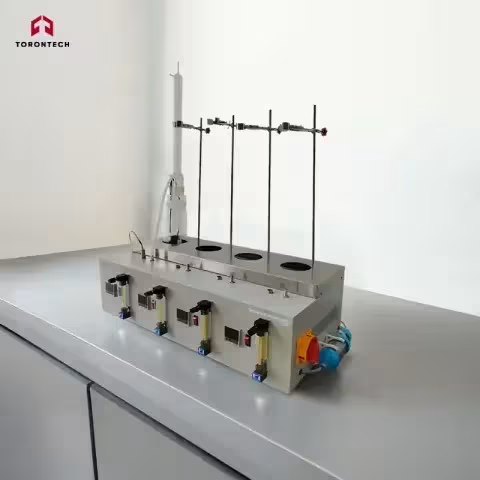
- Corrosion Tester for Engine Coolants (TT-1384): runs the ASTM D1384 glassware test across a standard metal coupon set, testing up to six coolant samples at once with digital temperature control from room temperature to 200°C.
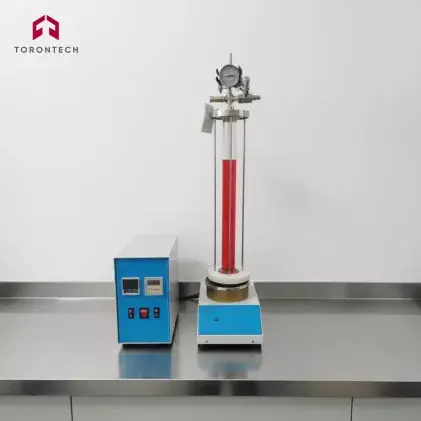
- Corrosion of Cast Aluminum Alloys in Engine Coolants Tester (TT-4340): runs the ASTM D4340 test, applying heat through a pressurized coolant cell to simulate an aluminum cylinder head, with a digital timer and pressure gauge to track the heat-rejecting exposure.
How to Choose the Right Engine Coolant Corrosion Tester
- For general coolant formulation screening across common metals: choose the TT-1384 to run the ASTM D1384 glassware test on steel, cast iron, brass, copper, solder, and aluminum coupons together.
- For coolants intended for aluminum cylinder head engines: choose the TT-4340 to confirm protection under ASTM D4340 heat-rejecting conditions before the coolant reaches production vehicles.
- For a full coolant qualification program: run both tests in sequence, since ASTM D1384 screens broad metal compatibility while ASTM D4340 targets the higher-risk aluminum heat-transfer surfaces.
- For OEM approval or tender documentation: request test reports referencing both standards to support factory-fill or service-fill coolant submissions.