Corrosion Testing Equipment for Petroleum, Oils & Coolants
Corrosion Testing Equipment | Copper, Rust, Coolant & Cavitation Testing
Corrosion testing equipment protects fuel, lubricant, and coolant formulations from failing in service by measuring how they interact with the copper, steel, and aluminum components they contact. Torontech's range spans four ASTM-based corrosion test families: copper strip corrosion for petroleum and LPG, rust and oxidation testing for turbine and circulating oils, coolant corrosion testing for engine cooling systems, and cavitation corrosion testing for aluminum water pumps.
Each family targets a different failure mode and a different set of ASTM standards, so labs typically select testers by the product they need to qualify rather than by a single shared specification.
Why Choose Torontech for Your Corrosion Testing Equipment
Torontech supplies testing and measurement equipment to laboratories and manufacturers across North America and worldwide, backed by responsive technical support and calibration service. The Corrosion Testing Equipment range is built for reliable, standards-driven results, so you can standardize on one supplier as your testing needs grow. Our team helps you match the right configuration to your samples, applicable standards, and throughput, then supports you through installation and beyond.
Request a Quote
Tell us which fuels, oils, or coolants you need to qualify, and we will point you to the right corrosion test family for your lab. Contact the Torontech team for pricing and lead times.
Applications
Corrosion testing supports quality control across the petroleum, lubricant, and automotive coolant supply chain, wherever a fluid contacts metal parts in service.
- Petroleum Refining and Fuel Blending: screens gasoline, diesel, jet fuel, and LPG for corrosive sulfur compounds before certification.
- Lubricant and Coolant Manufacturing: qualifies new formulations and inhibitor packages for turbine oils, hydraulic oils, and engine coolants.
- Automotive and Engine OEMs: approves coolants and lubricants for factory-fill and service use across the metals in modern engines and cooling systems.
- Power Generation: validates turbine oil and coolant performance in stationary engines and turbines, where corrosion-related downtime is costly.
- Fleet, Marine, and Heavy Equipment: supports fluid selection for long-life protection of pumps, radiators, and engine components in high-value assets.
Corrosion Testing Equipment Range
The range splits into four families by the fluid and failure mode each addresses.
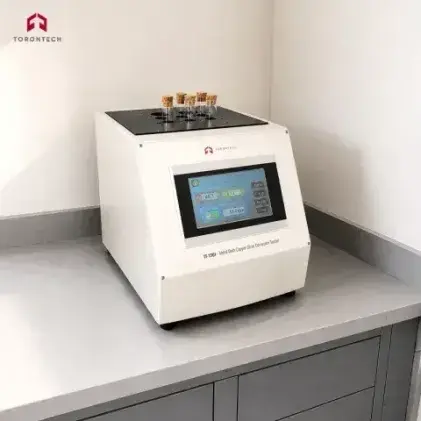
- Copper Strip Corrosion Tester: ASTM D130/ISO 2160 and ASTM D1838/ISO 6251 testing for copper and copper-alloy corrosion in petroleum fuels, lubricants, and LPG.
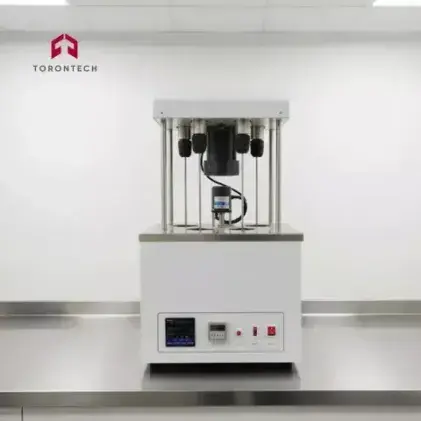
- Rust & Oxidation Corrosion Testers: ASTM D665/ISO 7120 rust-preventing characteristics testing for steam-turbine, hydraulic, and circulating oils.
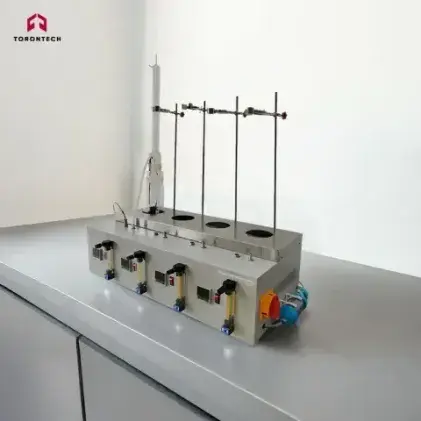
- Engine Coolant Corrosion Testers: ASTM D1384 and ASTM D4340 testing for coolant corrosion across common metals and aluminum cylinder heads.
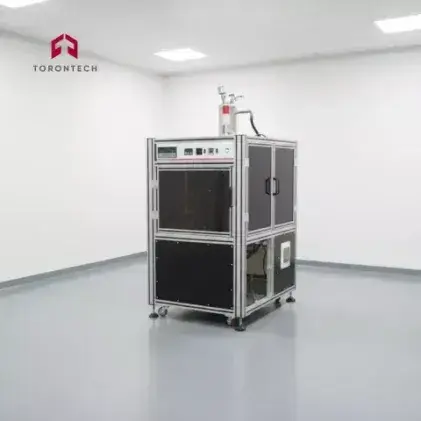
- Erosion / Cavitation Corrosion Testers: ASTM D2809 testing for cavitation and erosion-corrosion damage to aluminum water pumps from circulating coolant.
How to Choose the Right Corrosion Testing Equipment
- For petroleum fuels, lubricants, or LPG: start with the Copper Strip Corrosion Tester range to screen for corrosive sulfur compounds under ASTM D130 or ASTM D1838.
- For steam-turbine, hydraulic, or circulating oils: choose the Rust & Oxidation Corrosion Testers to confirm rust-inhibitor performance under ASTM D665.
- For antifreeze and engine coolant formulations: choose the Engine Coolant Corrosion Testers to screen general metal compatibility and aluminum cylinder head protection.
- For coolants used with aluminum water pumps: add the Erosion / Cavitation Corrosion Tester to confirm protection under ASTM D2809 before factory-fill approval.