

Dual Analysis Ferrograph – ToronFG™ 100
Dual Analytical Ferrograph – ToronFG™ 100
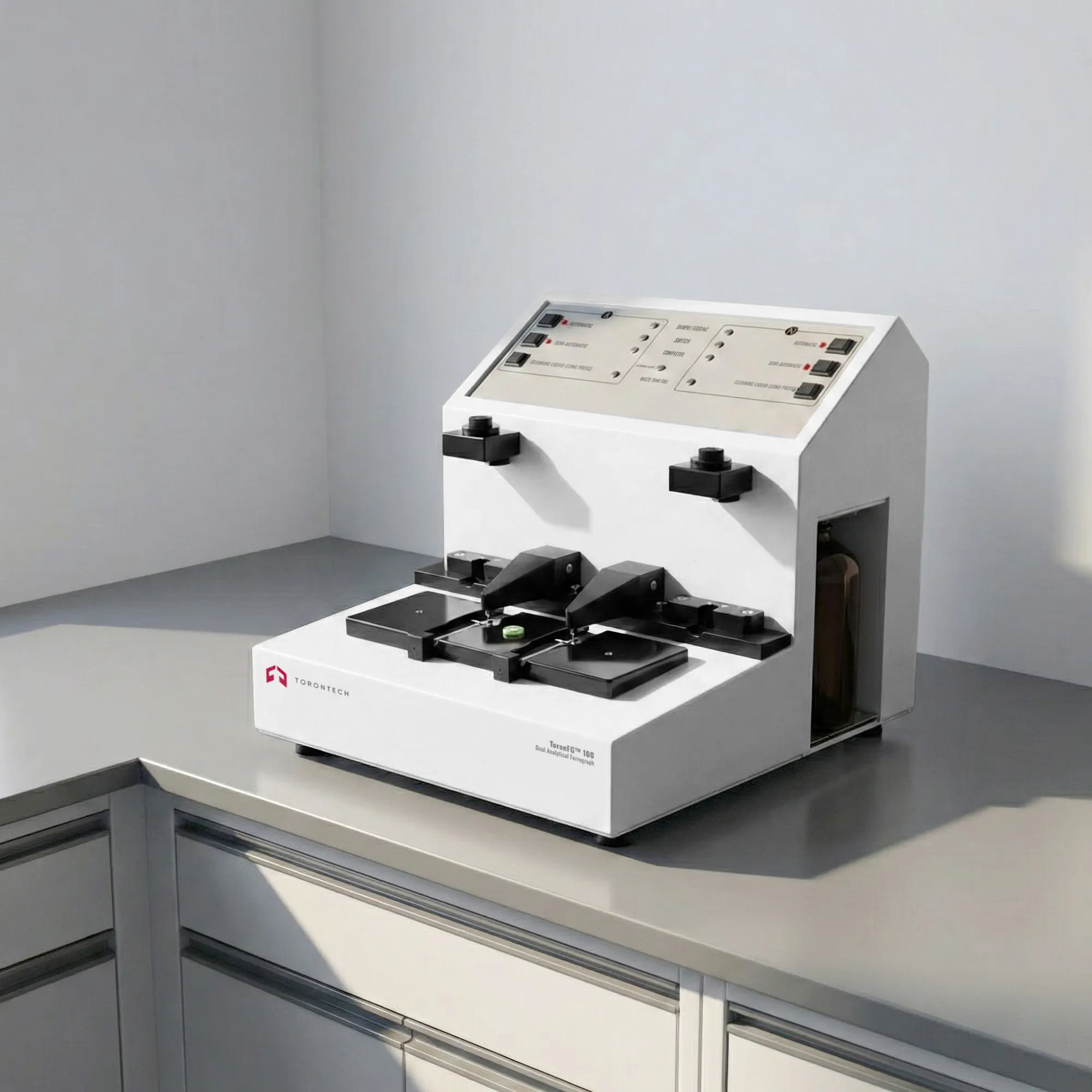
A Ferrograph helps maintenance and oil analysis teams see wear and contaminant particles pulled from in-service lubricants. The ToronFG™ 100 Dual Analytical Ferrograph prepares ferrograms using a controlled magnetic field so particles deposit in patterns that support fast microscopy-based interpretation.
Two independent preparation channels let you build two ferrograms in parallel for higher throughput in routine condition monitoring. Operators can run automatic, semi-automatic, or manual ferrogram preparation, depending on lab workflow and sample load.
Dual Analytical Ferrograph – ToronFG™ 100 Applications
- Transportation and rail fleets (locomotives and engines): Tracks abnormal wear trends in gearboxes, bearings, and engine lubrication systems so teams can plan corrective actions before unplanned downtime.
- Steel and heavy industry fans and rotating assets: Supports root-cause screening for abrasive, fatigue, and sliding wear signatures in circulating oil systems used on large rotating equipment.
- Power generation (generator sets and auxiliaries): Helps condition-monitor turbines, gear drives, and hydraulic systems by correlating particle type and size distribution with operating risk.
- Marine and defense drive systems (transmission gearboxes): Enables routine oil debris surveillance where reliability is tied to early detection of ferrous wear and mixed contaminant debris.
Standards
- ASTM D7690 – Microscopic characterization of particles from in-service lubricants by analytical ferrography.
- ASTM D7684 – Guide for microscopic characterization and reporting of particles from in-service lubricants.
- SH/T 0573 – Test method for wear particles in used lubricating oils (analytical ferrography method).
Dual Analytical Ferrograph – ToronFG™ 100 Key Features
- Dual-channel ferrogram preparation to produce two ferrograms simultaneously for higher daily throughput.
- High magnetic field performance with specified magnetic flux density and field gradient to support stable particle separation.
- Adjustable sample flow control to improve deposition consistency and repeatability between runs.
- Fast preparation cycle with two spectra produced in under 20 minutes under stated conditions.
- Transparent ferrogram for easier differentiation between metallic, organic, and non-metallic debris during diagnosis.
- Particle arrangement by magnetization and size to speed interpretation of wear severity and source.
- Integrated microscope configuration (matching scope parameters) supporting BF/DF objectives and reflected/transmitted illumination options listed for the system.
Theory and Method
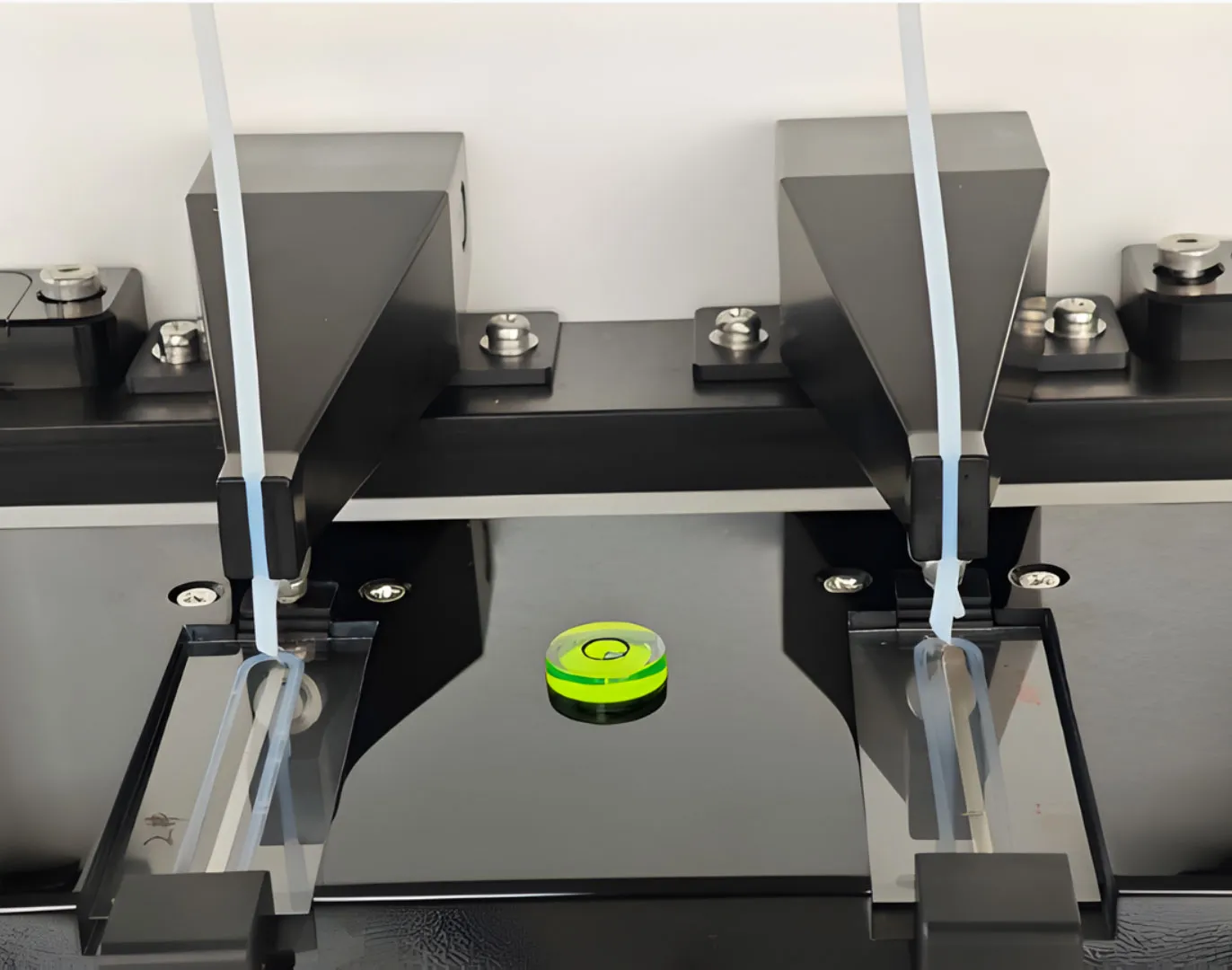
Analytical ferrography concentrates wear debris from an oil sample onto a ferrogram substrate while a magnetic field separates particles by magnetic response and size. The deposited pattern is then inspected under a microscope to classify particle types and relate them to wear mechanisms.
The ToronFG™ 100 uses dual, independent preparation paths so two samples can be processed at the same time. A controlled flow rate improves deposition consistency for repeatable slide preparation and easier comparison across time-based samples.
Dual Analytical Ferrograph – ToronFG™ 100 Technical Specification
| Item | Specification |
|---|---|
| Preparation channels | Dual, independent circuits; automatic / semi-automatic / manual preparation |
| Magnetic flux density (max) | ≈ 1.8 T |
| Magnetic field gradient (max) | > 0.5 T/mm |
| Oil transport flow range | 10–30 mL/h |
| Oil line size | OD 2.3 mm, ID 1.7 mm |
| Transport method | Pneumatic |
| Ferrogram inclination angle | 1°–5° |
| Ferrogram substrate size | 60 × 24 × 0.12 mm (L × W × H) |
| Instrument dimensions | 395 × 355 × 330 mm |
| Weight | 13.5 kg |
| Microscope system | Infinite optical system; eyepiece EW10×/22; objectives and illumination options as listed |
| Referenced methods | Meets ASTM D7690, ASTM D7684, and SH/T 0573 |