Combustion / Flame Behavior Indicators
Combustion / Flame Behavior Indicators
Combustion and flame behavior characteristics describe how a petroleum product burns — the completeness of combustion, the luminosity of the flame, and the tendency to produce soot or smoke. These properties are directly related to the hydrocarbon composition of the fuel: aromatic-rich fuels tend to produce more luminous, smoky flames, while paraffinic fuels burn more cleanly. Understanding a fuel's combustion behavior is essential for burner and engine design, emission control, product quality certification, and occupational safety.
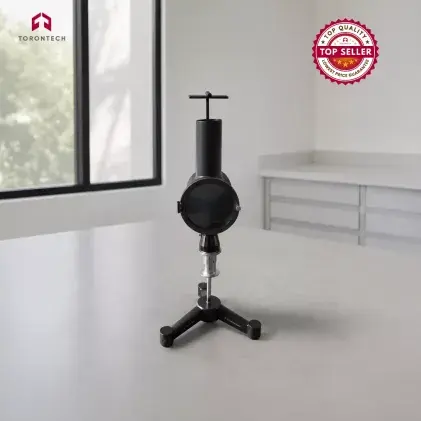
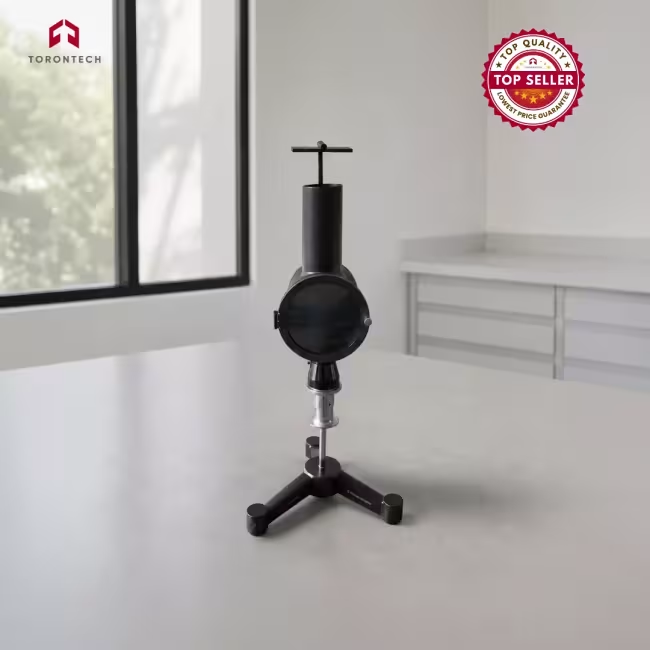
The smoke point test is the primary standardized method for characterizing the combustion behavior of kerosene, aviation turbine fuel, and lamp oil. It measures the maximum flame height at which a fuel burns without producing a continuous smoky flame in a standardized wick lamp under controlled conditions. Torontech's smoke point apparatus delivers precise, repeatable results in full compliance with ASTM D1322 and IP 57, making it an essential instrument for kerosene and jet fuel quality assurance programs.
Applications
Combustion and flame behavior testing is required across multiple petroleum product categories:
- Kerosene quality control: Smoke point is a mandatory specification parameter for all grades of kerosene — cooking, heating, and illuminating — as it directly reflects the fuel's aromatic content and burning cleanliness.
- Aviation turbine fuel (Jet A/Jet A-1): Smoke point or luminometer number is a required quality specification that confirms the fuel will burn cleanly in aircraft combustion chambers without producing soot deposits on turbine blades.
- Lamp and heating oil: Domestic and commercial heating oil products are specified for smoke point to guarantee clean, efficient combustion in wick-type burners.
- Refinery process control: Hydrotreating operations that reduce aromatic content in kerosene use smoke point as a real-time process quality indicator.
- Fuel blending: Smoke point data guides the blending of kerosene and jet fuel fractions to meet final product specifications without sacrificing yield.
- Customs & trade: Import/export fuel inspections routinely include smoke point testing as proof of product quality and compliance with purchase contracts.
- Research & reformulation: New kerosene and aviation fuel formulations are characterized for combustion behavior as part of product development and regulatory submission packages.
Why Choose Torontech Combustion Testing Series for Your Fuel Laboratory?
Torontech's smoke point apparatus is engineered for accuracy and ease of use in demanding petroleum laboratory environments:
- ASTM D1322 and IP 57 compliant: Full conformance with both primary international standards for smoke point testing of kerosene and aviation turbine fuels.
- Precision optical measurement: Clear, graduated scale and optimized lamp geometry allow accurate flame height measurement to the nearest 0.5 mm, minimizing operator subjectivity.
- Stable combustion environment: Wind-shielded enclosure and controlled air-flow design eliminate ambient air movement that can destabilize the flame and invalidate results.
- High-quality wick and cup assembly: Standard-compliant wick and fuel cup materials ensure consistent wicking behavior and repeatable fuel delivery to the flame front.
- Durable construction: Corrosion-resistant materials withstand repeated exposure to kerosene and jet fuel solvents in high-throughput quality control environments.
- Simple operation and rapid testing: The straightforward manual protocol allows trained operators to complete a smoke point test in minutes, supporting high sample volumes.