
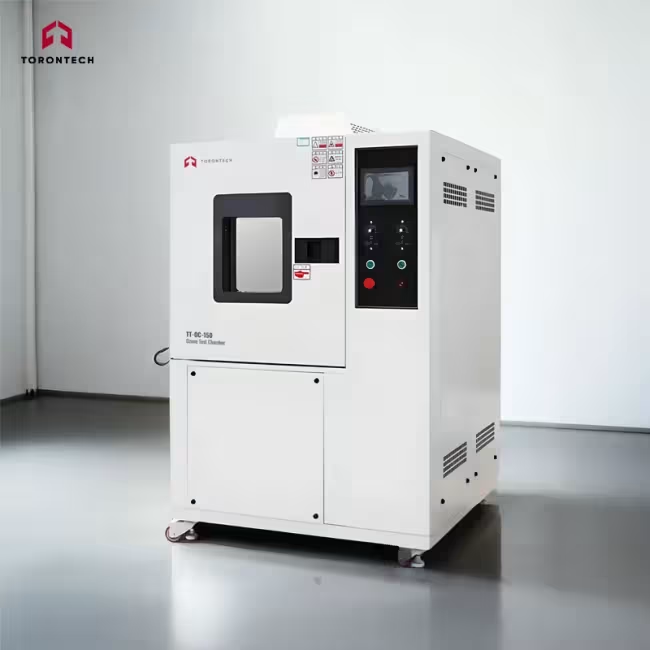
Ozone Test Chamber
The Ozone Test Chamber TT-OC-150 evaluates ozone aging resistance in rubber, elastomers, and other polymer products used in automotive, cable, and industrial manufacturing. Quality control and material research teams use it to reproduce atmospheric ozone conditions and accelerate aging that otherwise takes months outdoors. Ozone reacts with double bonds in rubber compounds, so even trace concentrations cause surface cracking over time. The chamber concentrates this reaction, letting engineers observe degradation in hours or days rather than months in the field.
The TT-OC-150 uses a welded 304 stainless steel interior chamber, an ozone range of 0 to 1500 pphm, and an operating range from room temperature to +60°C. A 1.5mm cold-rolled steel exterior with a polished, painted finish resists scratching during daily lab use. A 100mm polyurethane foam insulation layer and a double silicone rubber door seal keep internal conditions stable throughout extended test cycles. The four-layer tempered glass window, offered in custom sizes, includes a built-in heating wire that prevents fogging during monitoring.
Qualitest supplies the TT-OC-150 ozone test chamber to manufacturers, testing labs, and quality assurance teams that need dependable equipment for antiozonant evaluation and compound benchmarking. The chamber's circuitry is arranged according to UK wiring standards, with each line individually coded for fast identification during troubleshooting. Electrical components from established manufacturers, including Schneider Electric, Carlo Gavazzi, and Mitsubishi, support long-term reliability in continuous laboratory use. This combination of durable construction and accessible maintenance makes the TT-OC-150 suited for high-throughput testing environments.
Application of Ozone Test Chamber TT-OC-150
The TT-OC-150 supports ozone aging evaluation across industries that depend on rubber and elastomeric components for long-term outdoor or high-stress performance.
- Automotive Rubber Components: evaluates ozone cracking resistance of seals, hoses, weatherstripping, and wiper blades exposed to outdoor and under-hood conditions
- Wire and Cable Insulation: tests ozone aging resistance of rubber and polymer cable jackets and insulation sheaths used in outdoor and industrial installations
- Industrial Gaskets, O-Rings, and Seals: verifies long-term sealing performance of elastomeric components used in pumps, valves, and machinery
- Tire and Rubber Product Manufacturing: assesses antiozonant protection and compound formulation in tire sidewalls and other molded rubber goods
- Aerospace and Defense Elastomers: checks ozone resistance of O-rings, gaskets, and seals used in aircraft and defense equipment
- Footwear and Consumer Rubber Goods: evaluates aging resistance of rubber soles and other molded rubber components
- Construction and Roofing Materials: tests rubber roofing membranes, weatherstripping, and sealing products for outdoor durability
- Polymer and Material Research: supports R&D teams developing new antiozonant additives and ozone-resistant rubber compounds
Key Features of Ozone Test Chamber TT-OC-150
The Ozone Test Chamber TT-OC-150 offers advanced features for precise and reliable testing:
- Welded 304 Stainless Steel Interior: a fully welded, 1.2mm stainless steel chamber liner resists cracking and maintains a tight seal over repeated test cycles
- Reinforced Cold-Rolled Steel Exterior: a 1.5mm cold-rolled steel shell with brushed, polished, and painted finishing resists scratching in daily laboratory use
- 100mm Polyurethane Foam Insulation: thick foam insulation stabilizes internal temperature and reduces energy loss during extended exposure cycles
- Double Silicone Rubber Door Seal: dual silicone gaskets maintain a tight chamber seal to keep ozone concentration consistent throughout testing
- Four-Layer Tempered Glass Observation Window: a customizable, multi-pane window lets technicians monitor specimens visually without opening the chamber and disrupting test conditions
- Integrated Anti-Fog Heating Wire: a built-in heating element keeps the observation window clear during operation for uninterrupted visual monitoring
- UK-Standard Circuit Layout: circuit diagrams and individually coded wiring simplify troubleshooting and reduce maintenance downtime
- Branded Electrical Components: switches, relays, and control components from Schneider Electric, Carlo Gavazzi, and Mitsubishi support long-term operating reliability
- Proprietary Digital Controller: a purpose-built control system regulates ozone concentration and chamber temperature for consistent, repeatable test results
These features ensure the equipment meets rigorous testing requirements while maintaining ease of use.
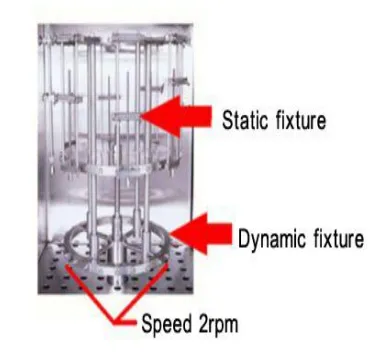
Main Materials and Features of the Equipment
The Ozone Test Chamber TT-OC-150 is constructed with high-quality materials and equipped with advanced features to ensure precision and durability:
- The outer shell is coated with advanced wear-resistant paint, while the interior liner is made from 304# stainless steel.
- It includes an AI-driven digital display intelligent program control regulator for seamless operation.
- A gas flow meter ensures precise control of gas flow across all levels, paired with the "QUA" non-dispersive UV ozone detector, a globally recognized reliable method for ozone detection.
- Utilizes Bill-Lambert principle measurement application software, internationally acknowledged for accuracy.
- Features a gas purifier, constant temperature bath, activated carbon absorption unit, and silica gel drying tower for optimal gas preparation.
- The ozone-containing gas stream is designed to flow parallel to the sample for uniform exposure.
- Optional remote monitoring software is available, enabling test data to be printed directly from a PC.
- Provides an interface for classical chemical testing of ozone concentration.
- A regulated power supply is built into the test chamber to ensure stable and consistent performance.
These materials and components make the equipment a dependable solution for rigorous testing standards.
Theory and Method
Ozone cracking occurs when atmospheric ozone (O3) attacks the carbon-carbon double bonds present in unsaturated rubber polymers such as natural rubber, SBR, and neoprene. This reaction, known as ozonolysis, breaks the polymer chain at the site of the double bond. When the rubber surface is under tensile strain, these broken chains open into visible surface cracks that run perpendicular to the direction of stress. Because ozone attacks only the strained surface layer, cracking concentrates where stress is highest, mirroring how rubber parts fail in real-world service.
The TT-OC-150 reproduces this mechanism by holding a fixed ozone concentration, between 0 and 1500 pphm, inside a sealed stainless steel chamber at a controlled temperature. Concentrating ozone at levels far above ambient air compresses years of atmospheric exposure into a test cycle lasting hours or days. The insulated, sealed enclosure keeps ozone concentration and temperature stable throughout the exposure period, so results remain consistent between test runs and comparable across different rubber formulations. This consistency lets laboratories compare antiozonant additives and compound formulations under identical conditions.
Temperature exposure alongside ozone concentration further influences the reaction rate, since higher temperatures accelerate ozone diffusion into the rubber surface. Running tests at a controlled temperature between room temperature and +60°C lets laboratories separate the effects of thermal aging from ozone-specific cracking. This distinction gives engineers a clearer picture of which degradation mechanism is responsible for a given field failure.
Ozone Test Chamber - TT-OC-150 Technical Specification
Parameter | Specification |
Model | TT-OC-150 |
Inner Chamber Dimensions (W × H × D) | 500 × 600 × 500 mm |
Outer Chamber Dimensions (W × H × D) | 1150 × 1500 × 750 mm |
Temperature Range | Room Temperature +10°C to +60°C |
Ozone Concentration Range | 0 to 1500 pphm (adjustable) |
Ozone Concentration Deviation | ≤10% |
Power Supply | 3 to 5 kW |
Interior Chamber Material | SUS304 stainless steel, 1.2 mm thickness, fully welded |
Exterior Material | Cold-rolled steel, 1.5 mm thickness, brushed/polished/painted finish |
Insulation | Polyurethane foam, 100 mm thickness |
Door Seal | Double silicone rubber |
Observation Window | 4-layer tempered glass, customizable size, anti-fog heating wire |
Electrical Components | Schneider Electric, Carlo Gavazzi, Mitsubishi |
