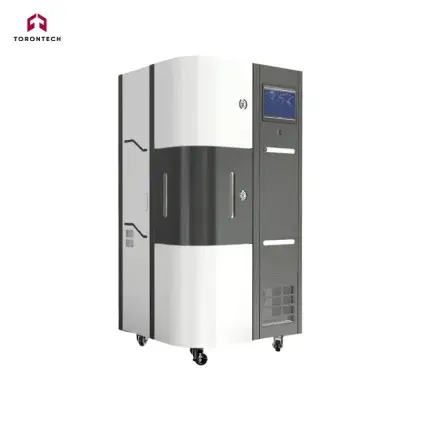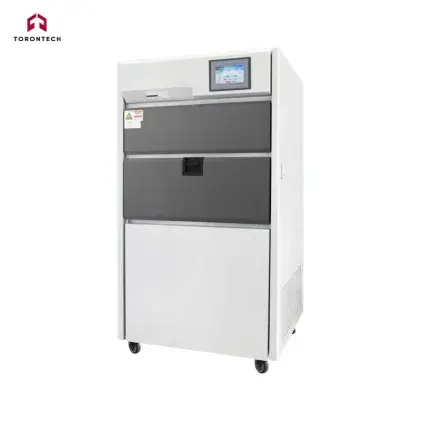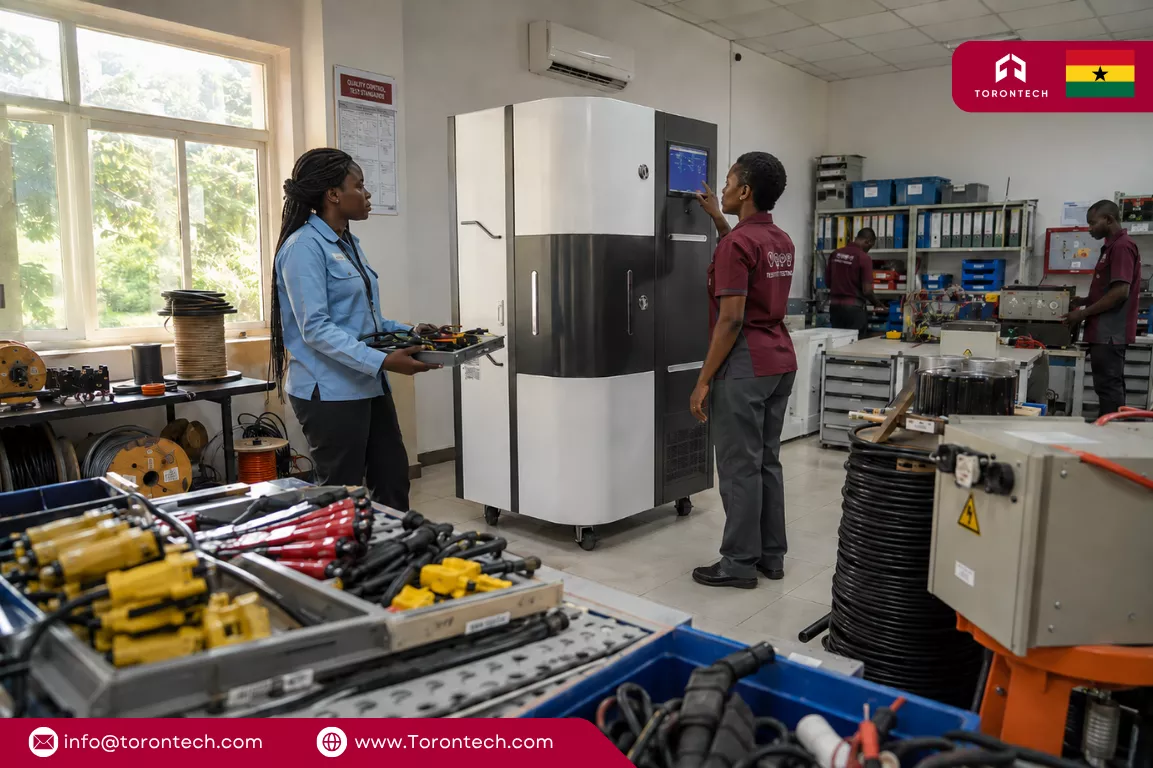
Xenon Test Chamber in Ghana for Sun, Humidity, and Dust
Roofing sheets chalk within two dry seasons. Exterior paint on a Tema warehouse fades well before the warranty period ends. Packaging film turns brittle on the shelf. Ghanaian manufacturers absorb these failures long after the product has shipped.
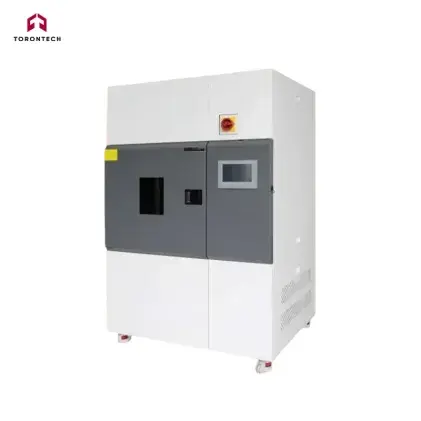
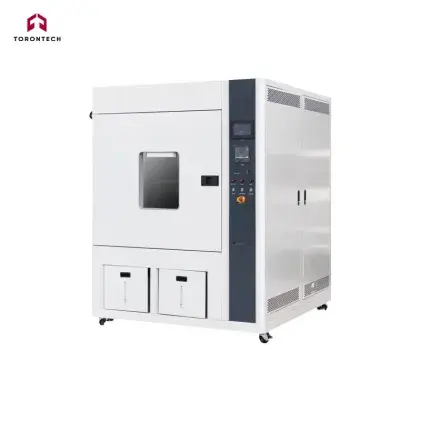
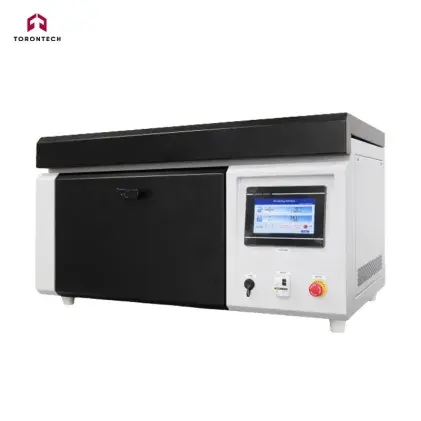
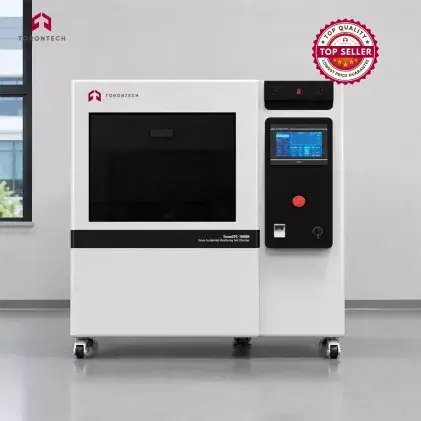
A xenon test chamber in Ghana reproduces that damage in weeks instead of years. Torontech supplies xenon accelerated weathering test chambers that simulate full-spectrum sunlight, heat, and moisture, so you catch a weak formulation before your customer does.
Why Ghana's Climate Breaks Materials Faster
Ghana sits close to the equator, so exposed surfaces take high solar irradiance year round. Southern regions add persistent humidity. Northern regions face the Harmattan, a dry Saharan wind that carries abrasive dust from December through February.
Coastal industrial sites near Tema and Takoradi add salt-laden air. Each stress works differently. Together they attack polymers, coatings, and pigments faster than temperate-climate test data predicts.
Field failures in this environment usually surface as:
- Color fading and chalking on pigmented coatings and roofing
- Embrittlement and loss of tensile retention in plastics
- Surface cracking and gloss loss on exterior trim
- Delamination in laminated packaging and printed labels
How Xenon Arc Exposure Mirrors Ghanaian Conditions
A xenon arc lamp emits a continuous spectrum across ultraviolet, visible, and infrared wavelengths. Optical filters trim that output so it approximates natural sunlight, either direct or filtered through window glass.
The chamber then layers on the remaining stresses. Controlled irradiance fixes the light dose. Black panel temperature drives the specimen surface hotter than surrounding air. Programmed water spray and humidity cycles reproduce dew, rainfall, and the wet-dry swing of the rainy season.
Running those variables together compresses years of coastal or inland exposure into one repeatable cycle. Results stay comparable between production batches, which matters when a buyer asks you to defend a durability claim.
Sectors Driving Demand for a Xenon Test Chamber in Ghana
Demand comes from manufacturers who export, and from those who warranty outdoor performance. Industrialization under the One District One Factory program has widened domestic production, and each new plant needs a defensible way to prove durability.
| Sector | Typical Material | Weathering Concern |
|---|---|---|
| Building products | Roofing sheets, PVC profiles | Chalking, color drift |
| Paints and coatings | Architectural, marine | Gloss loss, fading |
| Packaging | Films, closures, labels | Embrittlement, print fade |
| Cables and electrical | PVC and PE jacketing | Cracking, insulation loss |
| Solar and energy | Backsheets, encapsulants | Yellowing, delamination |
Offshore activity around the Jubilee and TEN fields sustains demand for protective coatings that survive marine exposure. Utility-scale solar development, including work led by the Bui Power Authority, calls for module components with documented photostability.
Standards Ghanaian Exporters Test To
The Ghana Standards Authority sets national standards and runs conformity assessment on regulated goods. Exporters shipping into ECOWAS markets, Europe, or North America usually face buyer-specified weathering methods on top of that baseline.
Xenon arc exposure is the method those specifications name most often. Common references include:
- ISO 4892-2, plastics exposed to laboratory light sources using xenon arc lamps
- ASTM G155, xenon arc exposure of nonmetallic materials
- ASTM D2565, xenon arc exposure of plastics intended for outdoor use
- ISO 105-B02, textile color fastness to artificial light
- SAE J2527, accelerated exposure of automotive exterior materials
Treat that list as the test methods your buyers cite, not as a claim about any particular chamber. Confirm the standards list for the model you shortlist on its own product page before you raise a purchase order.
Laboratories working toward ISO/IEC 17025 accreditation also need documented calibration and traceable irradiance control. Raise calibration support during procurement, not after delivery.
Matching a Configuration to Your Test Program
The Torontech ToronXTC range covers six models: the 400L, 1000, 1000H, 2200H, 2800H, and 6500H. Chamber capacity, lamp arrangement, and control options differ across the line, so the right choice follows your method rather than your budget.
Work through these questions before shortlisting:
- Specimen throughput: how many panels or plaques you need per exposure cycle
- Filter selection: daylight, window glass, or extended UV, matched to the standard you run
- Irradiance control: whether your method specifies a control wavelength and setpoint
- Water spray and humidity: essential for coatings and roofing, often unnecessary for indoor lightfastness
- Temperature sensing: whether your specification names black panel or black standard temperature
Compare the ToronXTC-1000 against the ToronXTC-6500H if you are weighing bench-scale screening versus higher-capacity production QC.
Specify Your Chamber With Torontech
Ghanaian labs rarely need the largest chamber on the list. They need the configuration that runs the standard their buyer named, delivered with calibration documentation and a support path that does not end at the port.
Torontech ME FZE covers Middle East and Africa supply from Dubai. That office handles specification review, quotation, and shipping documentation for buyers in Accra, Tema, and Takoradi.
Send your test standard, specimen type, and monthly throughput to me@torontech.com, or call +971 488 19252. You can also reach out to the Torontech team to request a configuration proposal.
Torontech ME FZE Meydan Grandstand, 6th floor, Meydan Road, Nad Al Sheba, Dubai-261440, UAE