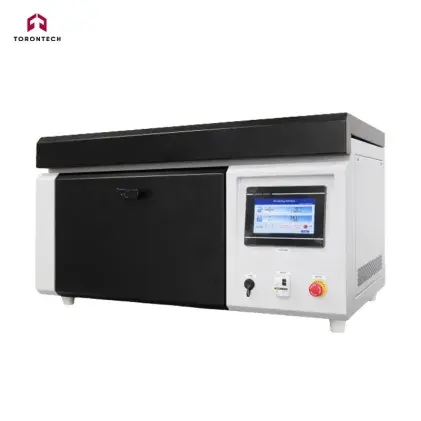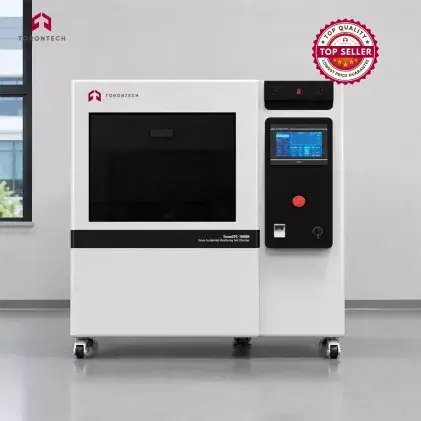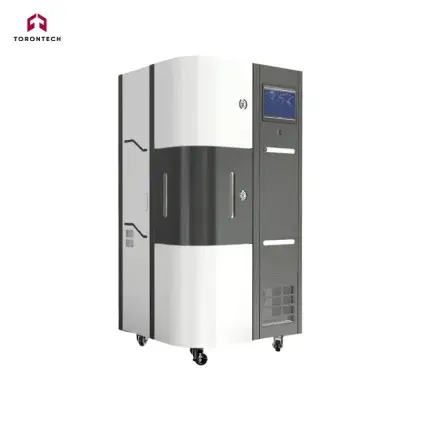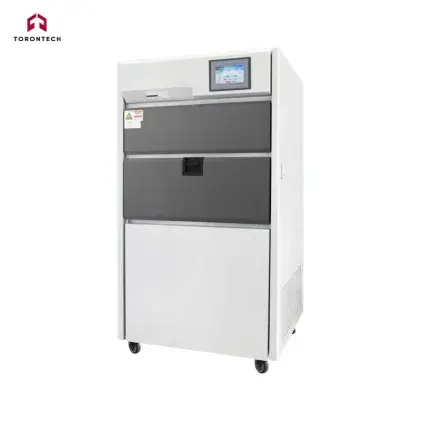
Xenon Accelerated Weathering Test Chamber
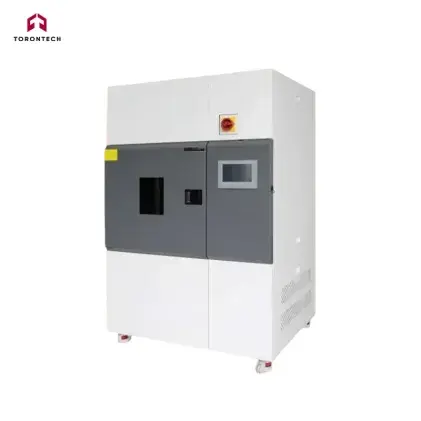
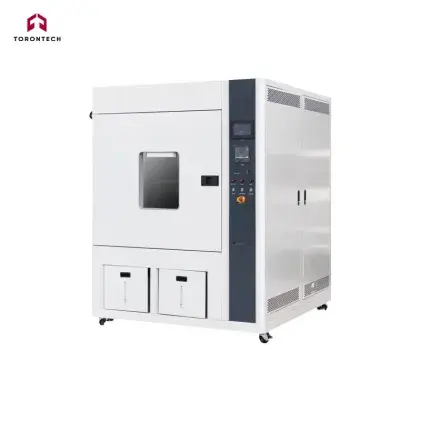
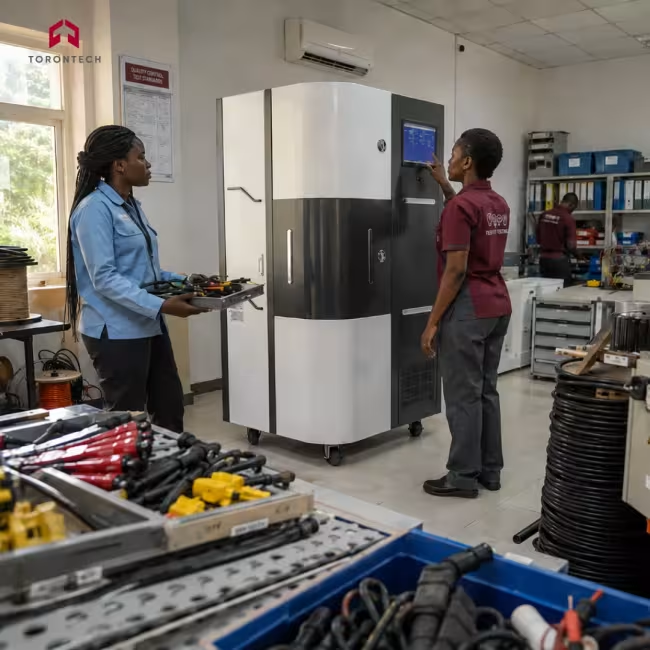
Xenon accelerated weathering test chambers are specialized equipment used to simulate the effects of long-term exposure to sunlight, heat, and moisture on various materials and products. These chambers use xenon arc lamps to replicate the full spectrum of sunlight, including ultraviolet (UV), visible light, and infrared radiation, making them ideal for assessing the durability and performance of materials under conditions that mimic natural weathering.
Compare Xenon Accelerated Weathering Test Chamber Options
Side-by-side overview of Torontech xenon arc weathering chambers to simulate sunlight, heat, and moisture for accelerated durability and performance testing.
ToronXTC™ Xenon Accelerated Weathering Test Chambers
| Feature | ToronXTC™-1000 | ToronXTC™-1000H | ToronXTC™-2200H | ToronXTC™-2800H | ToronXTC™-6500H | ToronXTC™-400L |
|---|---|---|---|---|---|---|
| Primary purpose | Accelerated weathering with xenon arc light to evaluate material durability | Accelerated weathering with enhanced configuration for higher-demand testing programs | Higher-capacity xenon weathering for expanded test throughput (series dependent) | Xenon weathering chamber option for larger programs and broader sample loads | High-capacity xenon weathering platform for intensive durability test workflows | Compact chamber volume option (400L class) for controlled accelerated exposure testing |
| Best for | Routine accelerated exposure testing in QC and product development | Labs needing a step-up configuration compared to baseline models | Facilities needing higher throughput for frequent durability programs | Teams running larger test plans needing more chamber capacity | High-volume labs and manufacturers requiring large-scale accelerated weathering | Labs needing a defined chamber size for standard sample sets and efficient cycles |
| Typical test factors | Sunlight simulation (UV/visible/IR), heat, and moisture exposure to mimic outdoor weathering | |||||
| Typical applications | Plastics, coatings, textiles, automotive parts, building products (application dependent) | Plastics, coatings, and durable goods requiring more robust accelerated programs | Materials and products needing repeated exposure cycles and higher throughput | Programs needing expanded capacity for multiple materials or batches | High-volume production validation and long-term durability qualification | Labs needing controlled capacity for routine accelerated weathering |
| How to choose | Choose when you need a baseline xenon chamber for standard accelerated weathering | Choose when your program needs a higher-spec option than the baseline 1000 model | Choose when you need more chamber capacity than the 1000 class for throughput | Choose when your testing volume and sample load require a larger platform | Choose when your lab needs the largest capacity option for intensive programs | Choose when a defined 400L chamber size matches your typical batch size and workflow |
| Selection tip | If you are building a standard weathering capability, start here | If you need a step-up model for heavier use or expanded control, choose this | If your queue is growing and you need more throughput, move up to this class | If you run multiple product lines and need more capacity, this is the upgrade path | If accelerated weathering is a core lab function at scale, choose the highest capacity | If you want a balanced option with a clear chamber size, this can be a practical fit |
Quick selection guide: pick the chamber based on sample volume, required throughput, and test program intensity. Lower models fit routine QC, while higher-number H models typically suit larger or heavier-use durability programs.
Key Applications:
- Material Testing: Evaluating the colorfastness, fading, and degradation of textiles, plastics, and paints.
- Testing coatings, adhesives, and sealants for UV resistance and longevity.
- Automotive Industry: Assessing the weatherability of automotive parts like dashboards, seats, and exterior coatings.
- Packaging Industry: Testing packaging materials for stability under prolonged exposure to light and humidity, ensuring product safety and shelf life.
- Construction Materials: Testing the durability of roofing materials, façade components, and flooring against UV and moisture.
- Cosmetics and Pharmaceuticals: Assessing the photostability of products and packaging to ensure efficacy and compliance with regulatory standards.
- Electronics and Consumer Goods: Evaluating the performance of outdoor-use electronics, garden furniture, and other consumer products subjected to weather conditions.
Advantages of Xenon Test Chambers:
- They provide realistic simulation of natural sunlight, offering accurate predictions of product lifespan.
- Conditions like temperature, humidity, and light intensity are precisely controlled.
- They enable rapid testing, compressing years of natural exposure into days or weeks of testing.
- This makes them an essential tool for quality assurance, product development, and compliance with international standards like ISO 4892, ASTM G155, and SAE J2412.