Xenon Test Chambers for Canada's Automotive and Building Materials Sectors
A coating that passes an overseas weathering test can still chalk, crack, or fade after two Canadian winters. Freeze-thaw cycling, intense summer UV, and long exposure windows push materials harder than milder climates ever will.
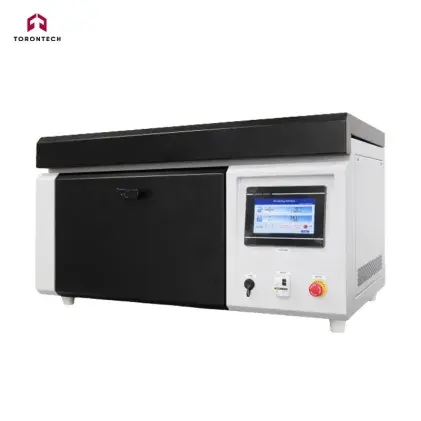
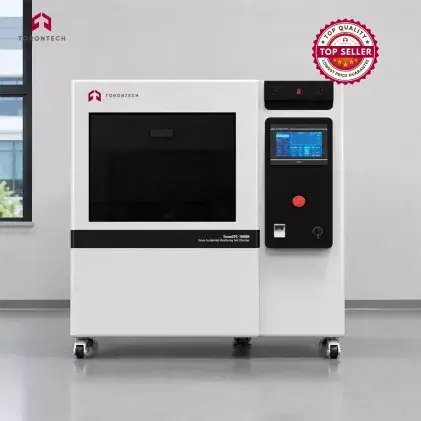
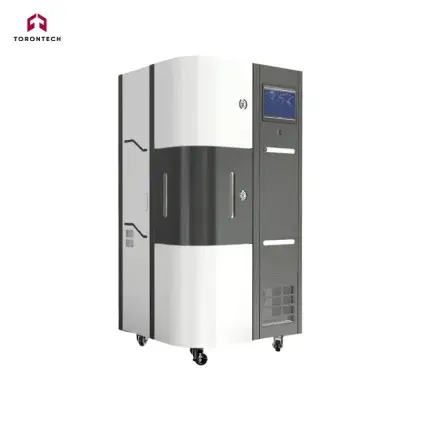
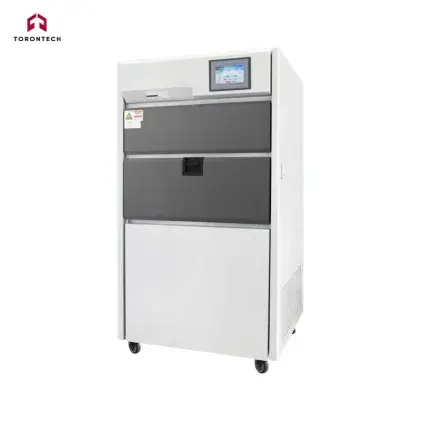
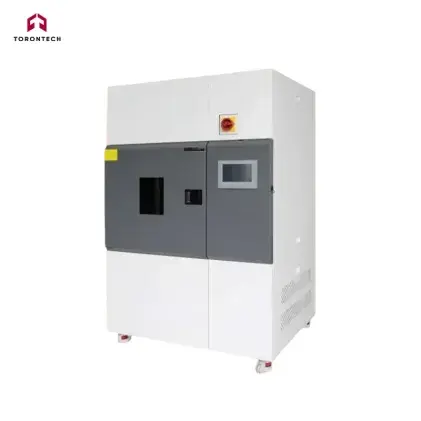
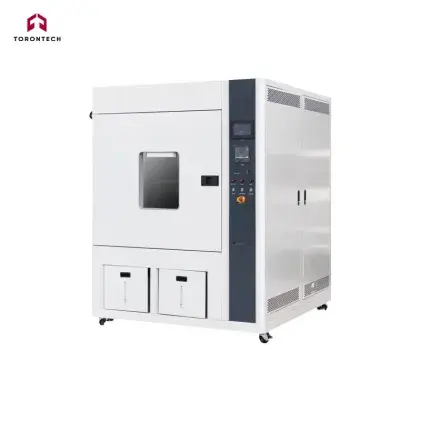
A Xenon Test Chamber in Canada reproduces that swing under controlled conditions, exposing coatings, plastics, and composites to full-spectrum sunlight, humidity, and temperature cycling in weeks instead of seasons. Torontech supplies ToronXTC™ xenon weathering chambers built for exactly this kind of qualification work.
Why Canadian Manufacturers Need Verified Weathering Data
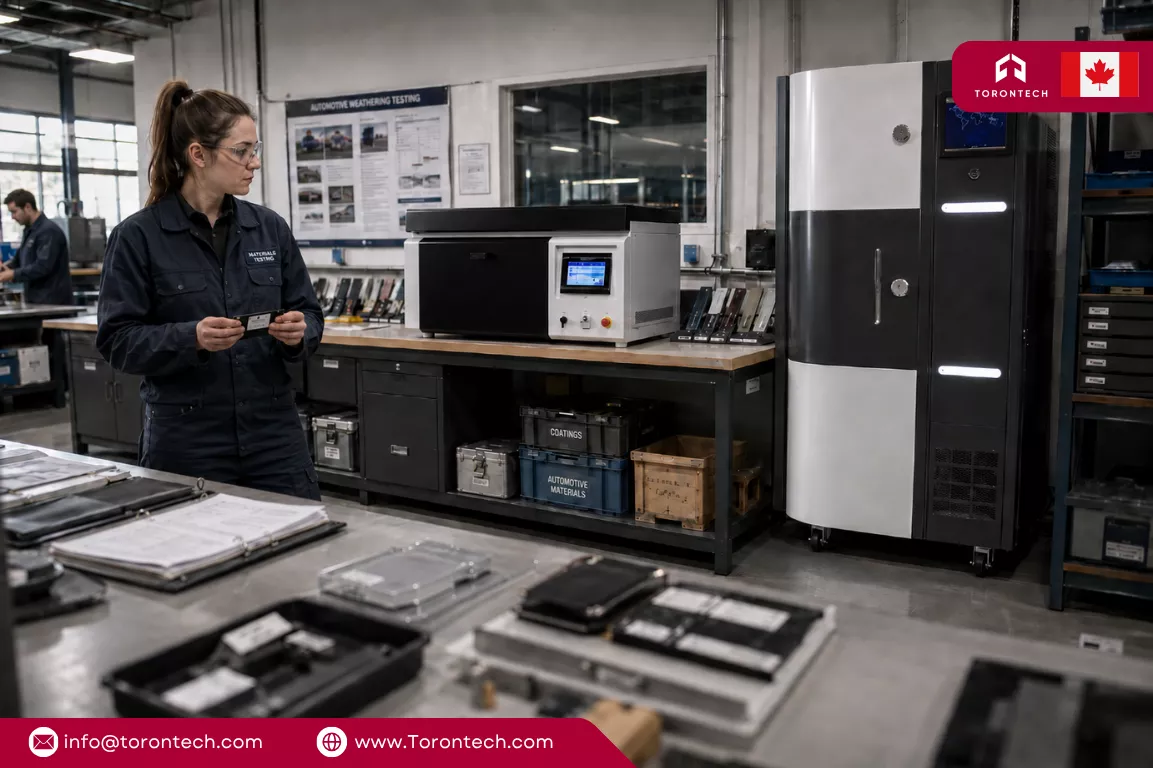
Ontario's automotive sector contributed $16.8 billion to Canada's GDP in 2024 and directly employed more than 125,000 people, and plastics suppliers feeding that supply chain need documented durability data before parts reach an assembly line. Interior trim, exterior cladding, and connector housings all face OEM-specific light exposure requirements.
Ontario's plastics and rubber manufacturers also send more than 96 percent of their domestic exports to the United States. Products must satisfy the same ASTM and SAE weathering benchmarks American buyers expect, and a local Xenon Test Chamber in Canada shortens that qualification loop instead of shipping samples abroad.
Trade uncertainty and shifting EV production timelines are pushing OEMs and suppliers toward domestic testing capability rather than outsourced labs overseas. Manufacturers that can qualify materials in-house move faster when a program shifts or a supplier changes a resin or coating formulation.
Construction materials face a parallel demand. Residential renovation spending and new housing starts keep driving orders for plastic window profiles, siding, and roofing components, all of which must hold their color and mechanical properties through Canadian winters and summers alike.
Torontech maintains a Canadian headquarters in Toronto, Ontario, alongside its Miami-based North American office, giving labs in this market a supplier that understands both the testing standards and the logistics involved in sourcing equipment locally.
Standards That Govern Xenon Testing in Canada
Buyers sourcing a xenon chamber need to know which standards a machine actually supports before specifying it into a quality program. The table below lists standards confirmed on Torontech's ToronXTC™ product pages.
| Standard | Scope |
|---|---|
| ASTM G155 | Xenon-arc exposure apparatus for nonmetallic materials |
| ISO 4892 | Laboratory light exposure methods for plastics |
| ASTM D6695 | Xenon-arc exposure of paints and related coatings |
| ISO 11341 | Xenon-arc artificial aging of paints and varnishes |
| SAE J2412 | Xenon-arc exposure for automotive interior materials |
Canadian building projects also reference the National Building Code's outdoor weathering resistance provisions, and roofing membranes are commonly evaluated against CGSB-37.54. Those are the testing frameworks a Canadian buyer works within; they describe the market's expectations rather than a specific chamber's certification.
Laboratories pursuing accreditation through the Standards Council of Canada or working toward ISO/IEC 17025 status need equipment that produces traceable, repeatable irradiance and temperature data, since auditors expect documented calibration behind every reported result.
How Xenon Arc Testing Matches Canadian Climate Extremes
A xenon arc lamp reproduces the full solar spectrum, including UV, visible, and infrared wavelengths, unlike fluorescent UV sources that only cover part of the range. That matters in Canada, where materials see both intense summer irradiance and months of cold, damp exposure.
Programmable blackboard temperature and humidity control let a lab replicate that seasonal swing inside one chamber, running condensation cycles that mimic spring thaw alongside high-irradiance cycles that mimic a prairie summer. The result is fracture, fade, and adhesion data that tracks real Canadian service life.
Accelerated cycles that combine UV exposure with moisture and temperature swings reveal failure modes that a single-factor test misses entirely. A coating that resists UV alone can still crack once repeated freeze-thaw and condensation cycles enter the test program.
Selecting a Xenon Test Chamber in Canada
Configuration depends on sample volume, test frequency, and how many product lines a lab qualifies each year. Consider these factors:
- Exposure area and sample count: smaller chambers suit routine QC batches; larger models handle multiple concurrent product lines.
- Filter selection: daylight, window glass, or UV extension filters align results with specific end-use conditions.
- Automation: automated irradiance compensation keeps long-duration Canadian test cycles consistent as lamps age.
| Configuration Class | Best Fit |
|---|---|
| ToronXTC™-1000 / 400L | Routine QC and smaller labs running standard batch sizes |
| ToronXTC™-1000H / 2200H | Expanded control for coatings and automotive R&D programs |
| ToronXTC™-2800H / 6500H | High-throughput qualification for OEM-scale production volumes |
Equip Your Lab for Canada's Testing Demands
From Ontario's automotive supply chain to construction materials built for prairie winters and coastal humidity, Canadian manufacturers need weathering data that holds up to scrutiny at home and across the border.
Torontech's team helps labs match exposure area, filter type, and automation level to their specific test standards, whether that means a compact ToronXTC™-1000 for a QC bench or a high-capacity ToronXTC™-6500H for production-scale validation.
To configure a Xenon Test Chamber in Canada matched to your material classes and test volume, reach out to the Torontech team for a consultation.