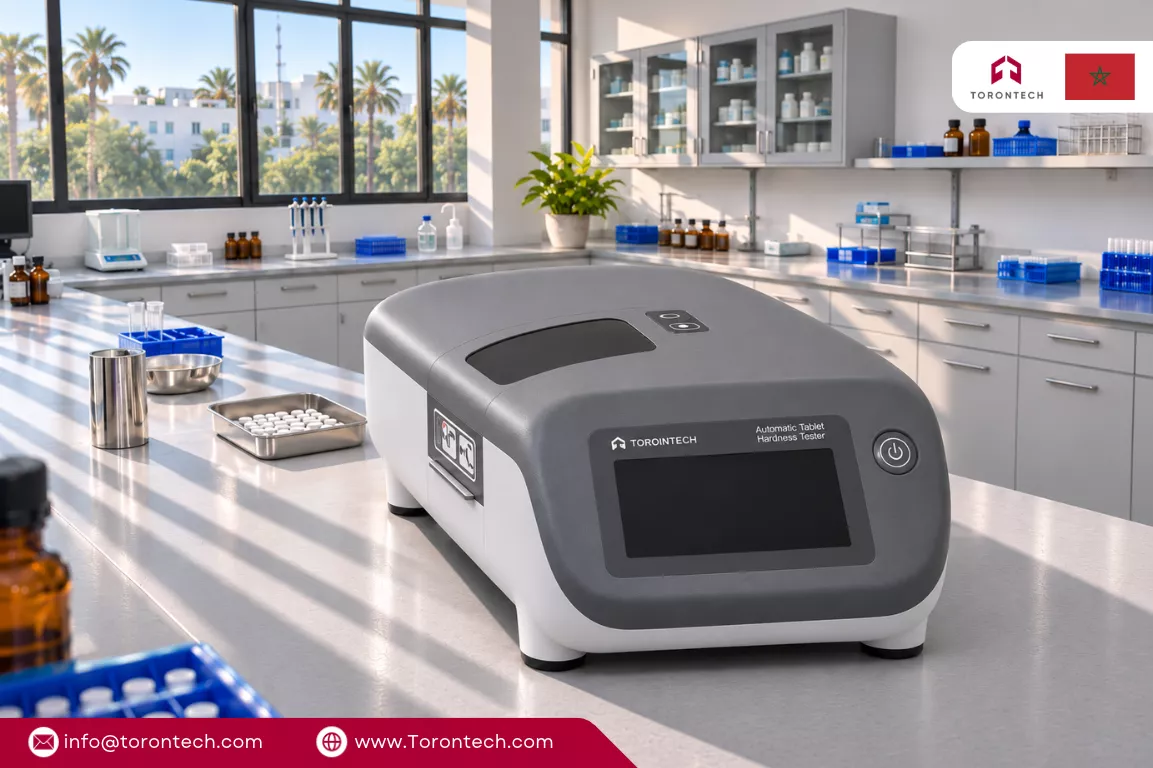
Keep Every Batch on Spec with a Tablet Hardness Tester in Tunisia
A tablet that chips on the blister line or dissolves too slowly can hold up a batch release and an export shipment. For Tunisian manufacturers producing generics at volume, inconsistent breaking force is a costly and avoidable problem.
A tablet hardness tester in Tunisia gives quality control teams the breaking force data they need to release batches with confidence. Torontech supplies a full range of tablet hardness testers, from portable units for the press room to automated multi-parameter systems.
Why Breaking Force Matters to Tunisia's Drug Makers
Tunisia has built one of the more mature pharmaceutical bases in North Africa. According to the national pharmaceutical industry chamber under UTICA, 43 companies now make human medicines. Together, they cover close to 80% of national consumption by volume and 60% by value.
The sector employs more than 9,000 people and exports over 320 million dinars of medicines each year. Tunisian products reach about 35 countries, including 24 in Africa, so tablets often face long transport routes before they reach a patient.
Tablet hardness, formally called breaking force or resistance to crushing, is the force needed to fracture a tablet under diametral compression. It indicates how a tablet will survive coating, packaging, and shipping. It also correlates with disintegration and dissolution behavior.
Therefore, hardness sits alongside friability and dissolution as a routine in-process control. For generics producers running several products on shared presses, fast and repeatable readings help operators correct compression force before a batch drifts out of specification.
Pharmacopoeial Methods and Tunisia's Regulatory Shift
Tunisian quality laboratories typically work to pharmacopoeial methods. Tunisia holds observer status at the European Pharmacopoeia Commission, so Ph. Eur. 2.9.8 (resistance to crushing of tablets) is a familiar reference. USP <1217> covers the same test under the name tablet breaking force.
Regulatory oversight is also consolidating. Law 2023-2 created the Agence Nationale du Médicament et des Produits de Santé (ANMPS), which unifies control of manufacturing, registration, import, and export. The health minister has tied the agency's digital platform to WHO maturity level 3 ambitions.
In addition, industry bodies have urged manufacturers to join a unified electronic technical process planned for around January 2027. As a result, traceable test records, audit trails, and controlled user access now carry more weight when selecting a tablet hardness tester in Tunisia.
Choosing a Tablet Hardness Tester in Tunisia
The right instrument depends on tablet size, sample volume, dosage form, and the documentation your quality system requires. The table below summarizes the Torontech lineup.
| Model | Key Capability | Typical Use |
|---|---|---|
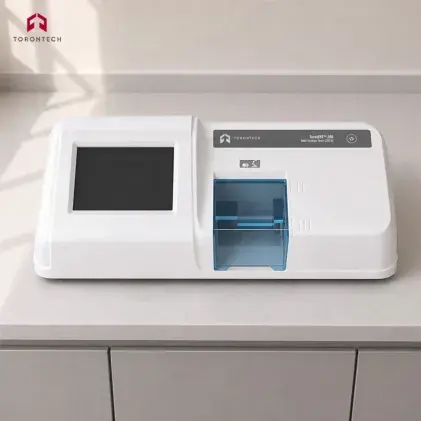
| ToronTHT 200 | 10 to 200 N, 0.01 N resolution | Small tablets, teaching labs, small-batch QC |
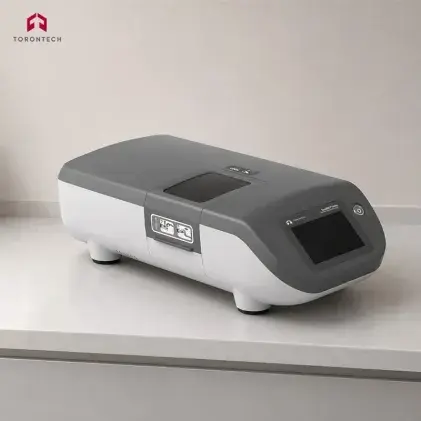
| ToronTHT 350 / 500 Automatic | 10 to 350 N or 500 N, diameter measurement | Routine batch release |
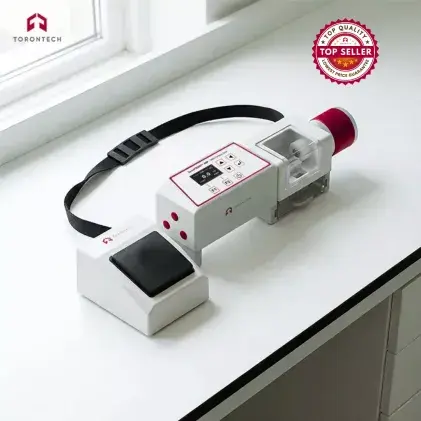
| Portable ToronPTAB01 Series | Results in N, kP, and SC | Spot checks at the tablet press |
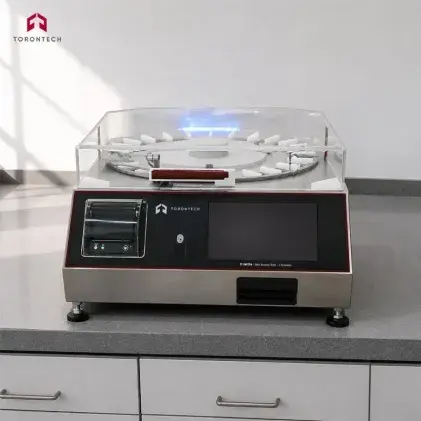
| TT-SWFT5W 5 Parameters | Up to 800 N, plus thickness, diameter, width, weight | High-throughput QC |
| Auto PharmaCheck | 60 N load cell, 0.001 N resolution | Soft gels and gelatine capsules |
Several decision points separate these models:
- Tablet range: standard uncoated and small film-coated tablets fit the 200 N unit. Larger film-coated and effervescent tablets call for the 350 N or 500 N automatic tester.
- Documentation: the ToronTHT 350 adds three-tier user access and timestamped audit trails. The TT-SWFT5W supports 21 CFR Part 11 electronic records through integOS Pro software.
- Throughput: the TT-SWFT5W tests up to 21 tablets per run and captures five parameters in one cycle.
- Dosage form: soft gels deform instead of fracturing. For that reason, the Auto PharmaCheck applies a controlled deformation and records the force curve.
Standards support differs by model, so match it to your method. The TT-SWFT5W is designed to support testing under USP <1217>, EP 2.9.8, and JP 6.06. Meanwhile, the portable series is designed to meet USP <1217>.
The ToronTHT 200 and ToronTHT 350 carry CE certification under the EU Machinery and EMC Directives. Torontech also offers IQ/OQ qualification documentation for both, which supports GMP validation after installation.
Practical Fit for Tunisian Laboratories
Local operating conditions deserve attention before purchase. Tunisia's mains supply runs at 230 V and 50 Hz. The TT-SWFT5W accepts 230 VAC at 50/60 Hz, while the ToronTHT testers use a DC 12 V universal-voltage adapter. No hardware change is needed.
Unit flexibility also helps. Many Tunisian plants produce licensed medicines alongside their own generics, and licensor specifications do not always share one unit. Depending on the model, the testers report in newtons, kilograms-force, kiloponds, or Strong-Cobb units.
Data handling is the third consideration. For example, the ToronTHT testers export results and formatted reports by USB. The TT-SWFT5W stores up to 10,000 reports and 250 user profiles, and it includes a built-in thermal printer for batch records.
Regional Support for Your Next Hardness Tester
As Tunisian manufacturers add capacity and pursue new export markets, physical testing has to keep pace with production. A tester matched to your tablets, throughput, and records removes one more variable from batch release.
Torontech supports buyers in Tunisia through Torontech ME FZE in Dubai. The regional team can compare models against your product list, confirm available qualification documents, and prepare a quotation for your site.
Reach out to the Torontech team to discuss a tablet hardness tester in Tunisia. You can also call +971 488 19252 or email me@torontech.com. The office address is Meydan Grandstand, 6th floor, Meydan Road, Nad Al Sheba, Dubai-261440, UAE.