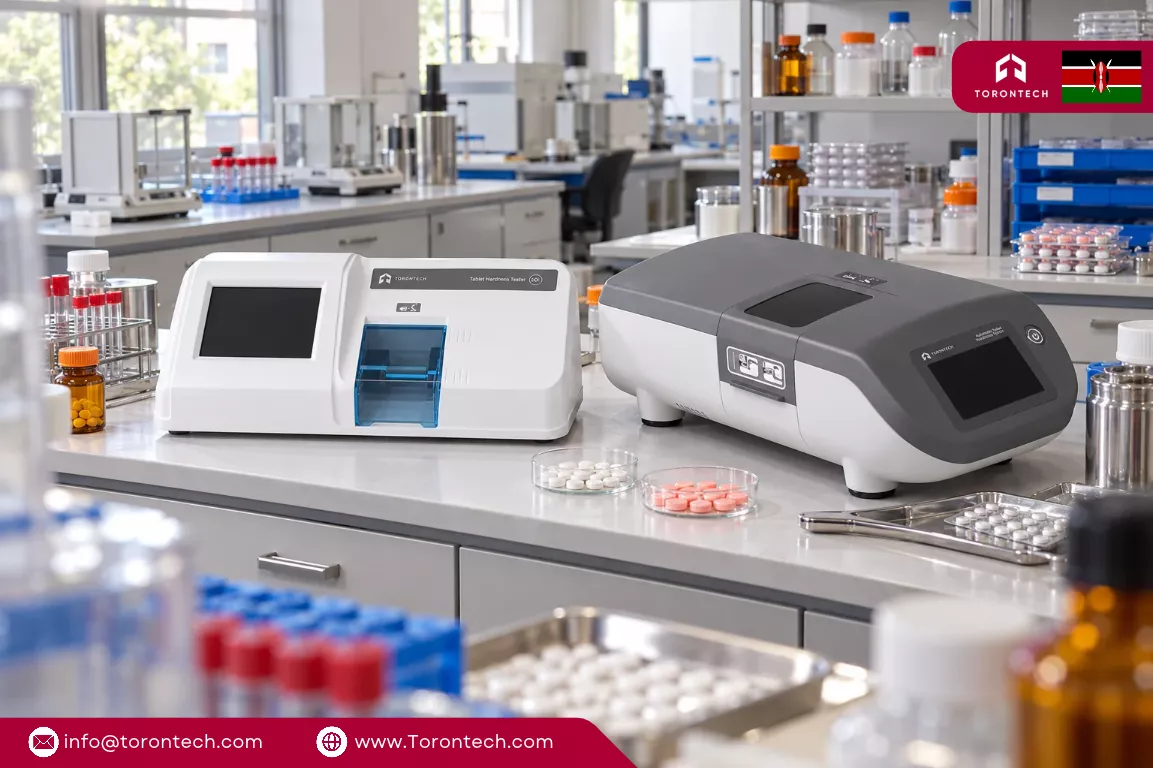
Tablet Hardness Testers for Kenya's Expanding Pharmaceutical Sector
Kenya's pharmaceutical manufacturers face a quality control challenge that only grows as their ambitions grow. Producing more tablet batches is valuable only if each batch meets the breaking force specifications the Pharmacy and Poisons Board requires, and that export buyers across the East African Community expect.
A tablet hardness tester in Kenya is not optional equipment for manufacturers seeking PPB GMP certification or COMESA market access. It is the instrument that connects production to compliance. Torontech supplies a full range of tablet hardness testers, from compact in-process units to fully automated, multi-parameter systems, each configured to meet international pharmacopeial standards.
How Kenya's Regulatory Framework Shapes Tablet Testing Requirements
The Pharmacy and Poisons Board (PPB), operating under the Pharmacy and Poisons Act (Cap 244), regulates GMP compliance for every pharmaceutical manufacturer in Kenya. PPB aligns its framework with WHO GMP guidelines, which require documented evidence that tablets meet specified physical quality attributes, including breaking force, before any batch is released.
PPB inspectors review calibration records, standard operating procedures, and batch testing documentation when assessing a quality control laboratory. A tablet hardness tester must produce traceable, reproducible results supported by records that can survive a GMP inspection. Instruments that lack calibration documentation or electronic audit trails create real compliance exposure that inspectors will find.
Kenya's PPB also conducts post-market surveillance on products already in circulation. Batch records, including breaking force data from tablet hardness testing, must be maintained in a retrievable, auditable format. Electronic record-keeping has become a practical requirement for facilities under active PPB oversight.
Kenya's pharmaceutical export growth adds another compliance layer. Manufacturers producing for EAC trade channels or the African Continental Free Trade Area (AfCFTA) increasingly need breaking force data measured against USP <1217> and EP 2.9.8. Institutional buyers and procurement bodies require pharmacopeial-compliant documentation before accepting batches.
Kenyan Pharmaceutical Production and the Solid Dosage Dominance
Kenya is the largest pharmaceutical producer in the COMESA region, with more than 30 licensed manufacturers and 13 additional facilities progressing through PPB licensing as of August 2026. The government has committed to pharmaceutical self-sufficiency by 2028, backed by the Kenya Health Products and Technologies Local Manufacturing Strategy (2026-2030), with new capacity coming online rapidly.
Tablets and capsules account for more than half of all locally manufactured pharmaceutical products in Kenya. Nairobi's Industrial Area concentrates the majority of this production, with facilities ranging from high-volume generics manufacturers to contract manufacturers serving regional clients.
A 22 percent decline in pharmaceutical import expenditure between 2024 and 2025 signals real progress. But local manufacturers must now prove their tablets match the quality benchmarks that imported generics carried. Reliable tablet hardness data, traceable to calibrated equipment, is part of the evidence that earns and sustains market share.
For these facilities, tablet hardness testing sits at the center of every QC workflow. Breaking force data must be ready for a PPB inspector and for any export buyer's quality review.
Choosing the Right Tablet Hardness Tester in Kenya
Kenyan pharmaceutical labs vary in size, throughput, and compliance scope. Torontech's lineup covers every profile, from single-parameter IPC units to five-parameter automated systems:
| Lab Type | Recommended Model | Testing Scope |
|---|---|---|
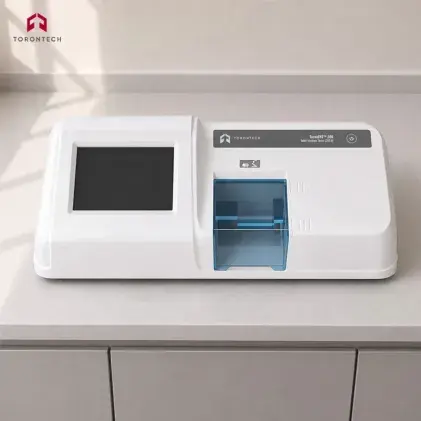
| Small lab or production floor IPC | ToronTHT 200 (200 N) | Breaking force up to 200 N, portable design |
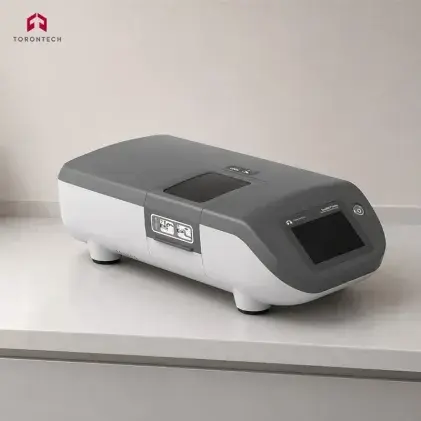
| Standard QC with automation | ToronTHT Automatic | Breaking force, diameter, derived statistics, 15-second cycles |
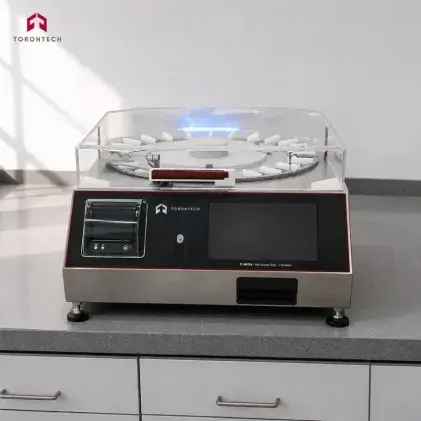
| Export-grade, full pharmacopeial compliance | TT-SWFT5W 5-Parameter | Hardness, thickness, diameter, width, and weight in one cycle |
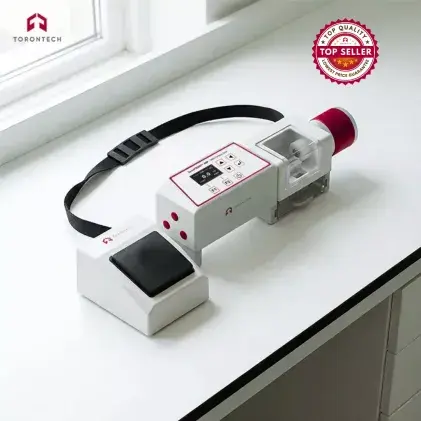
| Field or production floor | Portable Tablet Hardness Tester | Handheld, designed for non-laboratory environments |
| Capsule and soft gel lines | Auto PharmaCheck | Gelatine capsules and soft gel dosage forms |
Laboratories satisfying PPB audits and generating documentation for export buyers should evaluate the TT-SWFT5W five-parameter tester. It supports USP <1217>, EP 2.9.8, JP 6.06, and ICH Q6A, with 21 CFR Part 11 compliance via integOS Pro software. Audit trail functionality and multi-level user management address the electronic record requirements that define GMP inspection readiness.
Standards and Compliance in Kenya's Tablet Testing Environment
Kenya's PPB enforces quality control requirements aligned with WHO GMP principles. Tablet testing at Kenyan laboratories follows internationally recognized pharmacopeial methods, with USP <1217> (Tablet Breaking Force) and EP 2.9.8 (Resistance to Crushing of Tablets) as the principal reference standards for breaking force measurement.
These standards specify how force must be applied, the required measurement accuracy, and how results must be recorded. Torontech instruments apply force via the constant-speed crushing principle, producing operator-independent measurements. That consistency matters in Kenyan labs running multiple product lines across shifts, where manual testers can introduce batch-to-batch discrepancies.
Source Tablet Hardness Testers in Kenya with Direct Regional Support
Kenya's pharmaceutical sector is scaling at a pace that requires equipment partners who can respond quickly and support long-term compliance needs. Whether sourcing a tablet hardness tester in Kenya for a new quality control laboratory or upgrading to meet export-grade requirements, the right instrumentation and calibration documentation matter equally.
Torontech's Middle East and Africa hub serves Kenyan buyers directly, with consultation on instrument selection, calibration documentation, and pharmacopeial compliance for pharmaceutical manufacturers across the region.
To discuss specifications, IQ/OQ documentation, or delivery timelines, contact the Torontech team. You can also reach Torontech ME FZE directly at +971 488 19252 or me@torontech.com. The regional office is at Meydan Grandstand, 6th floor, Meydan Road, Nad Al Sheba, Dubai-261440, UAE.