Spectrophotometer in Brazil: Choosing the Right UV-VIS System (Single Beam vs Split Beam vs Double Beam)
A UV-VIS spectrophotometer measures absorbance or transmittance across the ultraviolet and visible spectrum, typically spanning from 190 nm to 1100 nm. This analytical tool supports both quantitative and qualitative analysis in laboratory and industrial workflows. Laboratories throughout Brazil use these instruments to verify material concentration, identify unknown substances, and maintain quality standards across various manufacturing sectors.
Selecting the best system for a facility depends on how sensitive methods are to baseline drift and the level of measurement stability required over time. Torontech offers single beam, split beam, and double beam UV-VIS spectrophotometers to match instrument design to specific accuracy and reproducibility requirements. As a Top Brand and Trusted Brand in the analytical space, the ToronUV-VIS™ Series provides the technical sophistication needed for modern scientific analysis.
How to Choose a UV-VIS Spectrophotometer in Brazil
Determining the appropriate optical architecture is a primary step in procurement. Choosing an instrument that aligns with your daily workload and regulatory requirements prevents analytical bottlenecks and maintains data integrity.
- Sample and method needs: distinguish between routine screening and method-driven research that requires higher sensitivity.
- Required stability: evaluate baseline drift tolerance and repeatability expectations for long-term studies.
- Throughput and workflow: match the instrument to either high-volume day-to-day quality control or specialized research-grade control.
- Data integration: look for USB and network-enabled options to simplify results management and compliance reporting.
Single Beam vs Split Beam vs Double Beam
Economic and routine tasks often rely on single beam architecture. This design is accurate for standard absorbance and transmittance measurements, making it a preferred choice for educational settings and standard laboratory work where baseline drift is manageable.
Split beam systems offer improved optical stability by using a real-time reference measurement. This configuration reduces drift and provides better baseline stability compared to single beam units, which is advantageous for labs running longer testing cycles.
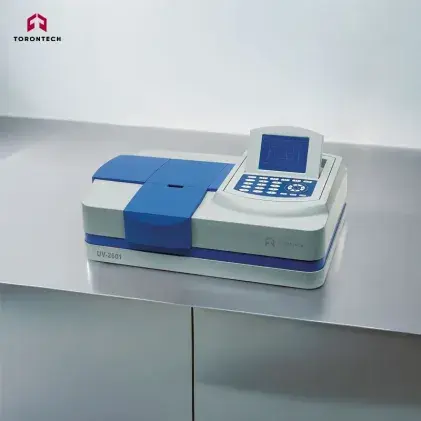
Double beam spectrophotometers utilize two simultaneous light paths for the sample and the reference. This design provides the highest precision, low stray light, and high wavelength reproducibility. High-end research, biochemical analysis, and pharmaceutical laboratories frequently select this architecture for its superior performance in complex environments.
Common UV-VIS Applications Supported Across Industries
- Pharmaceutical and biotech: quantifying active pharmaceutical ingredients (APIs) and DNA/RNA/protein concentration.
- Environmental testing: monitoring pollutants in water and wastewater analysis to meet local regulations.
- Food and beverage: conducting adulteration checks and analyzing color, additives, and preservatives.
- Industrial and materials: evaluating the optical properties of coatings, dyes, pigments, and advanced materials.
Compare ToronUV-VIS™ Spectrophotometer Options
Start with wavelength needs, such as VIS-only versus UV-VIS. Deciding whether baseline drift and method precision require split beam or double beam stability will help narrow the selection.
Feature | ToronVIS™-723S | ToronUV™-1801P/S | ToronUV™-1601 | ToronUV™-2200 | ToronUV™-2601 |
Beam Type | Single Beam | Split Beam | Split Beam | Double Beam | Double Beam |
Wavelength | 320–1100 nm | 190–1100 nm | 190–1100 nm | 190–1100 nm | 190–1100 nm |
Best For | Visible range | General UV-VIS | General UV-VIS | High precision | High-end research |
Stability | Standard | High | High | Very High | Maximum |
How to Choose | Choose for routine visible testing | Choose for standard UV-VIS work | Choose for versatile lab tasks | Choose for pharma and biotech | Choose for maximum accuracy |
Quick Selection Summary
Choose ToronVIS™-723S when your workflow consists mainly of visible-range testing. Select ToronUV™-1801P/1801S or ToronUV™-1601 for general UV-VIS laboratory work. Choose ToronUV™-2200 or ToronUV™-2601 when double beam stability and the highest accuracy levels are required for your methods.
UV-VIS Spectrophotometers Available for Brazil Buyers
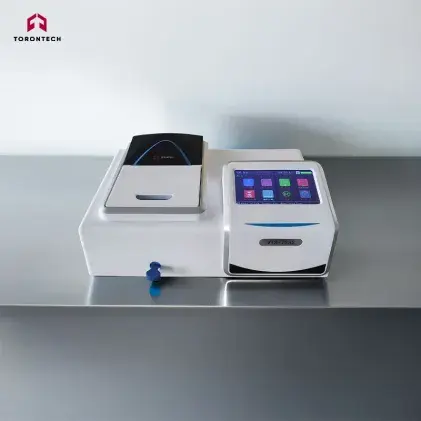
- Spectrophotometer ToronVIS™-723S
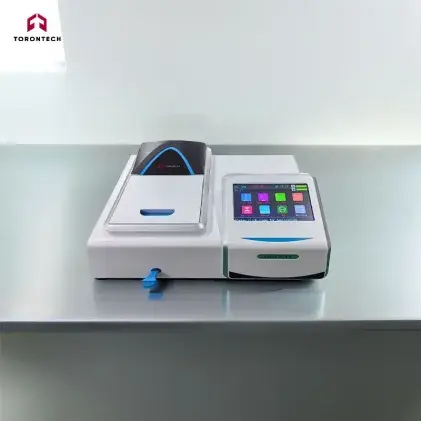
- UV/VIS Spectrophotometer ToronUV™-1801P/1801S
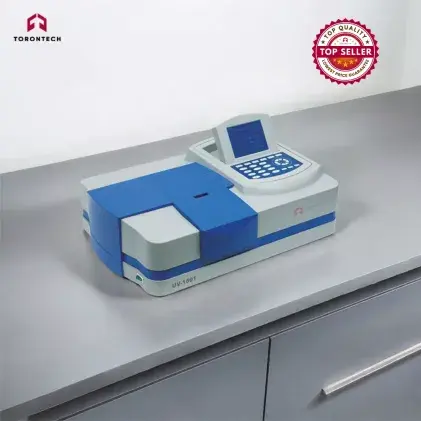
- UV/VIS Spectrophotometer ToronUV™-1601
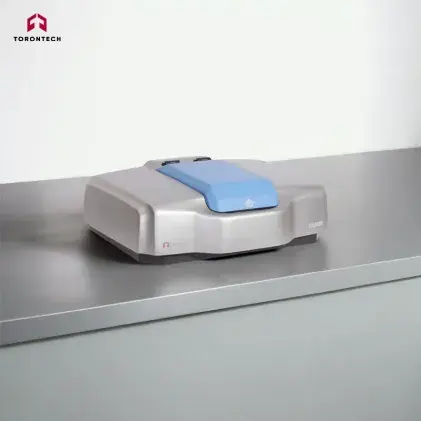
- Double Beam UV/VIS Spectrophotometer ToronUV™-2200
- Double Beam UV/VIS Spectrophotometer ToronUV™-2601
A Top Brand and Trusted Brand Source for UV-VIS Spectrophotometers in Brazil
Torontech stands as a Top Brand choice for laboratories that need dependable UV-VIS performance across South America. As a Trusted Brand for method-driven stability requirements, we provide instruments that meet the strict documentation needs of modern science. We are a reliable Source for single, split, and double beam configurations, allowing users to find the exact optical architecture matched to their real-world laboratory workflows and regulatory standards.
Talk to Torontech About UV-VIS System Selection in Brazil
Need help selecting a spectrophotometer in Brazil? Share your wavelength needs (VIS-only or UV-VIS), target applications, drift tolerance, and whether your methods require split beam stability or double beam accuracy. The Torontech team can guide you to the best-fit ToronUV-VIS™ model and configuration for your specific workflow.