Ozone Test Chambers for South Africa's Rubber and Automotive Sectors
A cracked seal on a Rosslyn assembly line or a split cover on an underground conveyor belt can halt production within hours. Rubber components across South Africa's automotive and mining operations face constant ozone exposure from engines, motors, and electrical equipment, and one undetected weakness carries a real cost.
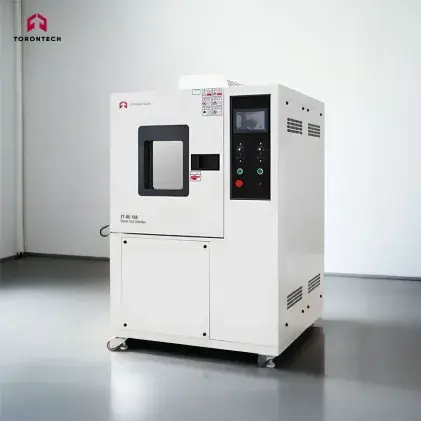
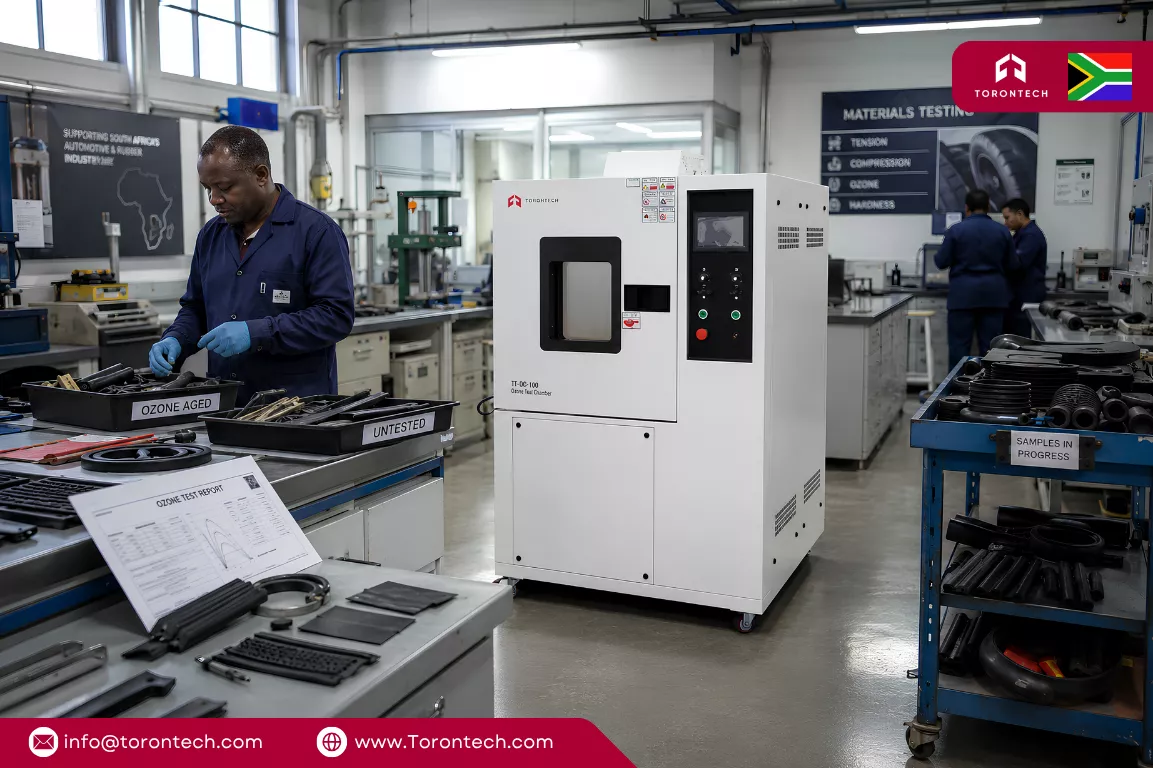
An ozone test chamber in South Africa gives quality teams the data to catch that weakness before it reaches the field. Torontech supplies the Ozone Test Chamber TT-OC-150, built to evaluate rubber's resistance to ozone cracking under controlled, repeatable conditions.
Where South African Industry Puts Ozone Resistance to the Test
South Africa's automotive sector anchors seven OEM plants, including Rosslyn, Silverton, Kariega, Gqeberha, and East London, alongside more than 500 component manufacturers represented by NAACAM. The South Africa Automotive Masterplan 2035 pushes local suppliers toward deeper value addition, which raises the bar on component durability testing.
Engine bay hoses, door and window seals, vibration mounts, and cable bushings all sit near heat and electrical fields that generate ozone. As electric and hybrid vehicle programs expand at plants like Silverton, insulation and sealing components take on new configurations that still need ozone aging verification.
Mining adds a second demand driver. Conveyor belting manufactured to SANS 1173 and trailing cables built to SANS 611 rely on rubber compounds that resist cracking under sun, heat, and constant flexing across operations in the Bushveld Complex and beyond. Suppliers such as Truco and Fenner Dunlop South Africa engineer belts and cable sheaths for exactly these conditions, and ozone resistance data supports that engineering.
Wire and cable manufacturers supplying mining and infrastructure projects face a similar burden. Rubber-insulated trailing cables sit close to motors and switchgear that generate ozone during normal operation, so insulation compounds need documented crack resistance before they reach a mine site or a construction contractor.
How the Ozone Test Chamber TT-OC-150 Works
The chamber holds a rubber specimen, either a static piece or a workpiece under dynamic tensile deformation, inside a sealed, light-free enclosure. A "QUA" non-dispersive UV ozone detector monitors concentration continuously while PID self-tuning holds temperature and humidity steady throughout the exposure period.
The TT-OC-150 adjusts ozone concentration up to 1500 pphm, with a deviation of 10 percent or less, and holds chamber temperature from room temperature to 60 degrees Celsius with a uniformity of plus or minus 2 degrees. That range covers routine QC checks on standard rubber grades as well as accelerated tests on compounds destined for high-heat engine bay or underground mining applications.
After exposure, technicians inspect the specimen surface for cracking and measure changes in physical properties. The 304 stainless steel interior and precision gas flow control keep readings consistent between runs, which matters when a lab reports results against a customer specification or an internal quality standard.
Standards That Shape Ozone Testing in South Africa
Buyers sourcing an ozone test chamber in South Africa work across two layers of requirements: the international test methods a chamber must run, and the national framework that governs local laboratory credibility.
| Standard or Body | Role |
|---|---|
| ASTM D1149 | Ozone cracking test method for rubber, carried by the TT-OC-150 |
| ISO 1431 | International ozone resistance test method, carried by the TT-OC-150 |
| JIS K 6259 | Ozone deterioration test method, carried by the TT-OC-150 |
| SANS 1173 / SANS 611 | South African standards for conveyor belting and mining cables (market context) |
| SABS / SANAS | National standards body and accreditation authority for South African labs |
Laboratories pursuing SANAS accreditation under ISO/IEC 17025 need equipment that produces traceable, repeatable ozone exposure data. SANS 1173 and SANS 611 describe the belting and cable products South African manufacturers build; they are not certifications the chamber itself carries, but they explain why local labs invest in ozone testing capability in the first place.
Choosing an Ozone Test Chamber in South Africa
Specification depends on the materials tested, sample throughput, and whether static or dynamic exposure is required. Key decision points include:
- Ozone concentration range: wider adjustable ranges suit labs testing multiple rubber grades against different specifications
- Sample holder type: static holders suit routine QC, while dynamic holders that apply cyclic tension better represent components under service load
- Temperature and humidity control: tighter uniformity matters for labs running comparative studies across compound formulations
- Detection method: non-dispersive UV detection gives continuous, drift-resistant readings over long exposure cycles
Working through these points early also helps procurement teams plan around import lead times, since most environmental test chambers used in South Africa arrive from overseas manufacturers.
Partner with Torontech for Your Ozone Testing Program
South African labs serving automotive OEMs, component suppliers, and mining operators need equipment that holds up to daily use and produces results buyers trust. Torontech configures the TT-OC-150 around the specimen types, concentration ranges, and reporting requirements each lab actually runs.
Our team also supports installation guidance, calibration documentation, and spare parts availability, which matters for labs planning around import timelines. Whether the application is automotive sealing components or mining conveyor belting, we help match the chamber to the test program.
To discuss configuration options, ozone concentration ranges, or lead times for your facility, reach out to the Torontech team. We will help specify an ozone test chamber that fits your lab's standards and production schedule.