Mobile OES Optical Emission Spectrometer in Mexico for On-Site Alloy Checks
A mislabeled heat of steel can travel from a receiving dock in Monterrey to a customer audit across the border before anyone catches it. By then the cost is not a retest. It is a rejected shipment.
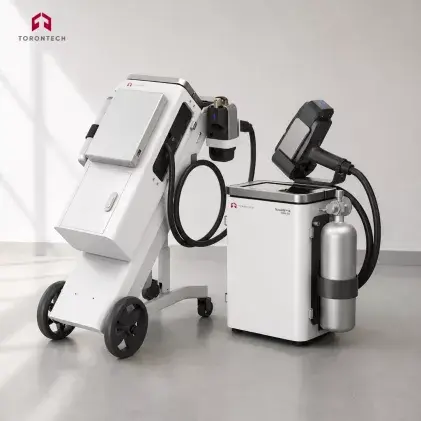
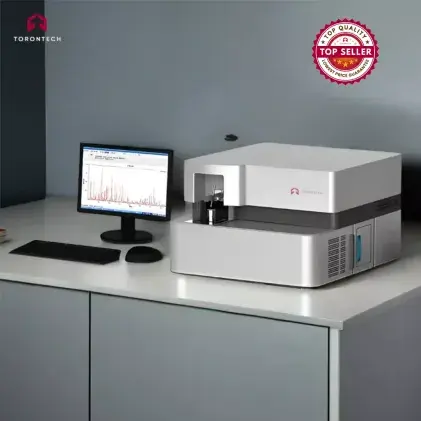
An OES Optical Emission Spectrometer in Mexico closes that gap. Torontech supplies a mobile spark unit for field verification plus a benchtop system for the lab, so chemistry gets confirmed where the metal actually sits.
Why Mexican Metal Producers Test Chemistry at the Source
Mexican steelmaking runs largely on electric arc furnaces fed by recycled scrap. Charge chemistry shifts from heat to heat, so composition control cannot wait for a weekly lab summary.
Market conditions sharpen that pressure. Canacero reported steel consumption falling roughly 10% through the first ten months of 2025. Producers working thin margins cannot absorb rework caused by off-spec material.
Three forces now push elemental analysis closer to production:
- Trade documentation: Steel entering the United States requires reporting of the country where the metal was melted and poured. Mill test certificates carry the composition data behind those records.
- Public procurement: The 2026 Agreement for the Promotion of the Mexican Steel Industry channels public works toward domestic steel. Forecast demand includes roughly 150,000 tons of rebar in 2026.
- Nearshoring qualification: Tier 1 and Tier 2 suppliers across the Bajio corridor must prove alloy grade against OEM material specifications before a program launches.
Mobile or Benchtop OES Optical Emission Spectrometer in Mexico
Both instruments share the same measurement principle. A controlled spark excites atoms at the sample surface, and the optical system reads the emitted wavelengths against calibration curves.
The difference is where the work happens. The mobile ToronOES(TM) M travels to the part. The TT-OES9000 stays in a controlled room and handles routine sample throughput.
| Factor | ToronOES M (Mobile) | TT-OES9000 (Benchtop or Floor) |
|---|---|---|
| Deployment | Trolley, excitation gun, battery pack | Fixed installation in a lab or QC room |
| Wavelength range | 170 to 670 nm | 130 to 800 nm |
| Sample handling | Open stage for large or installed parts | Clamp suited to small samples, 1 mm to 8 mm |
| Input power | 90 to 230 V, 50/60 Hz | AC 220 V / 50 Hz, 110 V also available |
| Weight | 18.5 kg main unit, 38.5 kg trolley | 80 kg benchtop, 120 kg floor model |
Power flexibility matters here. Mexican plants run on 127 V at 60 Hz, and the mobile unit accepts that range directly. For a fixed OES optical emission spectrometer, confirm the voltage configuration at order.
Choose the benchtop system when you cut coupons, run high daily volumes, and need the widest element coverage. Choose the mobile system when the part cannot move.
Where the Mobile Unit Earns Its Place on Mexican Sites
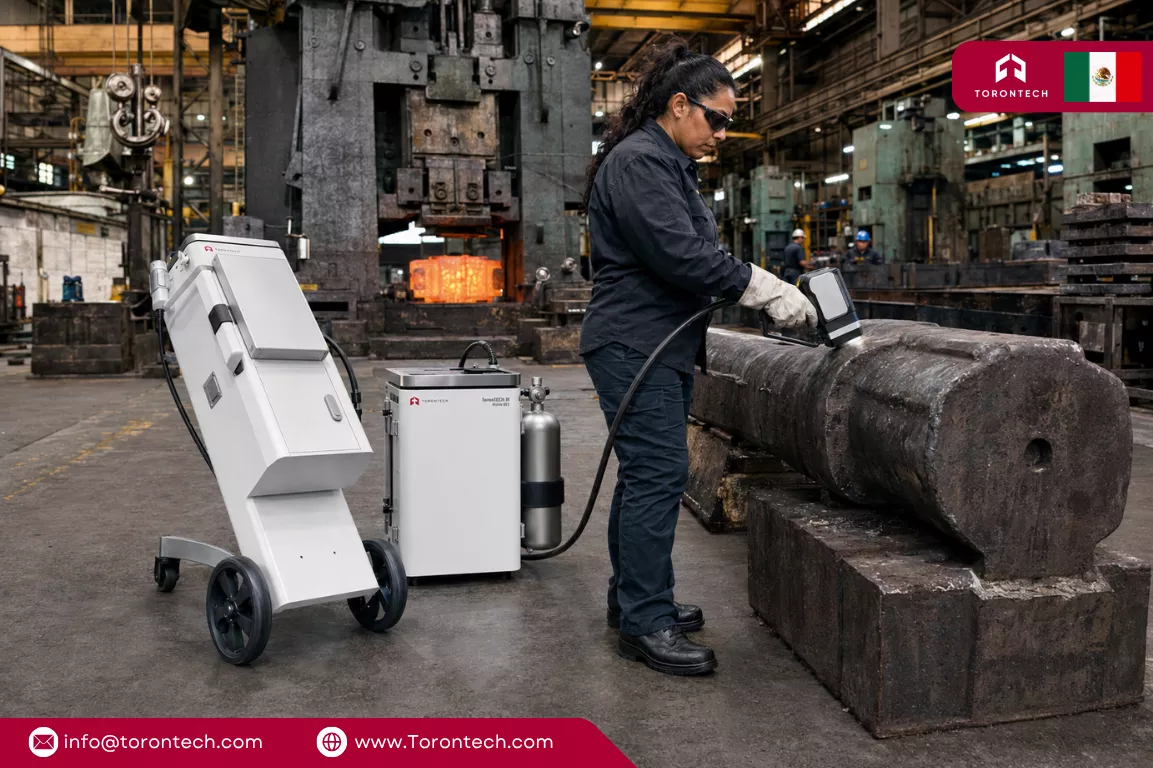
ToronOES M completes a detection cycle in about 20 seconds. Its argon-flushed UV path covers 174 to 196 nm, which supports carbon, phosphorus, sulfur, tin, arsenic, and boron in steel.
That combination fits work that never reaches a laboratory bench:
- Receiving and PMI: Confirm grade before cutting or welding when heat numbers or tags are missing.
- Fabrication and weld QA: Test structural steel, tanks, and pipe spools in place across industrial sites in Nuevo Leon, Coahuila, and Veracruz.
- Foundry spot checks: Verify chemistry during changeovers at aluminum and iron casting plants in Guanajuato and Queretaro.
- Scrap and sorting: Separate incoming grades at yards feeding the electric arc furnace route.
- Remote work: Run on battery power at sites with limited or unstable AC supply.
Field mobility also shortens supplier disputes. When a customer questions a delivered lot, an operator can re-verify the material on site instead of shipping samples and waiting.
Site Readiness and Documentation
Mexican testing laboratories seeking accreditation work with the entidad mexicana de acreditacion under NMX-EC-17025-IMNC-2018, the national adoption of ISO/IEC 17025. Traceable calibration records sit at the center of that framework.
Plan the practical requirements early. Both systems need argon at 99.999% purity, so confirm your industrial gas supply before installation.
Operating conditions differ as well. The mobile unit tolerates 0 to 35 degrees C, while the benchtop system expects 10 to 30 degrees C. That gap matters for plants in hot northern states.
Sample preparation still governs data quality. Grind the surface to a clean metallic finish, because no spectrometer corrects for a contaminated or oxidized test area.
Match the Configuration to Your Operation
Metal producers, fabricators, and foundries face the same question. Do you bring samples to the instrument, or bring the instrument to the material? Many Mexican operations eventually need both.
Torontech works through its North American and Latin American channels to configure an OES Optical Emission Spectrometer in Mexico around your matrices, element list, throughput, and site power. Our team also advises on argon supply, calibration samples, and operator training.
Tell us which alloys you run and where testing has to happen. Then reach out to the Torontech team for a proposal covering mobile deployment, laboratory installation, or both.