Microwave Digestion Systems for Mexico's Growing Analytical Sector
Laboratories across Mexico are processing more samples than ever, from mining concentrates to agricultural exports, but open-vessel acid digestion cannot keep pace. Slow heating, inconsistent recovery, and volatile element loss put results and turnaround times at risk.
A microwave digestion system in Mexico solves this bottleneck. Torontech supplies sealed-vessel digestion platforms that convert soil, food, metal, and pharmaceutical samples into clear, particle-free solutions ready for ICP-MS, ICP-OES, or AAS analysis in minutes rather than hours.
Why Mexico's Labs Need a Microwave Digestion System
Mexico remains one of the world's leading silver producers, with active drilling and permitting underway at projects in Sonora, Durango, and Oaxaca. Every ore, tailings, and process-water sample destined for grade control or environmental reporting needs digestion before elemental analysis.
Agri-food exports add further pressure. Mexico's agricultural trade with the United States approached 79 billion dollars in 2024, and exporters of produce, spices, and processed foods must verify heavy metal content before shipment. SENASICA and COFEPRIS both require documented laboratory testing for many import and export categories.
Pharmaceutical manufacturers preparing samples for USP <232> and <233> elemental impurity testing round out the demand base for a microwave digestion system in Mexico.
Nearshoring investment is adding a new layer of demand. Automotive and EV battery plants expanding across Nuevo Leon, Coahuila, and the Bajio region need trace-metal verification for raw materials, coatings, and battery components. Petrochemical facilities tied to Pemex operations also depend on digestion for catalyst and impurity monitoring.
Meeting Mexico's Regulatory and Import Landscape
Mexican laboratories work within a layered compliance framework. Environmental remediation testing falls under NOM-147-SEMARNAT-2004, which sets thresholds for metals and hydrocarbons in soil. Laboratories seeking formal recognition typically pursue ISO/IEC 17025 accreditation through EMA, the Entidad Mexicana de Acreditacion.
| Sector | Governing Body or Standard | Relevance to Digestion |
|---|---|---|
| Environmental | NOM-147-SEMARNAT-2004 | Metals thresholds in soil and remediation sites |
| Food and agriculture | SENASICA, COFEPRIS | Contaminant limits for export and import |
| Pharmaceutical | USP <232>/<233> | Elemental impurity limits in drug products |
| Laboratory accreditation | EMA (ISO/IEC 17025) | Recognized competence for regulatory testing |
USMCA membership also gives Mexican buyers tariff-free access to most laboratory instrumentation manufactured within the trade bloc, simplifying procurement for labs upgrading digestion capacity.
None of these frameworks certify a specific digestion instrument. What they require is a documented, repeatable method, which is why laboratories favor systems with logged temperature and pressure curves for every vessel and run.
How Microwave Digestion Prepares Samples for Trace Analysis
Microwave-assisted acid digestion uses concentrated acids, typically nitric acid combined with hydrochloric or hydrofluoric acid depending on the matrix, and controlled microwave energy inside sealed vessels to fully break down a sample.
Real-time temperature and pressure monitoring keeps the reaction stable while preventing the loss of volatile elements like mercury and arsenic.
Because the vessels stay sealed throughout the run, digestion happens without exposure to open-air contamination or reagent fumes, an important factor for laboratories running parallel batches across mining, food, and pharmaceutical sample streams.
The Intelligent Microwave Digestion System, Torontech's ToronMD-i3000, supports EPA 3051A and EPA 3052 methods for soils and organic matrices, along with EN 13657 and ISO 15587 for environmental and water digestion, built under an ISO 9001 quality system.
Mid-infrared, non-contact temperature sensing and optical pressure monitoring track every vessel through the run.
Choosing the Right System for Your Lab's Throughput
Sample volume and matrix difficulty should drive the equipment decision. A mining laboratory running dozens of ore samples daily has different needs than a pharmaceutical QC lab handling smaller, high-value batches with tighter turnaround windows.
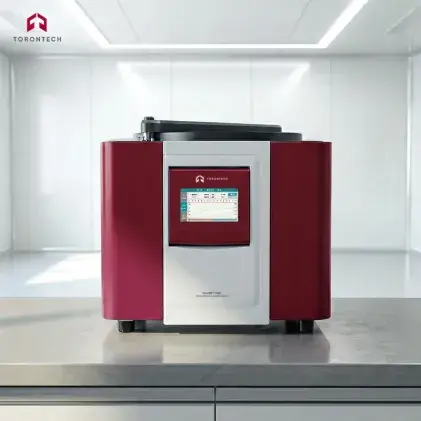
- High daily volume: the Advance Microwave Digestion System, ToronMD-2400, processes up to 42 vessels per batch with bottom-fed microwave delivery for uniform heating.
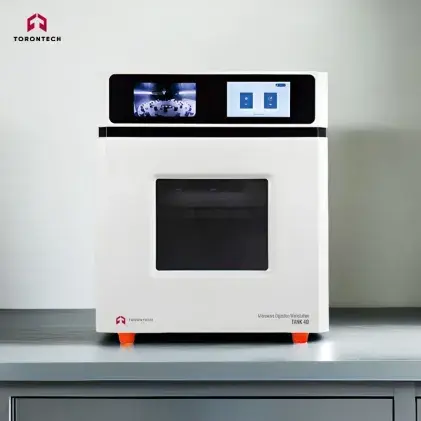
- Routine batch digestion at scale: the Microwave Digestion Workstation TANK 40 supports 40 vessels with dual magnetrons and cooling under 15 minutes between runs.
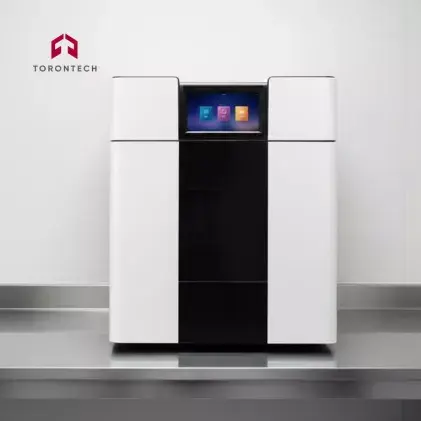
- Difficult or high-pressure matrices: the Microwave Digestion Extraction System TANK ECO handles digestion, extraction, and synthesis in one leak-free, high-pressure platform.
- Smaller labs or lower sample counts: the Compact Microwave Digestion System, ToronMD-1000, offers an 8-position batch with the same non-contact temperature and pressure control.
Vessel material, cavity design, and safety interlocks matter as much as capacity. Look for explosion-proof chambers, corrosion-resistant coatings, and documented calibration support when specifying equipment for regulated testing work in Mexico.
Supporting Your Lab Across Mexico
Whether your laboratory serves mining, agri-food export, pharmaceutical, or environmental testing, Torontech configures a microwave digestion system in Mexico around your vessel count, matrix range, and accreditation requirements. Our team understands the documentation Mexican buyers need for procurement and customs clearance, from equipment certificates to installation support.
From ore digestion in Sonora to pharmaceutical QC in Mexico City, laboratories rely on consistent, contamination-free sample prep to keep pace with growing analytical demand across the country.
Ready to specify a system for your throughput and compliance needs? Reach out to the Torontech team to discuss vessel capacity, safety features, and documentation support for your laboratory.