Metallographic Grinders Built for Canada's Materials Labs
A polishing scratch mistaken for a crack can send a failure investigation in the wrong direction. A deformed surface layer can hide the grain structure an aerospace inspector needs to sign off. Poor preparation quietly corrupts every analysis that follows.
A metallographic grinder in Canada has to deliver flat, scratch-free surfaces that reveal microstructure accurately, sample after sample. Torontech supplies ToronPol grinders and polishers configured for the repeatability and throughput Canadian quality labs depend on.
Where Canadian Industry Depends on Metallographic Preparation
Metallography underpins quality control wherever Canadian manufacturers verify how metals behave. Grinding and polishing expose the microstructure, so inspectors can assess grain size, inclusions, weld integrity, and heat treatment results.
Several sectors drive steady demand for reliable sample preparation:
- Aerospace: Quebec anchors a large share of Canada's aerospace manufacturing. Suppliers prepare turbine components, fasteners, and welds for microstructural inspection, frequently under Nadcap-aligned quality programs.
- EV batteries and critical minerals: Volkswagen's PowerCo gigafactory in St. Thomas, Ontario, and the Stellantis-LG NextStar plant in Windsor are scaling battery production. Nickel, graphite, and lithium operations expand to feed them under the Canadian Critical Minerals Strategy.
- Steel and heat treatment: Process labs and welding shops examine structural steel, alloys, and case-hardened parts before release.
- Research and education: University labs and the National Research Council prepare experimental alloys and composites for characterization.
Between 2021 and 2024, automakers announced roughly 46 billion dollars in Canadian EV supply chain investment. Every new alloy, weld, and battery enclosure in that buildout needs verified preparation before it reaches a microscope.
Each of these applications rewards a consistent surface finish, because the microstructure can only be read correctly once preparation artifacts are gone.
Standards and Accreditation Behind Canadian Testing
Canadian laboratories prepare specimens following recognized methods. ASTM E3 guides metallographic specimen preparation, and ASTM E407 covers microetching to reveal structure. These methods describe how the work is done; they are not a feature of any single machine.
Accreditation matters just as much to technical buyers. The Standards Council of Canada and CALA both accredit testing laboratories to ISO/IEC 17025, the international competence standard recognized internationally through the ILAC arrangement.
For mining and minerals work, the SCC Mineral Analysis Testing program adds sector-specific requirements. A grinder that produces consistent, well-documented surfaces supports the traceability these programs expect from a lab.
Many Canadian facilities also serve clients in the United States and the GCC. Because ILAC mutual recognition carries accredited results across borders, dependable preparation helps reduce duplicate testing and speeds approvals.
Manual and Automatic ToronPol Configurations
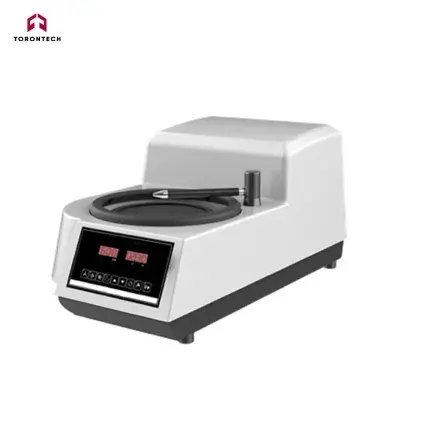
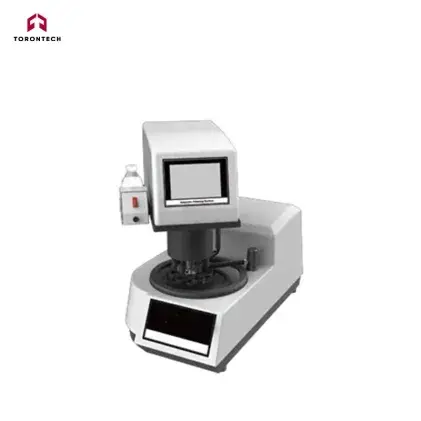
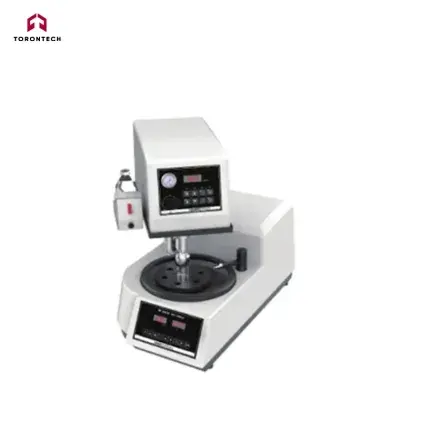
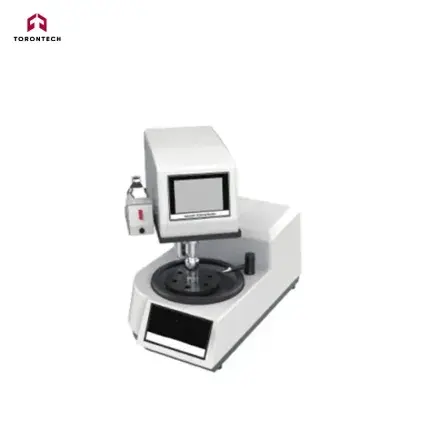
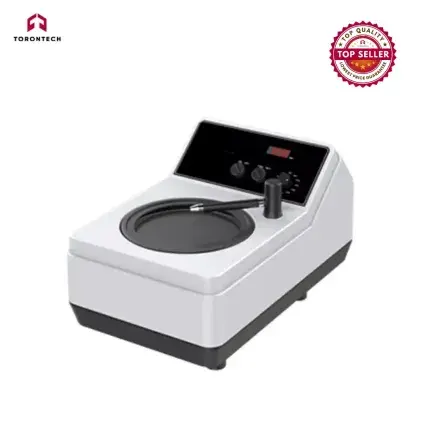
Torontech's ToronPol™ line spans manual bench units and fully automated platforms, so labs can match the machine to their volume and consistency needs.
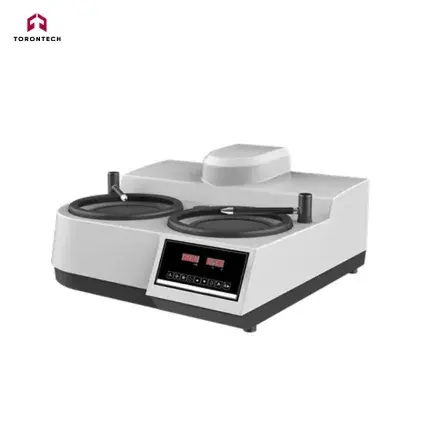
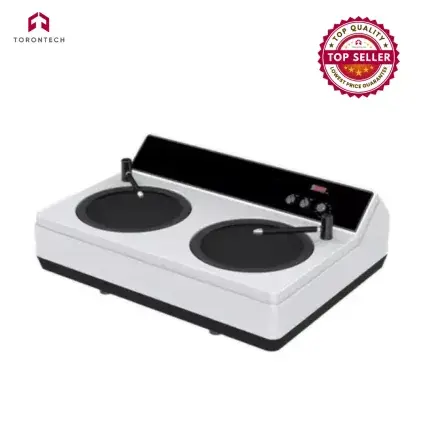
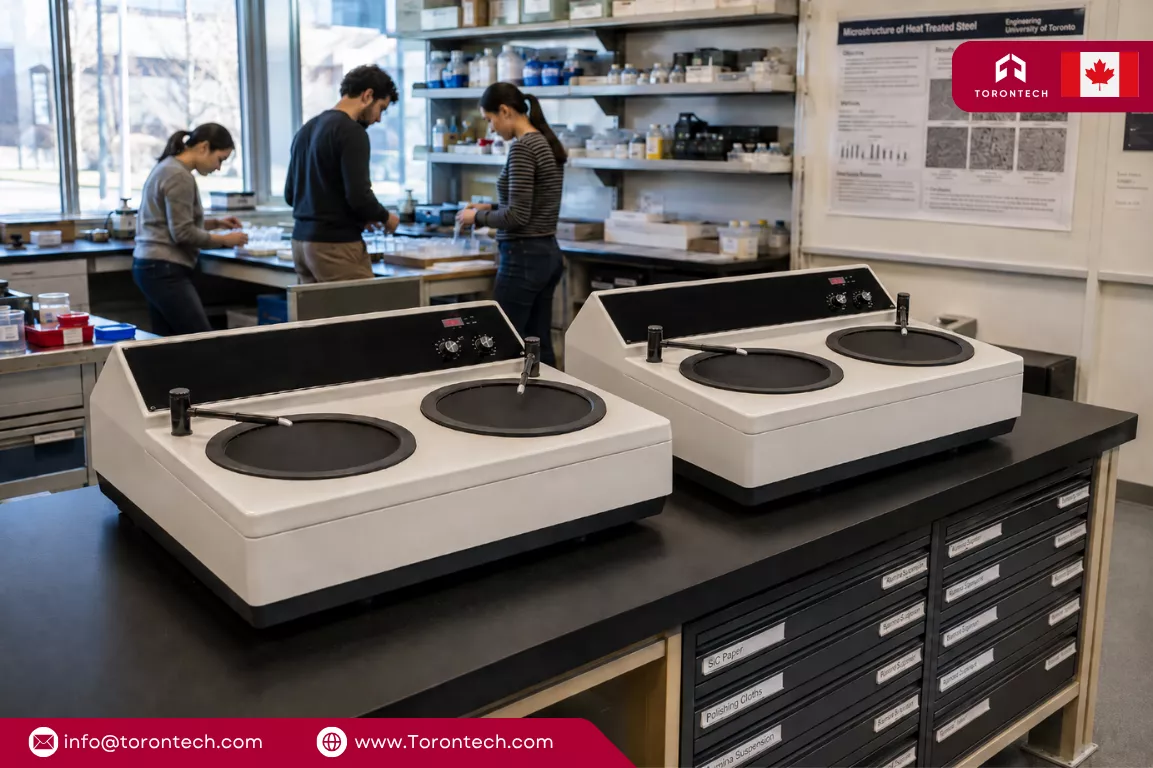
The twin-wheel manual series suits steady, hands-on workflows. The automatic series removes operator variability for high-mix or high-volume labs.
| Feature | Twin-Wheel 202/252/302 | Automatic GP-2A |
|---|---|---|
| Operation | Manual, operator controlled | Fully automated |
| Wheels | Two independent wheels | Two wheels, programmable |
| Wheel sizes | 203 to 305 mm | 203 or 254 mm |
| Pressure | Operator applied | Individual piston, 1 to 6 specimens |
| Best for | Routine multi-step prep | Reproducible high-volume prep |
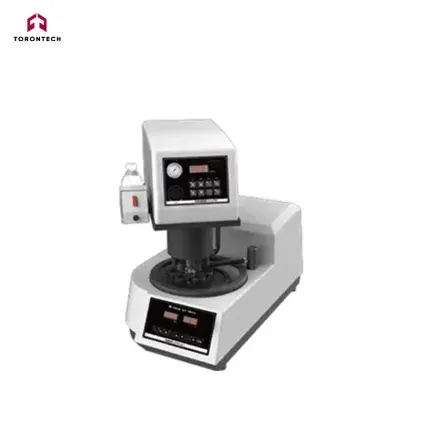
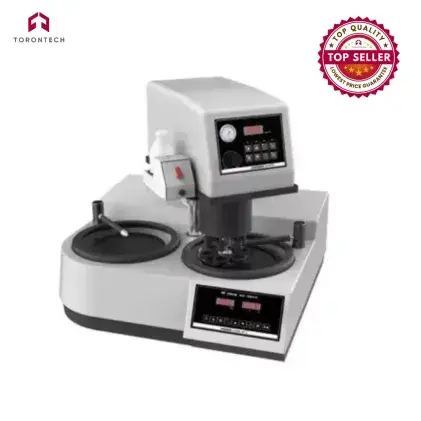
The twin-wheel ToronPol™ 202/252/302 series lets technicians dedicate wheels to consecutive grinding and polishing stages. For labs that handle dissimilar samples, the automatic ToronPol™ GP-2A series polishes each specimen at its own optimized pressure, which sharply reduces rework.
Both series share hard-anodized aluminum working wheels and rust-resistant, powder-coated housings. That construction holds up well to the abrasive slurries and constant rinsing of daily metallographic work.
How to Choose a Metallographic Grinder in Canada
Selecting the right system comes down to a few practical questions. Match the machine to your daily workload, your material mix, and the level of repeatability your reports require.
Key decision points include:
- Throughput: High sample volumes favor automatic platforms, while moderate volumes run well on manual twin-wheel units.
- Material variety: Mixed alloys and soft metals benefit from individual pressure control and adjustable wheel speed.
- Operator consistency: Automation reduces variability when several technicians share one station.
- Wheel size: Larger specimens and holders call for 254 mm or 305 mm wheels.
- Workspace and upkeep: Disposable bowl liners and rust-resistant construction simplify cleanup in busy labs.
Answer these questions first, and the shortlist narrows quickly to a single suitable configuration.
Equip Your Canadian Lab for Dependable Sample Prep
From St. Thomas battery cells to Quebec turbine parts, Canadian labs cannot afford preparation that introduces artifacts or slows turnaround. The right grinder and polisher protects both the accuracy of your analysis and the pace of your inspection schedule.
Torontech operates from its Toronto headquarters and supports customers across Canada with configuration advice and local availability. Whether you run routine QC or demanding failure analysis, the team can match a ToronPol system to your materials and volume.
To specify a metallographic grinder in Canada for your workflow, reach out to the Torontech team and discuss your sample types, throughput, and accreditation goals.