Izod Impact Tester in Egypt for Audit-Ready Plastics QC
A single rejected batch at a GOEIC port inspection can freeze a shipment for weeks. A failed customer audit over undocumented toughness data can cost a supplier a contract. For Egyptian plastics manufacturers, defensible impact data is not paperwork. It is protection.
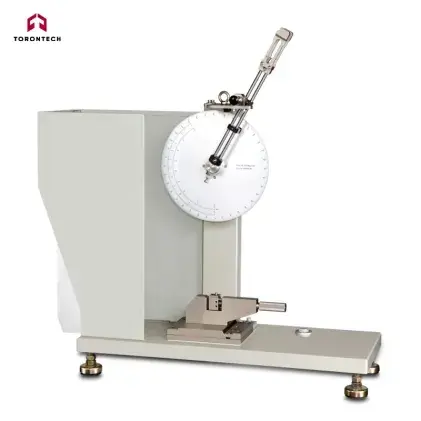
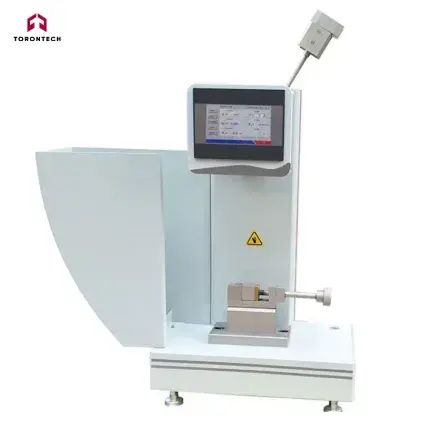
An Izod impact tester in Egypt gives injection molders, compounders, and QC labs the fracture-toughness numbers they need to clear inspection and satisfy demanding buyers. Torontech supplies Izod and Charpy impact testers for plastics configured for ASTM D256 and ISO 180.
Impact Testing Across Egypt's Expanding Plastics Sector
Egypt's plastics industry recorded roughly 16% growth heading into 2026, with plastic product exports near $2.4 billion. That momentum, on display at the EGYPlast exhibition in Cairo, puts fresh pressure on quality control.
Under the National Petrochemicals Plan announced in 2025, Egypt keeps adding polyethylene and polypropylene capacity through projects tied to Alexandria's clusters and the Suez Canal Economic Zone. More local resin means more compound and part testing.
Impact testing confirms that finished plastics survive real-world handling. Egyptian labs rely on it across several sectors:
- Packaging and consumer goods: caps, closures, containers, and housings that must resist drops and shipping shocks.
- Home appliances: durable plastic parts for manufacturers such as Fresh Electric, where shock resistance defines product life.
- Automotive components: bumpers, trim, and under-hood parts where toughness affects passenger safety.
- Petrochemical downstream: batch acceptance of PE, PP, ABS, and engineering thermoplastics before they reach converters.
Egypt exports plastics across African and Arab markets through preferential trade agreements. Those buyers expect impact results tied to recognized international methods, so producers increasingly test in-house rather than wait on third-party labs. Owning the equipment shortens release cycles and protects margins.
What the Izod Test Measures
The Izod method clamps a notched specimen vertically as a cantilever beam. A calibrated pendulum hammer strikes it, and the energy absorbed during fracture reveals the material's impact strength in joules per meter.
That single value tells engineers whether a polymer runs tough or brittle. Tracked across batches, it flags contamination, poor drying, filler problems, or resin drift before defective product reaches a customer or a port inspector.
Notch geometry drives the result. A consistent notch angle and depth keep readings comparable from operator to operator and lab to lab. For that reason, repeatable specimen preparation matters as much as the pendulum itself when Egyptian labs defend numbers during an audit.
Standards and Compliance for Egyptian Laboratories
The Egyptian Organization for Standards and Quality (EOS) maintains thousands of standards, roughly 80% harmonized with ISO. Where no mandatory Egyptian standard applies, Ministerial Decree 180 of 1996 lets importers follow recognized international systems, including ASTM and ISO.
For imported and exported goods, GOEIC inspects and tests conformity at Egyptian ports. Laboratories that want credible results pursue EGAC accreditation, which depends on documented calibration and traceable procedures.
Torontech Izod testers meet the two methods Egyptian buyers request most:
- ASTM D256: Izod pendulum impact of notched plastics.
- ISO 180: Izod impact resistance of rigid plastic specimens.
Multi-method models extend to ISO 179 and ASTM D6110 for Charpy testing. Egyptian ES specifications and EOS conformity marks govern the finished product, while the tester itself complies with ASTM and ISO, giving labs data that holds up under EOS review and GOEIC inspection.
Choosing the Right Izod Impact Tester in Egypt
Your selection depends on specimen types, throughput, and whether you need Charpy capability alongside Izod. Torontech's plastics range spans entry-level quality control through multi-method research setups.
| Model | Method | Energy | Best Suited For |
|---|---|---|---|
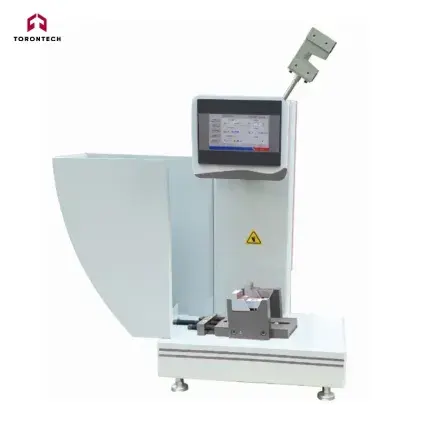
| Toron-Impact IZIT-5 | Izod only | 5.5J | Dedicated Izod QC benches |
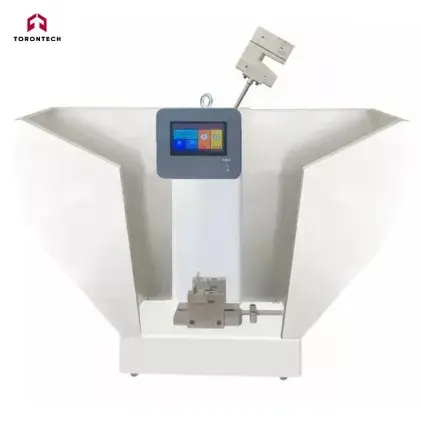
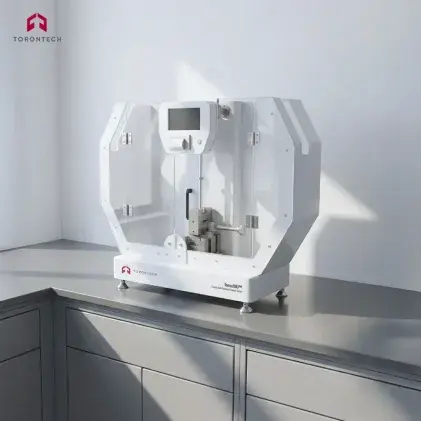
| ToronPI Series | Izod and Charpy | Configurable | Versatile multi-method R&D |
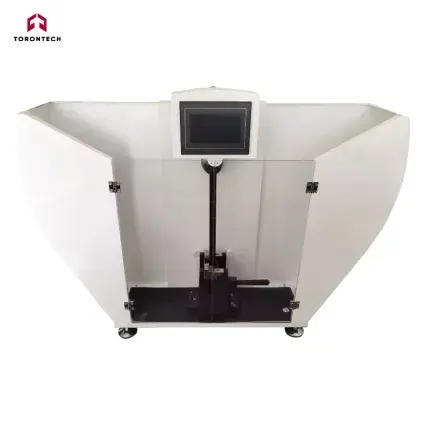
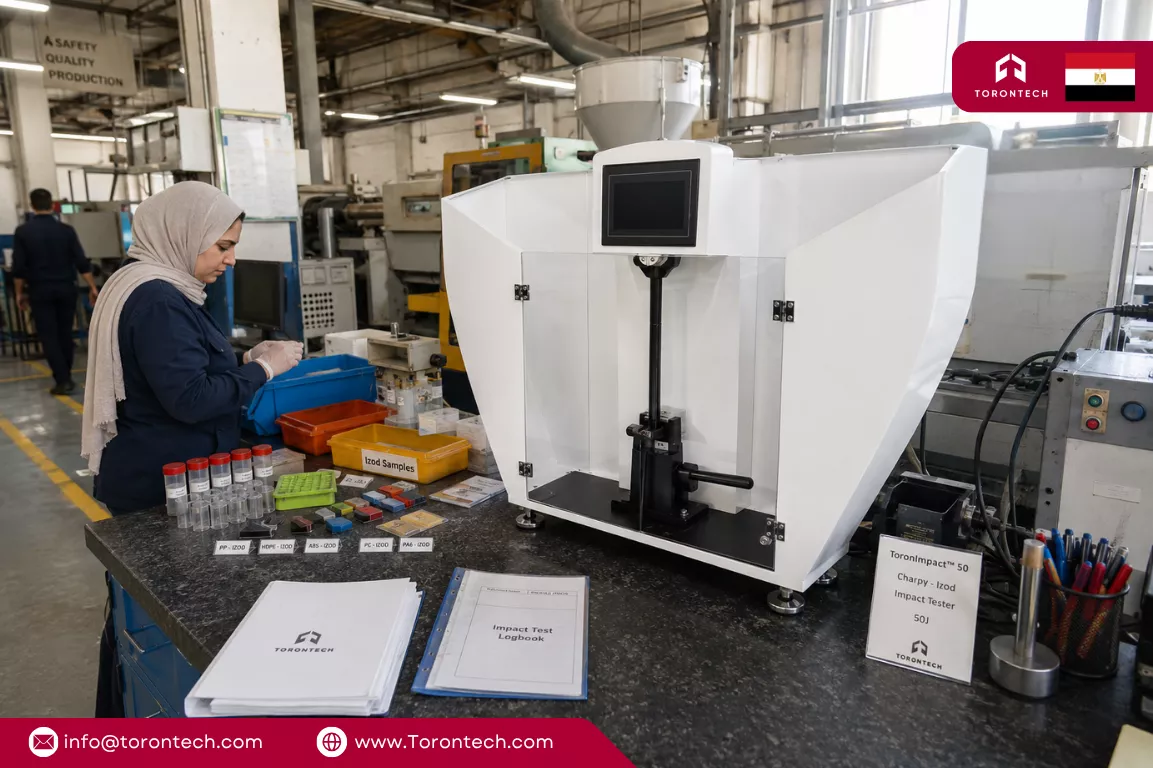
| Toron-Impact-50 | Izod and Charpy | 50J | Rigid plastics and composites |
Match pendulum energy to your material class. Low-energy hammers suit flexible polyethylene and soft compounds, while rigid ABS, filled grades, and composites usually need higher capacity for a clean break. A machine with interchangeable hammers covers a wider range of Egyptian production without a second purchase.
Specimen conditioning matters too. Consistent temperature and humidity before testing keep results stable across seasons, which is useful in Egypt's warm climate. Ask about notch cutters and conditioning accessories when you specify a system.
For a focused QC bench, the dedicated Izod impact tester handles routine notched-specimen work through a full-color touchscreen. Labs that need both methods and higher energy can step up to the 50J multi-method system.
Bring Certification-Ready Testing to Your Egyptian Lab
From Cairo's packaging plants to Alexandria's petrochemical clusters, Egyptian producers face rising scrutiny at customer audits and port inspections. Reliable impact data keeps shipments moving and contracts intact.
Torontech supports the region through its Middle East and Africa office, offering configuration advice, calibration, and operator training close to your market. The team matches pendulum energy and specimen fixtures to your standards and testing volume.
To specify an Izod impact tester for your application, reach out to the Torontech team. You can also contact Torontech ME FZE directly at me@torontech.com or +971 488 19252, Meydan Grandstand, Dubai, to discuss your Egyptian testing requirements.