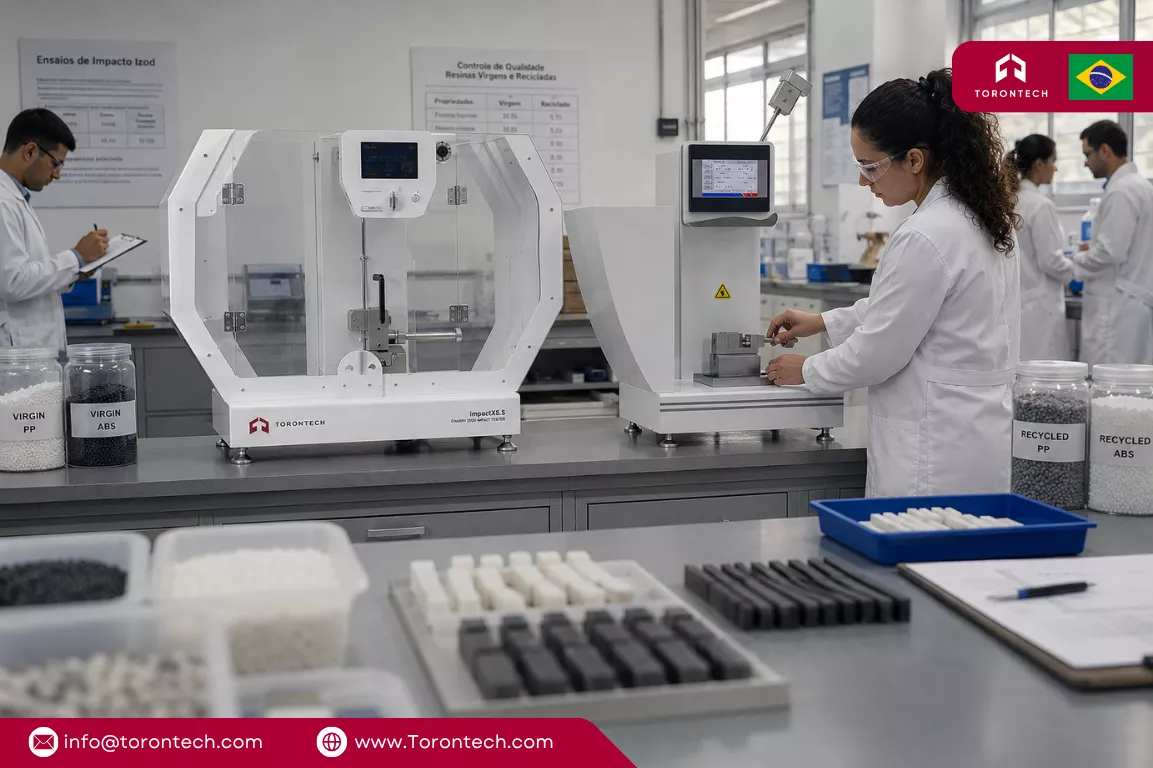
Izod Impact Testers in Brazil for Virgin and Recycled Resins
A recycled polypropylene blend arrives with a slightly different melt profile. The molded part looks identical on the shop floor. Then it cracks on a customer's assembly line, and the rejection costs more than the resin ever saved.
Notched toughness is where that drift shows up first. An Izod impact tester in Brazil lets processors catch it in-house, before shipment. Torontech supplies Izod impact testers for plastics built to ASTM D256 and ISO 180.
Where Brazilian Manufacturers Rely on Izod Data
Brazil is Latin America's largest producer of plastic resins, and plastics processing ranks as the country's fourth-largest industrial segment. ABIPLAST represents more than 14,600 processing and recycling companies employing over 404,000 people nationwide.
That scale generates constant material qualification work. Four sectors account for most pendulum impact testing demand:
- Automotive and auto parts: The MOVER program, enacted in 2024, ties tax incentives to recycled content and lifecycle carbon accounting. Suppliers must now prove that recyclate-bearing components still meet toughness targets.
- Rigid packaging: Containers, caps, and closures face drop and handling loads that correlate closely with notched impact strength.
- Electrical and electronics: Housings, connectors, and cable accessories sold under Inmetro conformity schemes need documented mechanical performance.
- Construction profiles: PVC window frames, panels, and siding must resist impact after prolonged UV exposure in tropical conditions.
Resin prices moved sharply through 2025 and 2026, pushing many processors toward alternative grades and higher recycled content. Every substitution needs verification data behind it.
How the Izod Method Reads Toughness
The operator clamps the specimen vertically as a cantilever beam, notched face toward the striker. A calibrated pendulum swings from a fixed angle and fractures the sample at a defined distance above the clamp.
The machine then compares pendulum energy before and after impact. The difference, expressed in joules, is the energy the material absorbed. Low values signal brittleness; higher values indicate a resin that tolerates sudden loading.
Because thermoplastics lose toughness as temperature drops, many Brazilian labs condition specimens before testing rather than relying on ambient conditions alone.
Matching Pendulum Energy to Your Resin Mix
Pendulum capacity is the first specification decision. Too much energy and resolution suffers. Too little and tough grades refuse to break cleanly, which invalidates the result.
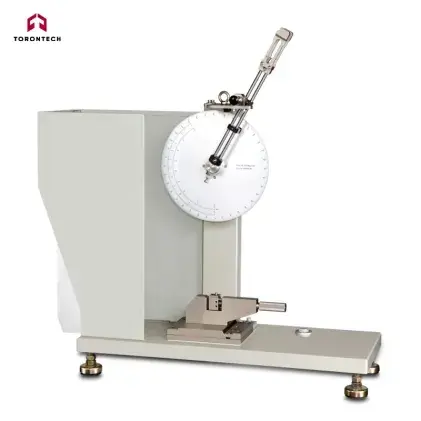
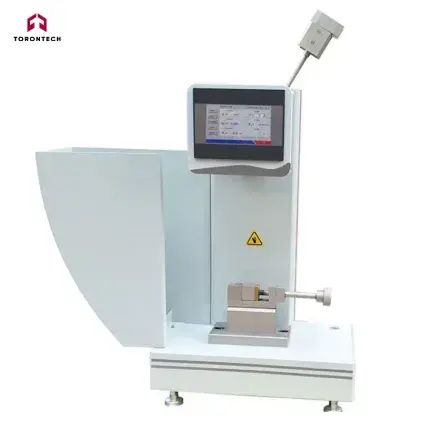
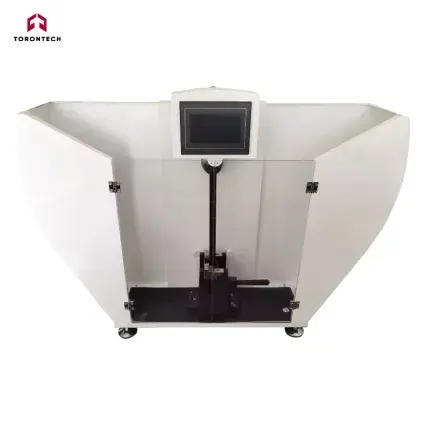
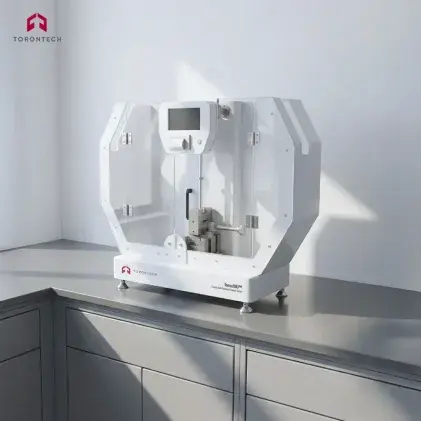
Torontech offers four Izod-capable configurations across its plastics impact range:
| Model | Izod Capacity | Standards | Best Suited For |
|---|---|---|---|
| Toron-Impact IZIT-5 | 1J, 2.75J, 5.5J | ISO 180, ASTM D256 | Dedicated Izod QC benches |
| ToronPI-C | 1 to 12J | ASTM and ISO methods | Multi-method polymer labs |
| ToronPI-D | 1 to 25J | ASTM and ISO methods | Filled and reinforced compounds |
| ToronImpact 50 | Up to 50J | ISO 180, ISO 179-1, ASTM D256 | Composites and rigid plastics |
Aim to land absorbed energy between 20 and 80 percent of maximum pendulum capacity. Because of that window, multi-hammer Izod and Charpy systems let a single machine cover unfilled polyolefins and glass-reinforced engineering plastics.
Notch quality matters as much as the hammer. Results depend directly on notch radius and depth, so pair any Izod impact tester in Brazil with a dedicated specimen notcher rather than hand machining.
Standards Brazilian Polymer Labs Work To
Two international methods govern Izod testing, and Torontech machines comply with both. They are not interchangeable, and the difference affects every test report you issue.
- ASTM D256 determines Izod pendulum impact resistance of plastics and reports absorbed energy per unit of notch width.
- ISO 180 determines Izod impact strength using different specimen dimensions and reports energy per unit of cross-sectional area.
Brazilian exporters often serve North American and European customers simultaneously. Consequently, many labs specify a machine that accepts both fixture arrangements instead of running two dedicated benches.
Accreditation adds a second layer. Cgcre, the accreditation arm of Inmetro, assesses Brazilian testing laboratories against ABNT NBR ISO/IEC 17025, and accredited scopes demand traceable calibration for every instrument.
Torontech ships hammer calibration reports with its pendulum testers. In addition, the onboard software corrects results automatically for air resistance and bearing friction, which strengthens your uncertainty budget.
Data handling deserves equal attention during specification. Touchscreen models store parameters and results locally, then export via USB, so operators avoid the transcription errors that auditors flag during accreditation reviews.
Specify Your Izod Impact Tester in Brazil
Material variability is the practical problem facing Brazilian processors right now. Recycled content targets, shifting resin supply, and export customers demanding different reporting formats all converge on one QC bench.
Torontech has supplied testing and analytical instruments for over 20 years across more than 60 countries, with distribution covering Latin America. Our application engineers match pendulum energy, vise configuration, and notching accessories to your actual resin portfolio rather than a generic datasheet.
Laboratories running composites alongside commodity plastics can also step up to 50J multi-method platforms. Those systems switch between Izod and Charpy fixtures, which suits contract labs and R&D groups testing across several material families.
Send your polymer families, applicable specimen standards, and monthly test volume, then reach out to the Torontech team for a configured quotation and lead time for delivery into Brazil.