Haze Meters for Brazil's Plastics, Packaging, and Glass Industries
A batch of clouded PET preforms can stall a bottling line before a single unit ships. As Brazilian converters raise recycled content to meet new packaging rules, clarity variation between resin lots grows harder to catch by eye alone.
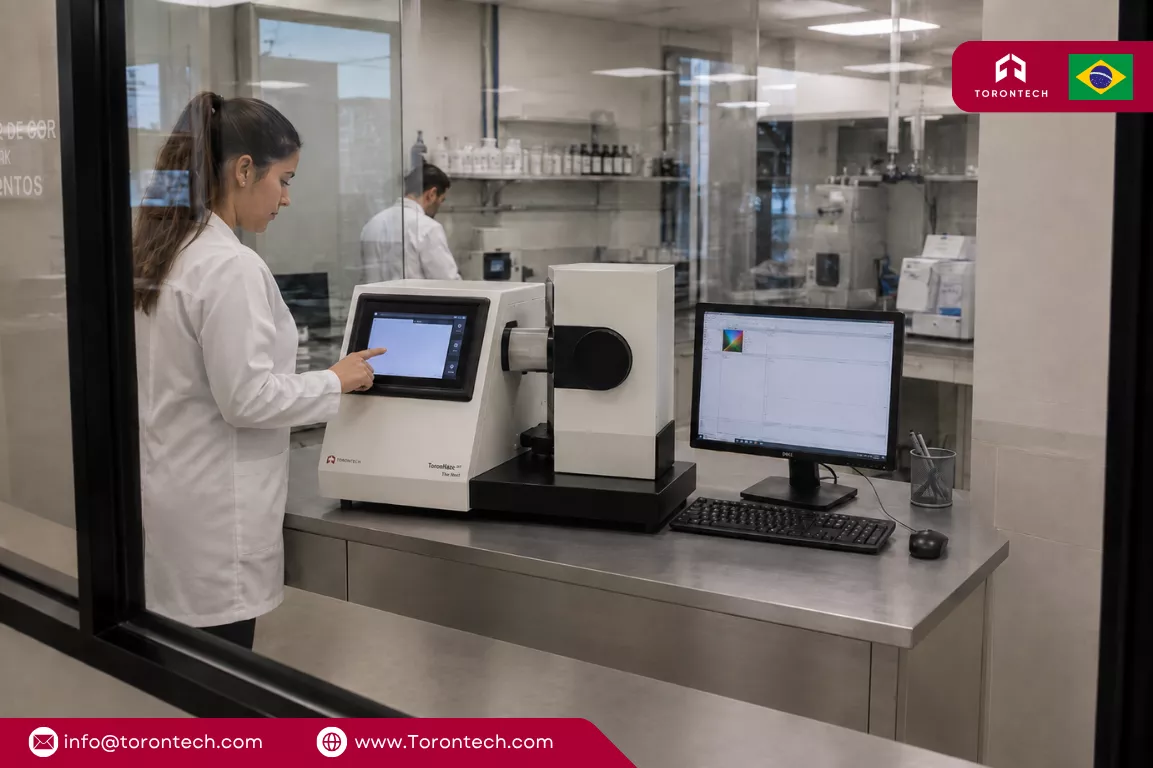
A haze meter in Brazil gives converters, glass processors, and electronics assemblers the objective haze and transmittance data needed to catch clarity drift before it reaches a customer. Torontech supplies benchtop, portable, and fast-cycle models built to ASTM D1003 and ISO 13468.
Why Optical Clarity Testing Matters for Brazil's Packaging Shift
Brazil's Decree 12,688 requires 22 percent recycled content in beverage bottles starting in 2026. Recycled PET scatters light differently than virgin resin, so clarity that once passed by default now needs verification.
Coca-Cola FEMSA installed fourteen new bottling lines in Brazil during 2025, a 75 percent jump over the prior year. A 20 percent import tax on polymers is pushing brands toward domestic resin sourcing.
Amcor's flexible packaging plant in Londrina became the first Latin American site in its network to earn International Sustainability and Carbon Certification Plus status, a sign of how closely Brazilian converters now track quality and sustainability data together.
Each of these shifts adds pressure on quality control teams. A haze meter in Brazil lets converters confirm that a higher recycled content or a new resin supplier has not compromised the clarity a brand owner specified.
Standards Brazilian Labs Rely On
ASTM D1003 and ISO 13468 both describe how to measure haze and total luminous transmittance using an integrating sphere. A specimen sits in the light path, and the instrument separates transmitted light into direct and scattered components.
Torontech's haze meter line reports results against ASTM D1003, ISO 13468, ISO 14782, and JIS K 7361, the methods most Brazilian converters already reference in supplier specifications.
Brazilian test laboratories seeking accreditation work through INMETRO's Cgcre body, which accredits laboratories to ABNT NBR ISO/IEC 17025. That accreditation requires documented calibration and traceable procedures, so equipment with a clear calibration record supports the application.
ABNT NBR ISO/IEC 17025 governs laboratory competence rather than the haze test method itself. In practice, most Brazilian labs still report haze and transmittance results against the ASTM and ISO methods above. That keeps their data comparable with export customers and multinational brand owners sourcing from Brazil.
Where Haze and Transmittance Testing Applies in Brazil
A haze meter in Brazil earns its place across several sectors that already anchor the country's industrial base:
- Flexible packaging and film: BOPP, polyethylene, and PET films for food, beverage, and pharmaceutical packaging need consistent clarity across production runs.
- PET bottles and preforms: beverage and personal care brands specify a haze ceiling that bottlers must hold as recycled content rises.
- Automotive glazing: windshields, side windows, and sunroofs are checked for light transmittance and haze against transparency requirements.
- Electronics and touch panels: LCD panels, cover glass, and touchscreens assembled for consumer devices are tested for clarity before final assembly.
Field and production teams often carry a portable haze meter to spot check incoming film rolls or bottle samples without pulling material back to a central lab.
That matters most for converters running multiple extrusion lines or bottling plants across different states, where a central lab cannot always keep pace with shift-level production.
Choosing a Haze Meter in Brazil for Your Application
The right configuration depends on where the test happens and how much data each reading needs to capture. Torontech offers three formats built around that difference, so a lab does not have to force one instrument to cover every role on the floor.
| Model | Format | Best For |
|---|---|---|
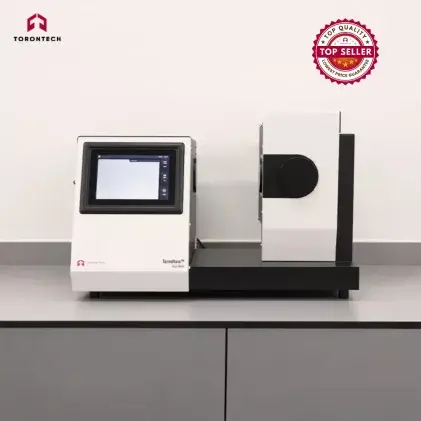
| Haze Meter - ToronHaze™ | Benchtop, all-in-one color, haze, and transmittance | Full QC labs needing complete optical data |
| Portable Haze Meter ToronHaze™ TTH-Series | Handheld, battery powered, up to three apertures | Line spot checks and field inspection |
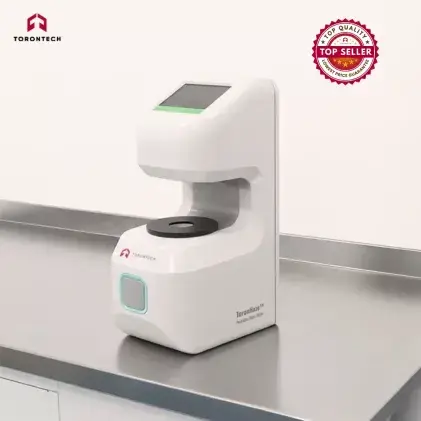
| Haze & Transmittance Meter | Compact benchtop, roughly three second cycle | High-volume haze and transmittance screening |
Labs running full color characterization alongside haze and transmittance typically choose the benchtop ToronHaze™ line. It captures all three in one reading, and its open sample area handles film, glass, or panel samples of varying size.
Production floors that need a quick pass or fail decision favor the Haze & Transmittance Meter for its fast cycle time and LED source that needs no warm up between shifts.
Equip Your Line for Brazil's Optical Clarity Standards
As recycled content mandates and new bottling capacity reshape Brazil's packaging supply chain, verified clarity data becomes part of every quality agreement rather than an occasional spot check.
Torontech's North America operations support Latin American buyers with configuration guidance across benchtop, portable, and fast-cycle haze meters. Every model is built to ASTM D1003 and ISO 13468 methods and ships with calibration documentation.
That guidance covers aperture size, sample thickness, and light source selection, so the instrument matches the film, bottle, or panel running on your line.
Tell us your material, sample size, and testing volume, and our team will match a configuration to your line. Reach out to the Torontech team to discuss pricing, lead times, and calibration support for your Brazilian operation.