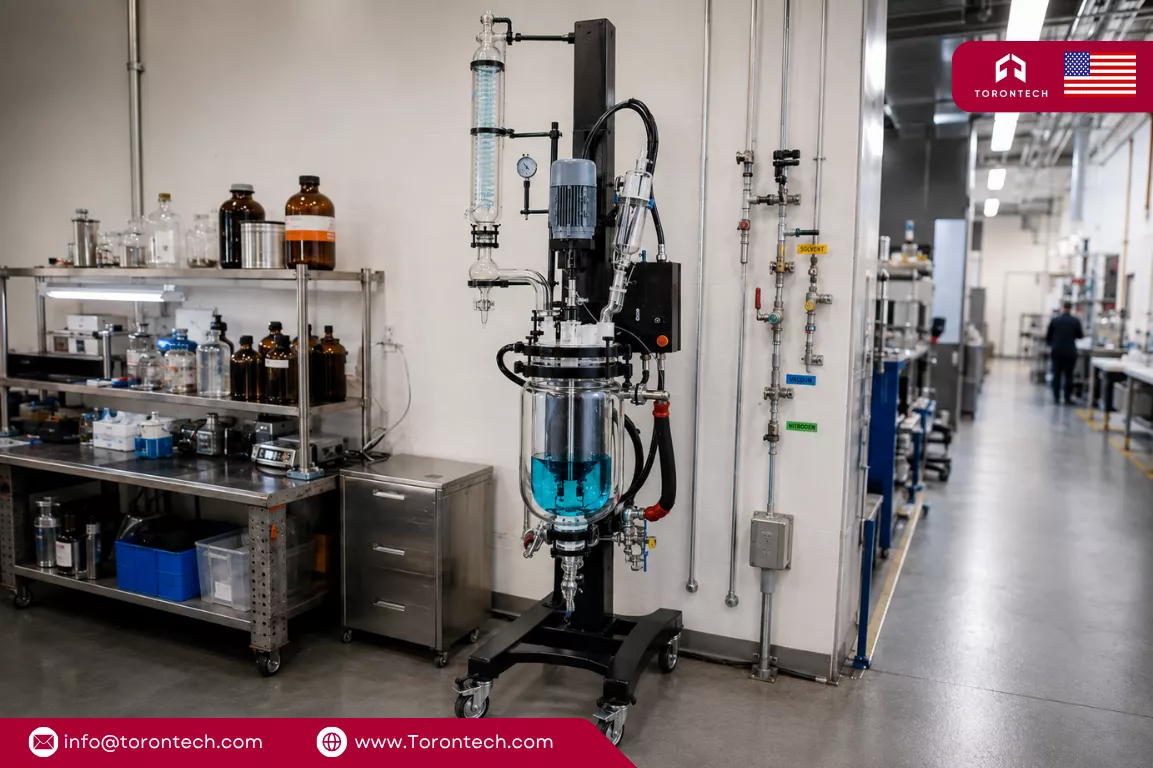
Glass Reactors in the USA for Pharma and Extraction Labs
Sourcing a lab reactor in the United States now means balancing two pressures at once: faster domestic process development and stricter solvent-safety expectations. A reactor that cannot flex to both slows the whole program.
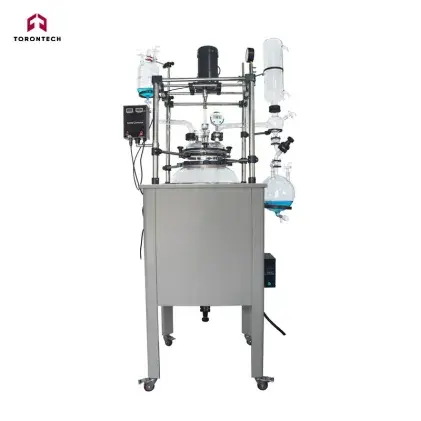
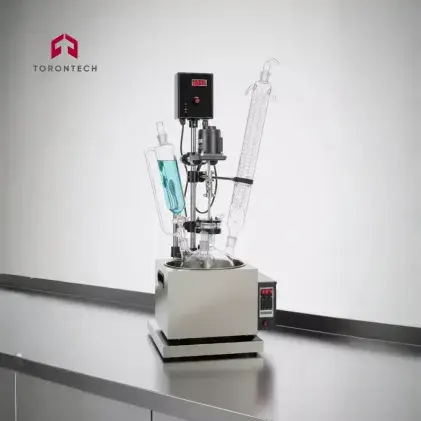
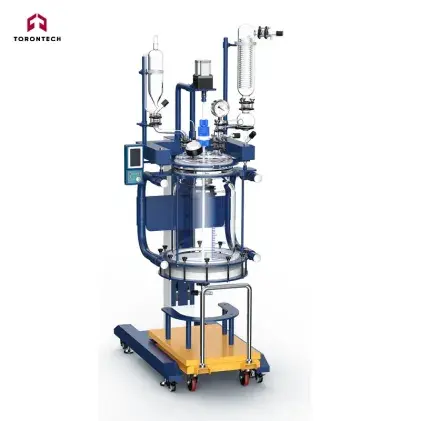
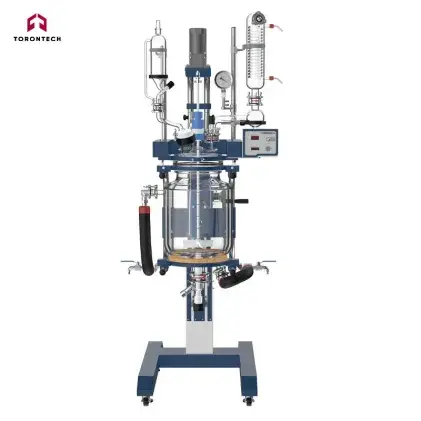
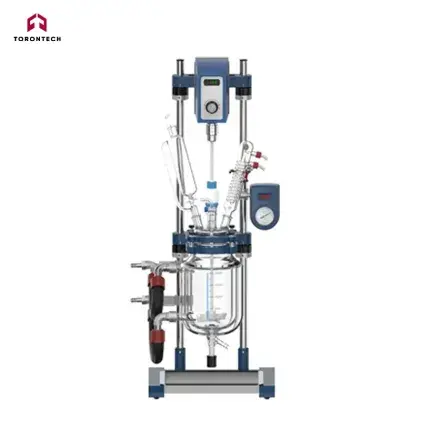
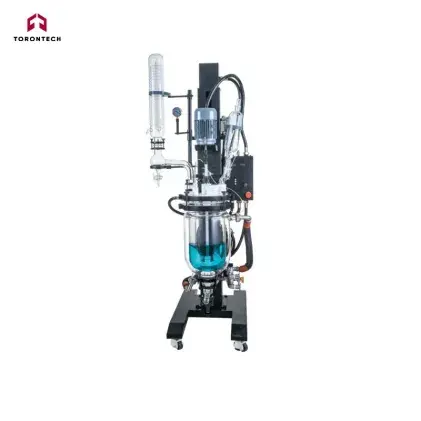
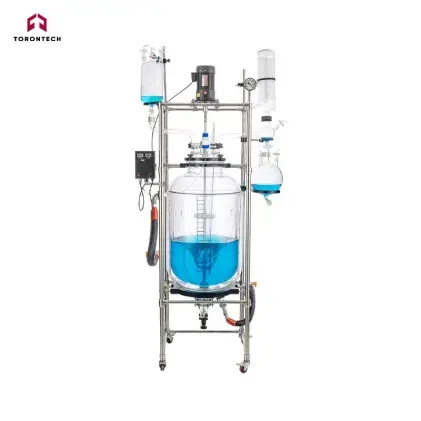
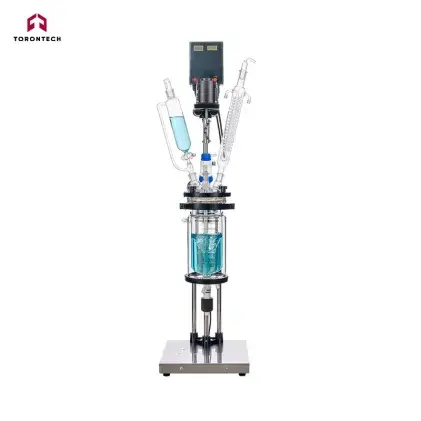
A glass reactor in the USA has to serve pharmaceutical synthesis, cannabinoid processing, and specialty chemistry from one adaptable platform. Torontech supplies jacketed, single-layer, lifting, and filter configurations built on 3.3 borosilicate glass for exactly that range of work.
Industries Driving US Demand for Glass Reactors
American reactor demand is not evenly spread. A few sectors set the pace, and each one shapes how buyers specify volume, temperature range, and motor type.
Pharmaceutical process development leads. The US market for active pharmaceutical ingredients reached roughly $33.8 billion in 2025 and is projected near $48 billion by 2030. Reshoring sharpens the pull, because only about 10% of APIs for US prescriptions are made domestically today.
That gap is now policy. A 2025 executive order created a Strategic Active Pharmaceutical Ingredients Reserve, and major producers are rebuilding small-molecule chemistry onshore.
AbbVie committed $195 million to a North Chicago API and synthesis site due online in 2027. Eli Lilly is reshoring small-molecule chemistry across new US sites, part of more than $50 billion in domestic commitments since 2020. Every one of those labs runs bench and pilot reactors.
Hemp and cannabis processors form the second major segment. Extraction, winterization, and cannabinoid crystallization all depend on jacketed vessels that hold precise sub-zero temperatures. Specialty chemicals, coatings, flavors, and academic research round out the demand base.
Processors that scaled fast during the hemp boom now push for tighter thermal control, because consistent cannabinoid purity depends on stable, repeatable winterization.
Typical US applications for a glass reactor include:
- API and fine-chemical synthesis: controlled reactions for drug substances and specialty intermediates
- Cannabinoid extraction and crystallization: winterization and isolation at low temperatures
- Polymer and materials research: managed polymerization and process scale-up
- Distillation and concentration: solvent recovery under vacuum
Matching a Glass Reactor in the USA to Your Process
The right reactor depends on scale, temperature, and whether solids or filtration enter the workflow. Torontech's range spans 1L benchtop units to 150L pilot systems, so a program can standardize on one platform from early R&D through scale-up.
Verified capabilities across the range include:
- Material: 3.3 borosilicate glass for strong chemical and thermal resistance
- Temperature: jacket circulation from 200°C down to -80°C
- Vacuum: operation to a 0.095 MPa vacuum level, with PTFE plug and discharge valve
- Stirring: variable speed up to 500 rpm across models
- Formats: jacketed, single-layer, lifting, and filter reactors
Let scale and task narrow the configuration before you specify anything else:
| Scale / Task | Suggested Configuration | Typical Volume |
|---|---|---|
| Benchtop R&D | Desk-top jacketed or single-layer | 1L to 5L |
| Pilot and scale-up | Pilot-scale jacketed | 10L to 150L |
| Frequent cleaning or access | Lifting jacketed | 5L to 50L |
| Reaction plus filtration | Lifting jacketed filter | 100L to 150L |
For temperature-critical synthesis, the jacketed glass reactor covers most bench and pilot work. Where filtration follows the reaction, the lifting jacketed filter reactor combines both steps in a single vessel.
Sourcing weighs as heavily as specifications. As reshoring compresses project timelines, US labs increasingly want reactors specified, supplied, and supported from within North America rather than shipped and serviced from overseas.
Built for US Solvent Safety and Quality Programs
Most US reactor work happens under two frameworks: pharmaceutical quality rules and electrical-safety codes. Both shape how a lab specifies equipment, even though the reactor itself is process apparatus rather than a certified system.
Pharmaceutical labs operate under FDA current Good Manufacturing Practice, defined in 21 CFR Part 211. That environment rewards equipment with clear documentation, repeatable temperature control, and transparent reaction monitoring, all of which a borosilicate glass reactor supports.
Solvent handling raises a second issue. When a lab processes flammable solvents such as ethanol or acetone, the National Electrical Code classifies those spaces as Class I hazardous locations. For these areas, Torontech offers explosion-proof (Ex) motor configurations instead of standard drives.
Chemical compatibility completes the picture. The 3.3 borosilicate vessel resists aggressive reagents, while PTFE seals and valves limit contamination. Together these features suit the corrosive, solvent-heavy chemistry that runs daily in US synthesis and extraction labs.
Standardizing on one glass platform from bench to pilot also keeps process data consistent as a method moves toward larger batches, which shortens tech-transfer time.
Configure Your Glass Reactor for the US Market
Whether your priority is API scale-up, cannabinoid isolation, or specialty synthesis, the reactor has to match your volume, temperature, and safety profile before it earns bench space. A configured platform beats a generic vessel every time.
Torontech North America supports US buyers directly from its Miami office, with practical guidance on capacity, jacket range, filtration, and explosion-proof drives. The team can align a pilot-scale reactor to your process and throughput.
To specify the right system, reach out to the Torontech team or call +1 866 383 7919. Share your solvents, temperature targets, and scale, and Torontech will recommend a glass reactor in the USA matched to your lab.