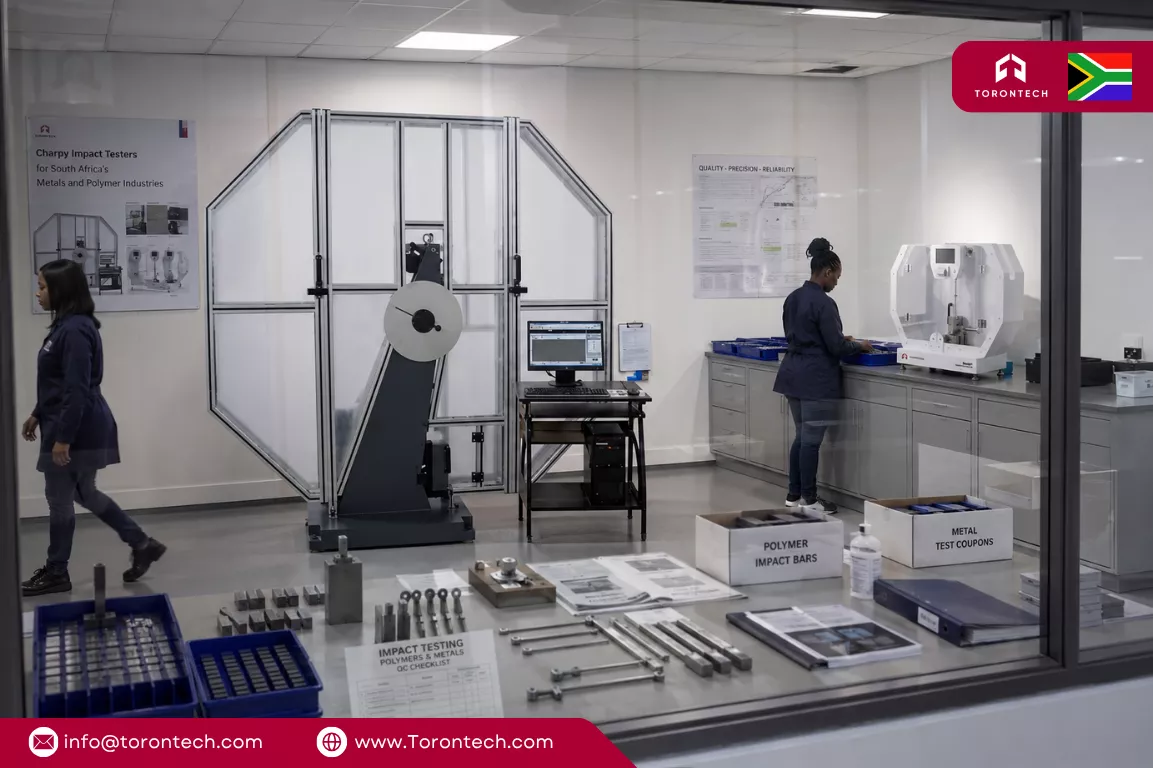
Charpy Impact Testers for South Africa's Metals and Polymer Industries
A brittle weld on a mining headgear or a cracked HDPE main under pressure carries real cost. South African fabricators, steel mills, and pipe producers need proof that their materials absorb impact before service, not after a failure.
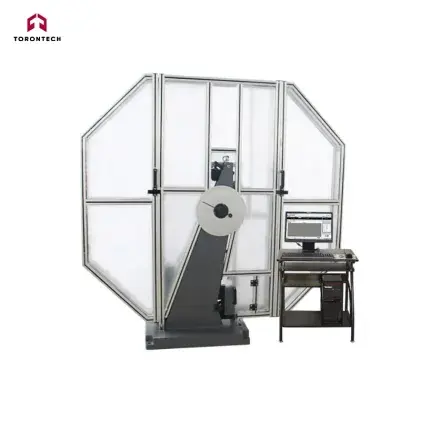
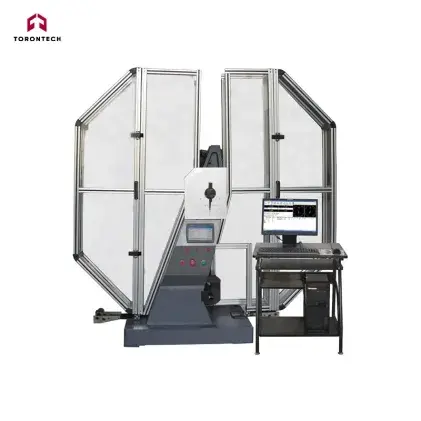
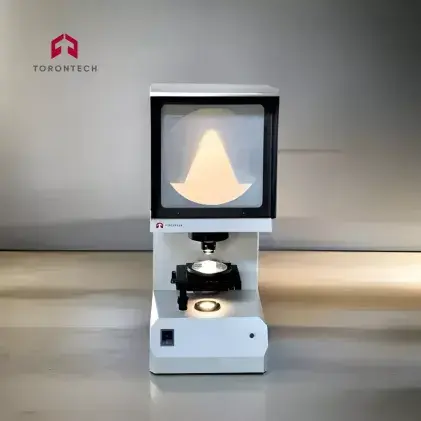
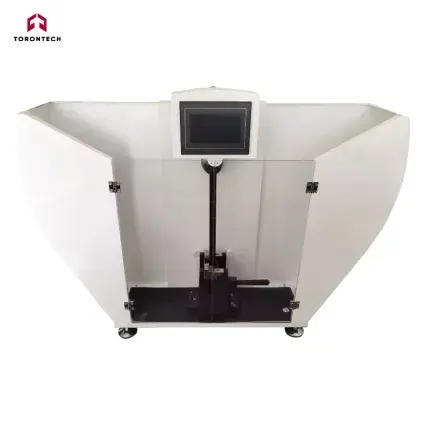
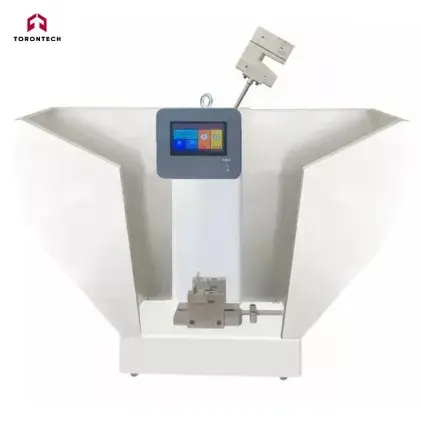
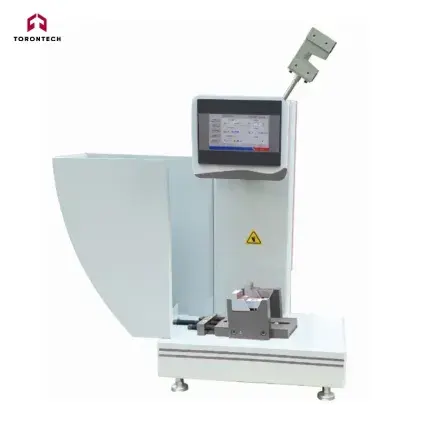
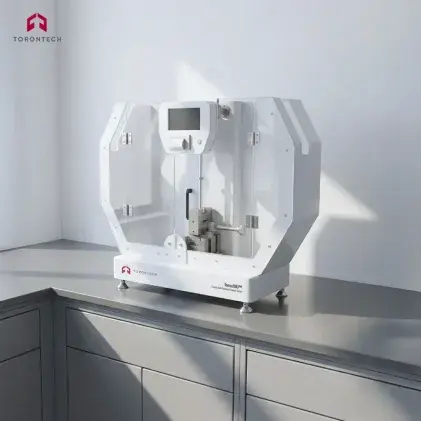
A Charpy impact tester in South Africa delivers that proof by measuring the energy a specimen absorbs as it fractures. Torontech supplies pendulum impact systems for both metals and plastics, matched to the standards local laboratories follow.
Two Product Lines for Two Very Different Materials
Charpy testing spans two distinct worlds, and one machine rarely serves both well. Metals demand high-energy pendulums, while polymers need fine resolution at low energies.
Torontech separates these needs across two engineered ranges:
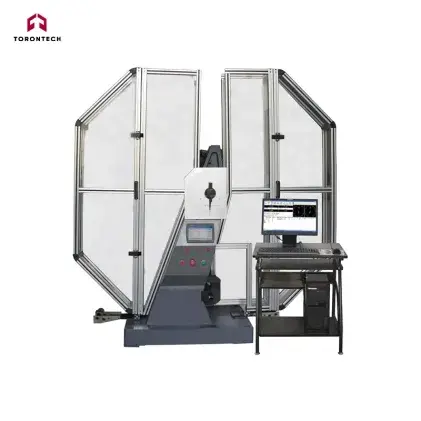
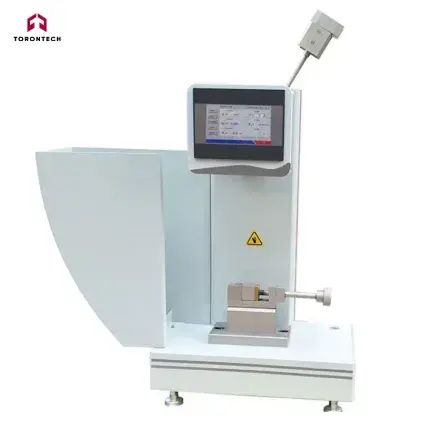
- Metals: The TT-PIT Series covers 150J, 300J, 500J, and 750J capacities, built for steel, welds, and structural alloys under ASTM E23, ISO 148-1, EN 10045/1, and JIS Z 2242.
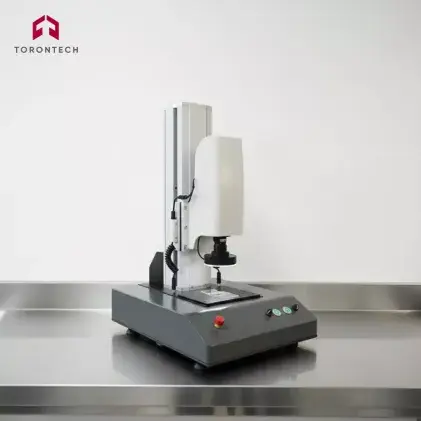
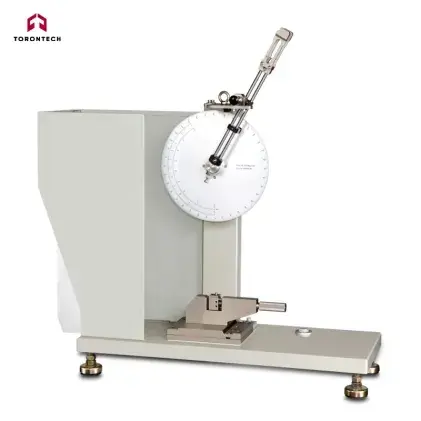
- Plastics: The Charpy and Izod range runs from compact 5J units to 50J multi-hammer systems, with interchangeable fixtures for both the Izod and Charpy methods under ASTM D256, ASTM D6110, ISO 179, and ISO 180.
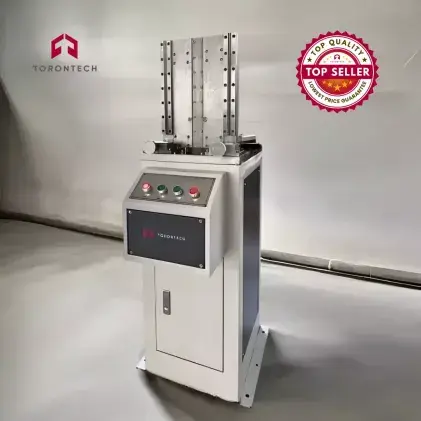
A dedicated thermoplastic pipe tester also serves ISO 9854 work. That capability matters directly for South Africa's stressed water and gas networks.
Where South African Industry Relies on Impact Data
South Africa is the second largest steel producer in Africa, so impact testing sits at the center of its quality chain. Several sectors drive steady demand for pendulum testing.
Steel and heavy fabrication. ArcelorMittal South Africa and the mills tracked by the South African Iron and Steel Institute test structural plate and welds for notch toughness. New import tariffs of 10 to 30 percent and the national green steel roadmap now push local producers to document material quality rigorously. Export buyers add further scrutiny, since low-temperature toughness often decides whether a steel grade qualifies for a contract.
Automotive. The Automotive Master Plan 2035 targets roughly 1.4 million vehicles a year. Assemblers and suppliers verify impact resistance on forged steel components and on polymer parts such as bumpers, trim, and under-hood housings.
Water, gas, and mining pipe. South Africa loses more than 40 percent of its treated water through aging networks. Producers of HDPE and PVC pipe, most represented by SAPPMA, run impact tests to qualify materials for long-term pressure service.
This table maps common South African testing needs to the right Torontech line:
| Sector | Material Tested | Torontech Line |
|---|---|---|
| Steel mills and welding | Structural steel, weld joints | TT-PIT metals series |
| Automotive | Steel parts, rigid polymers | Metals and plastics |
| Water and gas pipe | HDPE, PVC, PP pipe | Thermoplastic pipe tester |
| Research and universities | Composites, advanced alloys | Configurable |
Standards and SANAS Accreditation
South African laboratories work within a layered framework. National SANS methods and the SABS mark govern finished local products, while SANAS, the South African National Accreditation System, grants ISO/IEC 17025 accreditation to competent testing labs.
That framework rewards traceable, repeatable results. Labs pursuing or holding SANAS accreditation need instruments with documented calibration and defensible measurement uncertainty at every step.
Torontech impact testers meet the international methods that underpin South African practice:
- Metals: ASTM E23, ISO 148-1, EN 10045/1, and JIS Z 2242
- Plastics: ASTM D256, ASTM D6110, ISO 179, and ISO 180
- Thermoplastic pipe: ISO 9854
The SANS, SABS, and SAPPMA marks apply to finished materials rather than to the tester itself. Torontech equipment supplies the impact data that supports compliance with those local schemes.
Choosing the Right Charpy Impact Tester in South Africa
Selecting a Charpy impact tester in South Africa starts with your material and your governing standard. A steel mill and a pipe extruder need very different machines.
Work through these decision points before you specify:
- Material class: metals point to the TT-PIT range, while plastics and composites point to the Charpy and Izod line.
- Pendulum energy: 300J suits general structural steel, and 500J or 750J covers thick sections and high-toughness pipeline grades.
- Test method: interchangeable hammers and vises let plastics labs switch between Izod and Charpy configurations on one frame.
- Temperature conditioning: optional sub-zero chambers support ductile-brittle transition studies for cold-service and export steel.
For pipe manufacturers specifically, the ISO 9854 pipe tester targets thermoplastic specimens without added tooling.
Equip Your Lab for South African Testing Demands
From Gauteng steel mills to Western Cape pipe plants, South African quality teams need impact data they can defend in audits and public tenders. The right pendulum tester turns a material claim into traceable evidence.
Torontech supports the African market through its regional office, offering configuration guidance, calibration documentation, and practical sourcing advice. Whether you test structural steel, automotive polymers, or pressure pipe, the team can match a system to your standard and throughput.
To specify a tester for your laboratory, reach out to the Torontech team. You can also contact Torontech ME FZE directly at +971 488 19252 or me@torontech.com, Meydan Grandstand, 6th Floor, Meydan Road, Nad Al Sheba, Dubai 261440, UAE.