

ICP for Unused Lube Oils
ICP for Unused Lube Oils TT-4951
ICP for Unused Lube Oils TT-4951 - The presence of iron, manganese, phosphorus, zinc, calcium, magnesium, and other elements directly influences the quality of lubricating oil samples and their environmental impact.
Traditional testing methods involve acid digestion to break down organic components in the sample, followed by testing in an aqueous solution. However, this method has several drawbacks, including lengthy operation times, extensive use of reagents and consumables, susceptibility to contamination or loss of elements, poor test result accuracy, and environmental pollution.
In contrast, this method uses the organic solvent dilution technique to determine various elements in unused lubricating oil samples. It offers simplicity, speed, and ease of operation. The results obtained demonstrate repeatability and stability, fully meeting daily analysis requirements.
The primary application of the ICP for Unused Lube Oils TT-4951 is the elemental analysis of new (unused) lubricating oils to ensure product quality. The instrument uses an efficient organic solvent dilution method to measure the concentration of metallic additive elements, such as Phosphorus (P), Zinc (Zn), Calcium (Ca), and Magnesium (Mg). This is a critical quality control test to verify that the oil has been correctly formulated with the proper additive package before it is sold.
Key Industries
- Lubricant Manufacturing: This is the core industry for this instrument. Lubricant blenders rely on it for final product quality control to certify that their engine oils, hydraulic fluids, and other products contain the precise concentration of metallic additives required to meet performance specifications.
- Additive Manufacturing: Chemical companies that produce the metallic additive packages used in lubricants utilize this technology for their own quality control. It ensures the concentration of elements in their products is correct before they are sold to lubricant blenders.
- Third-Party Testing Laboratories: These independent labs are contracted by lubricant manufacturers, distributors, or large industrial consumers to provide independent verification of new oil quality, ensuring it meets the specified additive levels before being put into service.
- MCU-controlled with a large LCD color touch screen, allowing for programmed heating as per ASTM D93 requirements.
- Automatic ignition and flash point judgment, with ignition possible via electric or gas supply.
- Comes with an automatic ignition wire for gas ignition.
- Utilizes a stepper motor for sample stirring, ensuring stable, precise, and adjustable speeds, fully compliant with ASTM D93 A, B, and C procedures.
- Features a quick detection function, enabling the setting of heating rates as per requirements, facilitating swift judgment of the expected flash point for unknown oil samples.
- Automatic lifting and lowering function for easy operation.
- Equipped with a temperature correction function that automatically adjusts for atmospheric pressure.
- Can establish the highest detection temperature and ignition times, automatically halting heating upon reaching the set values.
- Optional nitrogen distinguisher available.
- Automatically disconnects gas supply in case of power outage.
- Capable of real-time atmosphere pressure detection.
High Frequency Generator | |
Working Frequency | 27.12MHz |
Stability | ﹤0.05% |
Output power | 800W ~1600W |
Stability | ≤0.05% |
Matching Method | Automatic |
Scanning spectrometer | |
Light path | Czerny turner |
Focal length | 1000mm |
Raster specification | Ion-etched holographic grating, engraved line density 3600L / mm or 2400L / mm; scribed area (80 × 110) mm |
Line dispersion reciprocal | 0.26nm/m |
Resolution | ≤0.008nm(3600 wire grating) ≤0.015nm(2400 wire grating) |
Main Unit Parameters | |
Scanning wavelength range | 195nm~500nm(3600L/mm wire grating) 195nm~800nm(2400L/mm wire grating |
Repeatability | RSD≤1.5% |
Stability | RSD≤2.0% |
Test Part
Abrasion Elements in Unused Lube Oils
1. Equipment
1.1 CONOSTAN Dedicated Diluent for ICP
1.2 CONOSTAN Co standard liquid
1.3 CONOSTAN S-21 mixed standard oil
1.4 Pipette, 0-5ml
1.5 Electronic balance, 0.0001g
2. Working Condition Requirements
High-frequency generator: 27.12MHz, 0.7mm quartz torch with center channel, high-frequency power 1200W, plasma gas flow 15L/min, auxiliary gas flow 0.99L/min, carrier gas flow 0.35L/min, oxygen flow rate 50ml/min. The temperature of the atomizing chamber is -20°C, and the peristaltic pump operates at a speed of 3ml/min.
3. Sample Treatment
After the lubricating oil sample is obtained using the weighing method, the diluent is added directly to achieve the desired volume.
The internal standard calibration method is used during testing to eliminate differences in the sample matrix.
4. Test Method
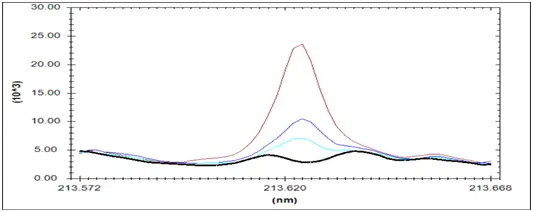
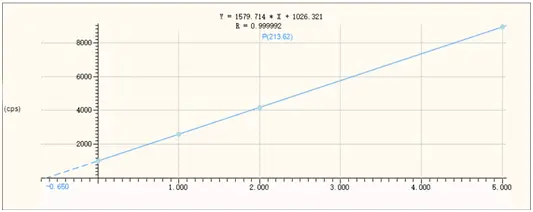
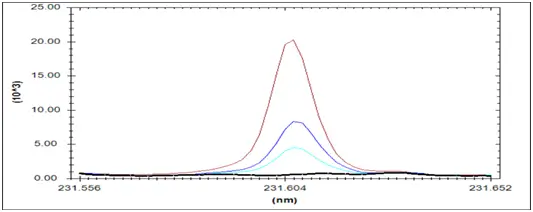
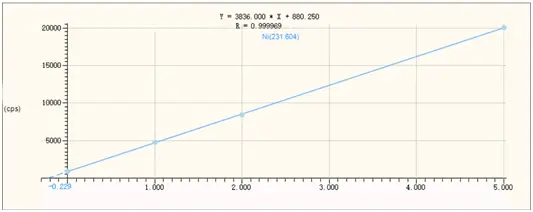
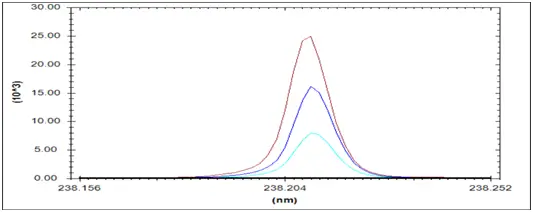
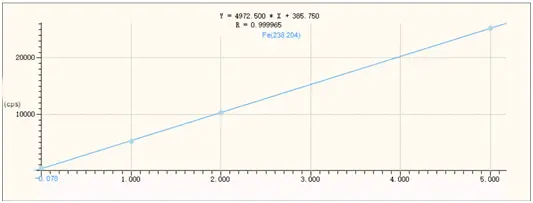
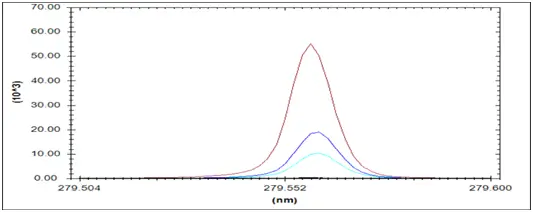
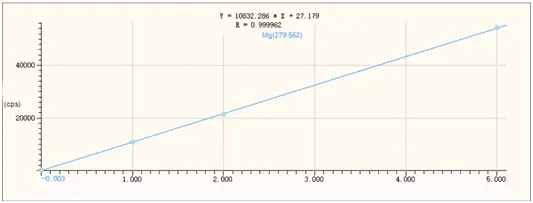
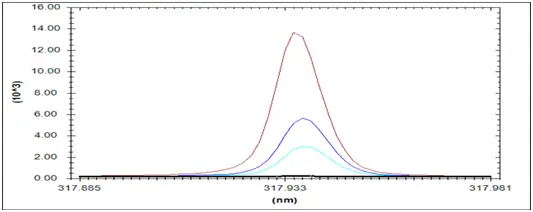
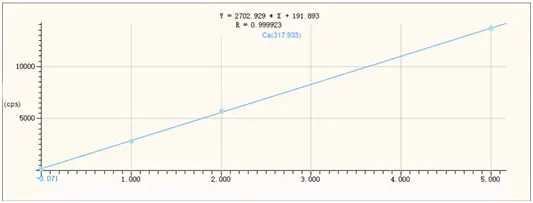
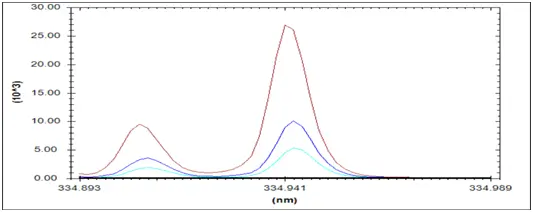
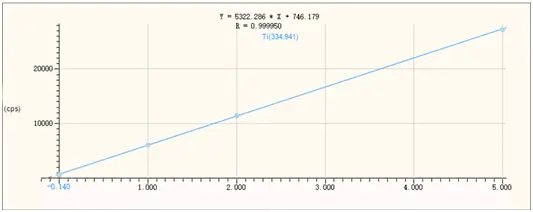
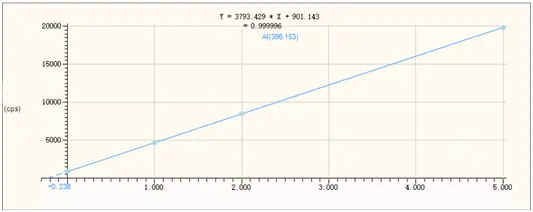
After the apparatus is automatically ignited and parameters are set according to the working conditions, the diluent is drawn directly into the mist chamber via the nebulizer and enters the plasma. Once the apparatus stabilizes, the blank solution, standard solution, and diluted sample solution are measured simultaneously. The content of each element in the final sample can be directly determined. The linear relationship of the elements is determined using experimental methods. Simultaneously, the blank solution is measured ten times for each element. The standard deviation of the measured values is divided by the slope of the curve to obtain the method detection limit. The fitting coefficient of the elemental working curve exceeds 0.999, indicating a good linear relationship within the linear range of the working curve. Optimized working parameters of the apparatus improve the accuracy of the test results.
Applicable Standard: ASTM D4951 Standard Test Method for Determination of Additive Elements in Lubricating Oils by Inductively Coupled Plasma Atomic Emission Spectrometry
Test Report | Comparison |
Sample Name | Diesel Engine Oil |
Receiving Date | JAN,2ND,2020 Test Period |
Description | Viscous Oil Sample |
Test Requirement | |
Test component | Ca, Mg, P, Zn |
Reference | |
Standard | ASTM D4951 |
Standard Sample | Humidity ≤70% Temperature |
Test Process | |
Weigh a certain amount of sample into a 100ml volumetric flask, add the internal standard solution, dilute to the mark with blank oil, shake well, and wait for measurement | |
Take the lubricating oil sample as an example. Weigh a 0.1g lubricating oil sample into a 100ml volumetric flask, and dilute it to the mark with the diluent containing the internal standard. After shaking it, the test results are obtained. The results are obtained by combining with PE ICP Avio200 and Agilent ICP 5110 The test results are compared, and there is no fundamental difference in the test results, indicating that the test performance of this instrument has reached the international advanced level. The specific data are as follows: | |
Perkin Elmer ICP Avio200 | Agilent ICP5110 | TT-4951 ICP | |
Test Item | Result | ||
Ca | 4225.7ppm | 4415.1 ppm | 4135.8 ppm |
Mg | 21.5ppm | 15.8 ppm | 29.1 ppm |
P | 1026.2 ppm | 1048.3 ppm | 1164.3 ppm |
Zn | 1133.1 ppm | 1117.6 ppm | 1131.2 ppm |
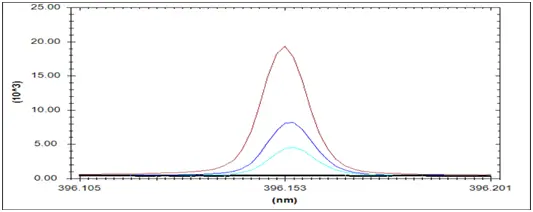
Typical element spectrum and curve
Conclusion
The relative digestion method for the direct determination of multiple elements in gasoline and lubricating oil by ICP offers higher accuracy and better reproducibility. This method not only significantly reduces the time required for sample digestion and minimizes environmental pollution caused by acids but also reduces the technical expertise required of operators. It can be widely used and utilized in the petrochemical industry. TT-4951 exhibits characteristics of low testing costs, rapid testing speeds, and high method accuracy. It enables direct determination of multiple elements in gasoline and lubricant samples, fulfilling the testing requirements of various customers in the petrochemical industry.