Electric Hospital Beds
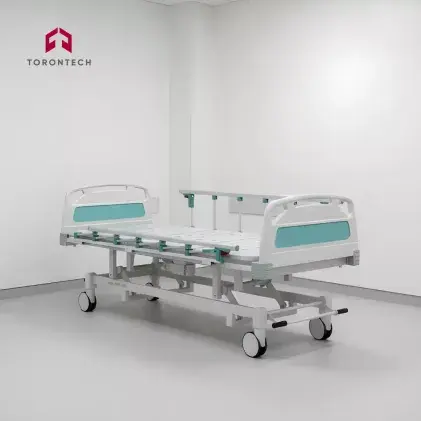
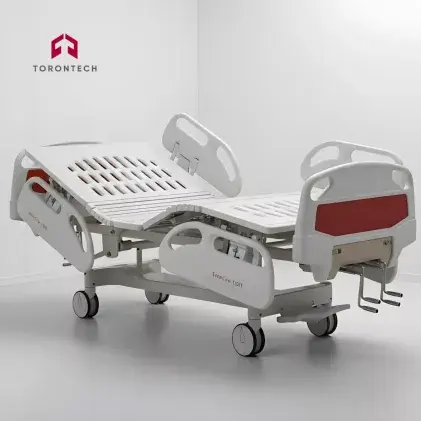
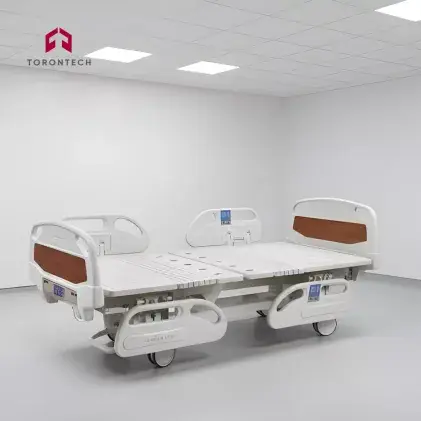
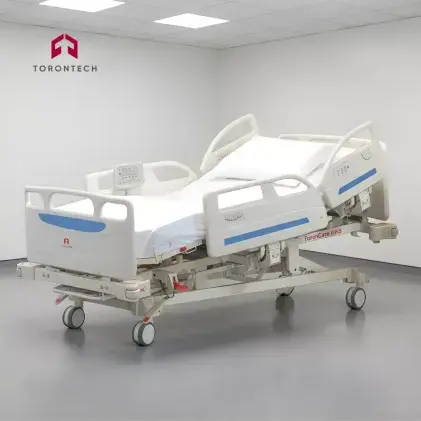
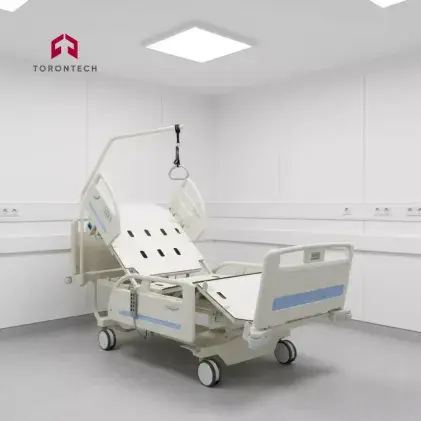
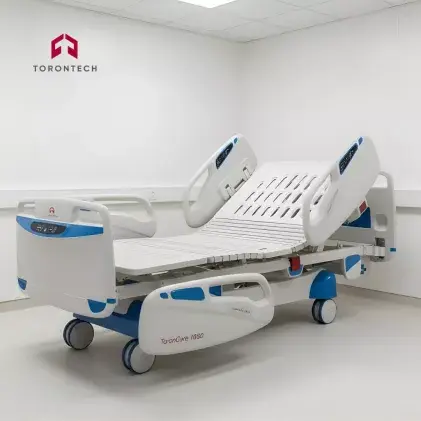
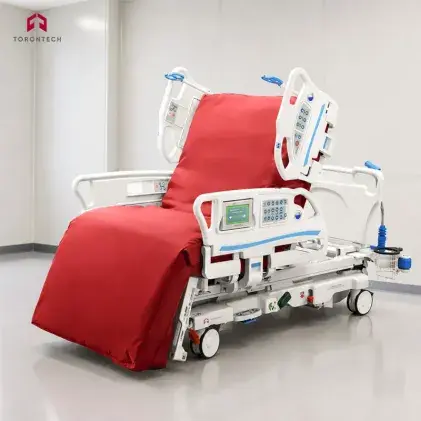
Torontech's Electric Hospital Beds are designed to enhance patient care, safety, and caregiver efficiency in hospitals, clinics, and long-term care facilities. With fully electric controls for height, backrest, and leg adjustments, these beds provide optimal comfort and support across various medical settings, from intensive care to general wards.
Built for durability and hygiene, each electric hospital bed features a robust frame, smooth mobility, integrated safety rails, and intuitive control panels. Torontech's beds meet international standards for medical equipment, offering customizable configurations to meet the evolving needs of modern healthcare environments.
Electric hospital beds serve a wide range of care settings where adjustable positioning supports treatment, recovery, and patient safety.
Intensive and Critical Care
Frequent, precise repositioning supports respiratory care, pressure-injury prevention, and emergency procedures. Rapid backrest and height changes help clinical teams respond quickly.
General Wards and Medical-Surgical Units
Adjustable positioning improves comfort during recovery and makes routine care, examinations, and transfers easier for both patients and staff.
Long-Term and Rehabilitation Care
Low height settings and stable positioning reduce fall risk for patients who spend extended time in bed, while assisting safe mobility and therapy.
Post-Operative Recovery and Home Care
Smooth, controlled adjustment supports patients during recovery, and electric controls allow patients with limited strength to reposition themselves with minimal assistance.
1. Multi-Function Electric Adjustment
Motor-driven actuators adjust bed height, backrest, and knee sections, and support Trendelenburg and reverse-Trendelenburg positioning where configured.
2. CPR Emergency Release
A rapid backrest release lowers the patient to a flat position quickly during emergencies, supporting effective resuscitation.
3. Integrated Safety Side Rails
Built-in or collapsible rails help prevent falls while allowing safe patient access and transfers.
4. Central-Locking Mobility
Smooth-rolling casters with a central braking system keep the bed stable when locked and easy to move when needed.
5. Intuitive Control Panels
Clear handset and side controls let staff and patients adjust positioning easily, with lockout options for safety.
6. Hygienic, Durable Construction
A robust frame and easy-clean surfaces support infection-control routines and stand up to continuous clinical use.
An electric hospital bed positions the patient using electric motors instead of manual cranks. This gives caregivers fast, repeatable control and lets many patients adjust their own position with a simple handset.
How Electric Adjustment Works
Each adjustable section of the bed connects to a linear actuator, a device that converts the rotation of a small electric motor into straight-line push or pull movement. When a user presses a button on the handset, the control unit sends power to the actuator for that section.
Coordinated, Controlled Motion
The actuator extends or retracts smoothly, raising or lowering the backrest, knee section, or whole-bed height. A central control unit manages each actuator, so movements stay steady and stop precisely when the button is released. This controlled operation is part of why medical beds are built to standards such as IEC 60601-2-52, which sets safety requirements for medical bed design. Because the motion is powered and precise, staff can reposition patients with less physical strain and lower risk of injury to both patient and caregiver.