DSC Differential Scanning Calorimeter – ToronDSC™
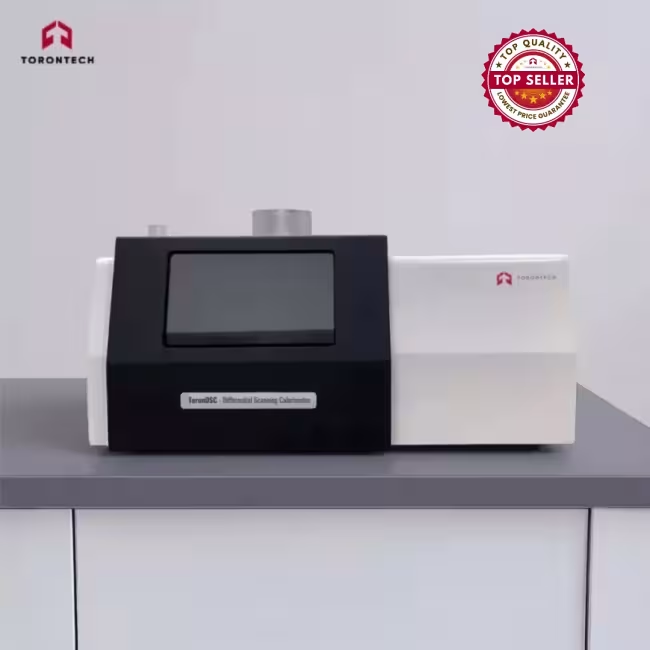
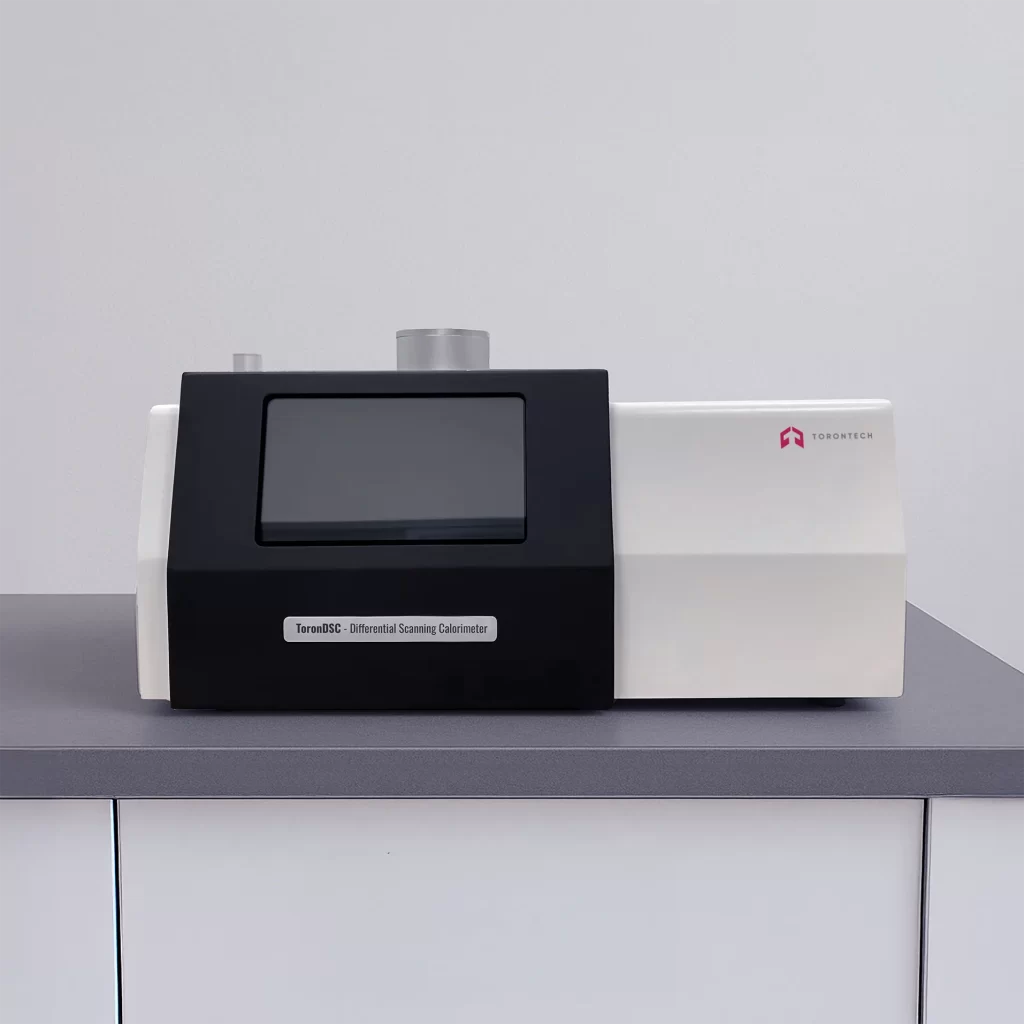
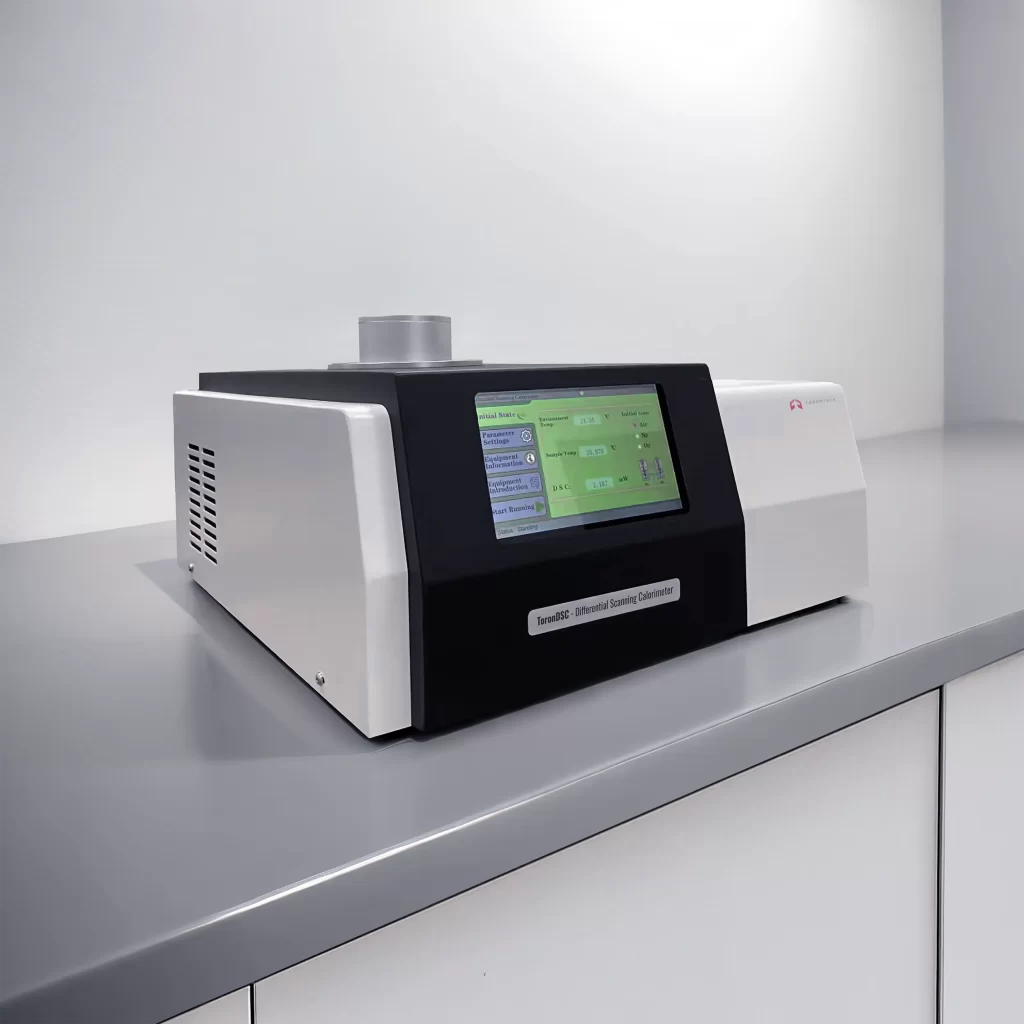
The ToronDSC™ Differential Scanning Calorimeter is designed for fast and accurate measurement of heat flow and specific heat across a wide range of materials. It provides reliable thermal analysis for both routine quality control and advanced research applications. With a stable metal furnace and a robust system design, ToronDSC™ delivers consistent results that support confident material evaluation.
Built for efficiency and dependable operation, ToronDSC™ combines dual atmosphere capability with real-time monitoring to ensure stable testing conditions throughout each run. The system requires minimal calibration, helping reduce setup time while maintaining high measurement accuracy. Its balanced design makes complex thermal analysis easier to manage, even in busy laboratory environments.
ToronDSC™ supports precise evaluation of material behavior during thermal transitions. It is widely used in materials research, polymer analysis, formulation development, and performance validation. Designed for laboratories that value accuracy without unnecessary complexity, ToronDSC™ offers a practical solution for both daily testing and in-depth thermal studies.
Key Highlights
- Fast and accurate DSC heat flow analysis
- Stable metal furnace for consistent thermal performance
- Dual atmosphere operation for flexible testing conditions
- Real-time monitoring to improve workflow efficiency
- Minimal calibration requirements for reliable daily use
- Suitable for quality control labs and R&D facilities
Applications of DSC Differential Scanning Calorimetry
DSC supports laboratories that need to measure thermal transitions, compare formulations, and confirm material stability under controlled heating or cooling conditions.
Polymers and Plastics
Measure glass transition, crystallization, melting behavior, and oxidation onset to compare grades, optimize processing windows, and evaluate thermal history.
Pharmaceuticals
Study polymorphism, purity, compatibility, and stability of active ingredients and formulations during development, quality control, and storage studies.
Adhesives, Resins, and Composites
Evaluate curing reactions, crosslink density, and batch-to-batch consistency for thermosets, prepregs, and formulated materials.
Research and Failure Analysis
Investigate unexpected thermal events, compare unknown materials, and correlate heat-flow behavior with performance issues in development and troubleshooting work.
Key Capabilities of ToronDSC
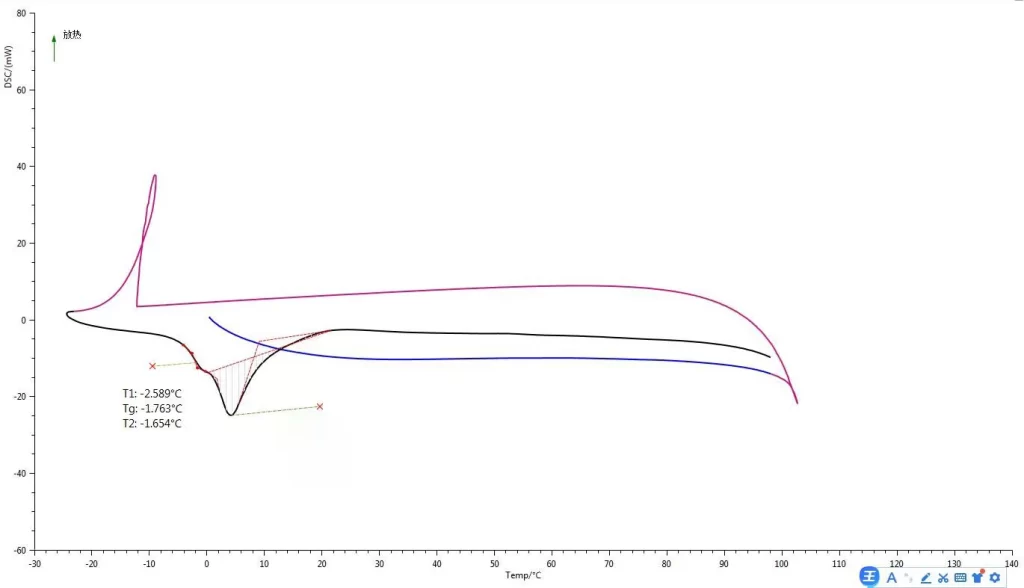
ToronDSC analyzes thermal properties and detects critical transitions such as glass transition temperature (Tg), cold crystallization, melting behavior, oxidation onset, curing reactions, and broader phase changes that affect product stability and processing.
Understanding the Differential Scanning Calorimetry Curve
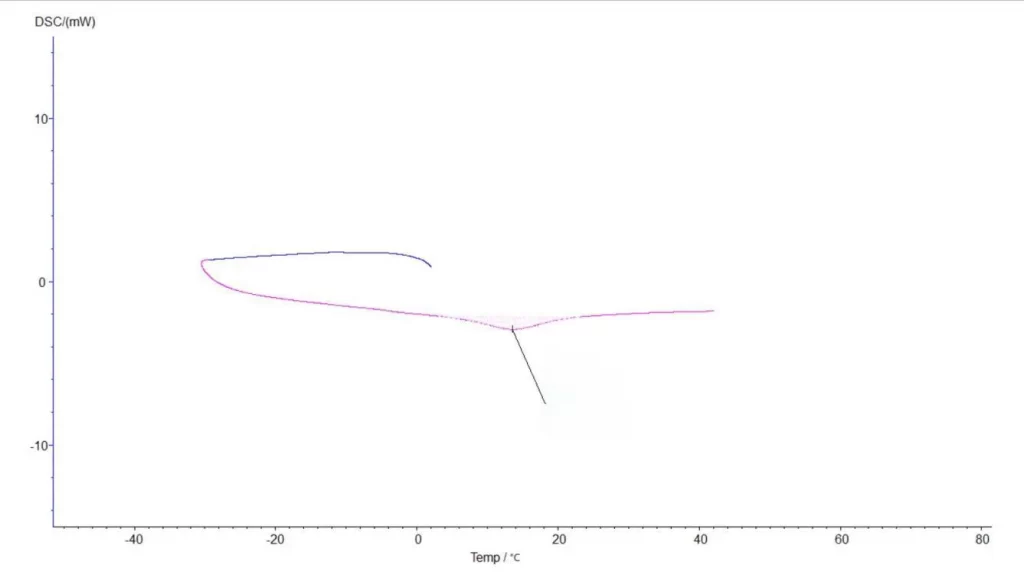
The DSC curve shows how heat flow changes as the sample is heated or cooled relative to a reference. Peak direction, onset temperature, and peak area help identify endothermic and exothermic events and quantify the heat involved in each transition.
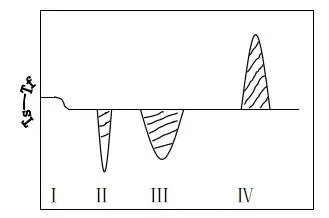
I. Secondary transition: a small baseline shift often linked to structural rearrangement or a minor glass transition.
II. Endothermic peak: heat absorbed during events such as melting or fusion.
III. Additional endothermic event: heat absorbed during decomposition or bond-cleavage reactions.
IV. Exothermic peak: heat released during crystallization, curing, or crosslinking.
1. Advanced Metal Furnace Design
The newly engineered metal furnace structure provides a more stable baseline and improved measurement precision. Indirect conduction heating ensures superior uniformity and stability, significantly reducing pulse radiation compared to traditional heating methods.
2. Dual Atmosphere Flow System
Features automatic switching between two-way atmosphere flows with rapid transition and minimal stabilization time. Includes an additional protective gas inlet for enhanced safety and flexibility.
3. USB Communication Interface
Equipped with a versatile and reliable USB interface for seamless, uninterrupted communication. Supports automatic reconnection for added convenience.
4. Programmable Multi-Stage Temperature Control
Allows for fully automated temperature programming with precise control over each stage.
5. 7-Inch Industrial-Grade Color Touchscreen
High-resolution display provides clear, comprehensive data visualization and an intuitive user interface for easy operation.
6. Enhanced Sensitivity and Accuracy
Upgraded components significantly increase measurement sensitivity and accuracy. The bidirectional operating system enables real-time spectral acquisition and online data analysis through integrated software.
Differential Scanning Calorimetry (DSC) is a thermal analysis technique used to measure the difference in heat flow between a test sample and a reference as both are subjected to a controlled temperature program. This method provides valuable insight into material behavior during physical or chemical transitions, such as melting, crystallization, or curing.
The DSC instrument used here is a heat-flow-type DSC calorimeter, which records the thermal flow difference in milliwatts. These measurements reflect the enthalpy characteristics of the material—specifically, heat absorbed or released during transitions.
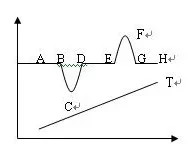
In the diagram above:
- The x-axis represents temperature (T) or time (t), increasing from left to right.
- The curve labeled T shows the reference temperature profile, while the AH-line curve displays the sample’s deviation.
When the sample and reference have nearly equal heat capacities and no thermal events occur, the temperature difference (∆T) between them remains near zero, resulting in a flat baseline, as seen in regions AB, DE, and GH.
Once a thermal event begins, the sample's behavior deviates:
- C–D segment shows an endothermic dip, typically due to melting or decomposition, where the sample absorbs heat.
- E–F–G segment features an exothermic peak, indicating heat release, such as crystallization or chemical crosslinking.
Each peak’s position, height, width, and direction reveals critical information about the sample’s thermal behavior. The area under the peak correlates with the magnitude of the heat involved in the transition. These markers help identify the type of thermal event (endothermic vs. exothermic), its onset temperature, and the transition range.
While ideal DSC curves are often smooth and clearly defined, real-world results may be more complex due to the kinetic factors and reaction rates of the material. The testing environment, sample preparation, and heating rate also influence the curve’s accuracy and reproducibility.
This detailed curve interpretation is essential in industries such as polymer development, pharmaceutical testing, and materials research, where thermal properties directly impact product performance and stability.
| Technical Parameters | ToronDSC™-100A | ToronDSC™-300 | ToronDSC™-300C | ToronDSC™-300L | |
|---|---|---|---|---|---|
| Temperature Range | Room temperature~600°C | -40~600°C | -170~600°C | ||
| Temperature Resolution | 0.01°C | 0.001°C | 0.001°C | 0.001°C | |
| Temperature Fluctuation | ±0.1°C | ±0.001℃ | ±0.001℃ | ||
| Temperature Repeatability | ±0.1°C | ±0.01°C | |||
| Heating Rate/Cooling Rate | 0.1~100°C/min | 0.1~100°C/min/0.1~40°C/min | |||
| Temperature Control Method | PID temperature control, temperature rise, Constant temperature | PID temperature control, heating, constant temperature, cooling | |||
| DSC Range | 0~±600mW | 0~±800mW | 0~±600mW | ||
| DSC Accuracy | 0.01mW | ||||
| Voltage | AC220V/50Hz or customized | ||||
| Gas Flow Rate | 0~300mL/min | ||||
| Gas Pressure | ≤5mPa | ||||
| Display Method | 24-bit color, 7-inch LCD touch screen display | ||||
| Data Interface | Standard USB interface | ||||
| Product Photos |  |  |  |  | |
Instrument Accessories
Variety of crucibles are available, including ceramic crucibles, aluminum crucibles, and crucibles with lids.
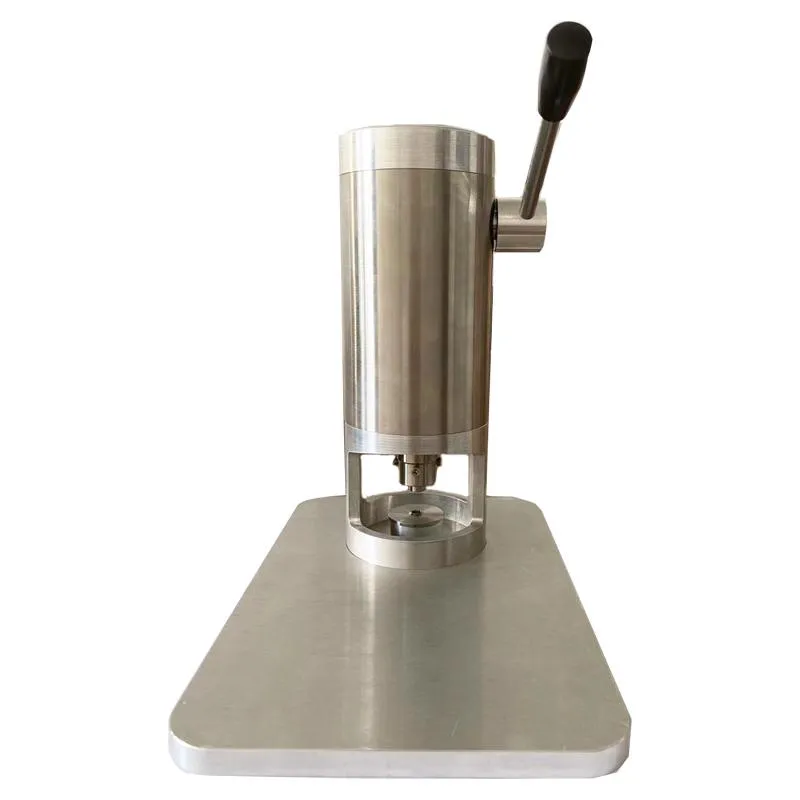
Tablet Press
Instrument Interface
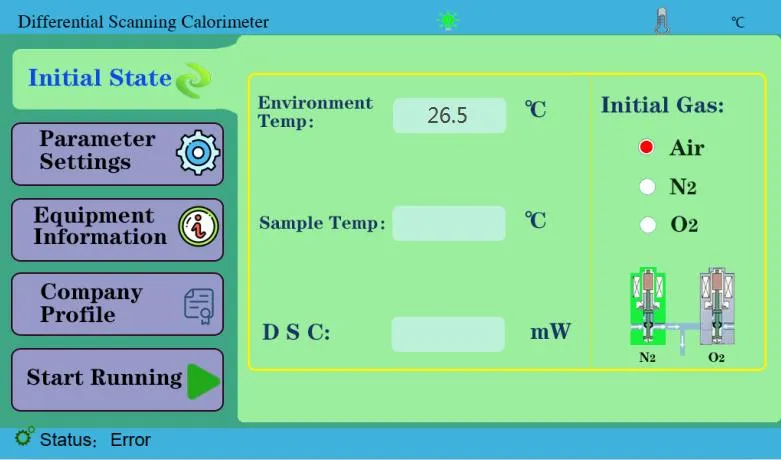
The Initial Status key displays ambient temperature, sample temperature, and other relevant parameters.
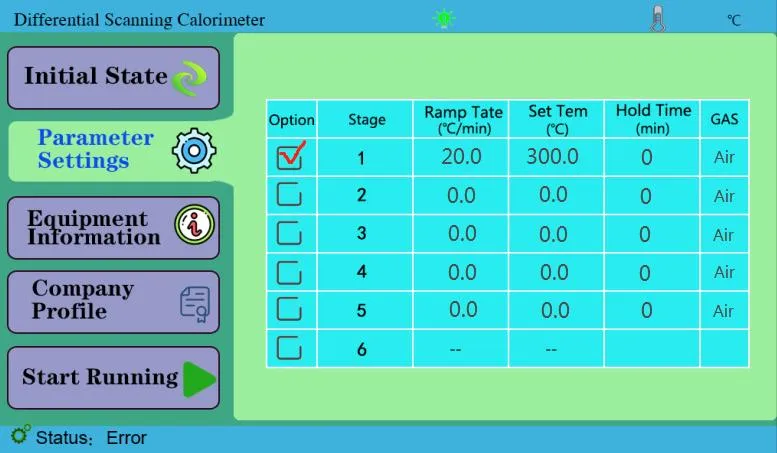
The Parameter Settings key is used to configure experimental parameters, typically through the software interface.
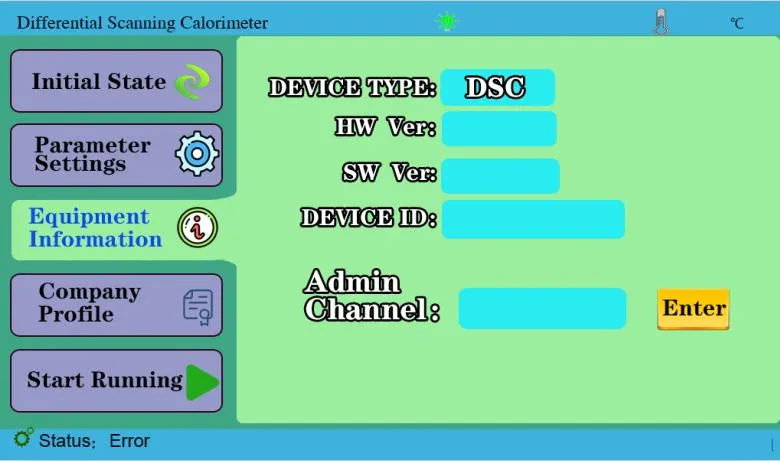
The Device Information key displays detailed information about the instrument. The Administrator Channel is used by authorized personnel for internal temperature calibration.
The Start Run key displays real-time data after the operation is initiated through the computer software.
Test Graph